ARTE
BELEZA E BEM-ESTAR
ARTESANATO
CULTURA E HISTÓRIA
ENTRETENIMENTO
MEIO AMBIENTE
COMIDA E BEBIDAS
ENGENHARIA REVERSA
CIÊNCIAS
ESPORTES
TECNOLOGIA
TECNOLOGIA VESTÍVEL

Nylon 66 Pellets: Nylon Salt Polymerised in an Autoclave, Carothers 1938
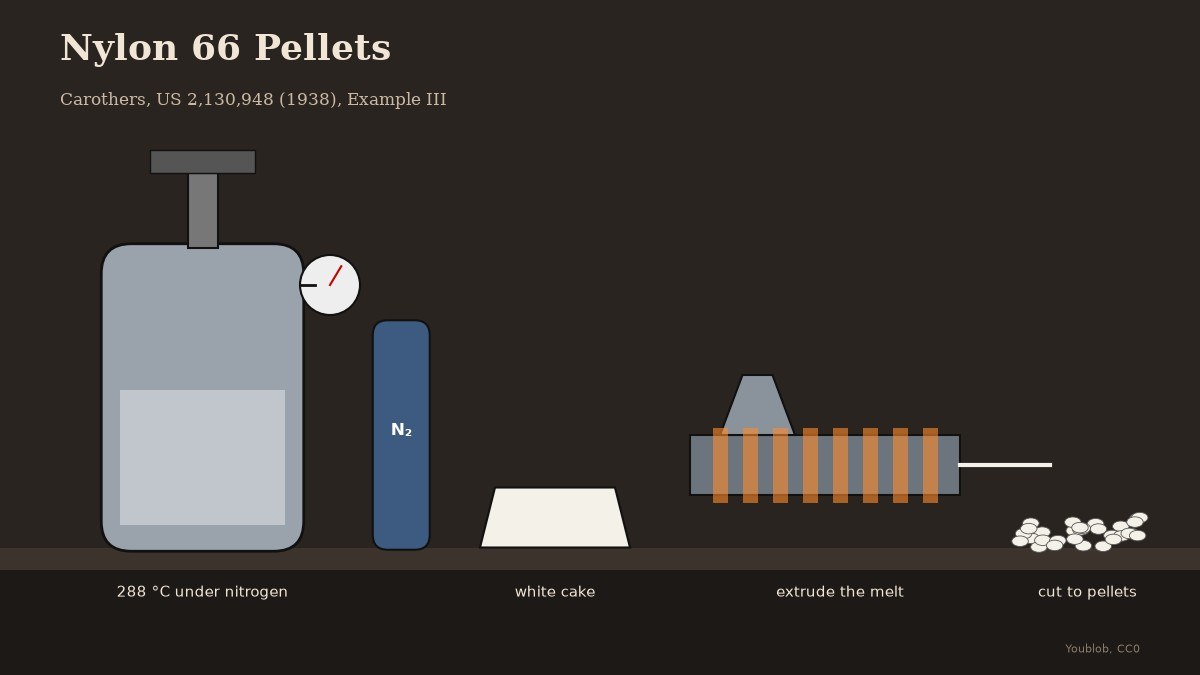
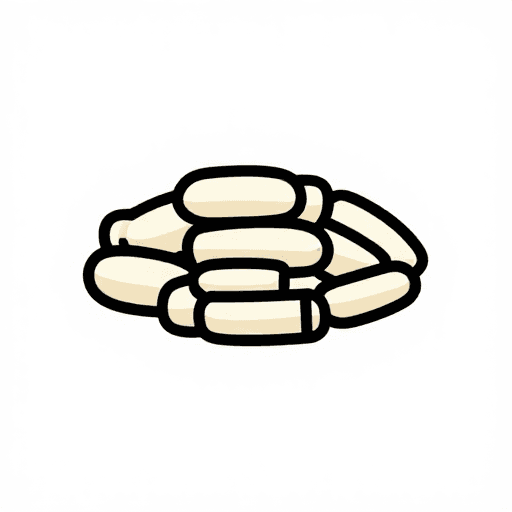
Nylon salt heated to 288 °C under oxygen-free nitrogen gives off water and joins into long chains of nylon 66 (Carothers, du Pont, US 2,130,948, 1938: two moles of salt in a silver-lined autoclave). A pinch of extra adipic acid keeps the melt's viscosity steady. The polymer is then extruded and cut into pellets.
The picture: our drawing of the autoclave and the pellet line.
Avançado
A day
Instruções
1
1
Charge the autoclave
Charge the autoclave
Put two moles of nylon salt (525 g) and 0.02 mole of adipic acid (2.9 g) in a two-litre silver-lined autoclave with a stainless stirrer and a reflux condenser leading to a receiver.
Materiais para este passo:
 Sal de nylon525 g
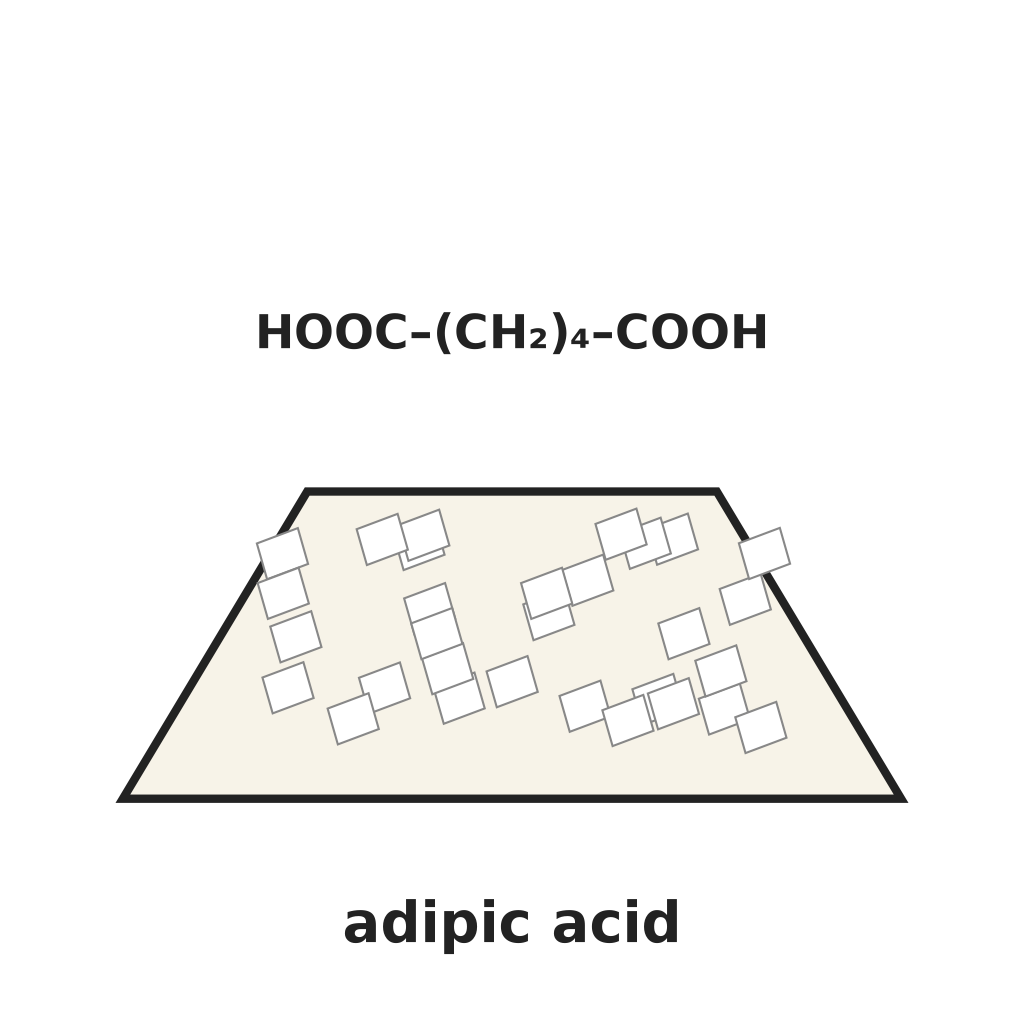 Ácido adípico2.9 g
Ferramentas necessárias:
 Reator de pressão
 Serpentina do condensador
 Balança digital de cozinha
2
2
Drive out the air
Drive out the air
Evacuate, fill with nitrogen, evacuate again, then apply 80 lb/in² of nitrogen. Use nitrogen free of oxygen; oxygen spoils the polymer.
Ferramentas necessárias:
 Bomba de vácuo
 Azoto
 Manómetro
3
3
Heat to 288 °C
Heat to 288 °C
Start the stirrer and heat to 288 °C over 1.5 hours.
Ferramentas necessárias:
Reator de pressão Termopar com mostrador
4
4
Let the water off
Let the water off
Bring the pressure down to atmospheric over half an hour and keep heating and stirring 2.5 hours. Then pull to 200 mm absolute for a few minutes.
Ferramentas necessárias:
Reator de pressãoBomba de vácuoManómetroTermopar com mostrador5
5
Cool and take out
Cool and take out
Cool. The polymer comes out as a white solid cake that melts at about 263 °C.
Ferramentas necessárias:
Reator de pressão6
6
Pelletise
Pelletise
Break up the cake (our step), melt it in the extruder, draw the strand and cut it into pellets.
Ferramentas necessárias:
 Extrusora de plástico
 Matriz de extrusão
7
7
Grams and pressures
Grams and pressures
A carregar o notebook Jupyter…
Materiais
2- 525 gReferência
- 2.9 gReferência
Ferramentas necessárias
9- Referência
- Referência
- Referência
- 1 vendor sell this, none ship to you yetReferência
- Referência
- Referência
- Referência
- Referência
- Referência
Este projeto faz
Blueprints relacionados
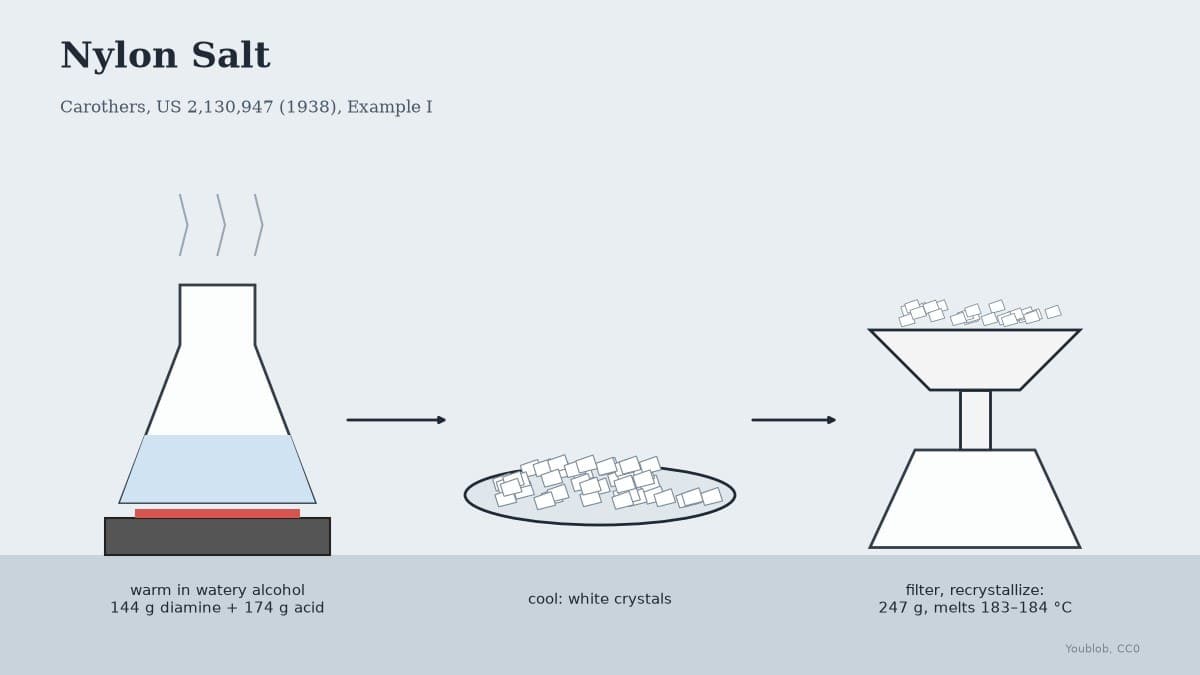
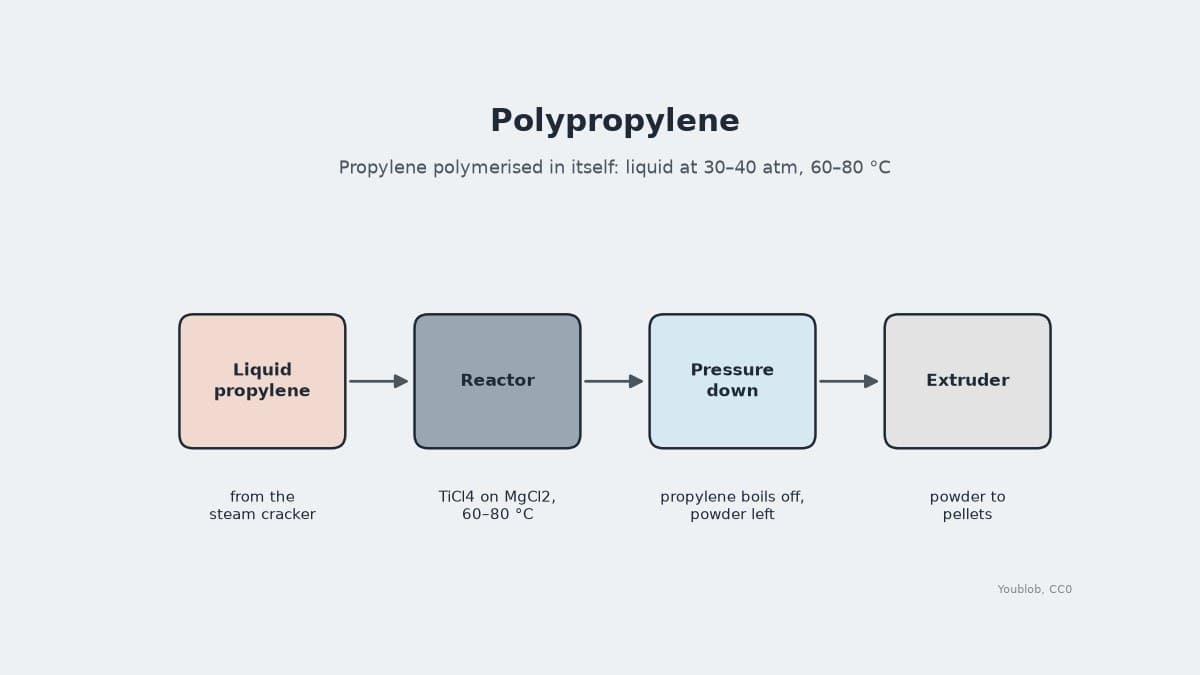
Estes blueprints compartilham conhecimento — técnicas, materiais ou princípios


CC0 Domínio Público
Este blueprint é liberado sob CC0. Você é livre para copiar, modificar, distribuir e usar este trabalho para qualquer finalidade, sem pedir permissão.
Apoie o Maker comprando produtos através do Blueprint, onde ele ganha uma Comissão Maker definida pelos vendedores, ou crie uma nova versão deste Blueprint e inclua-o como conexão no seu próprio Blueprint para compartilhar receita.