

Making Biochar for Soil Amendment — Pyrolyzed Carbon for Agriculture
Instruções
Build or Prepare the TLUD Gasifier
Build or Prepare the TLUD Gasifier
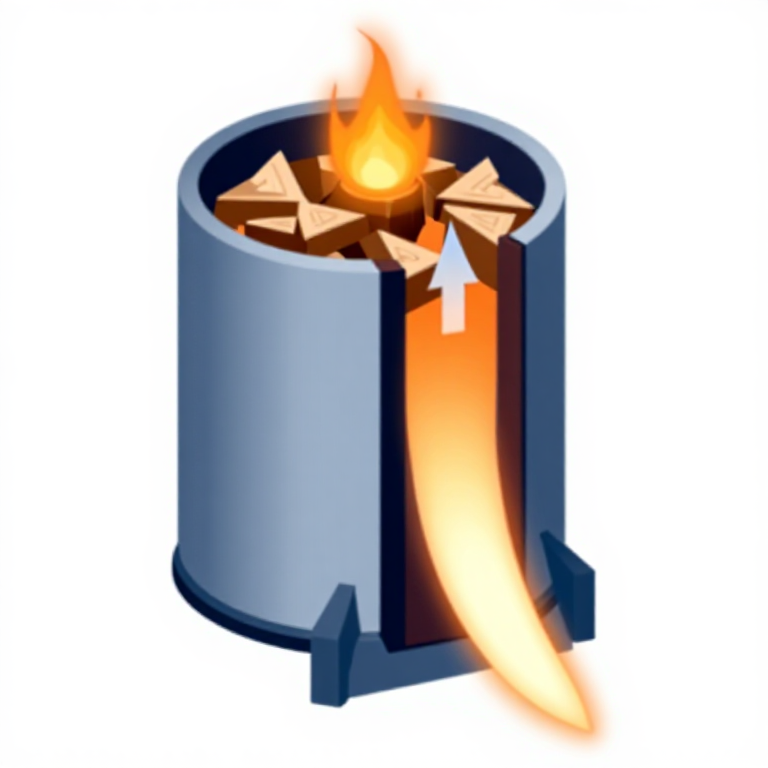
A TLUD (Top-Lit Updraft) gasifier can be made from two nested metal cans. The inner can (a large paint can or small drum) has holes punched around the bottom for primary air intake. The outer can is slightly larger and serves as a secondary combustion chamber with holes near the top for secondary air. Alternatively, use a single metal drum with a loose-fitting lid. The TLUD design is critical: it creates pyrolysis conditions (thermal decomposition in limited oxygen) rather than combustion (burning in excess oxygen). The primary air enters at the bottom, and the combustible gases released by the pyrolyzing wood burn at the top of the fuel column where secondary air is introduced, producing a clean, hot flame while the wood below converts to charcoal rather than ash.
Ferramentas necessárias:
 Wood Gasifier Kit
Load and Light the Gasifier
Load and Light the Gasifier
Fill the inner can with dry wood waste — uniform piece size (2-5cm) ensures even pyrolysis. The wood must be dry (below 20% moisture content); wet wood produces excess smoke and poor-quality biochar. Pack the wood loosely enough for air to flow through but tightly enough that the pieces do not shift. Place a small amount of kindling on top and light it. In a TLUD, the fire burns downward from the top — the pyrolysis front descends through the fuel column, converting wood to charcoal from top to bottom. The volatile gases released ahead of the pyrolysis front rise and burn in the flame at the top, producing usable cooking heat as a byproduct.
Materiais para este passo:
 Dry Firewood2-5 kg kg
Ferramentas necessárias:
 Matches
Monitor the Pyrolysis Process
Monitor the Pyrolysis Process
The burn progresses in distinct phases visible from the flame character. Initially, thick white smoke (water vapour and volatile compounds) gives way to a clean, hot secondary flame at the top of the gasifier. This clean-burning phase indicates proper pyrolysis — the wood is decomposing thermally at 400-600 degrees C without sufficient oxygen to combust completely. The process takes 1-3 hours depending on the volume and piece size. The pyrolysis is complete when the flame dies down and the remaining material in the can has been reduced to charcoal. If the process is allowed to continue beyond this point with air access, the charcoal itself will begin to burn to ash — the key is to stop when the wood has been converted to char but before the char is consumed.
Quench the Biochar
Quench the Biochar
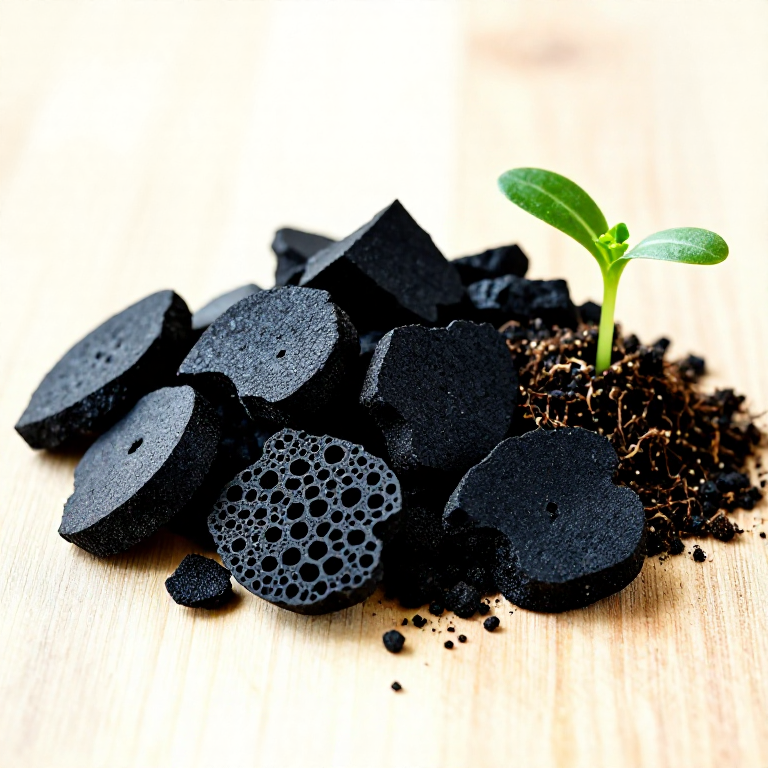
Once the flame dies and only glowing charcoal remains, immediately quench with water or seal the container with a tight-fitting lid to exclude oxygen. Water quenching is faster and more reliable — pour water over the hot char until it stops hissing and steaming. If using the lid method, seal all air holes and allow to cool completely before opening (several hours). Incomplete quenching allows smouldering to continue, converting your biochar to ash. The quenched biochar should be black, lightweight, porous, and break with a snap. It should not be powdery grey (that is ash — too much combustion) or brown (that is incompletely pyrolyzed wood).
Materiais para este passo:
 Water5-10 litres litro
Ferramentas necessárias:
 Quench Bucket
Charge and Apply to Soil
Charge and Apply to Soil
Raw biochar is highly porous and has a very high surface area (200-400 square metres per gram) but is nutrient-poor and can initially immobilize soil nitrogen as microbes colonize it. To avoid temporary nutrient lockup, charge the biochar before application by soaking it in compost tea, dilute liquid fertilizer, or urine (a nitrogen-rich natural fertilizer) for 1-2 weeks. This pre-loads the pore structure with nutrients and microbes. Mix the charged biochar into soil at 5-10% by volume. Biochar improves sandy soils by increasing water and nutrient retention (the porous structure acts like a sponge), and improves clay soils by increasing drainage and aeration. Unlike compost, which decomposes within months, biochar persists in soil for centuries because its aromatic carbon structure resists microbial decomposition.
Materiais
3- 2-5 kg kgReferência
- 5-10 litres litroReferência
- 2-5 kg peçaReferência
Ferramentas necessárias
4- Referência
- Referência
- Referência
- Referência
CC0 Domínio Público
Este blueprint é liberado sob CC0. Você é livre para copiar, modificar, distribuir e usar este trabalho para qualquer finalidade, sem pedir permissão.
Apoie o Maker comprando produtos através do Blueprint, onde ele ganha uma Comissão Maker definida pelos vendedores, ou crie uma nova versão deste Blueprint e inclua-o como conexão no seu próprio Blueprint para compartilhar receita.