ARTE
BELEZA E BEM-ESTAR
ARTESANATO
CULTURA E HISTÓRIA
ENTRETENIMENTO
MEIO AMBIENTE
COMIDA E BEBIDAS
ENGENHARIA REVERSA
CIÊNCIAS
ESPORTES
TECNOLOGIA
TECNOLOGIA VESTÍVEL
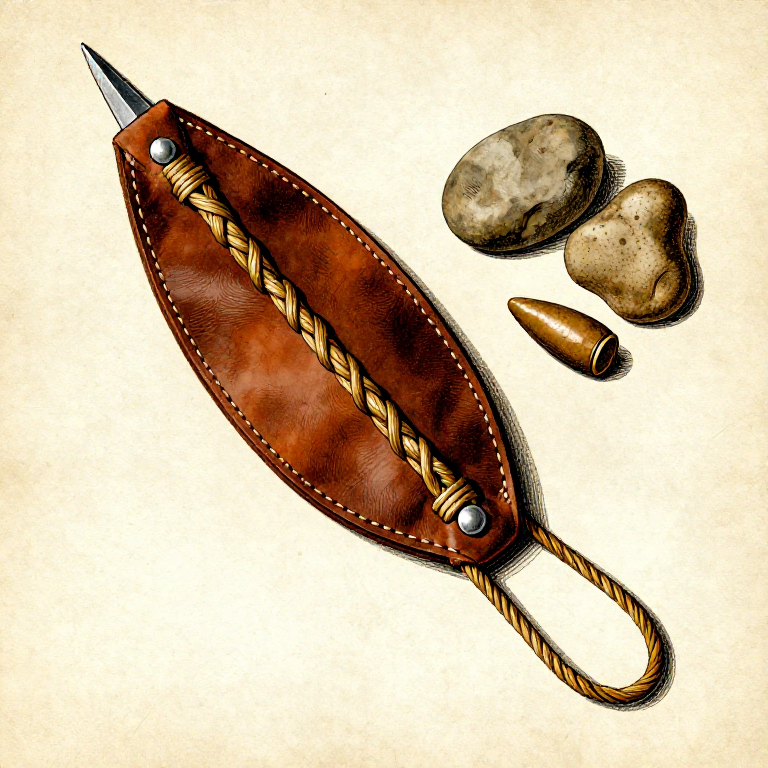


Making a Leather Sling — The Shepherd's Projectile Weapon
The sling is one of the oldest and most effective projectile weapons, capable of hurling a stone at speeds exceeding 100 km/h. Archaeological evidence dates sling use to at least 10,000 years ago, and slings remained a serious military weapon through the Roman era. The weapon consists of a small leather pouch connected to two cords — one with a finger loop, one with a free end that is released at the moment of maximum velocity. The physics are simple: the sling extends the thrower's arm length, dramatically increasing the angular velocity and therefore the kinetic energy of the projectile. A skilled slinger could hit targets at 50 metres with lethal force using rounded river stones or shaped clay bullets.
Iniciante
1-2 hours
Instruções
1
1
Cut the Leather Pouch
Cut the Leather Pouch
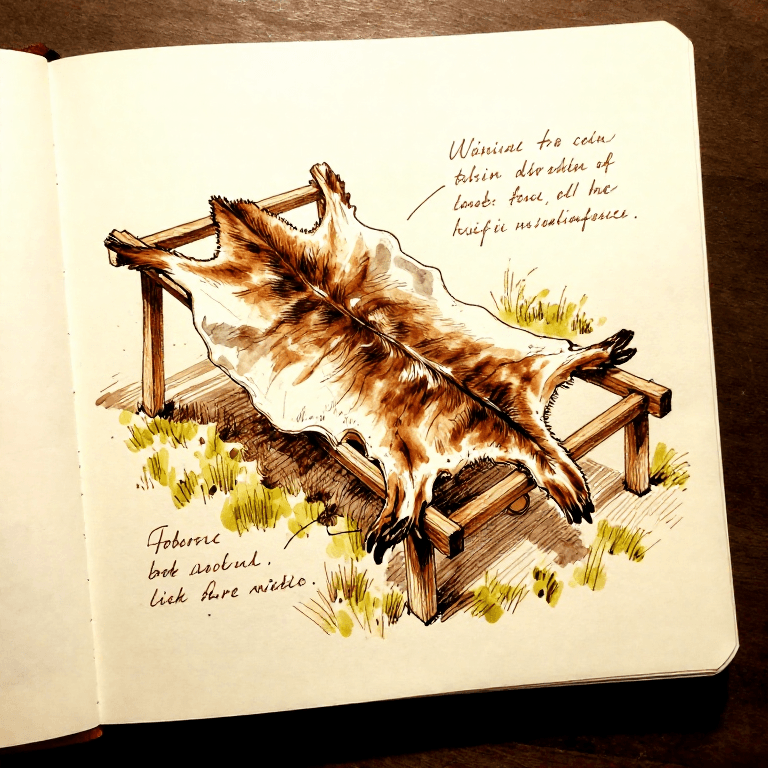
From a piece of brain-tanned or softened leather, cut an oval pouch approximately 8 cm wide and 12 cm long. The leather should be flexible but strong — about 2 to 3 mm thick. Brain-tanned deer hide is ideal. The oval shape cradles a round stone securely and releases it cleanly when the sling opens.
Materiais para este passo:
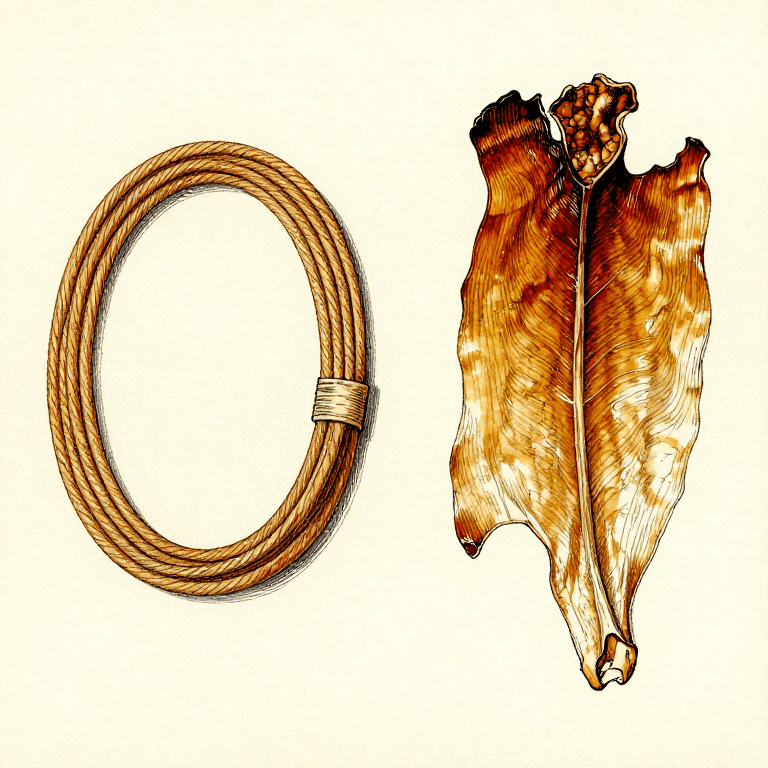
 Pele curtida com miolos1 peça
2
2
Punch Holes for the Cords
Punch Holes for the Cords
Using a bone awl, punch two small holes near each narrow end of the oval pouch, about 1 cm from the edge and 2 cm apart. You will have two holes on the left end and two holes on the right end — four holes total. The holes must be clean and round so the cordage passes through without tearing the leather under stress.
Ferramentas necessárias:
 Sovela de osso
3
3
Cut Two Cords of Equal Length
Cut Two Cords of Equal Length
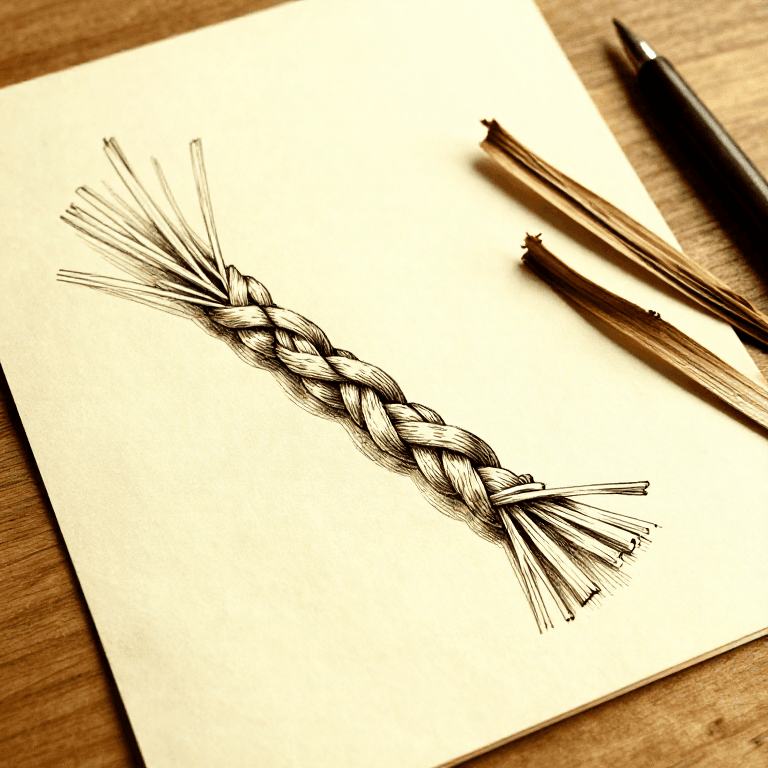
Cut two lengths of braided rawhide cord or strong plant fibre cordage, each 60 to 70 cm long. Both cords must be the same length — unequal cords cause the sling to release asymmetrically, sending stones off-target. The cords should be about 4 to 5 mm in diameter, strong enough to withstand the centrifugal force of a spinning stone.
Materiais para este passo:
 Cordame2 peças
4
4
Attach the Retention Cord
Attach the Retention Cord
Thread one cord through both holes on one end of the pouch. Pull it through evenly so the pouch hangs at the midpoint. Tie a secure knot on the outside of each hole — an overhand knot pulled tight works well. This is the retention cord, which stays in your hand throughout the throw.
5
5
Attach the Release Cord
Attach the Release Cord
Thread the second cord through both holes on the other end of the pouch and knot it securely, just as you did with the first cord. This is the release cord — you will let go of this cord at the moment of release to open the pouch and launch the stone.
6
6
Tie a Finger Loop on the Retention Cord
Tie a Finger Loop on the Retention Cord
At the free end of the retention cord, tie a loop large enough to slip over your middle finger. An overhand loop knot or a simple bowline works well. This loop anchors the sling to your hand — when you release the other cord, the retention cord stays on your finger and the pouch opens, launching the stone.
7
7
Prepare the Release Cord End
Prepare the Release Cord End
At the free end of the release cord, tie a simple overhand knot to create a small bulge that is easy to grip between your thumb and forefinger. Some slingers leave the end plain — experiment to find what gives you the cleanest, most consistent release. The key is that this cord must slip free from your fingers at exactly the right moment.
8
8
Select Suitable Ammunition
Select Suitable Ammunition
Gather smooth, rounded river stones roughly the size and shape of a hen's egg, weighing 100 to 200 grams each. Uniformity matters — stones of consistent weight and shape produce consistent trajectories. Avoid flat, angular, or cracked stones. Ancient slingers often shaped clay into uniform ovoid bullets for maximum accuracy and range.
9
9
Practice the Overhead Release
Practice the Overhead Release
Place a stone in the centre of the pouch. Hold both cords together — retention loop on your middle finger, release cord pinched between thumb and forefinger. Whirl the loaded sling vertically in an overhead circle 2 to 3 times to build speed, then release the release cord at the forward-most point of the arc. The stone should fly forward in a flat trajectory. Practice in an open area with no people or animals nearby.
10
10
Practice the Side-Arm Release for Accuracy
Practice the Side-Arm Release for Accuracy
For greater accuracy at shorter range, swing the sling horizontally at waist height rather than overhead. Whirl 2 to 3 times and release when the pouch is pointing at the target. The side-arm technique gives better visual alignment with the target but less range than overhead. Consistent release timing is the key skill — releasing a fraction of a second too early or late sends the stone far off target. Accuracy develops only through extensive repetition.
Ferramentas necessárias
1- Referência
Materiais de Blueprints conectados

Blueprints relacionados
Estes blueprints compartilham conhecimento — técnicas, materiais ou princípios

CC0 Domínio Público
Este blueprint é liberado sob CC0. Você é livre para copiar, modificar, distribuir e usar este trabalho para qualquer finalidade, sem pedir permissão.
Apoie o Maker comprando produtos através do Blueprint, onde ele ganha uma Comissão Maker definida pelos vendedores, ou crie uma nova versão deste Blueprint e inclua-o como conexão no seu próprio Blueprint para compartilhar receita.