ARTE
BELEZA E BEM-ESTAR
ARTESANATO
CULTURA E HISTÓRIA
ENTRETENIMENTO
MEIO AMBIENTE
COMIDA E BEBIDAS
ENGENHARIA REVERSA
CIÊNCIAS
ESPORTES
TECNOLOGIA
TECNOLOGIA VESTÍVEL
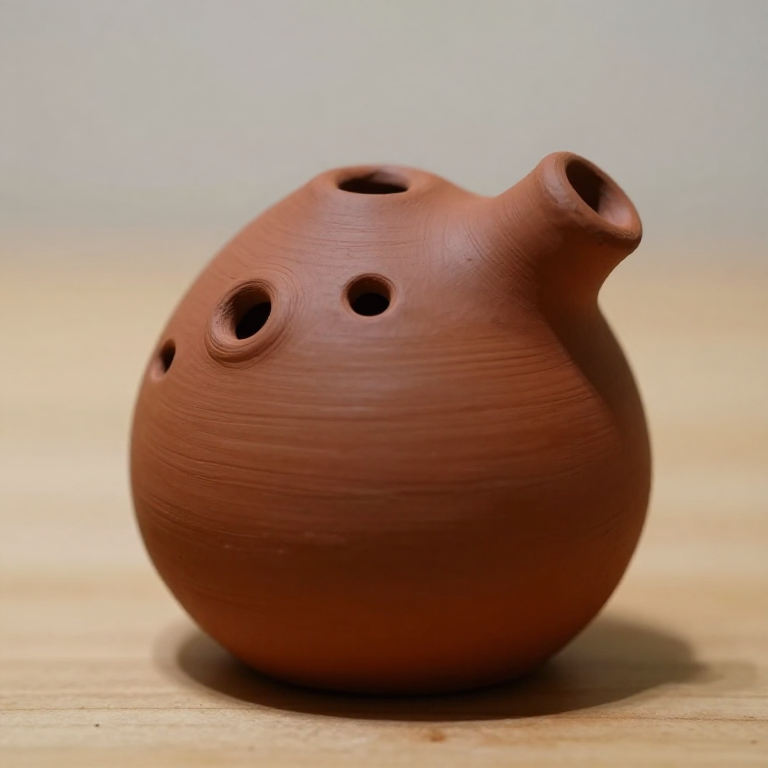


Making a Clay Ocarina — A Vessel Flute You Can Play
Join two clay pinch-pots into a hollow chamber, cut a whistle mouthpiece and poke finger holes to build an ocarina — a vessel flute whose pitch comes from the whole body of air, not the length of a tube. A buildable ceramics school project in Helmholtz resonance, the physics of blowing across a bottle.
Iniciante
45 minutes
Instruções
1
1
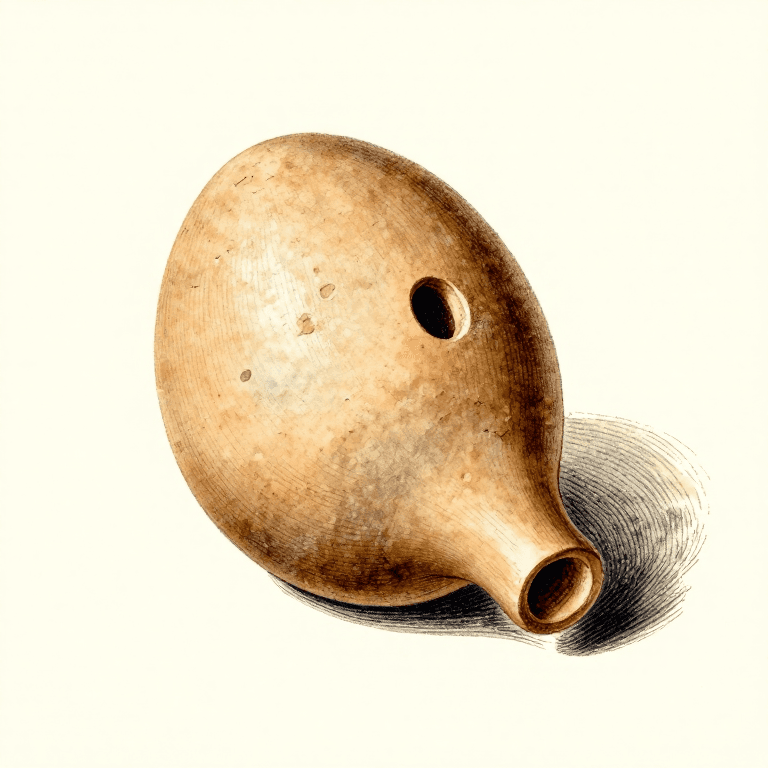
A hollow egg full of sound
A hollow egg full of sound
An ocarina is a vessel flute: a sealed hollow clay chamber with a whistle mouthpiece and finger holes. Unlike a pipe, its note comes from the whole body of air inside.
2
2
Prepare the clay
Prepare the clay
Knead a fist-sized ball of clay firmly to press out every air bubble, so it will not crack later.
Materiais para este passo:
 Argila de faiança300 g
3
3
Make two pinch-pots
Make two pinch-pots
Press the clay into two equal thumb-pots (little bowls) with even walls about 8 mm thick.
4
4
Join into a hollow chamber
Join into a hollow chamber
Score and wet both rims, then press the two bowls together into a sealed hollow ball. The chamber must be completely airtight.
Ferramentas necessárias:
 Ferramenta de riscar barro
5
5
Smooth the seam
Smooth the seam
Smooth the joint all the way round with a wet finger so no air can leak from the seam.
6
6
Cut the windway
Cut the windway
Add a short clay spout and cut a narrow flat channel through it — the windway — that aims a thin ribbon of breath into the chamber.
Ferramentas necessárias:
 Conjunto de fio e faca para argila
7
7
Cut the sounding edge
Cut the sounding edge
Just past the windway, cut a small rectangular opening with one sharp, clean edge (the labium). The air splits on this edge to make the sound.
Ferramentas necessárias:
Conjunto de fio e faca para argila8
8
Test the whistle
Test the whistle
Blow gently through the windway while the clay is still soft. Trim the sharp edge until you get a clear, steady whistle.
9
9
Poke the finger holes
Poke the finger holes
Make four to six finger holes in the top with a pencil or skewer. On an ocarina, hole SIZE sets the pitch far more than hole position.
10
10
Dry it slowly
Dry it slowly
Let the ocarina dry slowly for several days, away from direct heat, until it is bone-dry and pale — rushing this cracks the walls.
11
11
Fire it
Fire it
Fire the bone-dry ocarina in a kiln to harden it and brighten the tone. For a no-kiln class, use air-dry clay instead and skip firing.
12
12
Play and tune
Play and tune
Cover all holes for the lowest note and open them to rise. If a note sounds flat, carefully enlarge that hole a little to raise its pitch.
13
13
Compendium — the Helmholtz resonator
Compendium — the Helmholtz resonator
An ocarina is not a pipe — it is a Helmholtz resonator, the same physics as blowing across a bottle. The whole cushion of air inside the chamber springs in and out through the open holes, like a mass bouncing on a spring. Its pitch depends on two things: the VOLUME of the chamber and the TOTAL AREA of all the open holes — not on where the holes are. Opening a hole, or a bigger hole, lets air escape more easily, which stiffens the spring and raises the pitch; this is why ocarina holes can sit wherever your fingers fall, unlike a tube flute where each hole's position fixes its note. The sound itself is an edge-tone: the flat ribbon of breath from the windway flaps back and forth across the sharp labium edge, the very same mechanism that sounds a recorder or an organ flue pipe. Vessel flutes are ancient and worldwide — Mesoamerican clay ocarinas, the Chinese xun, and countless clay whistles — and the simplest vessel flute of all is just a clay whistle with no finger holes.
Materiais
1- 300 gReferência
Ferramentas necessárias
2- Referência
- Referência
Blueprints relacionados
Estes blueprints compartilham conhecimento — técnicas, materiais ou princípios
CC0 Domínio Público
Este blueprint é liberado sob CC0. Você é livre para copiar, modificar, distribuir e usar este trabalho para qualquer finalidade, sem pedir permissão.
Apoie o Maker comprando produtos através do Blueprint, onde ele ganha uma Comissão Maker definida pelos vendedores, ou crie uma nova versão deste Blueprint e inclua-o como conexão no seu próprio Blueprint para compartilhar receita.