ARTE
BELEZA E BEM-ESTAR
ARTESANATO
CULTURA E HISTÓRIA
ENTRETENIMENTO
MEIO AMBIENTE
COMIDA E BEBIDAS
ENGENHARIA REVERSA
CIÊNCIAS
ESPORTES
TECNOLOGIA
TECNOLOGIA VESTÍVEL
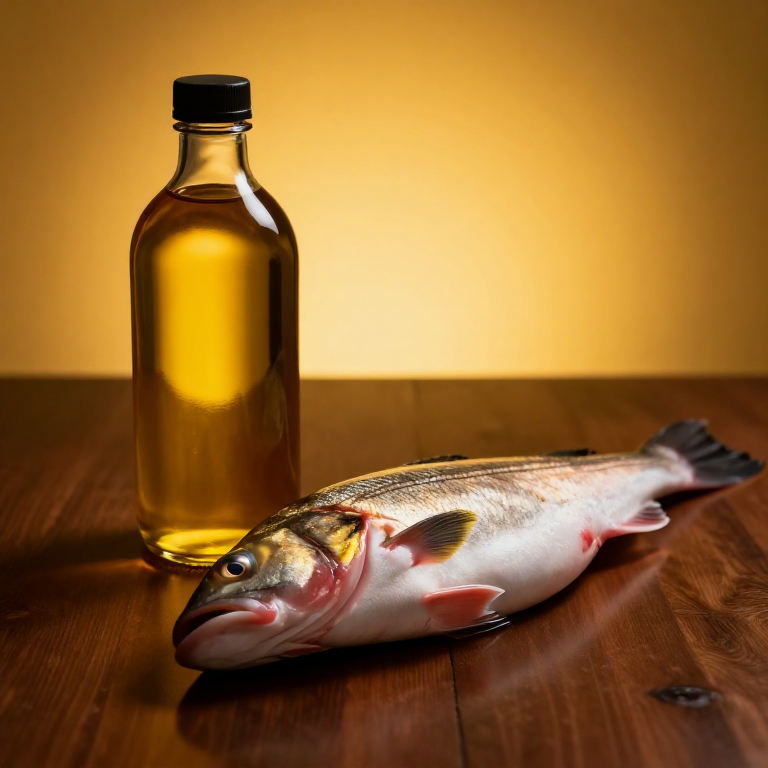

Producing Cod Liver Oil from Atlantic Cod — Norway's Liquid Gold
Intermediário
An afternoon to render and settle, then a week of watching it keep or turn
Instruções
1
1
Understand Atlantic Cod Biology
Understand Atlantic Cod Biology
Atlantic cod (Gadus morhua) is a cold-water demersal fish found throughout the North Atlantic, from Newfoundland to the Barents Sea. Adults reach 1-1.5 meters and 40 kg. Cod have an exceptionally large, oil-rich liver that constitutes 5-10% of body weight — an adaptation for energy storage in cold, food-scarce waters. The liver stores vitamins A and D in concentrations hundreds of times higher than muscle tissue. Norwegian Arctic cod (skrei) migrate annually from the Barents Sea to spawn at Lofoten, where they have been fished for over 1,000 years.
2
2
Trace the History of Tran Production
Trace the History of Tran Production
Vikings produced cod liver oil ('tran', from Old Norse þrán) by packing fresh cod livers in birch bark containers and letting them decompose slowly over weeks — the oil separating from the liver tissue rose to the surface. By the 1700s, Lofoten fishermen filled large wooden vats with livers each winter season, collecting the pale oil that floated up as a valuable trade commodity. Bergen was the primary export port. The foul-smelling but nutritious oil was consumed medicinally across Northern Europe long before anyone understood vitamins.
3
3
Examine Peter Møller's Revolution
Examine Peter Møller's Revolution
Norwegian pharmacist Peter Møller transformed cod liver oil production in 1854 by developing a gentle steam rendering process at Svolvær in Lofoten. Instead of letting livers putrefy, Møller heated fresh livers with steam at temperatures below 85°C, releasing pale, mild-tasting oil within hours rather than weeks. The resulting oil retained far more vitamins and had vastly less odor and rancidity. Møller's method became the global standard. His company (now Möller's, owned by Orkla) remains Norway's most recognized cod liver oil brand, producing tran continuously for over 170 years.
4
4
Render tran yourself, and hold it below 85 °C
Render tran yourself, and hold it below 85 °C
Møller's insight is testable at kitchen scale in an afternoon, and the whole of it is the temperature.
Buy cod livers from a fishmonger and render them the day they are landed if you possibly can. Freshness is not fussiness here — the quality step later in this blueprint is entirely about oxidation, and every hour a liver spends warm is oxidation you cannot take back out afterwards. Keep them cold until the moment you start.
Weigh the livers on the precision scale and write the figure down with the date. That number is the denominator for everything you measure in the next step, and without it your yield is not a number at all.
Rinse them in cold water and trim away blood vessels, connective tissue and any patch stained green by a broken gall bladder. Bile is intensely bitter and one smear carries through the whole batch.
Put the livers in the pot over the gentlest heat you have — standing in a water bath is ideal — with the cooking thermometer buried in the mass rather than touching the metal. Bring them to between 70 and 85 °C and hold there. Do not let it boil. The tissue collapses within minutes and clear oil begins to separate and float.
Hold it for thirty to forty-five minutes, until no more oil is releasing. Then strain the whole mass through fine cheesecloth into the settling jar, pressing gently rather than wringing — hard pressing drives solids and water through with the oil, and you pay for that in the next step.
What you have just done is exactly what the previous step describes: releasing the oil with gentle heat in an hour or two instead of letting the liver putrefy for weeks. Hold the temperature and the oil comes out pale. Let it climb and it comes out dark — which is the same lesson the Lofoten vats taught over a century, learned here in an afternoon.
Materiais para este passo:
 Bacalhau500 gram
Ferramentas necessárias:
 Panela grande
 Termómetro de cozinha
 Musselina fina
 Frasco de decantação em vidro
 Balança de precisão
5
5
Settle, decant, and measure what you actually got
Settle, decant, and measure what you actually got
Leave the strained liquor somewhere cool and undisturbed for several hours, longer if you can. It separates into the same three layers the industrial decanter produces: clear oil on top, a watery protein layer below it — the stickwater — and solids on the bottom.
Decant the clear oil off the top with a ladle or a syringe, taking none of the layer beneath. Weigh what you recover and divide by the liver mass you recorded. That fraction is your yield. Write it down beside the temperature you held, because the two are related and you can test that relationship on the next batch by deliberately running one hotter.
Now judge it the way the trade does. Pale yellow and mild means you held your temperature. Brown, or a strong fishy smell, means it went too hot or the livers were not fresh enough — both are oxidation, and neither can be undone.
Then run the test that makes the quality step real. Split your oil: half into a dark glass bottle filled to the very top and put in the fridge, half into a clear jar left half-empty on a windowsill. Look at and smell both after a day, after three days and after a week. Expect the windowsill sample to turn and the fridge sample to hold. Air, light and warmth are the three things that industrial nitrogen blanketing and dark bottling exist to exclude, and you have just measured what each of them is worth.
**SAFETY — read this before you taste anything.** This is an extraction exercise, not a supplement. A tablespoon of commercial cod liver oil already carries more vitamin A than an adult needs in a day, and vitamin A is fat-soluble: it accumulates, and it is genuinely toxic in excess. Your oil is unrefined, unmeasured and of unknown concentration. Do not dose yourself or anyone else with it, do not give it to children, and do not use it in place of a product made to a standard. Keep it cold, keep it dark, and treat it as the result of an experiment.
Ferramentas necessárias:
Frasco de decantação em vidroBalança de precisão Frascos de vidro escuro com tampas
6
6
Follow Modern Industrial Extraction
Follow Modern Industrial Extraction
Modern cod liver oil production begins within hours of catch. Livers are separated at sea or at the processing plant and heated with steam in large rendering tanks at 70-85°C. The mixture separates into three layers: oil on top, aqueous protein solution (stickwater) in the middle, and solid residue (press cake) at the bottom. The crude oil is separated by centrifugation, then refined through degumming, neutralization with sodium hydroxide, bleaching with activated earth, and deodorization under vacuum at 180-200°C to remove volatile compounds while preserving vitamins.
Ferramentas necessárias:
 Panela grande de aço inoxidável
7
7
Understand the Vitamin A and D Content
Understand the Vitamin A and D Content
Cod liver oil is one of nature's richest sources of vitamins A and D. One tablespoon (15 ml) contains approximately 4,500 IU of vitamin A (as retinol) and 1,360 IU of vitamin D3 (cholecalciferol) — exceeding daily requirements for both. Vitamin A is essential for vision (rhodopsin in rod cells), immune function, and skin integrity. Vitamin D3 regulates calcium absorption and bone mineralization. Before fortification of milk and margarine, cod liver oil was the primary defense against rickets in children and osteomalacia in adults throughout Northern Europe.
8
8
Examine Omega-3 Fatty Acid Profile
Examine Omega-3 Fatty Acid Profile
Cod liver oil contains 20-25% omega-3 fatty acids, primarily eicosapentaenoic acid (EPA, 20:5n-3) at 8-10% and docosahexaenoic acid (DHA, 22:6n-3) at 10-12%. These long-chain polyunsaturated fatty acids originate from marine microalgae at the base of the food chain and accumulate through the trophic levels. EPA reduces inflammation by competing with arachidonic acid in prostaglandin synthesis. DHA is a structural component of brain gray matter and retinal photoreceptors. The cod concentrates these fats in its liver because its lean muscle stores almost no fat.
9
9
Discover the Rickets Prevention Story
Discover the Rickets Prevention Story
British physician Samuel Kay first documented cod liver oil treating rickets in 1782 in Manchester. By the 1820s, German physician Daniel Schütte demonstrated its effectiveness in controlled hospital settings. During the Industrial Revolution, rickets reached epidemic proportions in sunless factory cities — children's bones softened and deformed from vitamin D deficiency. Norwegian and Scottish cod liver oil became the standard treatment. In 1922, Elmer McCollum identified 'anti-rachitic factor' (vitamin D) in cod liver oil. By the 1930s, a daily spoonful of tran was mandatory for Norwegian schoolchildren.
10
10
Survey Quality and Oxidation Control
Survey Quality and Oxidation Control
Cod liver oil quality depends on freshness of livers and processing speed — oxidation of polyunsaturated fatty acids produces rancid off-flavors and harmful lipid peroxides. The industry measures quality by peroxide value (fresh oil: below 3 meq/kg), anisidine value (secondary oxidation products), and TOTOX value (2× peroxide + anisidine, target below 10). Nitrogen blanketing prevents oxygen contact during processing and bottling. Antioxidants including mixed tocopherols (vitamin E) and rosemary extract are added to extend shelf life. Modern tran has a mild, almost neutral taste compared to the rancid historical product.
11
11
Understand Norwegian Tran Culture
Understand Norwegian Tran Culture
Norway produces approximately 20,000 tonnes of cod liver oil annually, with Lofoten remaining the historical heartland. 'En skje tran om dagen' (a spoonful of tran a day) is embedded in Norwegian culture — surveys show over 40% of Norwegians take cod liver oil regularly, especially during the dark winter months when sunlight-driven vitamin D synthesis drops to zero above 60°N latitude. Flavored varieties (lemon is most popular) have replaced the dreaded unflavored oil that generations of Norwegian children associate with breakfast-time struggle. The product remains a cornerstone of Norwegian public health policy.
Ferramentas necessárias:
Balança de precisão12
12
Document Findings and Global Health Impact
Document Findings and Global Health Impact
Record cod liver oil's key data: pale yellow oil, density 0.92 g/ml, rich in vitamins A (4,500 IU/tbsp) and D3 (1,360 IU/tbsp), 20-25% omega-3 fatty acids. Cod liver oil is the product that proved nutrition could prevent disease — centuries before the word 'vitamin' existed, Norwegian fishermen knew that tran kept their families healthy through dark winters. From Viking birch-bark vats to Peter Møller's steam process to modern molecular distillation, the journey of cod liver oil mirrors humanity's understanding of nutrition itself.
Ferramentas necessárias
8- Referência
- Referência
- Referência
- Referência
- Referência
- Referência
- Referência
- Referência
Materiais de Blueprints conectados
10% de atribuição
Constructing a Stone Fish Weir — River Channel Trap
por Bob
Trabalho em Pedra
121
0
0
0
3
0
10% de atribuição
Weaving a Wicker Fish Trap — Funnel-Entry Basket Trap
por Bob
Marcenaria
90
0
0
0
3
0
10% de atribuição
Willow Bark Tea — Nature's Pain Reliever (Precursor to Aspirin)
por Bob
Natureza Selvagem
82
0
0
0
5
0
10% de atribuição
Compounding a Healing Salve from Herbs — Medieval Herbal Medicine
por Bob
Ervas e Especiarias
185
0
0
0
3
0
10% de atribuição
Tapping Birch Sap — Spring Harvest from Living Trees
por Bob
Aquático
94
0
0
0
6
0
Este projeto faz
Blueprints relacionados
Estes blueprints compartilham conhecimento — técnicas, materiais ou princípios
Perigoso
Isolating Phosphorus from Bone Ash — The Element Discovered in Urine
por Maker anônimo
Antigo
56
0
0
0
1
0
Perigoso
Extracting Iodine from Seaweed Ash — The Violet Vapor That Prevents Goiter
por Peter
Mar
57
0
0
0
4
0
Extracting Iron from Hematite — Bloomery Smelting from Ore to Bloom
por Peter
Trabalho em Metal
159
0
0
0
12
0
CC0 Domínio Público
Este blueprint é liberado sob CC0. Você é livre para copiar, modificar, distribuir e usar este trabalho para qualquer finalidade, sem pedir permissão.
Apoie o Maker comprando produtos através do Blueprint, onde ele ganha uma Comissão Maker definida pelos vendedores, ou crie uma nova versão deste Blueprint e inclua-o como conexão no seu próprio Blueprint para compartilhar receita.