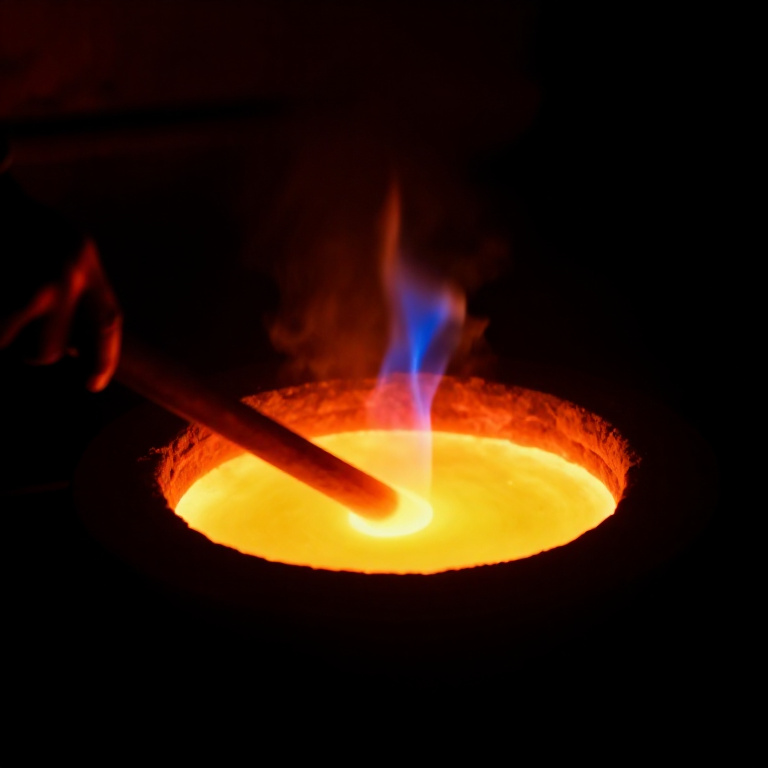


Puddling Wrought Iron from Pig Iron — Burning Out the Carbon in a Reverberatory Furnace
Pig iron straight from the blast furnace is cheap and plentiful but nearly useless for anything that must bend or take a blow: its high carbon makes it brittle as glass. To turn it into the tough, malleable wrought iron that built the railways and bridges of the 1800s, the carbon has to be burned out. Henry Cort's puddling process, patented in 1784, did exactly that — at scale, with coal.
The trick is the reverberatory furnace, which keeps the fuel separate from the metal. Coal burns in a side firebox and the flame is drawn over a low bridge and reflected down off the furnace roof onto a hearth of pig iron, so the sulphurous coal smoke never touches the iron. A workman called a puddler stirs the molten bath through a small door with a long iron rabble, exposing every part of it to the air until the carbon oxidises away.
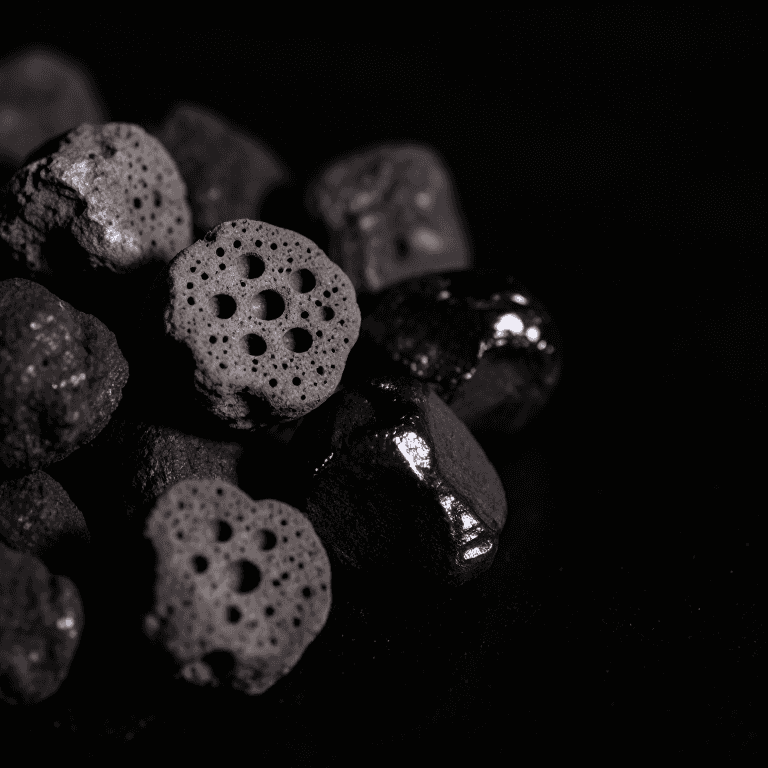
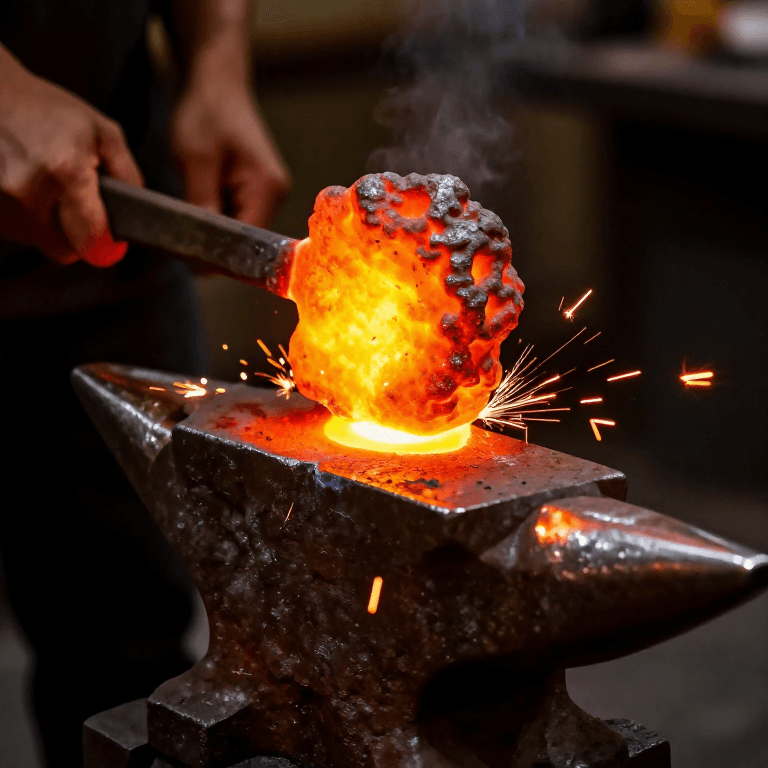
As the carbon leaves, something strange happens: the purer iron's melting point rises above the furnace temperature, so the metal grows stiff and pasty even in the heat. The puddler gathers it into spongy balls, which are then hammered and rolled to squeeze out the slag and consolidate the fibres into bars of wrought iron.
Instruções
Understand the goal
Understand the goal
Build a reverberatory furnace
Build a reverberatory furnace
Materiais para este passo:
 Tijolos refratários100 peças
Ferramentas necessárias:
 Colher de jardineiro
Fettle the hearth
Fettle the hearth
Materiais para este passo:
 Carepa de ferro5 kg
Fire the furnace with coal
Fire the furnace with coal
Materiais para este passo:
 Carvão betuminoso60 kg
Charge and melt the pig iron
Charge and melt the pig iron
Materiais para este passo:
 Lingotes de ferro-gusa30 kg
Puddle the bath
Puddle the bath
Ferramentas necessárias:
 Gancho de pudelagem
Bring on the boil
Bring on the boil
Let it come to nature
Let it come to nature
Ferramentas necessárias:
Gancho de pudelagemBall up the iron
Ball up the iron
Ferramentas necessárias:
Gancho de pudelagemShingle the ball
Shingle the ball
Ferramentas necessárias:
 Marreta
Roll into bars
Roll into bars
Ferramentas necessárias:
 Laminador
Identify wrought iron
Identify wrought iron
Ferramentas necessárias:
 Martelo
Materiais
4- 100 peçasReferência
- 5 kgReferência
- 60 kgReferência
- Referência
Materiais de Blueprints conectados

Blueprints relacionados
Estes blueprints compartilham conhecimento — técnicas, materiais ou princípios

CC0 Domínio Público
Este blueprint é liberado sob CC0. Você é livre para copiar, modificar, distribuir e usar este trabalho para qualquer finalidade, sem pedir permissão.
Apoie o Maker comprando produtos através do Blueprint, onde ele ganha uma Comissão Maker definida pelos vendedores, ou crie uma nova versão deste Blueprint e inclua-o como conexão no seu próprio Blueprint para compartilhar receita.