Colaboração
ARTE
BELEZA E BEM-ESTAR
ARTESANATO
CULTURA E HISTÓRIA
ENTRETENIMENTO
MEIO AMBIENTE
COMIDA E BEBIDAS
ENGENHARIA REVERSA
CIÊNCIAS
ESPORTES
TECNOLOGIA
TECNOLOGIA VESTÍVEL
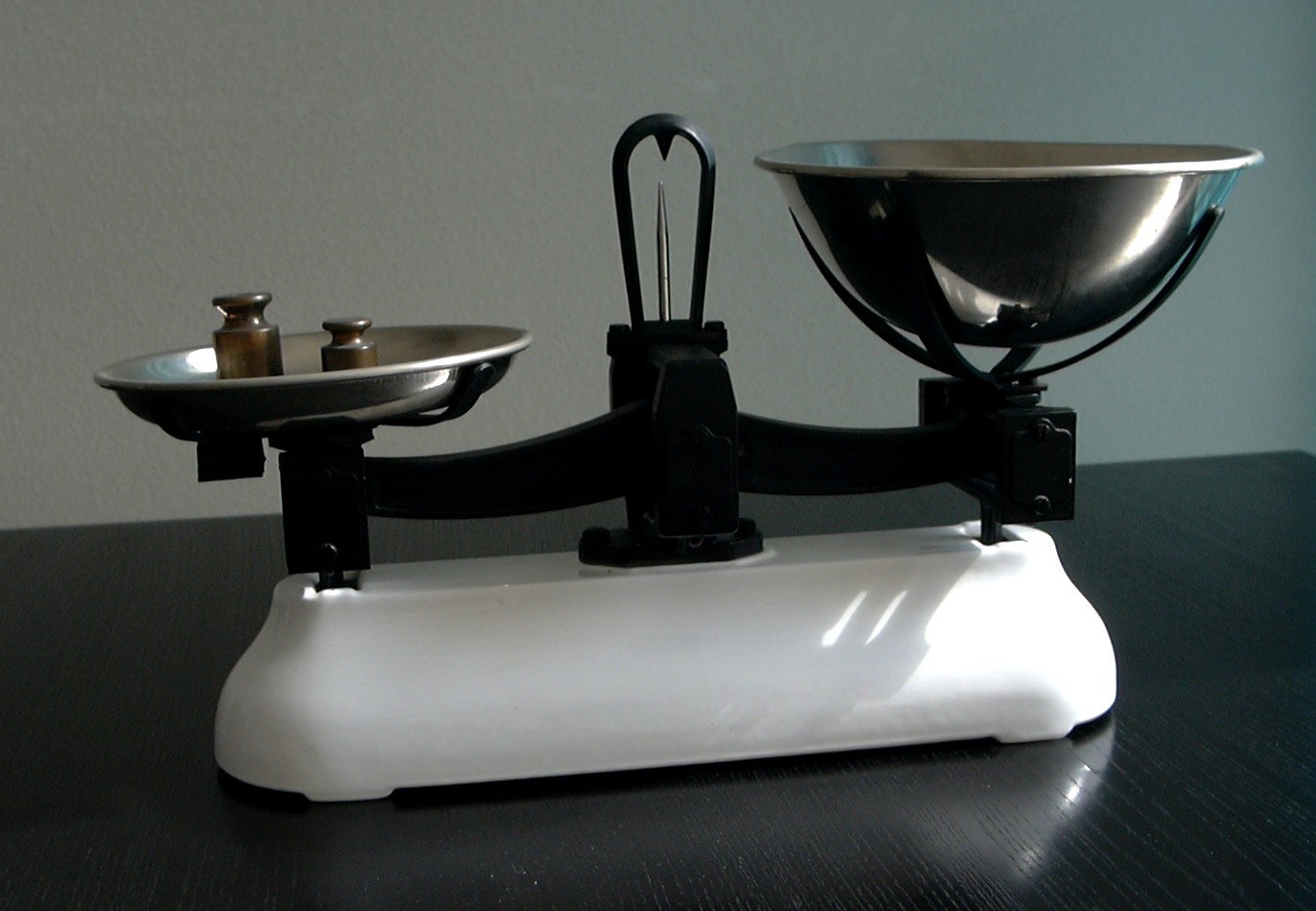


Roberval Balance: a Parallelogram Frame That Keeps Both Pans Level (Roberval, 1669)
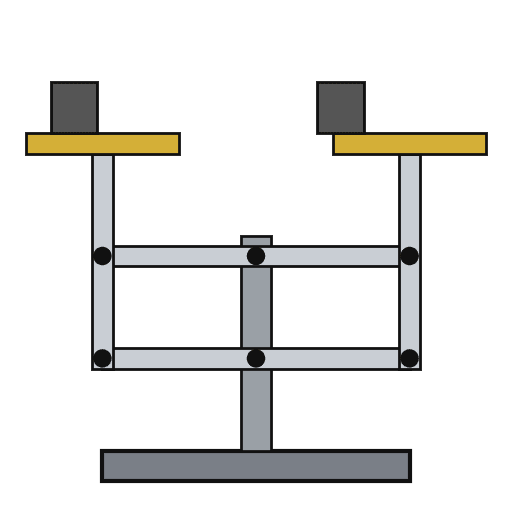
The equal-arm balance rebuilt as a hinged frame. Gilles Personne de Roberval showed it to the Académie Royale des Sciences in 1669. Two bars pivot on a post, joined at their ends by two upright bars into a hinged rectangle; each pan is fixed to an upright, so it stays level as the frame tilts.
Result: a balance on which a weight weighs the same wherever it sits on its pan, even when both loads are on the same side of the post. Later shop scales of the Roberval type keep this frame.
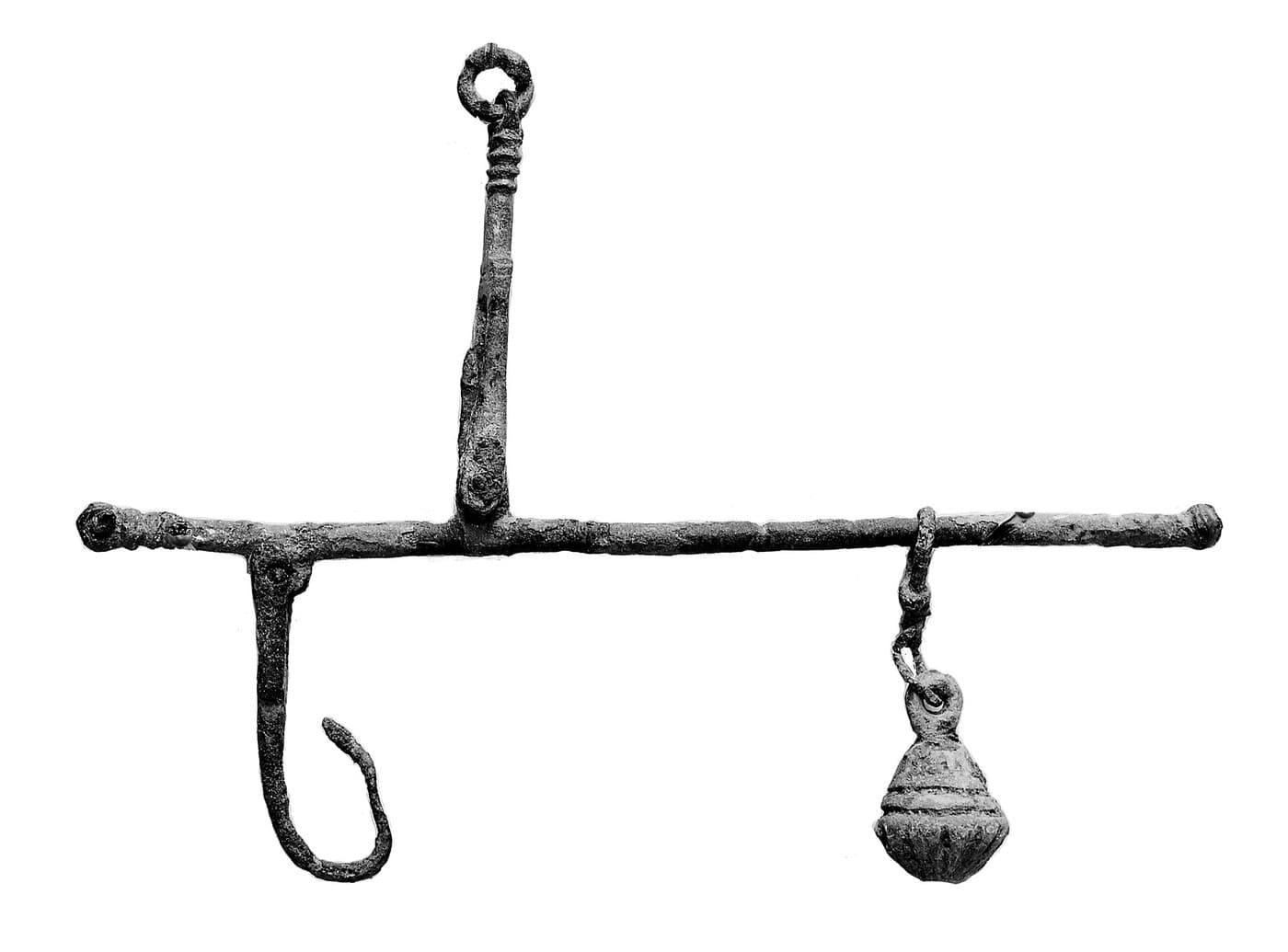
Source: the 1670 Journal des savants account as given by J. F. Hall, Two Hundred Years of Analyzing Roberval's Balance, Caltech Report 2024-01. Unknown: materials and sizes. Picture: Wikimedia Commons.
Intermediário
1 day
Instruções
1
1
Make the six frame pieces and the post
Make the six frame pieces and the post
Make a post standing on a pedestal, a top bar and a bottom bar of the same length, and two upright bars of the same length as each other. Mark each horizontal bar at its exact middle: its two arms must be equal. Make two flat platforms (the pans). Not given: the material and the sizes.
Materiais para este passo:
 Material desconhecido1 bars, post, pedestal, platforms
Ferramentas necessárias:
 Dimensões desconhecidas
2
2
Pin the frame to the post
Pin the frame to the post
Pin the top bar to the post at its middle, and the bottom bar to the post at its middle, directly below, so both can turn. Pin the left upright to the left ends of both bars, and the right upright to the right ends. The four bars now form a rectangle that can lean into a parallelogram; the uprights always stay upright. Tight pins bind unless every length is exact, so Hall advises slotting the lower hole in the post upright: it may slide up and down but not sideways. Ours: drill the pin holes by hand.
Materiais para este passo:
Material desconhecido1 six pinsFerramentas necessárias:
 Berbequim de mão
3
3
Fix the pans to the uprights
Fix the pans to the uprights
Fix one platform rigidly to each upright, so it cannot turn. The weights sit on the platforms or hang from them. As the frame tilts, the uprights move straight up and down and the platforms stay level.
Materiais para este passo:
Material desconhecido1 fixings4
4
Test it
Test it
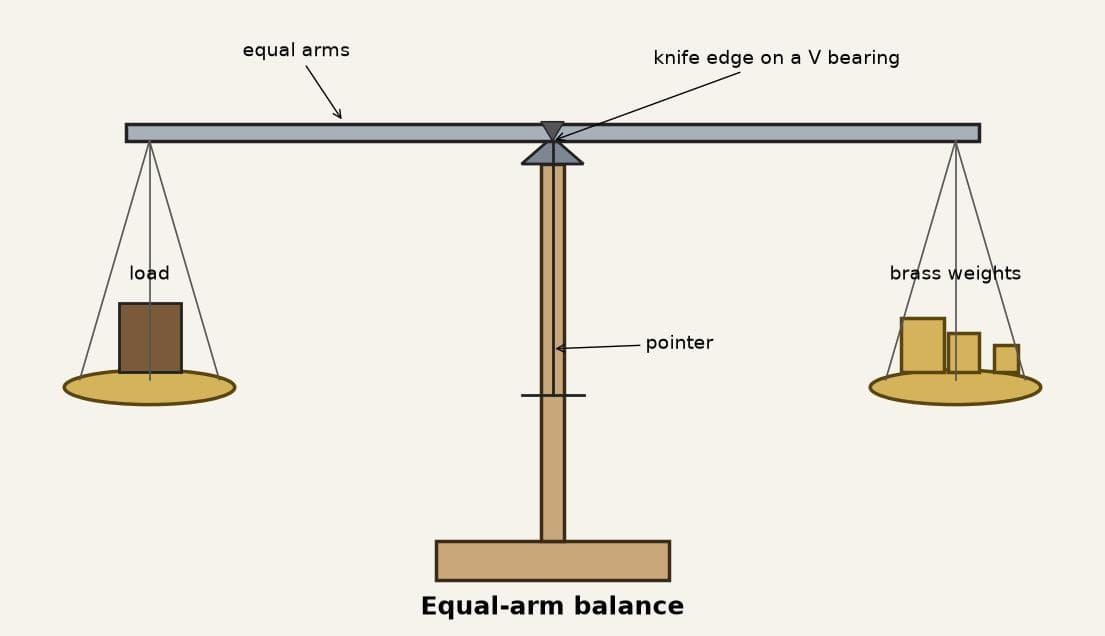
With the pans empty the frame should rest level. Put equal weights on the two pans: they balance. Now slide one weight to the edge of its pan, or to the far side of the post: they still balance. With unequal arms, weights balance when their ratio is the inverse of the arm lengths.
Ferramentas necessárias:
 Peso
Ferramentas necessárias
3- Referência
- Referência
- Referência
Materiais de Blueprints conectados
Este projeto faz
Blueprints relacionados
Estes blueprints compartilham conhecimento — técnicas, materiais ou princípios

CC0 Domínio Público
Este blueprint é liberado sob CC0. Você é livre para copiar, modificar, distribuir e usar este trabalho para qualquer finalidade, sem pedir permissão.
Apoie o Maker comprando produtos através do Blueprint, onde ele ganha uma Comissão Maker definida pelos vendedores, ou crie uma nova versão deste Blueprint e inclua-o como conexão no seu próprio Blueprint para compartilhar receita.