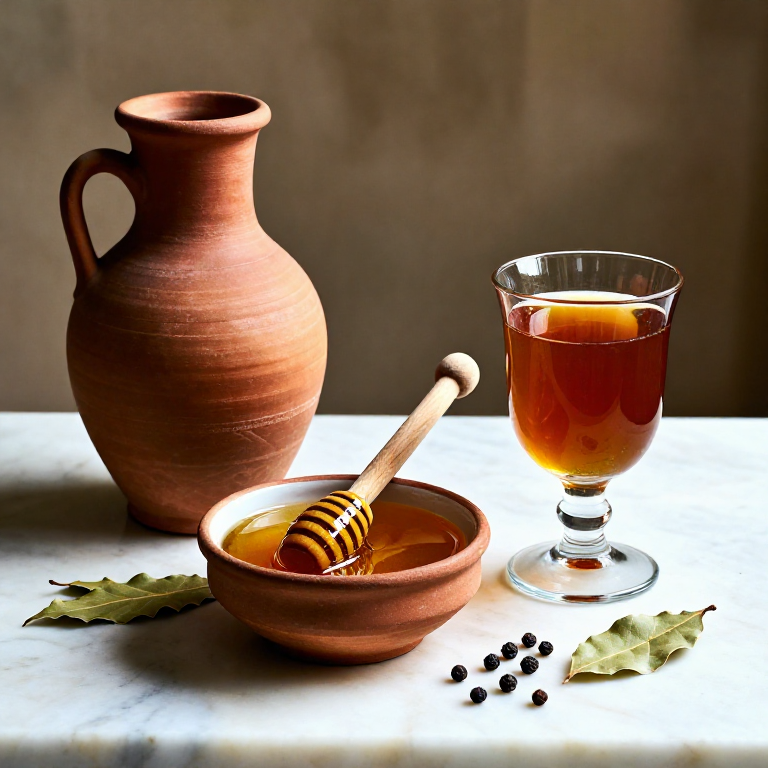


Making Roman Mulsum Spiced Honey Wine — Ancient Aperitif
Instruções
Warm and Dissolve the Honey
Warm and Dissolve the Honey
Measure the honey into a clean mixing vessel. Columella specifies the finest Attic honey from Mount Hymettus, but any raw, strong-flavoured honey works well — thyme honey or wildflower honey provides the complexity Roman writers praised. Gently warm approximately 200 ml of the wine (do not boil — heating above 70 degrees Celsius destroys delicate flavour compounds and drives off alcohol) and pour it over the honey. Stir thoroughly with a wooden spoon until the honey is completely dissolved, with no layers of thick honey remaining at the bottom. The warm wine acts as a solvent, and the mixture should become a uniform amber liquid. Allow it to cool to room temperature before proceeding.
Materiais para este passo:
 Mel200-250 grams g
 Vinho branco seco200 ml ml
Ferramentas necessárias:
 Frasco de vidro para infusões
 Conjunto de colheres de pau
Blend with Remaining Wine
Blend with Remaining Wine
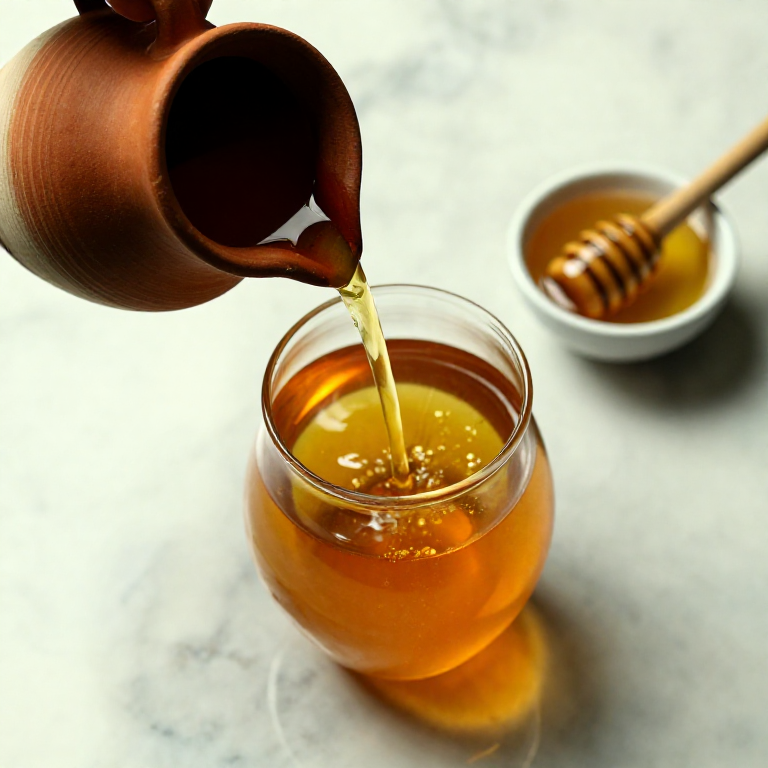
Add the remaining wine to the honey solution and stir gently until thoroughly combined. Columella's ratio of one part honey to four parts wine (by volume) yields a moderately sweet mulsum — Pliny the Elder notes that some hosts preferred a drier blend with less honey. Taste and adjust: the honey should be clearly present but not cloying, and the wine's acidity should balance the sweetness. If using a very dry wine, you may wish to add slightly more honey. Romans typically used white wines from Campania or light reds from the Alban Hills for mulsum, avoiding heavily resinated wines (retsina-style) that would clash with the honey.
Materiais para este passo:
Vinho branco seco800 ml remaining mlFerramentas necessárias:
Conjunto de colheres de pauAdd Spices
Add Spices
Lightly crush the black peppercorns using the flat of a knife or a mortar and pestle — just enough to crack them open, not grind them to powder. Add the cracked peppercorns and bay leaf to the mulsum. If using saffron, add a small pinch of threads. Apicius recommends pepper in several wine preparations, and archaeological evidence from Pompeii confirms that pepper was widely available in Roman kitchens despite being imported from India at considerable expense. Stir the spices into the wine and cover the vessel with a clean cloth. The spices will infuse over the coming days, so start with less than you think necessary — it is easier to add spice than to remove it.
Materiais para este passo:
 Grãos de pimenta-preta6-8 corns peça
 Folha de louro1 leaf peça
 Estigmas de açafrãosmall pinch pinch
Rest and Infuse
Rest and Infuse
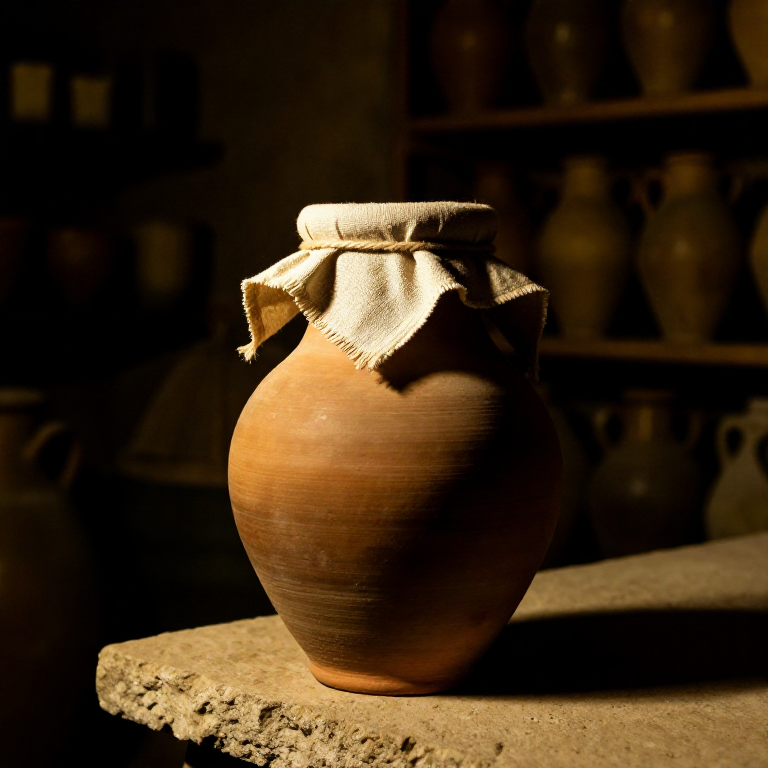
Store the covered vessel in a cool, dark place for 7 to 14 days, stirring gently every two to three days. During this resting period, the honey fully integrates with the wine and the spice flavours infuse into the liquid. Taste after seven days — the pepper should provide a gentle warmth and the bay leaf an aromatic background note without dominating the honey-wine character. Columella advises that mulsum improves with brief ageing but does not keep as long as unblended wine, as the sugars from the honey make it susceptible to secondary fermentation in warm conditions. If you notice bubbling (indicating refermentation by residual yeasts feeding on the honey sugars), move the vessel to a cooler location or strain and serve promptly.
Strain and Serve
Strain and Serve
Pour the mulsum through a fine-mesh strainer into clean glass bottles, removing the peppercorns, bay leaf, and any sediment. The finished mulsum should be a clear golden-amber colour with a sweet, spicy aroma. Serve at cool room temperature in small cups — Romans drank mulsum as a gustatio (appetiser course) beverage, typically alongside eggs, olives, and small dishes before the main course. Store sealed bottles in a cool place and consume within two to four weeks, as the honey sugars will eventually cause spoilage or refermentation. Mulsum was considered a drink of refinement — Martial, Pliny, and Petronius all mention it in the context of elegant dining.
Ferramentas necessárias:
 Coador de chá de malha fina
 Garrafas de cerveja âmbar
Materiais
6- 200-250 grams gReferência
- 200 ml mlReferência
- 6-8 corns peçaReferência
- 1 leaf peçaReferência
- small pinch pinchReferência
Ferramentas necessárias
7- Referência
- Referência
- Referência
- Referência
- Referência
- Referência
- Referência
CC0 Domínio Público
Este blueprint é liberado sob CC0. Você é livre para copiar, modificar, distribuir e usar este trabalho para qualquer finalidade, sem pedir permissão.
Apoie o Maker comprando produtos através do Blueprint, onde ele ganha uma Comissão Maker definida pelos vendedores, ou crie uma nova versão deste Blueprint e inclua-o como conexão no seu próprio Blueprint para compartilhar receita.