Colaboração
ARTE
BELEZA E BEM-ESTAR
ARTESANATO
CULTURA E HISTÓRIA
ENTRETENIMENTO
MEIO AMBIENTE
COMIDA E BEBIDAS
ENGENHARIA REVERSA
CIÊNCIAS
ESPORTES
TECNOLOGIA
TECNOLOGIA VESTÍVEL
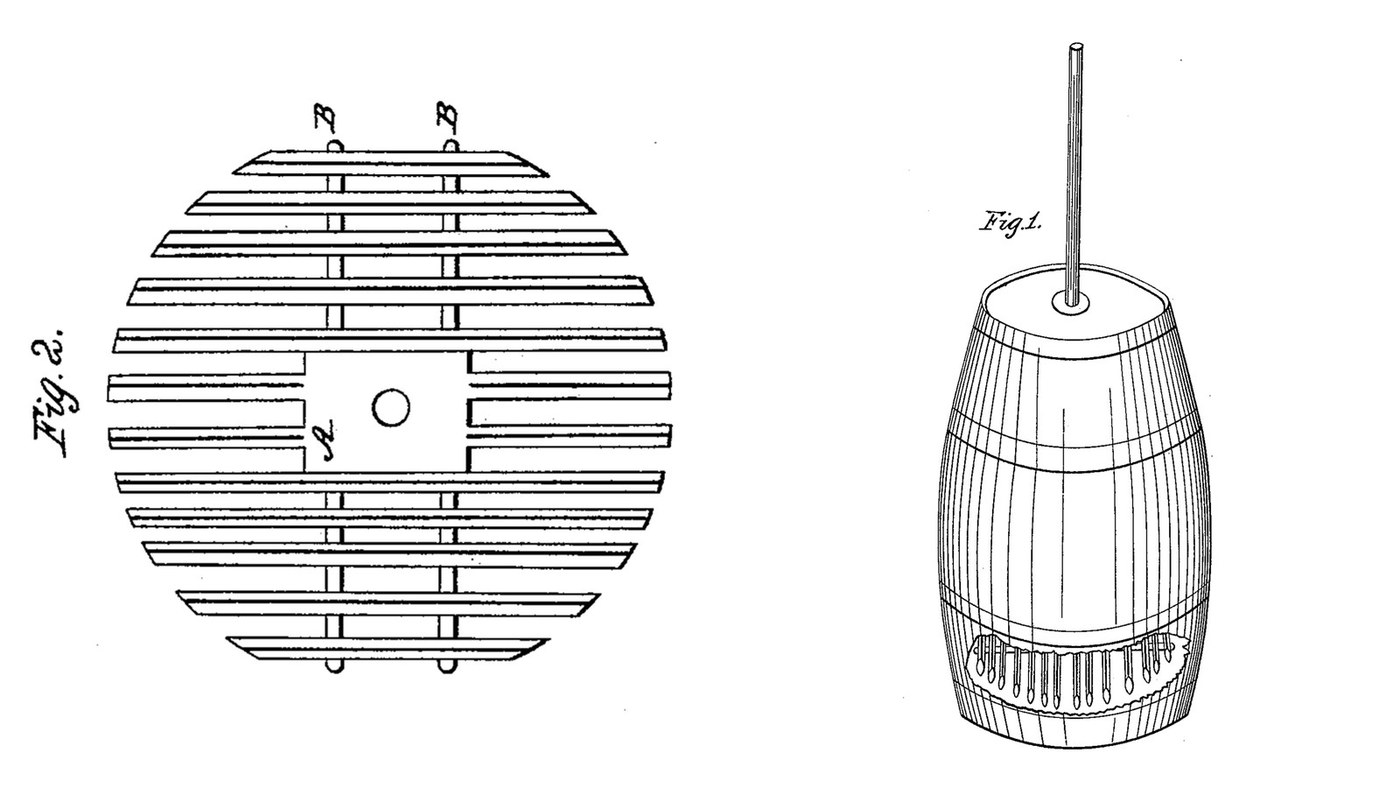


Oval-Breaker Rod Dasher: Breakers Strung on Two Rods, Add More for More Agitation
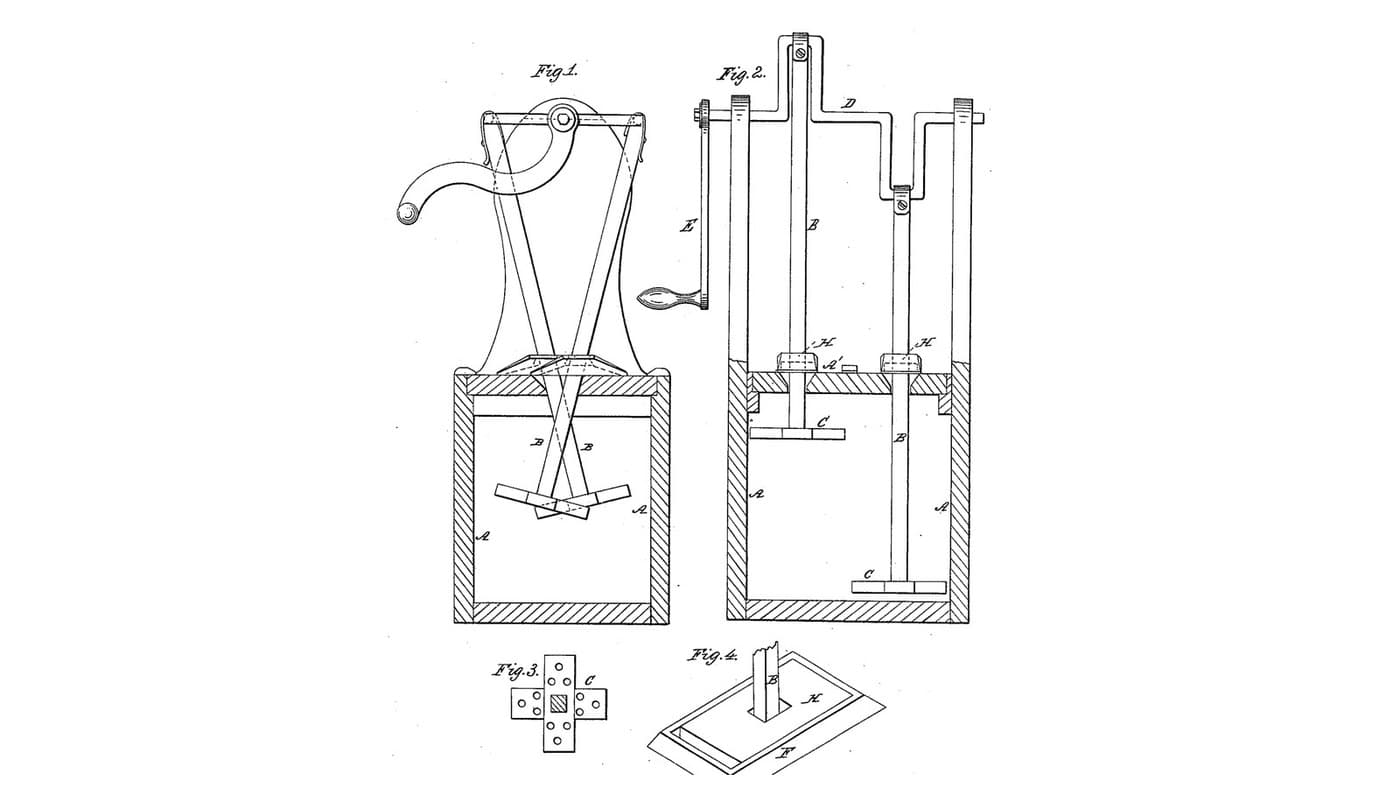
Alfred Rose of Penn Yan, New York, received US 25,914, dated 25 October 1859, for a churn-dasher for an ordinary up-and-down churn. A centre piece takes the staff, and breakers of oval section, with nearly sharp upper and lower edges, are strung beside it on two parallel rods, their ends cut to a circle. Putting on more breakers narrows the gaps between them and gives more agitation.
The patent gives no sizes; every size here is ours.
Iniciante
About a day, plus printing
Instruções
1
1
Breaker lengths, and how open the dasher is
Breaker lengths, and how open the dasher is
A carregar o notebook Jupyter…
2
2
An up-and-down dasher of crossed boards, a few weeks before
An up-and-down dasher of crossed boards, a few weeks before
Gilpatrick's dashers are two boards crossed and bored with holes. Rose builds his from breakers strung on rods, so the openings can be changed.
3
3
Read US 25,914
Read US 25,914
"They may be adjusted to the width required to give the necessary agitation and if more agitation is required put on more of the breakers, thereby reducing the space between them and any amount of agitation required may by this means be produced."
4
4
Print the spacers
Print the spacers
Sixteen spacer rings 12 mm across and 8 mm long, bored 6.4 mm, to go on the rods between the pieces. Print more, or shorter ones, to change the gaps. PETG, 0.2 mm layers, 100 % infill.
5
5
Centre piece A
Centre piece A
Draw a 248 mm circle on 30 mm hardwood. Cut the centre piece 64 mm wide right across it, then cut away its middle down to a 90 mm block, leaving two prongs 12 mm wide each side, 20 mm apart, out to the circle. Bore a 31 mm hole down through the block for the staff, and two 6.6 mm holes across it, 50 mm apart, for the rods. Shave the prongs to an oval 12 x 24 mm, their upper and lower edges nearly sharp.
Materiais para este passo:
 Tábua de madeira de lei1 peça
 Cola de madeira1 peça
Ferramentas necessárias:
 Bússola
 Serra de mesa
 Serra tico-tico
 Conjunto de brocas de pá
 Berbequim sem fios
 Jogo de brocas
 Plaina de raspar curvas
 Lixa
6
6
Breakers and rods B
Breakers and rods B
Cut eight breakers 12 x 24 mm from hardwood, two each of 230, 210, 179 and 129 mm long along their middles, ends trimmed to the circle. Shave each to the same oval with nearly sharp edges, and bore two 6.6 mm holes through each, 50 mm apart across their middles. Cut two 6 mm stainless threaded rods 236 mm long, thread the breakers and spacers on either side of the centre piece, and close each end with a cap nut.
Materiais para este passo:
Tábua de madeira de lei1 peça Varão roscado1 peça
 Porca de segurança com anel de nylon4 peças
 Filamento PETG1 peça
Ferramentas necessárias:
 Impressora 3D de filamento (FDM)Serra de mesaPlaina de raspar curvasBerbequim sem fiosJogo de brocas
 Serra de arco para metais
 Limas (lima de mão)
 Chave inglesa ajustável
 Fita métrica
7
7
The build in 3D
The build in 3D
FreeCAD model of the dasher: the centre piece with its prongs and the staff's foot, the eight breakers with their ends on a 248 mm circle, the two rods, spacers and cap nuts.
8
8
Churn
Churn
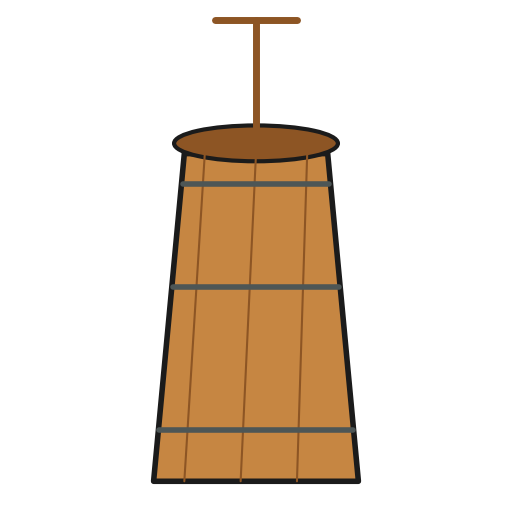
Fit a 30 mm hardwood staff into the centre piece and wedge it. Use a dash churn at least 260 mm across inside where the dasher works. Pour in cream at about 15 °C to a third of the churn's height, checked with the thermometer, put the dasher in and the lid on, and work the staff up and down, timing it. When the butter comes, lift the dasher out, drain the buttermilk, wash the butter in cold water until it runs clear, salt and weigh it. If it churns slowly, add breakers next time to close the gaps.
Materiais para este passo:
 Natas para bater6 l
 Sal marinho grosso1 peça
 Cavilhas de madeira dura1 peçaCola de madeira1 peça
Ferramentas necessárias:
 Batedeira de manteiga
 Termómetro de sonda permanente
 Cronómetro
 Balança digital de cozinha
 Taça grande de aço inoxidável
 Água
9
9
Troubleshooting
Troubleshooting
Rod dasher troubleshooting.
Flow
Loading...
10
10
History and honest limits
History and honest limits
**Alfred Rose** of Penn Yan, Yates County, New York, US 25,914, 25 October 1859, "Churn-Dasher". He claimed "the churn dasher when made in the manner substantially as specified". The patent gives no sizes and leaves the number of breakers to the maker; every size here is ours, and his drawing shows five breakers each side where ours has four.
Materiais
8- 1 peçaReferência
- 2 peçasReferência
- 1 peçaReferência
- Referência
- 1 peçaReferência
- Referência
- 1 peçaReferência
- 1 peçaReferência
Ferramentas necessárias
19- Referência
- 1 vendor sell this, none ship to you yetReferência
- 1 vendor sell this, none ship to you yetReferência
- Referência
- 1 vendor sell this, none ship to you yetReferência
- Referência
- Referência
- Referência
- Referência
- Referência
- Referência
- Referência
- 1 vendor sell this, none ship to you yetReferência
- Referência
- Referência
- Referência
- Referência
- Referência
- Referência
Ficheiros de design
2

Blueprints relacionados
Estes blueprints compartilham conhecimento — técnicas, materiais ou princípios


CC0 Domínio Público
Este blueprint é liberado sob CC0. Você é livre para copiar, modificar, distribuir e usar este trabalho para qualquer finalidade, sem pedir permissão.
Apoie o Maker comprando produtos através do Blueprint, onde ele ganha uma Comissão Maker definida pelos vendedores, ou crie uma nova versão deste Blueprint e inclua-o como conexão no seu próprio Blueprint para compartilhar receita.