

Building a Safety Bicycle — Chain Drive, Equal Wheels, and Personal Freedom
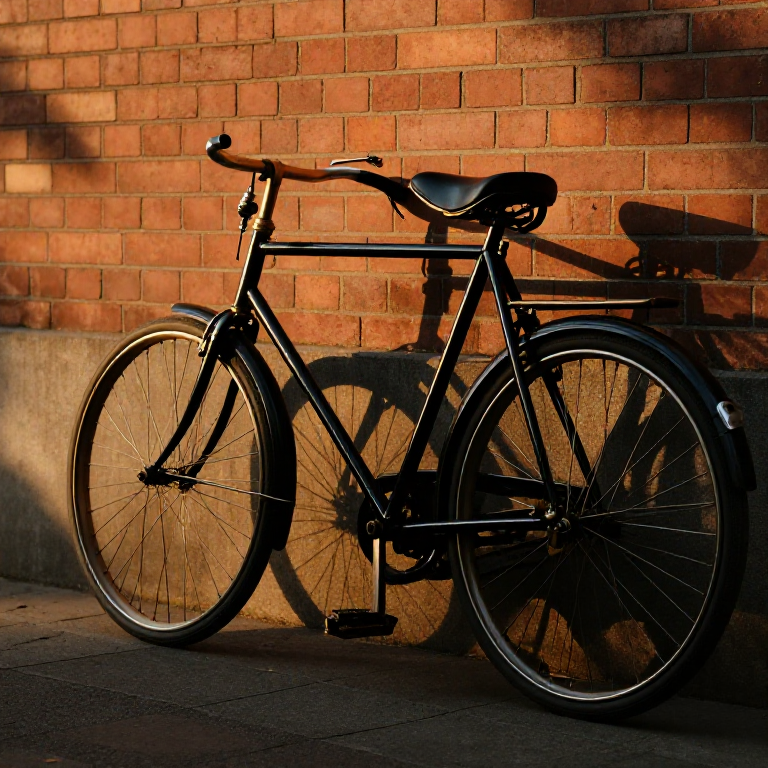
The bicycle that everyone rides today was settled in the 1880s and is still called, in the trade, the safety bicycle — to distinguish it from the terrifying high penny-farthing it replaced. Two equal wheels, a diamond frame, a chain driving the rear wheel, and soon air-filled tyres made cycling safe, fast, and available to ordinary people.
Each feature solves a problem. Equal wheels and a low frame mean you can put a foot down and cannot be pitched over the handlebars. The chain and gearing let a small wheel travel fast without the giant front wheel of the penny-farthing. The diamond frame, built of brazed steel tubes, is astonishingly light and strong for its weight. And Dunlop's pneumatic rubber tyres turned a bone-shaking ride into a smooth one.
The safety bicycle was more than transport. Cheap, simple, and needing no horse or fuel, it gave working people and especially women a freedom of movement they had never had — which is why it is often credited with as much social change as mechanical.
Instruções
Understand the safety design
Understand the safety design
Braze the diamond frame
Braze the diamond frame
Materiais para este passo:
 Tubo de aço4 metros
Ferramentas necessárias:
 Maçarico de brasagem
Build the wheels
Build the wheels
Materiais para este passo:
 Raios de aço72 peças
 Aro de bicicleta (alumínio)2 peças
Ferramentas necessárias:
 Chave de raios
Fit pneumatic tyres
Fit pneumatic tyres
Materiais para este passo:
 Pneu de borracha2 peças
Build the chain drive
Build the chain drive
Materiais para este passo:
 Corrente de rolos1 peça
 Roda pedaleira1 conjunto
 Roda dentada1 conjunto
Fit the bottom bracket and cranks
Fit the bottom bracket and cranks
Materiais para este passo:
 Rolamentos de esferas1 conjunto
Set up the steering
Set up the steering
Materiais para este passo:
 Guiador1 peça
Fit brakes
Fit brakes
Materiais para este passo:
 Pinça de travão2 peças
Fit the saddle
Fit the saddle
Materiais para este passo:
 Selim de couro1 peça
Assemble and true
Assemble and true
Ferramentas necessárias:
 Chave de tubos
Test and tune
Test and tune
Ferramentas necessárias:
Chave de tubosAppreciate the freedom it gave
Appreciate the freedom it gave
Materiais
11- 4 metrosReferência
- 72 peçasReferência
- 2 peçasReferência
- 2 peçasReferência
- 1 peçaReferência
- 1 conjuntoReferência
- 1 conjuntoReferência
- 1 conjuntoReferência
- 1 peçaReferência
- 2 peçasReferência
- 1 peçaReferência
Ferramentas necessárias
3- Referência
- Referência
- Referência
Blueprints relacionados
Estes blueprints compartilham conhecimento — técnicas, materiais ou princípios

CC0 Domínio Público
Este blueprint é liberado sob CC0. Você é livre para copiar, modificar, distribuir e usar este trabalho para qualquer finalidade, sem pedir permissão.
Apoie o Maker comprando produtos através do Blueprint, onde ele ganha uma Comissão Maker definida pelos vendedores, ou crie uma nova versão deste Blueprint e inclua-o como conexão no seu próprio Blueprint para compartilhar receita.