ARTE
BELEZA E BEM-ESTAR
ARTESANATO
CULTURA E HISTÓRIA
ENTRETENIMENTO
MEIO AMBIENTE
COMIDA E BEBIDAS
ENGENHARIA REVERSA
CIÊNCIAS
ESPORTES
TECNOLOGIA
TECNOLOGIA VESTÍVEL
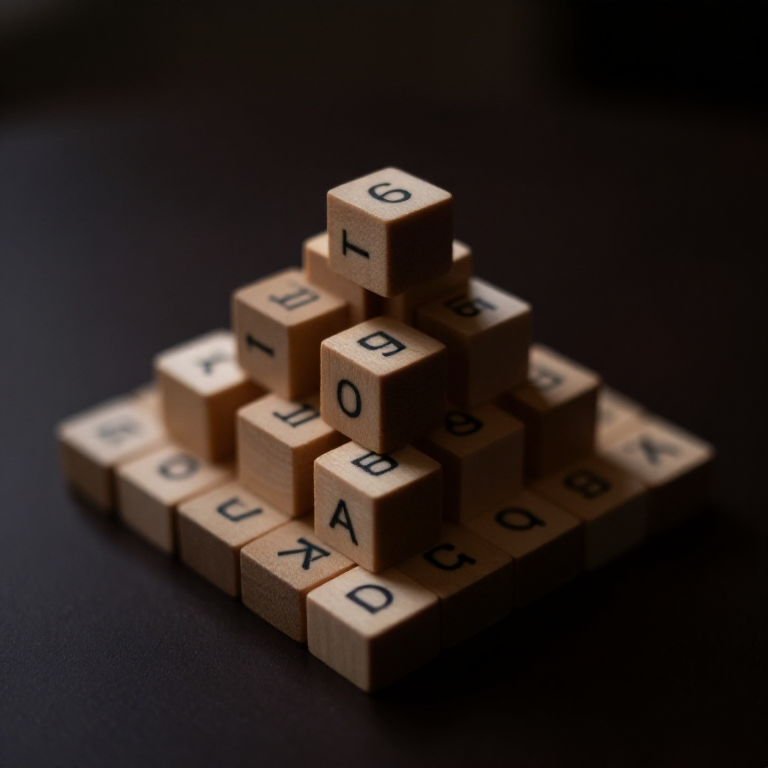


Pascal's Triangle — Build a Pyramid of Numbers by Adding
A hands-on maths project: build a triangle of numbers where each one is the sum of the two above it, then hunt for the patterns hiding inside -- powers of two, the Fibonacci numbers, even a fractal. A Python cell reveals the patterns and a compendium links them to counting and chance.
Iniciante
30 minutes
Instruções
1
1
A pyramid of numbers
A pyramid of numbers
Pascal's triangle starts with a 1 at the top, and every number below is the sum of the two just above it. It is simple to build but packed with hidden patterns.
2
2
Build it on card
Build it on card
On a large sheet, write a 1 at the top. In the next row write 1 and 1. For every row after, put a 1 at each end, and in each gap write the SUM of the two numbers diagonally above it. Fill in eight or nine rows. (You can lay out coins or counters and combine piles instead of writing, if you like.)
Materiais para este passo:
 Conjunto de cartolinas sortidas1 peça
Ferramentas necessárias:
 Jogo de lápis de grafite
3
3
Hunt the patterns
Hunt the patterns
Add up each row: 1, 2, 4, 8, 16 -- the powers of two! Now shade in only the ODD numbers and step back: a triangular fractal pattern appears. Add the numbers along shallow diagonals and you get the Fibonacci sequence. Mark these discoveries on your triangle.
Ferramentas necessárias:
 Calculadora
4
4
Reveal them with code
Reveal them with code
A carregar o notebook Jupyter…
Ferramentas necessárias:
 Computador de secretária
5
5
Compendium: counting and chance
Compendium: counting and chance
What the pyramid hides. (1) Each row is the answer to 'how many ways can you choose k things from n?' -- the numbers are the 'combinations'. (2) The rows are also the coefficients you get expanding (a+b) to a power, the binomial theorem. (3) Shading the odd numbers draws the Sierpinski fractal -- pure pattern out of pure adding. (4) Because the triangle counts how many ways things can happen, Pascal and Fermat used it in 1654 to work out the odds in games of chance, launching the whole of probability and, from it, modern statistics. Though named for Pascal, it was known centuries earlier in India, Persia and China.
Materiais
2- Referência
- 1 folhaReferência
Ferramentas necessárias
3- Referência
- Referência
- Referência
Blueprints relacionados
Estes blueprints compartilham conhecimento — técnicas, materiais ou princípios
CC0 Domínio Público
Este blueprint é liberado sob CC0. Você é livre para copiar, modificar, distribuir e usar este trabalho para qualquer finalidade, sem pedir permissão.
Apoie o Maker comprando produtos através do Blueprint, onde ele ganha uma Comissão Maker definida pelos vendedores, ou crie uma nova versão deste Blueprint e inclua-o como conexão no seu próprio Blueprint para compartilhar receita.