Colaboração
ARTE
BELEZA E BEM-ESTAR
ARTESANATO
CULTURA E HISTÓRIA
ENTRETENIMENTO
MEIO AMBIENTE
COMIDA E BEBIDAS
ENGENHARIA REVERSA
CIÊNCIAS
ESPORTES
TECNOLOGIA
TECNOLOGIA VESTÍVEL
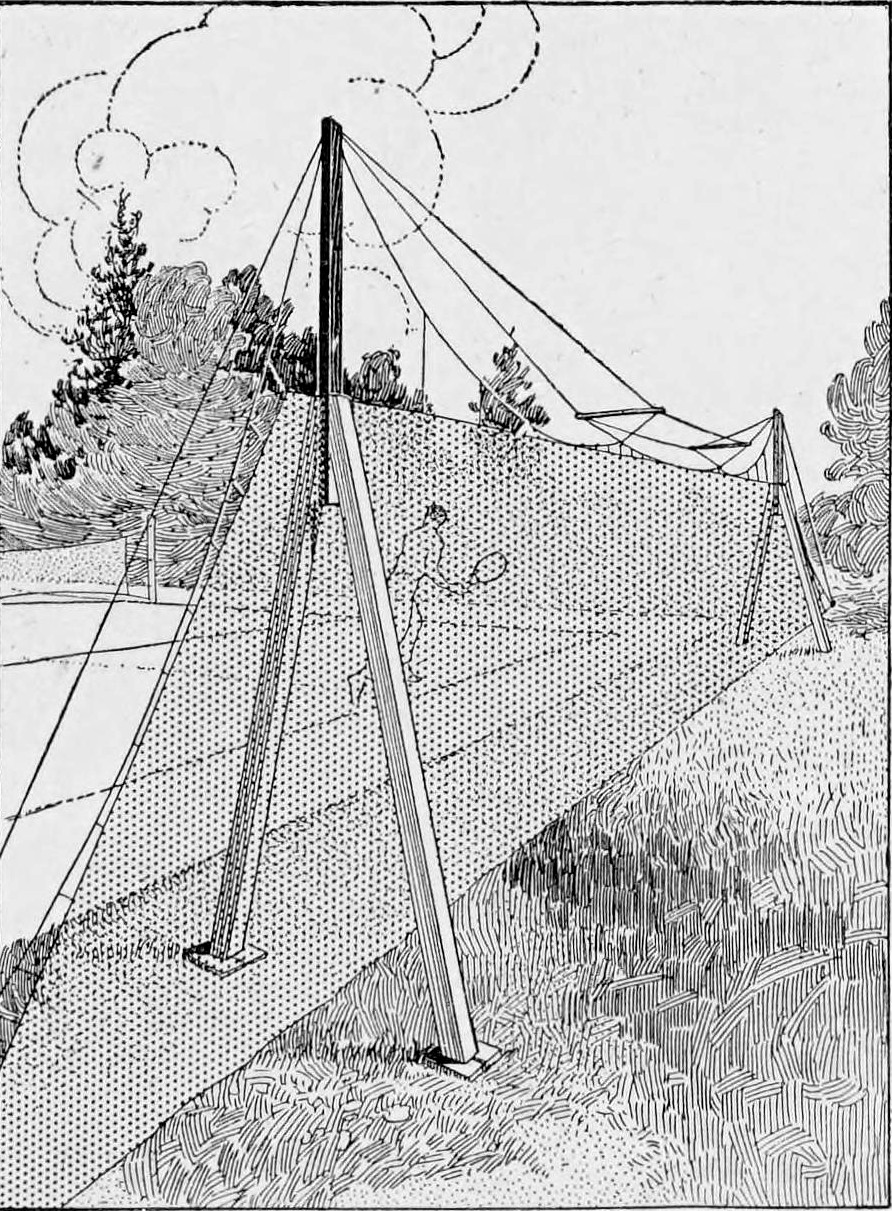


Knock-Down Tennis-Court Backstop: Guyed Yellow-Pine Towers on the Ground and Hooked-Down Netting (Boy Mechanic, 1919)
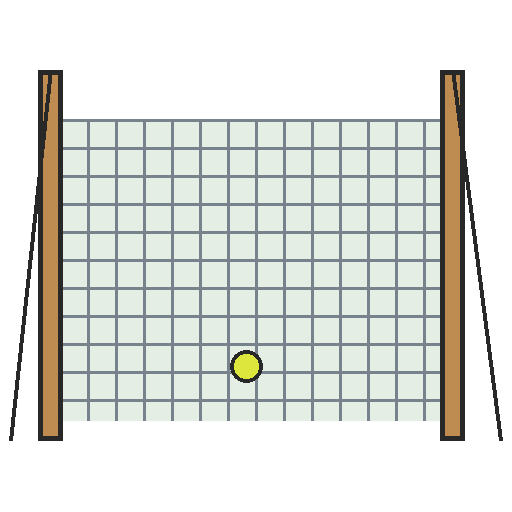
Edward R. Smith's take-down tennis backstop from The Boy Mechanic, Book 3 (1919): two towers about 14 ft high and 50 ft apart, of 4 x 4 and 2 x 4 in yellow pine, stand on brick footings and are guyed with heavy wire; the wire netting hangs from supporting wires on 2 ft crossarms and is hooked to tent stakes at the bottom, so the whole rig comes down between seasons.
Intermediário
About 2 days
Instruções
1
1
Sizes and wire gauges
Sizes and wire gauges
A carregar o notebook Jupyter…
2
2
Read The Boy Mechanic, Book 3
Read The Boy Mechanic, Book 3
"Instead of setting the supports in the ground, they are set on the ground, and guyed by a system of wire braces."
3
3
Build the towers and footings
Build the towers and footings
Build two towers about 14 ft high from sound 4 by 4 in and 2 by 4 in yellow-pine timber, to stand 50 ft apart. Make brick foundations, anchored into the ground, for them to stand on, and sink anchors in the ground beyond each end.
Materiais para este passo:
 Madeira de pinho6 peças
 Pregos1 peça
 Parafuso de carroçaria4 peças
 Tijolo20 peças
Ferramentas necessárias:
 Serrote
 Arco de pua e broca
 Martelo
 Pá
 Fita métrica
4
4
Guy the towers
Guy the towers
Fasten end braces of heavy wire (No. 9) to the top of each tower and guy them to the sunken anchors; they carry the weight of the netting and let a ladder lean safely on the guyed end of a tower.
Materiais para este passo:
 Arame de aço galvanizado1 peça
Ferramentas necessárias:
 Escada de mão de madeira
 Alicate de bico chato
5
5
Rig the supporting wires and hang the netting
Rig the supporting wires and hang the netting
Run the supporting wires (No. 20 gauge, as printed) between the towers on crossarms of 1 by 1 in wood, 2 ft long, which stop side motion at the top; wire them to the netting and draw them up so it is fairly taut. Add more supporting wires with vertical leaders to the netting to draw its whole length taut. Let the netting run under the towers, held there by wires, nearly to the end guys.
Materiais para este passo:
 Ripa de madeira macia2 peçasArame de aço galvanizado1 peça
 Rede de arame galvanizado1 peça
Ferramentas necessárias:
Escada de mão de madeiraAlicate de bico chatoSerrote6
6
Hook down the bottom and mark the guys
Hook down the bottom and mark the guys
Hold the lower edge of the netting down with hooks pinned to the ground by tent stakes, so it can be unhooked to mow. Tie a white flag to each guy wire about 6 ft from the ground so players see it.
Materiais para este passo:
 Arame de ferro1 peça
 Estaca de tenda12 peças
 Bandeira2 peças
Ferramentas necessárias:
MarteloAlicate de bico chato7
7
Season and troubleshooting
Season and troubleshooting
Backstop troubleshooting.
Flow
Loading...
8
8
History and honest limits
History and honest limits
From "A Knock-Down Tennis-Court Backstop" by Edward R. Smith, in **The Boy Mechanic, Book 3**, Popular Mechanics, 1919 (Project Gutenberg 71856; checked on the archive.org scan boymechanic0003unse, p. 189). He gives no netting height or mesh, no tower framing details and no anchor type, and No. 20 gauge for the supporting cables is as printed. The tools and metric figures are ours.
Materiais
10- 6 peçasReferência
- 1 peçaReferência
- 4 peçasReferência
- 20 peçasReferência
- 2 peçasReferência
- 2 peçasReferência
- Referência
- 1 peçaReferência
- 12 peçasReferência
- 2 peçasReferência
Este projeto faz
Blueprints relacionados
Estes blueprints compartilham conhecimento — técnicas, materiais ou princípios
CC0 Domínio Público
Este blueprint é liberado sob CC0. Você é livre para copiar, modificar, distribuir e usar este trabalho para qualquer finalidade, sem pedir permissão.
Apoie o Maker comprando produtos através do Blueprint, onde ele ganha uma Comissão Maker definida pelos vendedores, ou crie uma nova versão deste Blueprint e inclua-o como conexão no seu próprio Blueprint para compartilhar receita.