ARTE
BELEZA E BEM-ESTAR
ARTESANATO
CULTURA E HISTÓRIA
ENTRETENIMENTO
MEIO AMBIENTE
COMIDA E BEBIDAS
ENGENHARIA REVERSA
CIÊNCIAS
ESPORTES
TECNOLOGIA
TECNOLOGIA VESTÍVEL
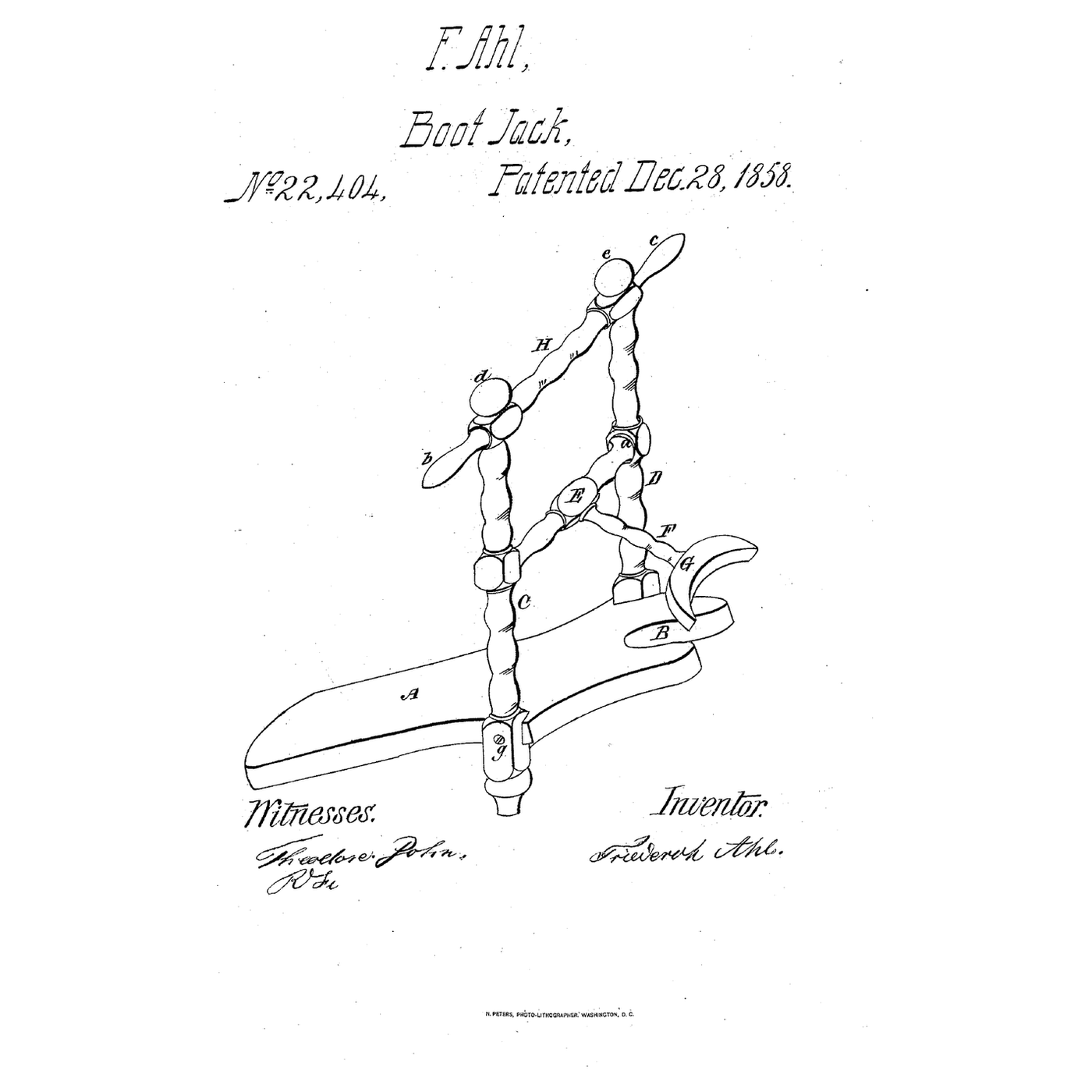


The Bootjack Hat Stand: Handles to Hold, a Crescent on the Instep
Standing on one foot to draw off a tight boot, there is nothing to hold, and a bootjack takes floor space for one job only.
Frederick Ahl of West Meriden, Connecticut, received US 22,404, dated 28 December 1858, for a bootjack that "will afford a rest for both hands to hold it steady while drawing the foot from the boot", with a vibrating arm whose crescent-shaped piece falls "to rest, upon the upper surface of the foot of the boot, between the toe and instep". Its cross-bar "renders it useful as a clothes, or hat, stand", and the whole unscrews to pack.
This rung works out how much the stand will hold before it tips, then turns and assembles the jack from hardwood and plywood and loads it.
Intermediário
About 5 hours
Instruções
1
1
Load before tipping
Load before tipping
A carregar o notebook Jupyter…
2
2
Holding the toe another way
Holding the toe another way
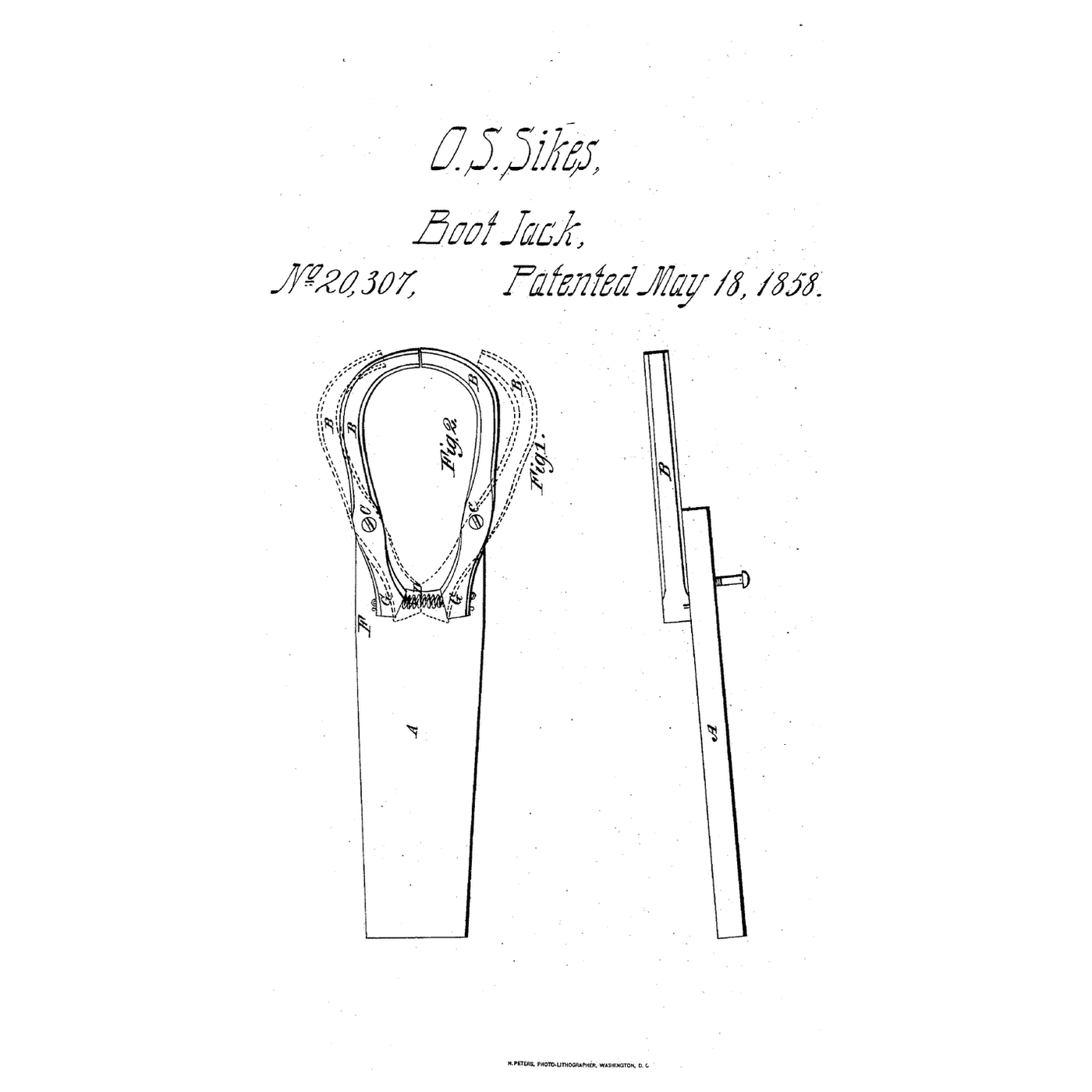
The embedded blueprint holds the toe with clamps closed by the heel. Ahl holds it with a falling crescent and gives the hands something to grip.
3
3
Read US 22,404
Read US 22,404
"I make the platform, A, for the foot to rest on, substantially in the form shown in the drawing, with a notch, or space, for the heel of the boot at its elevated end, in the usual form, as represented at B. I mount this platform, A, in two upright posts, or standards, C and D".
"To pack this apparatus, for transportation, &c., I unscrew the knobs, d and e, at the top, take off the cross-bar, H, and take out the screws which secure the standards to the platform, (one of which is seen at g,) when the whole may be packed within the length of the platform."
4
4
Build the stand and test it
Build the stand and test it
**Platform.** Cut a platform 40 × 20 cm from plywood with a heel notch at one end, and screw a block under that end to raise it.
**Standards.** Cut two 45 cm lengths of hardwood dowel and screw them upright through the platform's sides from below, so they can be unscrewed.
**Cross-bar.** Drill a 36 cm hardwood strip at the standards' spacing, set it on their tops with glued dowel knobs so it lifts off, and round its ends as handles.
**Arm.** Push a dowel rock-shaft through holes halfway up the standards so it turns freely. Glue a hardwood arm to it with a crescent cut from plywood on its end, long enough to rest on a boot's instep.
**Test.** Take a rubber boot off, holding the handles, with the crescent on the instep. Then hang loads weighed on the kitchen scale on one handle end and find the one that tips it. Compare with the notebook. Unscrew and pack it.
Materiais para este passo:
 Placa de contraplacado1 peça
 Cavilhas de madeira dura1.2 metros
 Tábua de madeira de lei1 peça
 Parafusos para madeira6 peças
 Cola de madeira10 ml
Ferramentas necessárias:
 Serrote
 Serra de recortes
 Berbequim sem fios
 Jogo de brocas
 Grosa
Grosa Lixa
Lixa Conjunto de chaves de fendas
 Balança digital de cozinha
 Régua
Régua Botas de borracha
 Descalçadeira de botas
5
5
A stand that tips, wobbles or will not hold the boot
A stand that tips, wobbles or will not hold the boot
Bootjack hat stand troubleshooting.
Flow
Loading...
6
6
History and honest limits
History and honest limits
**Frederick Ahl** of West Meriden, New Haven County, Connecticut, received US 22,404, dated 28 December 1858. He noted that jacks with a rigid piece pressing on the boot already existed; his claim is the platform, vibrating arm and cross-bar arranged together.
**Honest limits.** Plywood and dowel stand in for his turned standards and cross-bar. The notebook treats the stand as a rigid block tipping about one edge; its weights and sizes are examples. Your tipping load is the result.
Materiais
5- 1 peçaReferência
- 1.2 metrosReferência
- 1 peçaReferência
- 6 peçasReferência
- 10 mlReferência
Ferramentas necessárias
11- Referência
- Referência
- 1 vendor sell this, none ship to you yetReferência
- Referência
- Referência
- Referência
- Referência
- Referência
- Referência
- Referência
- Referência
Blueprints relacionados
Estes blueprints compartilham conhecimento — técnicas, materiais ou princípios

CC0 Domínio Público
Este blueprint é liberado sob CC0. Você é livre para copiar, modificar, distribuir e usar este trabalho para qualquer finalidade, sem pedir permissão.
Apoie o Maker comprando produtos através do Blueprint, onde ele ganha uma Comissão Maker definida pelos vendedores, ou crie uma nova versão deste Blueprint e inclua-o como conexão no seu próprio Blueprint para compartilhar receita.