ARTE
BELEZA E BEM-ESTAR
ARTESANATO
CULTURA E HISTÓRIA
ENTRETENIMENTO
MEIO AMBIENTE
COMIDA E BEBIDAS
ENGENHARIA REVERSA
CIÊNCIAS
ESPORTES
TECNOLOGIA
TECNOLOGIA VESTÍVEL
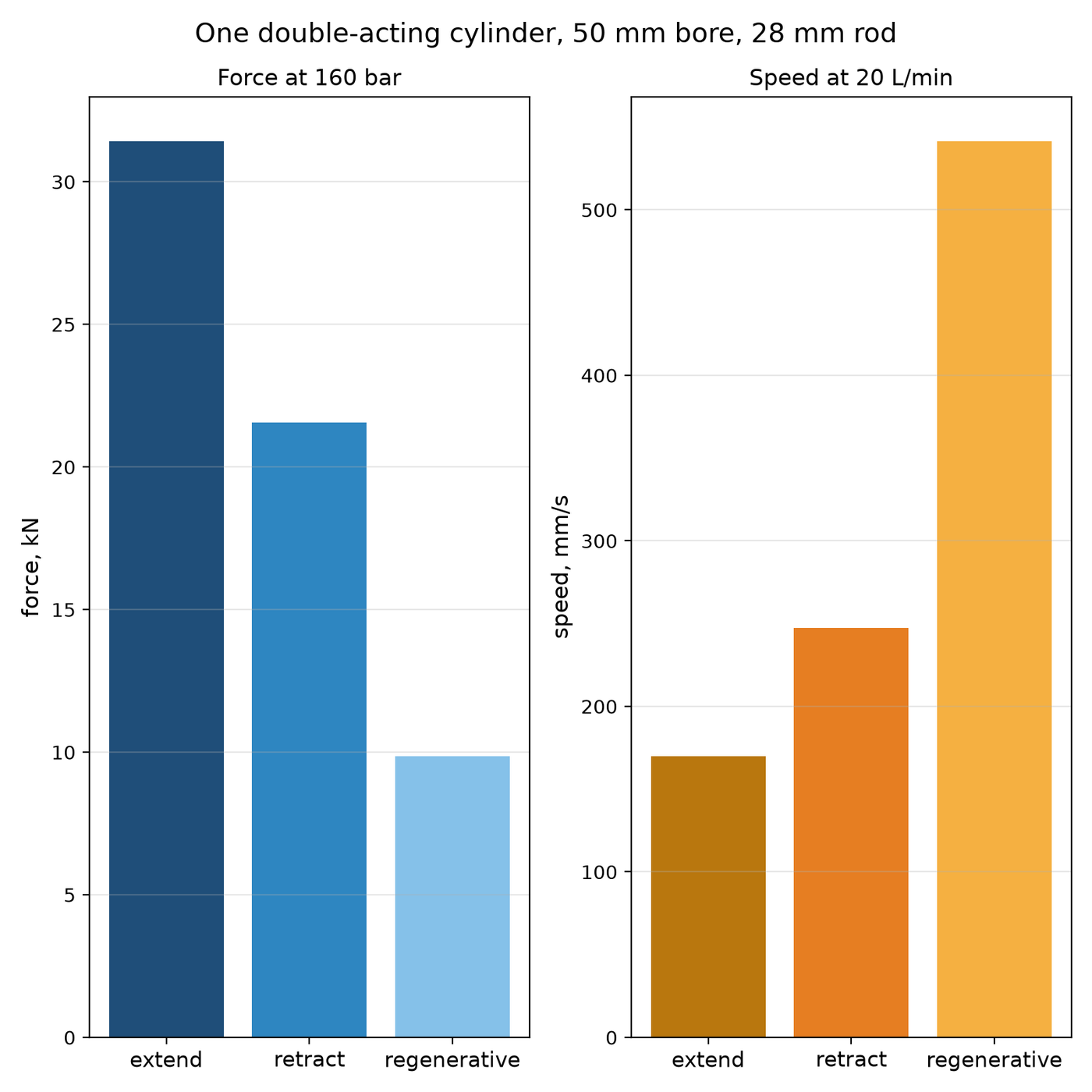
Youblob (generated from this blueprint's notebook) · CC0


The Double-Acting Cylinder: Push With the Bore, Pull With the Ring
Bramah's press and the hydraulic jack push one way and let the load fall back. Most machines need power in both directions: a digger's arm, a tractor's lift, a press that must open as well as close. The double-acting cylinder has a port at each end, so oil drives the piston out and oil drives it back.
The rod makes the two directions unequal. Pushing uses the whole bore; pulling uses only the ring round the rod. That one fact decides a cylinder's forces and speeds, hides a pressure trap that can burst a hose, and — with a long stroke — lets the rod buckle long before the oil runs out of pressure.
This rung works all three out and builds a double-acting cylinder from a syringe to measure the difference.
Iniciante
About 3 hours
Instruções
1
1
Force, speed, intensification and buckling
Force, speed, intensification and buckling
A carregar o notebook Jupyter…
2
2
Start from Pascal's principle
Start from Pascal's principle
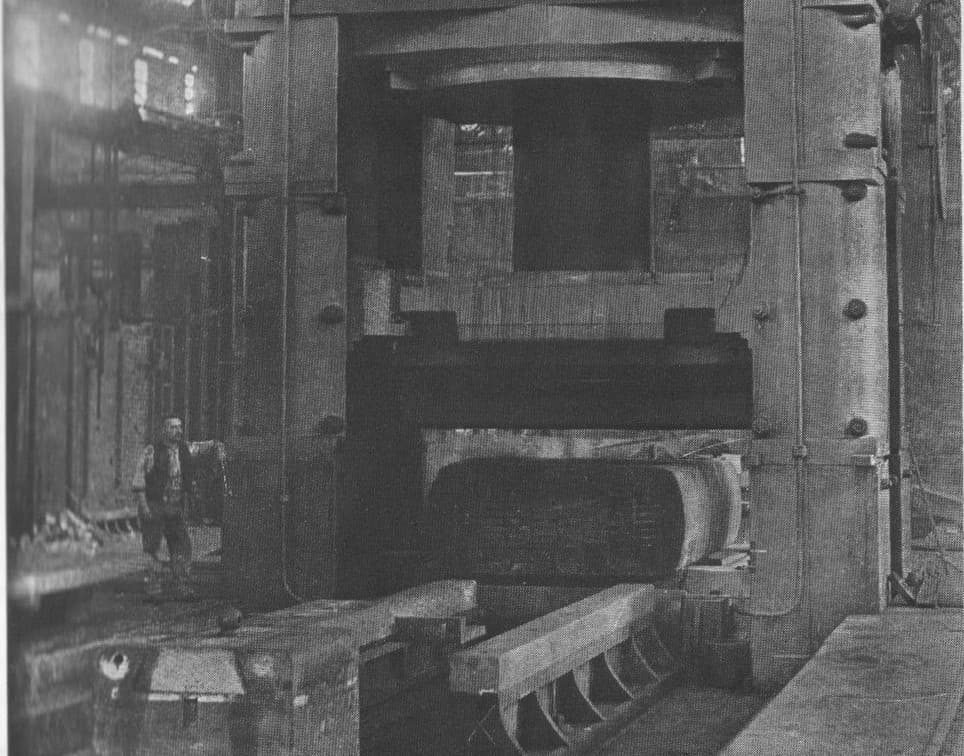
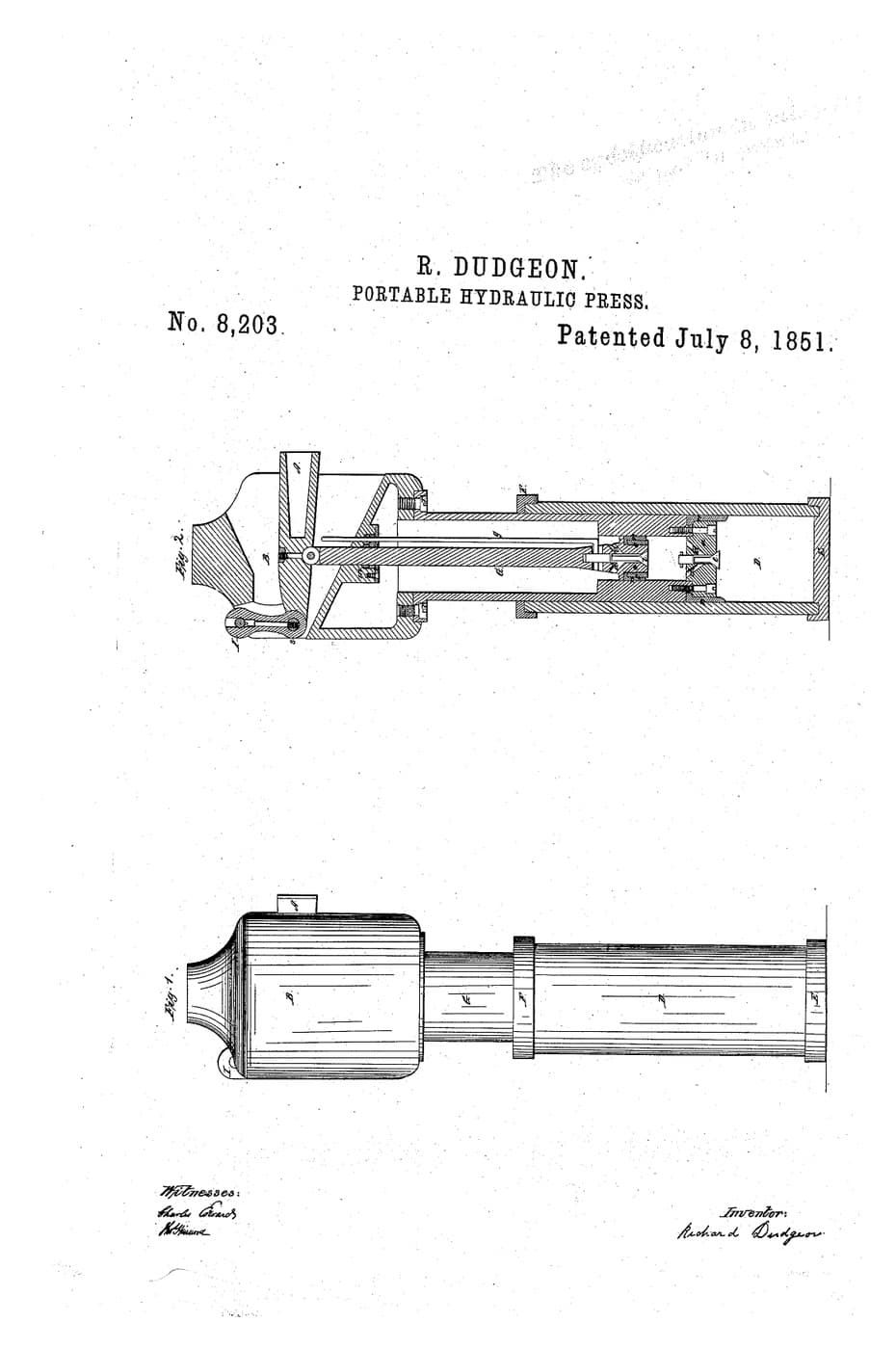
Every cylinder turns pressure into force by area. The embedded blueprint shows it in its first working form, Bramah's single-acting press.
3
3
Make a syringe double-acting
Make a syringe double-acting
A syringe is single-acting: it has one sealed chamber. Make it double-acting by closing its open end.
Measure the barrel bore and the plunger rod with a caliper. 3D-print an end cap that slides over the barrel's open end, with a central hole for the rod carrying an O-ring in a groove (the gland), and a side port with a hose barb. Seal the cap to the barrel with silicone sealant. Cut the plunger's cross-shaped rod down to a round pushrod: glue a steel dowel pin into it so the O-ring seals on a smooth round rod.
Fill both chambers and two hand syringes with coloured water, bleeding out every bubble. Connect one hand syringe to the tip (cap side) and one to the new side port (rod side).
Materiais para este passo:
 Conjunto de seringas1 peça
 Pino cilíndrico de aço1 peça
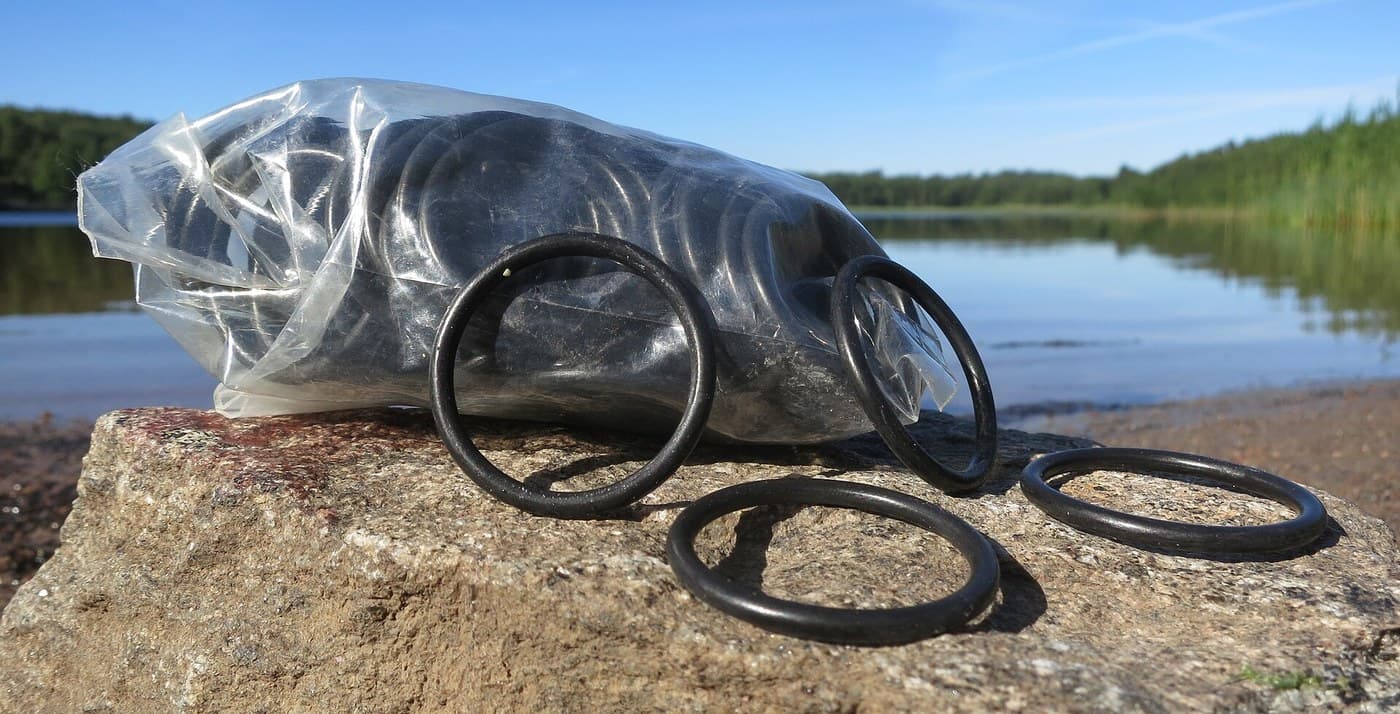
 Sortido de anéis de vedação1 peça
 Tubo de silicone1 metro
 Vedante de silicone1 peça
 Água1 litro
 Corante alimentar (corante para visualização de escoamento)1 peça
Ferramentas necessárias:
 Impressora 3D de filamento (FDM)
 Filamento PETG
 Paquímetro digital de 6 polegadas
 Pistola de cola quente
4
4
Measure the two directions
Measure the two directions
From your measured bore $D$ and rod $d$, work out the travel that 2 mL should give each way: $2000 / A_{cap}$ mm going out, $2000 / A_{ann}$ mm coming back (areas in mm²).
Push 2 mL into the cap side, with the rod-side hand syringe free to fill, and measure the rod's travel with the caliper. Then push 2 mL into the rod side and measure the travel back. Repeat three times each way. The return stroke is longer for the same volume — exactly the ratio $A_{cap}/A_{ann}$ in the notebook.
Now hold the rod-side hand syringe's plunger firmly and push gently on the cap side: you feel the rod-side plunger pushed back hard. That is intensification. Do not push hard — a syringe is not rated for it.
Ferramentas necessárias:
Paquímetro digital de 6 polegadas Régua
Régua Óculos de segurança transparentes
5
5
A cylinder that misbehaves
A cylinder that misbehaves
Cylinder faults show up as a handful of symptoms.
Flow
Loading...
6
6
Context and honest limits
Context and honest limits
The double-acting cylinder is not one invention but the working form every hydraulic machine settled on: a honed tube, a piston with seals, a chromed rod through a gland with a wiper, and a port at each end. Its sizes are standardised, so a cylinder of one make fits the mountings of another.
**Honest limits.** A cylinder only turns pressure into force; the valve decides where it goes and the pump how fast. Real cylinders lose a little force to seal friction and need cushions at the ends of stroke, which the notebook leaves out. And hydraulic oil at working pressure can pierce skin from a pinhole leak: never feel for a leak with your hand.
Materiais
7- 1 peçaReferência
- 1 peçaReferência
- Referência
- 1 metroReferência
- 1 peçaReferência
- 1 litroReferência
- Referência
Ferramentas necessárias
6- Referência
- Referência
- Referência
- Referência
- Referência
- Referência
Blueprints relacionados
Estes blueprints compartilham conhecimento — técnicas, materiais ou princípios



CC0 Domínio Público
Este blueprint é liberado sob CC0. Você é livre para copiar, modificar, distribuir e usar este trabalho para qualquer finalidade, sem pedir permissão.
Apoie o Maker comprando produtos através do Blueprint, onde ele ganha uma Comissão Maker definida pelos vendedores, ou crie uma nova versão deste Blueprint e inclua-o como conexão no seu próprio Blueprint para compartilhar receita.