ARTE
BELEZA E BEM-ESTAR
ARTESANATO
CULTURA E HISTÓRIA
ENTRETENIMENTO
MEIO AMBIENTE
COMIDA E BEBIDAS
ENGENHARIA REVERSA
CIÊNCIAS
ESPORTES
TECNOLOGIA
TECNOLOGIA VESTÍVEL
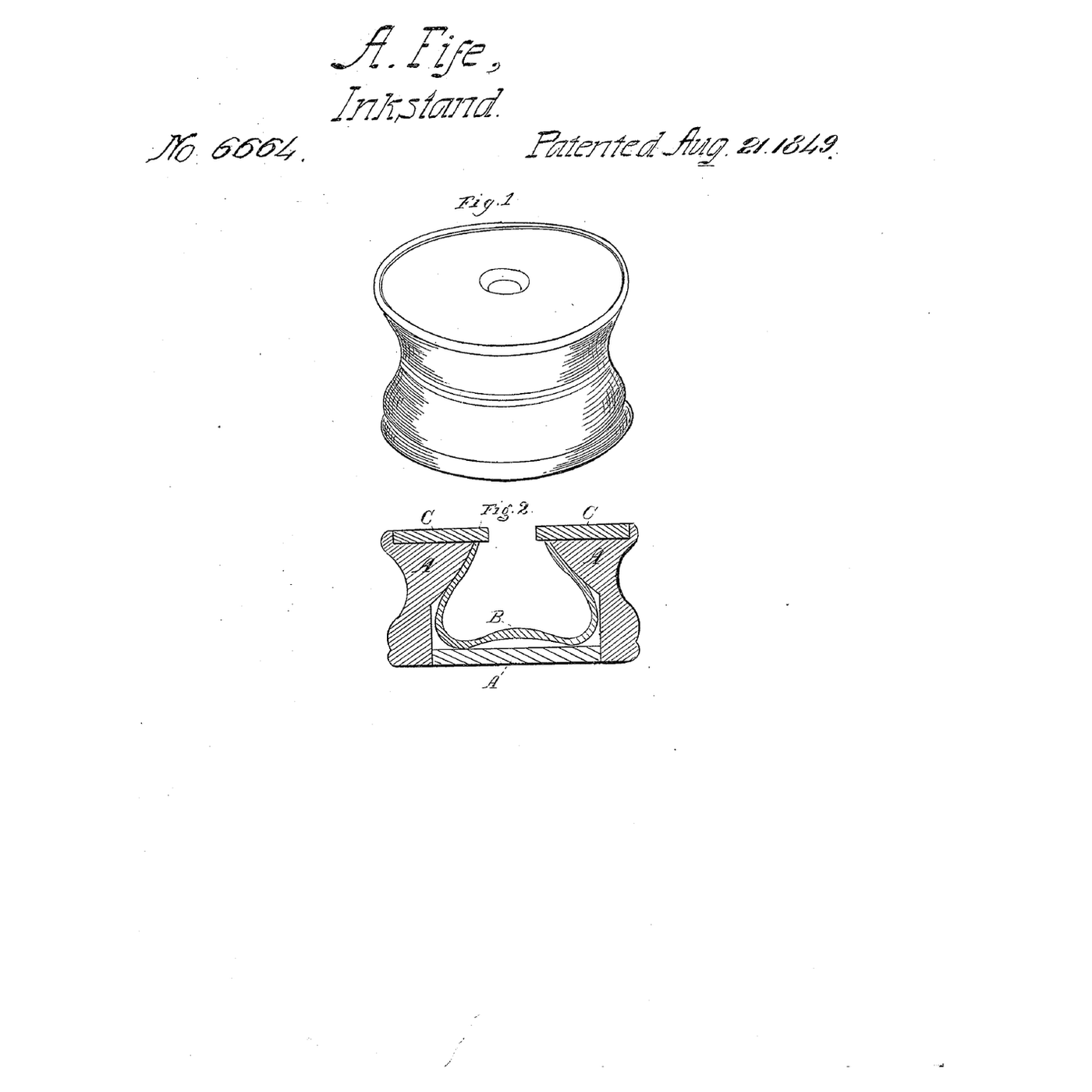


The Gold-Pen Protector Inkstand: A Rubber Rim for Careless Dipping
A pen thrust quickly into an inkwell strikes its point on the glass or brass edge of the mouth, and a costly diamond-pointed gold pen is spoiled.
Andrew Fife of Philadelphia received US 6,664, dated 21 August 1849, for an improvement in inkstands called a "Gold-Pen Protector": "forming the top, or surface surrounding and partially covering the mouth of the reservoir of the inkstand, of gum elastic, or other similar soft elastic substance, or composition", with its hole smaller than the mouth, so that the edge of the reservoir is covered.
This rung works out the force on the point with and without the rubber, then fits a rubber ring to a jar and dips two nibs, one on each, and compares them under a lens.
Iniciante
About 1 hour
Instruções
1
1
Force on the point
Force on the point
A carregar o notebook Jupyter…
2
2
Another well
Another well
The embedded blueprint protects the ink. Fife's rubber rim protects the pen.
3
3
Read US 6,664
Read US 6,664
"Among writers the habit is almost universal of thrusting the pen, quickly and carelessly, into the mouth of the reservoir for a supply of ink, and at it to throw out of the pen the superfluous ink it has taken up."
"The object of the 'gold pen protector' is to interpose a soft elastic substance between the pen and the hard substances composing the inkstand and its reservoir, in such a way as to greatly decrease—if not entirely remove—the danger of breaking the point of the pen in taking a dip of ink."
4
4
Fit the rim and dip two nibs
Fit the rim and dip two nibs
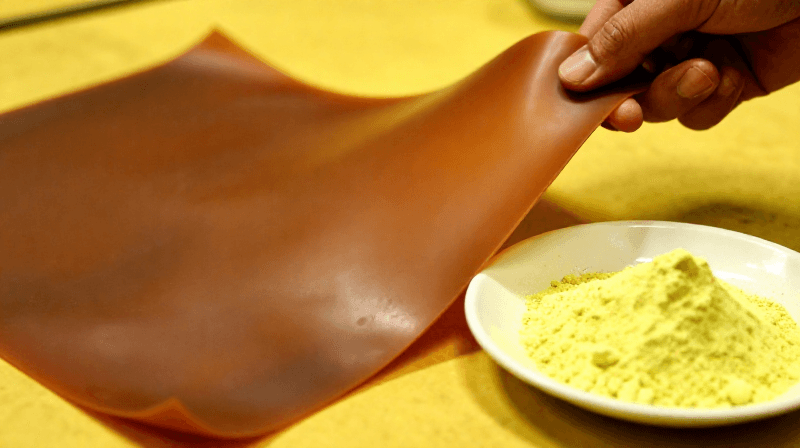
Cut a ring from rubber sheet about 3 mm thick, as large as the jar's rim and with a hole a few millimetres smaller than its mouth. Glue it on with contact cement so it covers the rim's edge.
Look at two new dip-pen nibs under the hand lens and note the tines. Fit one in a holder and thrust it into the rubber-rimmed jar 100 times as a writer would, knocking off the surplus on the rim. Do the same with the other nib on a bare glass jar.
Look at both nibs under the lens again, then write the same line with each and compare the strokes.
Materiais para este passo:
 Chapa de borracha1 peça
 Cola de contacto2 ml
 Frasco de vidro2 peças
 Tinta de escrever50 ml
 Cartolina1 peça
Ferramentas necessárias:
 X-ato (faca de precisão)
 Tesoura
 Régua
Régua Lupa de mão 10x
 Conjunto de aparos de caligrafia
5
5
A rim that peels, clogs or still lets the nib strike
A rim that peels, clogs or still lets the nib strike
Gold-pen protector troubleshooting.
Flow
Loading...
6
6
History and honest limits
History and honest limits
**Andrew Fife** of Philadelphia signed US 6,664 on 27 March 1849; it is dated 21 August 1849. He secured the protector with glue, cement or other material according to the inkstand, and noted that steel and quill pens as well as diamond-pointed gold ones were destroyed the same way. He disclaimed the shape of the inkstand itself.
**Honest limits.** Sheet rubber and contact cement stand in for his gum elastic top, and steel dip-pen nibs for gold ones. The notebook's mass, speed and stopping distances are examples. Your lens comparisons are the result.
Materiais
5- 1 peçaReferência
- 2 mlReferência
- 2 peçasReferência
- 50 mlReferência
- 1 peçaReferência
Ferramentas necessárias
5- Referência
- Referência
- Referência
- Referência
- Referência
Blueprints relacionados
Estes blueprints compartilham conhecimento — técnicas, materiais ou princípios



CC0 Domínio Público
Este blueprint é liberado sob CC0. Você é livre para copiar, modificar, distribuir e usar este trabalho para qualquer finalidade, sem pedir permissão.
Apoie o Maker comprando produtos através do Blueprint, onde ele ganha uma Comissão Maker definida pelos vendedores, ou crie uma nova versão deste Blueprint e inclua-o como conexão no seu próprio Blueprint para compartilhar receita.