ARTE
BELEZA E BEM-ESTAR
ARTESANATO
CULTURA E HISTÓRIA
ENTRETENIMENTO
MEIO AMBIENTE
COMIDA E BEBIDAS
ENGENHARIA REVERSA
CIÊNCIAS
ESPORTES
TECNOLOGIA
TECNOLOGIA VESTÍVEL
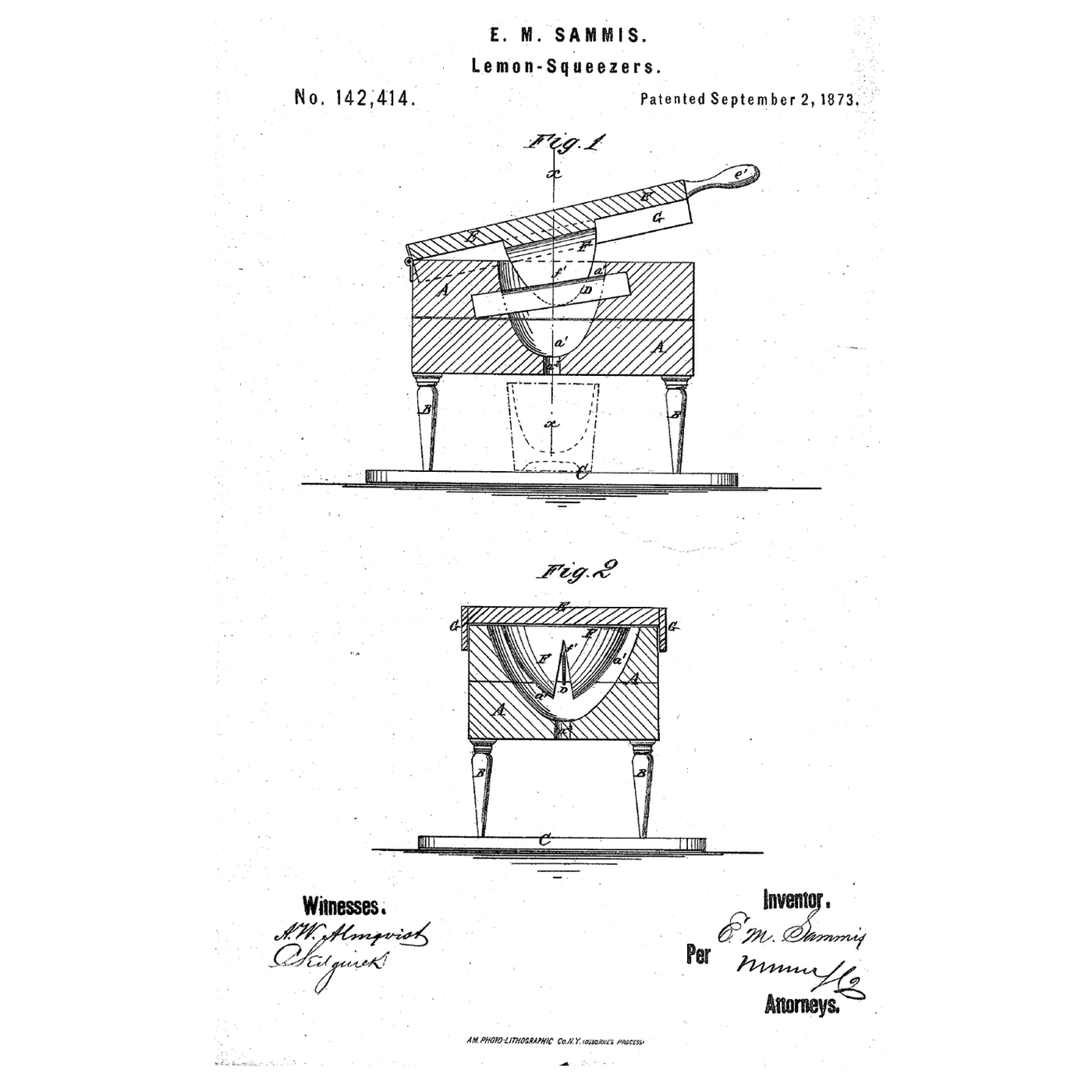

The Inclined-Knife Lemon Squeezer: Put In a Whole Lemon, Cut and Press in One Stroke
A lemon has to be cut in half before it goes in a squeezer, and a squeezer's juice can squirt out over the person using it.
Edward M. Sammis of Babylon, New York, received US 142,414, dated 2 September 1873, for a squeezer "so constructed that a whole lemon may be put into it and the juice expressed without its being necessary to first cut the said lemon, and which will prevent the juice from squirting out over the operator." A knife is set on a slant in a cavity in the lower block; the upper part, hinged at one end, has a projection notched for the knife that presses the lemon down onto it, and side flanges that overlap the lower block's sides.
This rung works out why the knife is set on a slant, then builds the squeezer in hardwood with a stainless steel knife, and squeezes whole lemons in it.
Intermediário
About 5 hours
Instruções
1
1
The slanted knife
The slanted knife
A carregar o notebook Jupyter…
2
2
Blades in a squeezer before it
Blades in a squeezer before it
The embedded blueprint cuts and spreads a half lemon with blades on a reamer. Sammis sets one knife in the squeezer so a whole lemon is cut as it is pressed.
3
3
Read US 142,414
Read US 142,414
"In the concavity a1 is secured a knife, D, to cut the lemon as it is pressed upon it. The knife D is placed in an inclined position, as shown in Fig. 1. The effect of the inclination of the knife D is to cause the lemon to roll downward, so as to be pressed against one side of the concavity a1, and leave a space at the other side, so that the juice may flow out freely through the hole or holes a2 formed in the part A, and leading down from the bottom or lower part of said cavity a1."
"The knife D and slit or notch f′ are designed to be so arranged as to not quite separate the parts into which the lemon is cut."
4
4
Build the squeezer and press whole lemons
Build the squeezer and press whole lemons
**Lower block.** Glue up a hardwood block 15 × 12 × 8 cm, carve a rounded cavity in its top that takes a whole lemon, and drill a hole from the cavity's bottom through the block. Fit four dowel legs tall enough for a glass beneath.
**Knife.** Cut a blade from stainless steel sheet, file one edge sharp, and set it across the cavity, sharp edge up and tilted at about 30°, in saw kerfs cut in the cavity's walls, as Sammis's drawing shows.
**Upper part.** Hinge a hardwood board to one end of the block. Carve a knob on its underside that enters the cavity and saw a slit in the knob that takes the knife's edge, deep enough that the lemon is cut nearly but not quite through. Glue strips along its sides as flanges that overlap the block's sides, and shape a handle at its free end.
**Test.** Put a whole lemon in the cavity over a glass and press the handle down. See that the lemon is cut, held together at one edge, and pressed to one side, and that no juice escapes past the flanges.
Materiais para este passo:
 Tábua de madeira de lei2 peças
 Cavilha de madeira0.6 metro
 Cola de madeira1 peça
 Chapa de aço inoxidável1 peça
 Dobradiça de livro1 peça
 Parafusos para madeira6 peças
 Limão3 peças
Ferramentas necessárias:
 Serrote
 Conjunto de formões para madeira
 Grosa
Grosa Berbequim sem fios
 Jogo de brocas
 Tesoura de chapa
 Limas (lima de mão)
 Pedra de amolar
 Transferidor
 Grampos
 Conjunto de chaves de fendas
 Copo
Copo Luvas de trabalho em couro
5
5
A squeezer that jams, sprays or cuts the lemon apart
A squeezer that jams, sprays or cuts the lemon apart
Inclined-knife lemon squeezer troubleshooting.
Flow
Loading...
6
6
History and honest limits
History and honest limits
**Edward M. Sammis** of Babylon, Suffolk County, New York, filed US 142,414 on 19 July 1873; it is dated 2 September 1873. His lower part A stood on legs B tall enough for a tumbler on the plate C beneath, and the parts were to be made of or plated with nickel or another metal lemon juice will not corrode. His claims cover the knife in the cavity, its inclined position, the notched knob with the knife, and the flanges.
**Honest limits.** Hardwood and stainless steel stand in for his plated metal. The notebook uses a simple sliding condition for a round, wet lemon; its angles and friction coefficients are examples. Your pressed lemons are the result.
Materiais
7- 2 peçasReferência
- 0.6 metroReferência
- 1 peçaReferência
- 1 peçaReferência
- 1 peçaReferência
- 6 peçasReferência
- 3 peçasReferência
Ferramentas necessárias
13- Referência
- Referência
- Referência
- 1 vendor sell this, none ship to you yetReferência
- Referência
- Referência
- Referência
- Referência
- Referência
- Referência
- Referência
- Referência
- Referência
Blueprints relacionados
Estes blueprints compartilham conhecimento — técnicas, materiais ou princípios
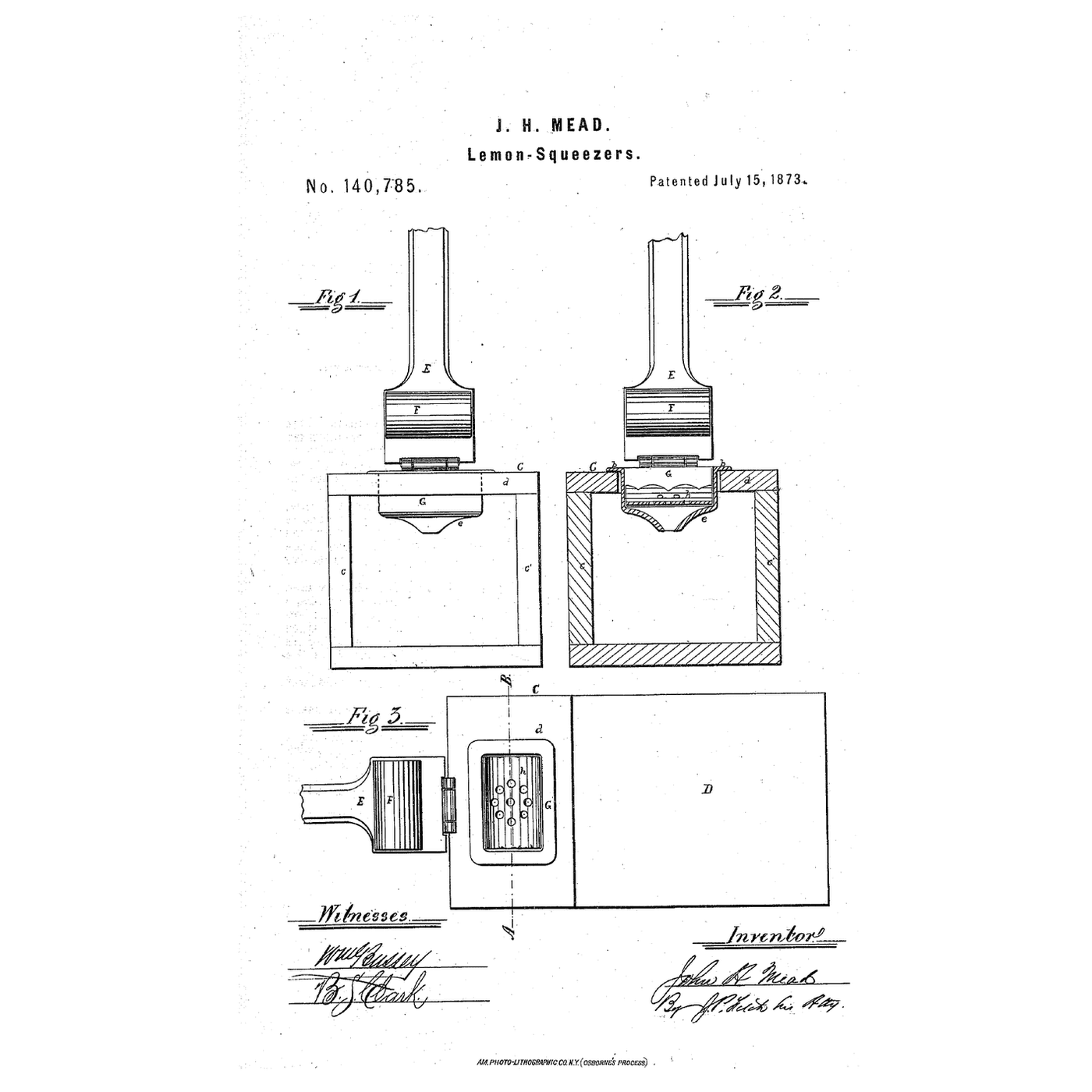
The False-Bottom Lemon Press: A Hinged Lever Over a Die, and One Hole for the Juice
por TheChef
Marcenaria
11
0
0
0
0
0
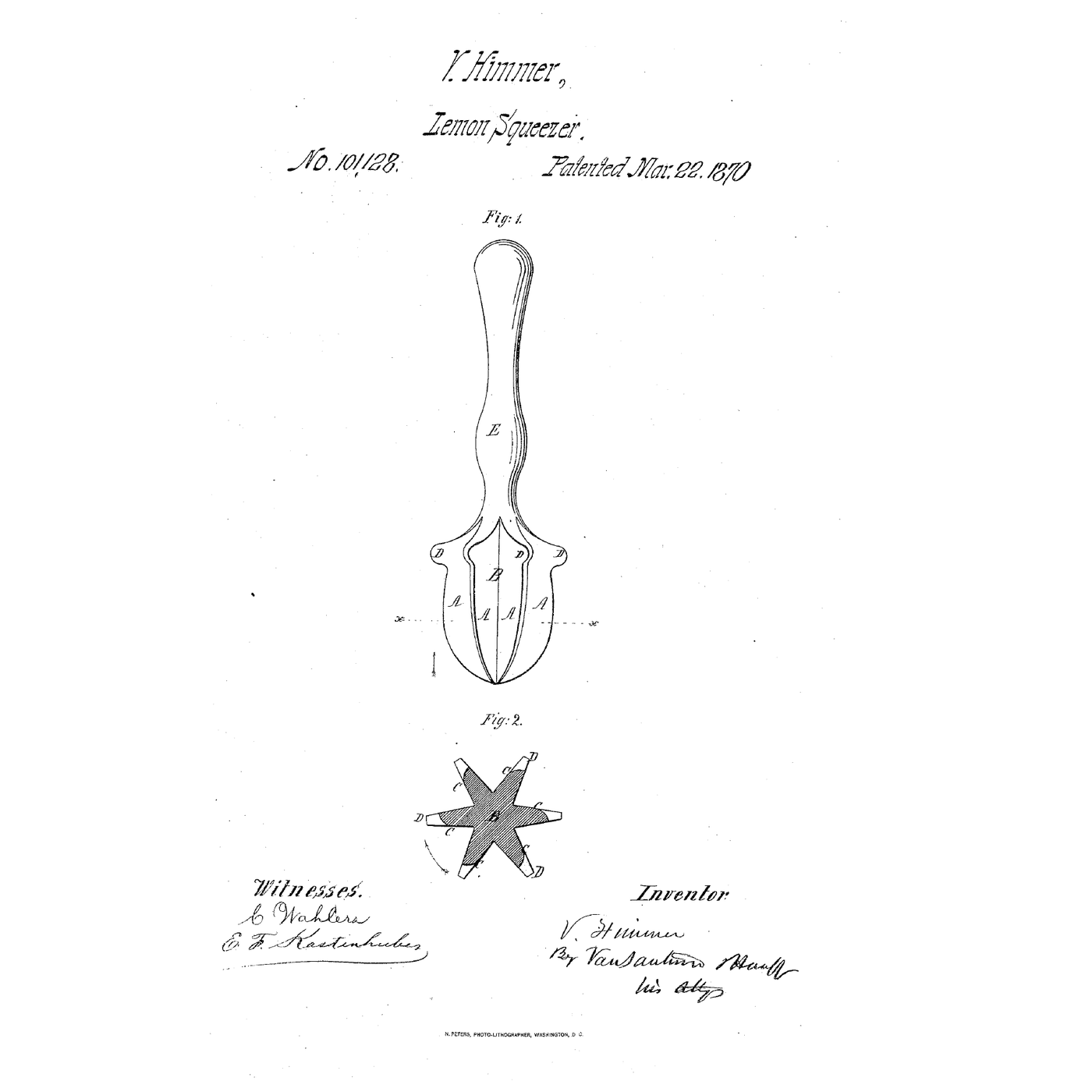
The Bladed Lemon Reamer: Six Blades That Cut and Spread the Fruit
por TheChef
Marcenaria
9
0
0
0
0
0
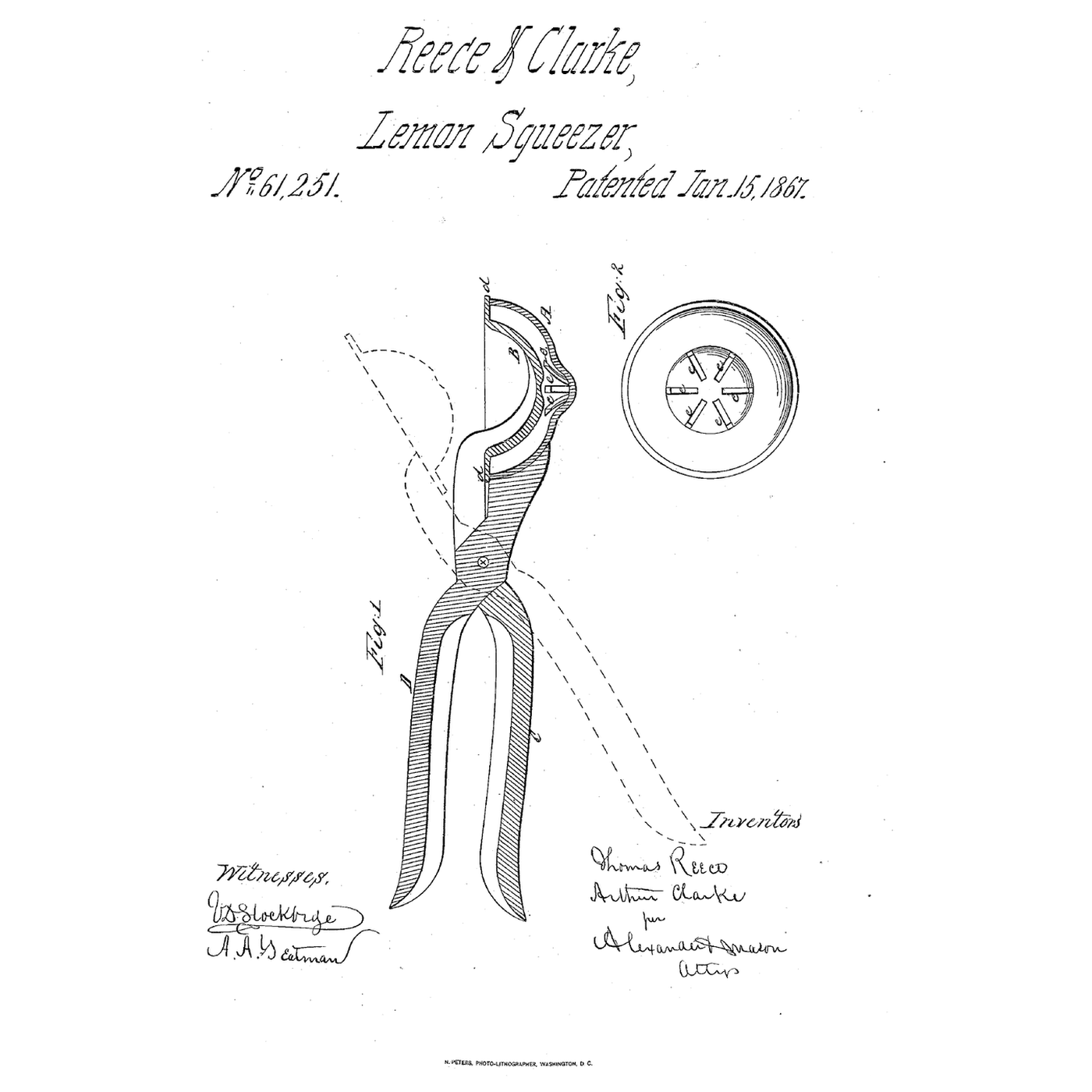
The Shears-Cup Lemon Squeezer: Two Cups on Crossed Handles, a Slotted Recess for the Juice
por TheChef
Trabalho em Metal
9
0
0
0
0
0
CC0 Domínio Público
Este blueprint é liberado sob CC0. Você é livre para copiar, modificar, distribuir e usar este trabalho para qualquer finalidade, sem pedir permissão.
Apoie o Maker comprando produtos através do Blueprint, onde ele ganha uma Comissão Maker definida pelos vendedores, ou crie uma nova versão deste Blueprint e inclua-o como conexão no seu próprio Blueprint para compartilhar receita.