ARTE
BELEZA E BEM-ESTAR
ARTESANATO
CULTURA E HISTÓRIA
ENTRETENIMENTO
MEIO AMBIENTE
COMIDA E BEBIDAS
ENGENHARIA REVERSA
CIÊNCIAS
ESPORTES
TECNOLOGIA
TECNOLOGIA VESTÍVEL
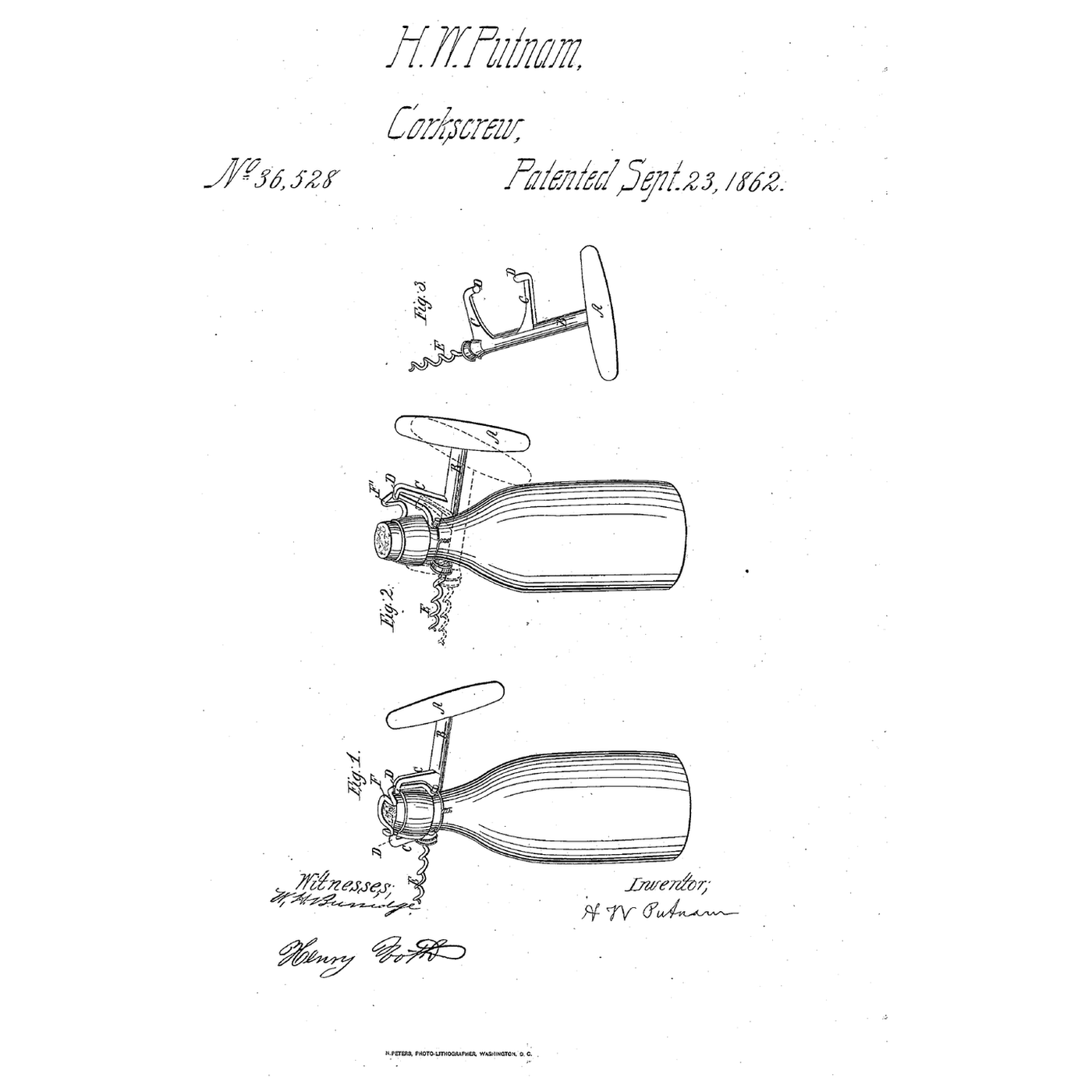


The Key and Corkscrew: Throw the Wire Fastener Off, Then Draw the Cork
A wire fastener that holds a cork down against the gas is hard to push onto the cork, and hard to push off, with the fingers alone; and the cork still has to be drawn afterwards.
H. W. Putnam of Cleveland, Ohio, received US 36,528, dated 23 September 1862, for "a combined key and corkscrew in one instrument for securing and releasing my patent bottle cork-fastener and for drawing the cork": a handle and shaft with two arms at right angles whose ends turn inward as nibs, far enough apart for the bottle's neck to pass between them, and an ordinary corkscrew at the shaft's end. The neck is the fulcrum for the key.
This rung works out the force of the key about the neck, with a work check, then makes the key and corkscrew from rod and flat bar, fastens a corked bottle with a wire fastener and throws it off.
Intermediário
About 4 hours
Instruções
1
1
The neck as the fulcrum
The neck as the fulcrum
A carregar o notebook Jupyter…
2
2
Why the neck works as the fulcrum
Why the neck works as the fulcrum
The embedded blueprint works out the lever law. Putnam's key turns about the bottle's neck, so a short push on the handle moves the fastener with a larger force.
3
3
Read US 36,528
Read US 36,528
"Fig. 3 represents the combined key and corkscrew. A is the handle. B is the shaft or bar. C C represent arms projecting from the shaft B in lines parallel with each other and at right angles to the shaft. The ends of these arms are turned inward toward each other, forming the nibs D D. The arms are far enough apart to allow the neck of the bottle to pass between them, and the distance between the points of the nibs is equal to or greater than the thickness of the cork. In the end of the shaft B is placed an ordinary corkscrew, E."
"Now by turning the key a little forward it is released, and the screw can be used as an ordinary corkscrew for drawing the cork. In replacing to its former position (seen in Fig. 1) the instrument is changed to the opposite side of the neck of the bottle, as indicated by the dotted lines in Fig. 2. In both cases the neck of the bottle becomes the fulcrum for the key."
4
4
Make the key and throw a fastener off
Make the key and throw a fastener off
**Handle and shaft.** Cut 10 cm of hardwood handle stock and drill it across the middle. Cut 12 cm of 6 mm mild steel rod, pass one end through the handle and peen it over a washer.
**Arms and nibs.** Cut 20 cm of 20 × 3 mm mild steel flat bar and bend it into a U whose legs are the arms, wide enough apart for the bottle's neck to pass between them. Bend the last centimetre of each leg inward as a nib, with the nibs' points at least as far apart as the cork is wide. Silver-solder the U's base across the shaft near its far end, the arms at right angles to it.
**Corkscrew.** Wind 2 mm steel wire into an open helix round a 6 mm rod, file its end to a point, and silver-solder its straight end into a hole drilled in the shaft's end.
**Fastened bottle.** Pour chilled soda water into a clean beer bottle and press a cork in. Twist a wire ring tight round the neck below the lip and bend a wire bail, hinged on the ring, that swings over the top of the cork and holds it.
**Test.** Wearing safety glasses, pass the neck between the arms with the nibs over the bail, and turn the key a little forward: the bail is thrown back off the cork. Draw the cork with the corkscrew. Put the cork back and use the key from the other side of the neck to swing the bail on again.
Materiais para este passo:
 Barrote de madeira dura para cabos1 peça
 Varão de aço macio0.12 metro
 Anilha plana1 peça
 Barra chata de aço macio0.2 metro
 Arame de aço0.4 metro
 Conjunto de solda de prata (fraca/média/forte)1 peça
 Fundente1 peça
 Garrafas de cerveja âmbar1 peça
 Água gaseificada (garrafa selada)1 peça
 Rolhas1 peça
 Arame de aço galvanizado0.5 metro
Ferramentas necessárias:
 Serra de arco para metais
 Limas (lima de mão)
 Torno de bancada
 Maçarico a propano
 Martelo
 Berbequim sem fios
 Jogo de brocas
 Alicate de bicos redondos
 Alicate de bico chato
 Alicate de corte
 Óculos de segurança transparentes
 Luvas de trabalho em couro
5
5
A key that slips, bends or will not throw the fastener
A key that slips, bends or will not throw the fastener
Key and corkscrew troubleshooting.
Flow
Loading...
6
6
History and honest limits
History and honest limits
**H. W. Putnam** of Cleveland, Cuyahoga County, Ohio, received US 36,528, dated 23 September 1862. The key was for his own patent bottle cork-fastener, shown at F embracing the top of the cork and at F′ thrown back. His claim is the arms C C and nibs D D combined with a corkscrew.
**Honest limits.** A hand-bent wire bail on a beer bottle of re-corked soda water stands in for his patent fastener, whose exact form this rung does not reproduce, and flat bar and rod for his key. The notebook ignores friction; its forces and lengths are examples. Your thrown-off fastener is the result.
Materiais
11- Referência
- 0.12 metroReferência
- 1 peçaReferência
- 0.2 metroReferência
- 0.4 metroReferência
- Referência
- 1 peçaReferência
- Referência
- Referência
- 1 peçaReferência
- 0.5 metroReferência
Ferramentas necessárias
12- Referência
- Referência
- Referência
- Referência
- Referência
- 1 vendor sell this, none ship to you yetReferência
- Referência
- Referência
- Referência
- Referência
- Referência
- Referência
Blueprints relacionados
Estes blueprints compartilham conhecimento — técnicas, materiais ou princípios


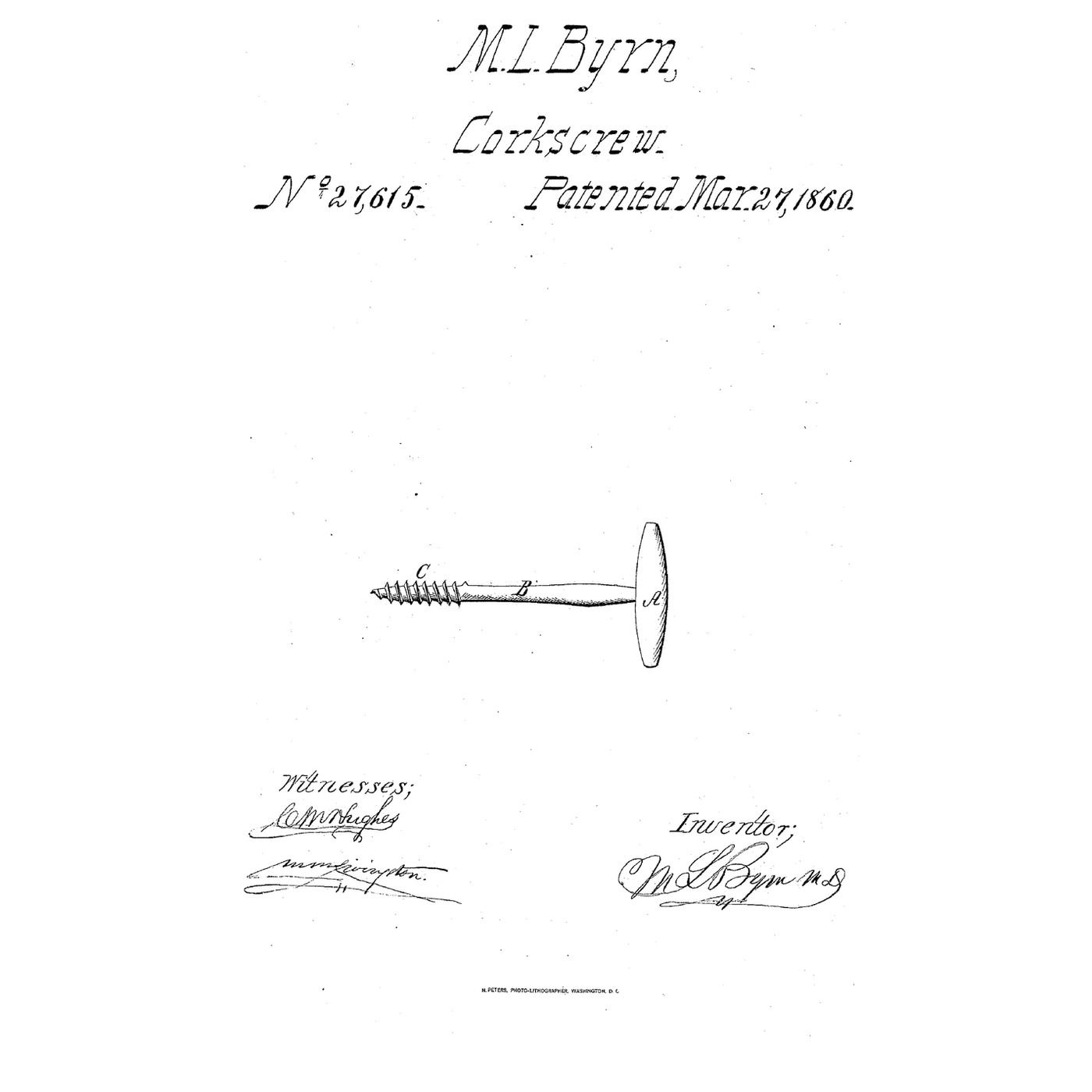
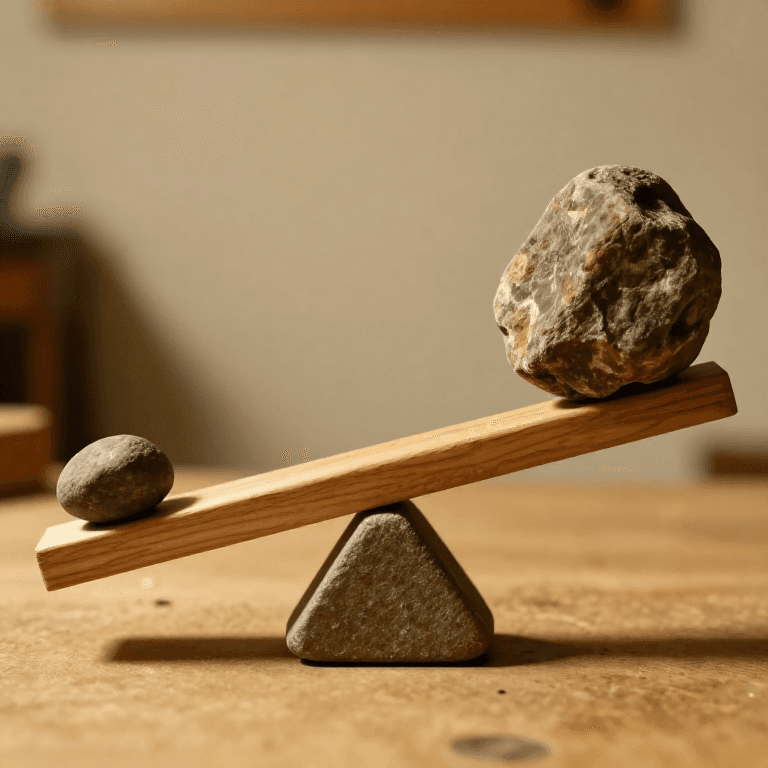
CC0 Domínio Público
Este blueprint é liberado sob CC0. Você é livre para copiar, modificar, distribuir e usar este trabalho para qualquer finalidade, sem pedir permissão.
Apoie o Maker comprando produtos através do Blueprint, onde ele ganha uma Comissão Maker definida pelos vendedores, ou crie uma nova versão deste Blueprint e inclua-o como conexão no seu próprio Blueprint para compartilhar receita.