ARTE
BELEZA E BEM-ESTAR
ARTESANATO
CULTURA E HISTÓRIA
ENTRETENIMENTO
MEIO AMBIENTE
COMIDA E BEBIDAS
ENGENHARIA REVERSA
CIÊNCIAS
ESPORTES
TECNOLOGIA
TECNOLOGIA VESTÍVEL
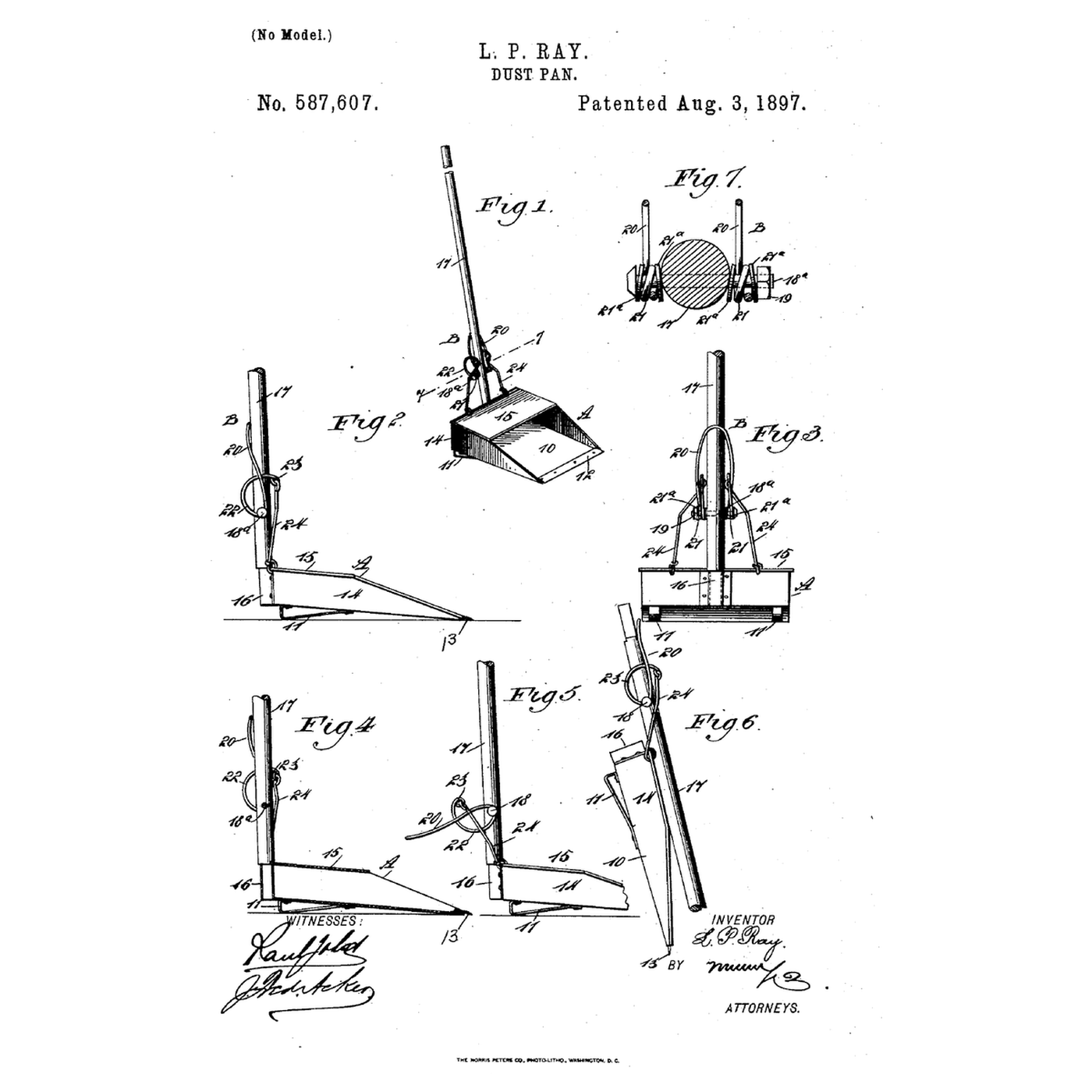


The Low-Lipped Dustpan: A Hard Thin Edge Pressed to the Floor
Every dustpan leaves a line of dust in front of it: the grains too small to climb its edge. The thinner the edge and the closer it lies to the floor, the less is left.
Lloyd P. Ray of Seattle, Washington, received US 587,607, dated 3 August 1897 (filed 25 March 1897), for a dust-pan "so constructed as to lie close to the floor or surface from which the dust is to be taken up and wherein the receiving edge of the pan will be of a stronger material than the body portion", with a removable handle held at an angle by a spring fastening.
This rung computes how much dust a lip of a given height leaves behind, then weighs what a real dustpan picks up as its lip is raised.
Iniciante
About 1 hour
Instruções
1
1
What the lip leaves behind
What the lip leaves behind
A carregar o notebook Jupyter…
2
2
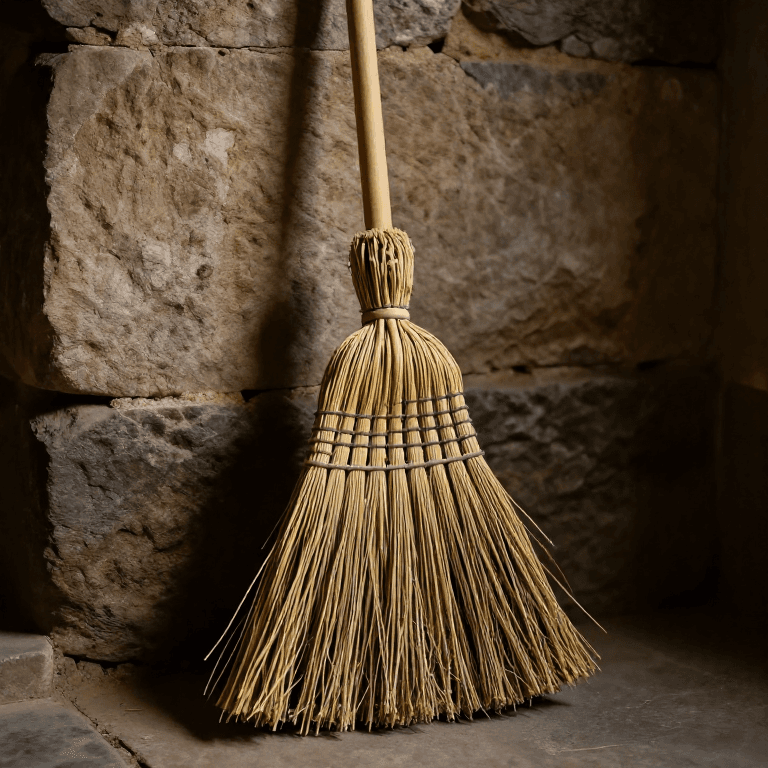
The broom that pushes the dust
The broom that pushes the dust
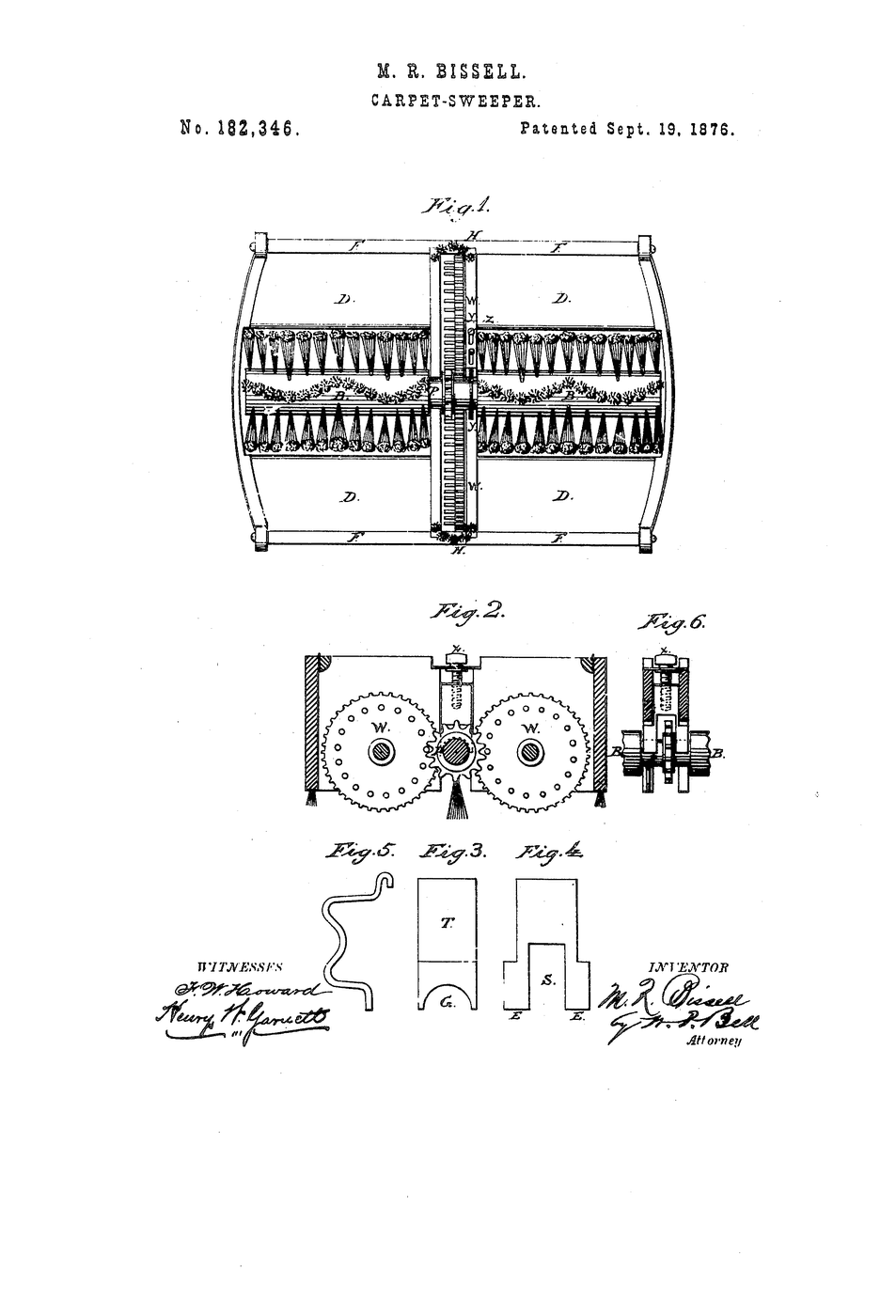
The embedded blueprint binds a birch besom; the dustpan is what the broom sweeps into.
3
3
Read US 587,607
Read US 587,607
"The object of my invention is to provide a dust-pan which will be so constructed as to lie close to the floor or surface from which the dust is to be taken up and wherein the receiving edge of the pan will be of a stronger material than the body portion."
The pan has "feet 11, which give a forward tip or inclination to the bottom of said pan", and at the front "a plate 12 is secured, made of steel or like material or a material which is harder than that from which the body of the pan is constructed. The plate 12 is made to taper from its back in direction of its forward edge, which is quite thin and bent downward to form a curved surface 13, capable of being brought in close engagement with the surface from which the sweepings are to be removed."
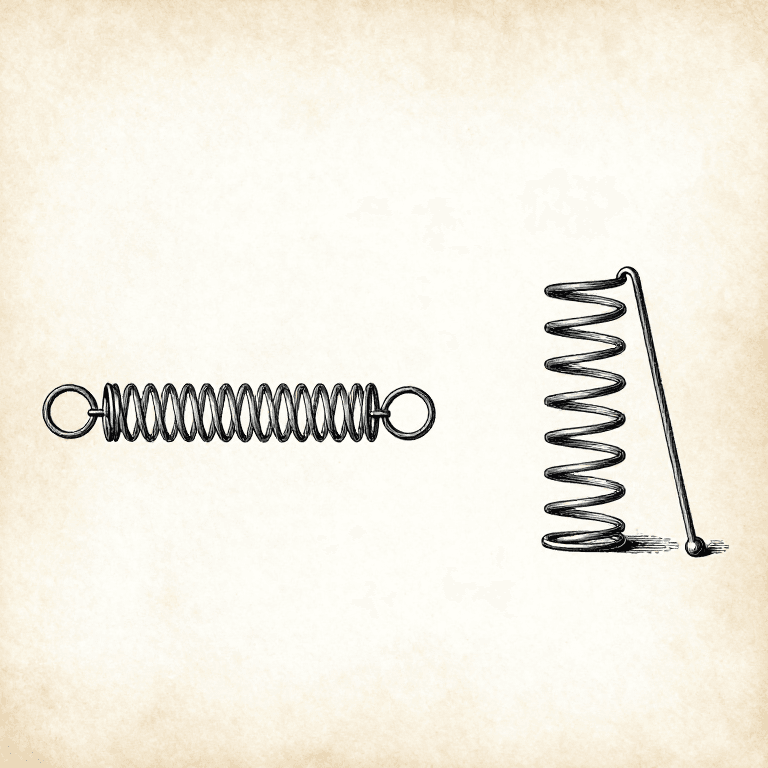
A spring-wire fastening holds the handle upright in use; folded down over the pan, the same loop serves "as a means for hanging the handle and the pan from any convenient support."
4
4
Weigh what the pan picks up
Weigh what the pan picks up
Weigh out 50 g of fine sand and spread it evenly over a square about 30 cm across on a smooth, hard floor. Sweep it into the dustpan with five strokes of the broom, then weigh what is in the pan.
Stick one layer of masking tape along the underside of the dustpan's front edge so the lip stands higher, measure the height with the caliper, and repeat with fresh sand. Add a second and a third layer. Plot sand collected against lip height and compare the trend with the notebook.
Materiais para este passo:
 Areia fina200 g
 Fita de máscara1 peça
Ferramentas necessárias:
 Pá do lixo
 Vassoura
 Balança digital de cozinha
 Paquímetro digital de 6 polegadas
 Régua
Régua5
5
A dustpan that leaves a line or spills
A dustpan that leaves a line or spills
Dustpan troubleshooting.
Flow
Loading...
6
6
History and honest limits
History and honest limits
**Lloyd P. Ray** of Seattle, Washington, filed US 587,607 on 25 March 1897; it is dated 3 August 1897. His claims cover the spring fastening that holds the handle.
**Honest limits.** The notebook treats every grain as a sphere that climbs only a step lower than its radius; real grains are angular and broom bristles lift some of them. The size mix and lip heights are examples. The sand you weigh is the measurement.
Materiais
2- 200 gReferência
- 1 peçaReferência
Ferramentas necessárias
5- Referência
- Referência
- Referência
- Referência
- Referência
Blueprints relacionados
Estes blueprints compartilham conhecimento — técnicas, materiais ou princípios

CC0 Domínio Público
Este blueprint é liberado sob CC0. Você é livre para copiar, modificar, distribuir e usar este trabalho para qualquer finalidade, sem pedir permissão.
Apoie o Maker comprando produtos através do Blueprint, onde ele ganha uma Comissão Maker definida pelos vendedores, ou crie uma nova versão deste Blueprint e inclua-o como conexão no seu próprio Blueprint para compartilhar receita.