ARTE
BELEZA E BEM-ESTAR
ARTESANATO
CULTURA E HISTÓRIA
ENTRETENIMENTO
MEIO AMBIENTE
COMIDA E BEBIDAS
ENGENHARIA REVERSA
CIÊNCIAS
ESPORTES
TECNOLOGIA
TECNOLOGIA VESTÍVEL
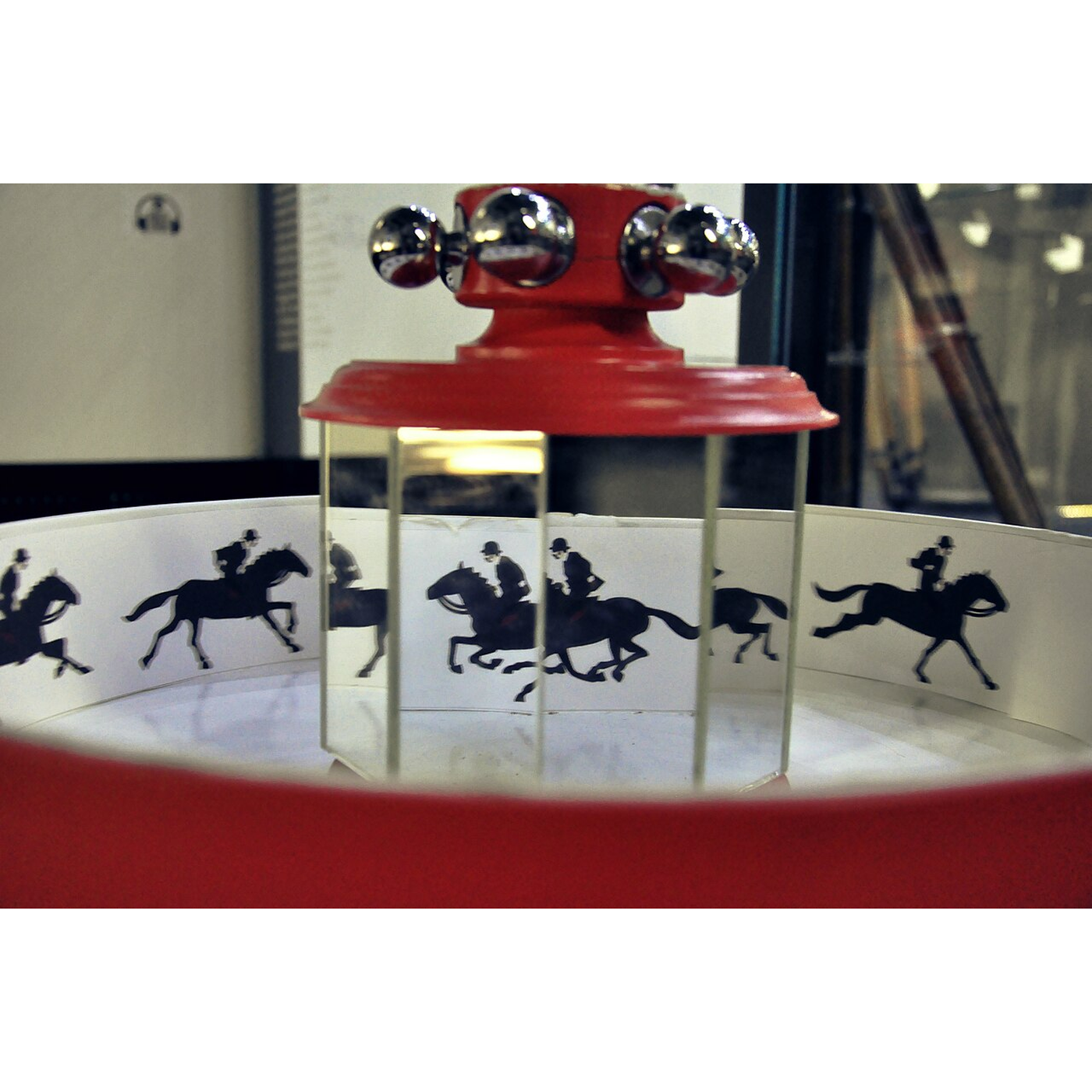
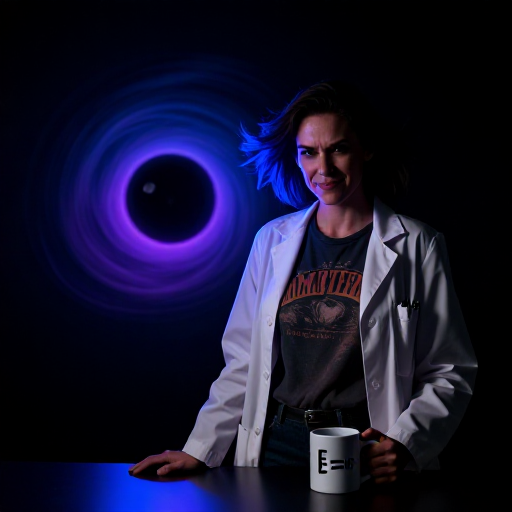

The Praxinoscope: Moving Pictures in a Ring of Mirrors
Before cinema, moving pictures were toys. The zoetrope spun a strip of drawings inside a slotted drum; looking through the slots, you saw each drawing only for an instant, and the series ran together into motion — dimly, because the slots let in so little.
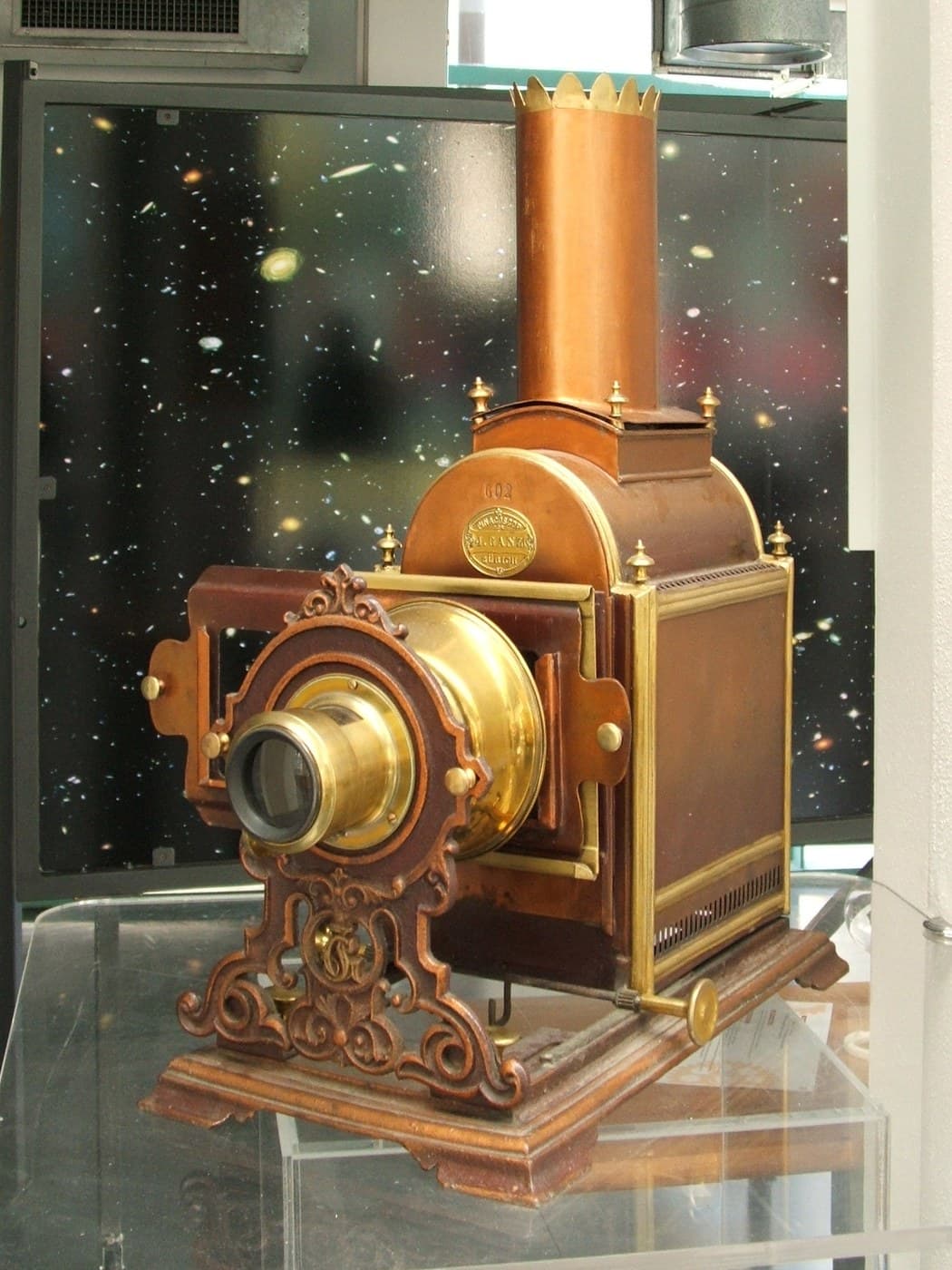
Émile Reynaud of Paris patented the praxinoscope in France on 30 August 1877 (patent 120484). He replaced the slots with a ring of flat mirrors at the centre of the drum, one for each picture, set at half the drum's radius. The reflected pictures appear one after another in the same place, bright and steady. Reynaud went on to project them for audiences in his Théâtre Optique.
This rung shows why the mirrors must stand at half the radius, and builds a praxinoscope.
Iniciante
About 3 hours
Instruções
1
1
Where the images land
Where the images land
A carregar o notebook Jupyter…
2
2
Mirrors making images
Mirrors making images
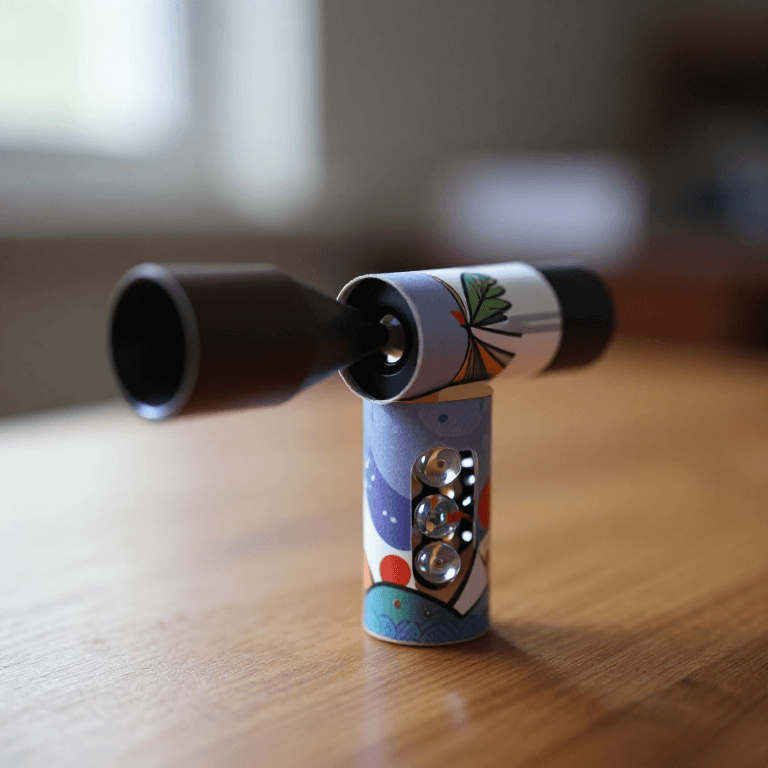
The praxinoscope's trick is plane-mirror imaging, as in the kaleidoscope. The embedded blueprint shows how facing mirrors multiply a picture.
3
3
Build a praxinoscope
Build a praxinoscope
Cut a cardboard disc 220 mm across and glue a 60 mm-high cardboard wall round it: the drum, radius 110 mm. Mount it on a pencil or dowel through a bead so it spins freely on a base.
Cut twelve pieces of acrylic mirror sheet, each 28 mm wide and 50 mm high, and stand them round a twelve-sided cardboard prism glued at the centre, so the mirror faces are 55 mm from the axis — half the drum's radius.
Draw twelve pictures of a simple motion — a ball bouncing, a figure jumping — on a paper strip that fits inside the drum wall, one picture opposite each mirror. Spin the drum and look into the mirrors: the drawings move. Move the mirrors to 45 mm and to 65 mm from the axis and see the image jump and blur.
Materiais para este passo:
 Folhas de cartão canelado1 peça
 Placa de espelho acrílico1 peça
 Cavilhas de madeira dura1 peça
Ferramentas necessárias:
 Pistola de cola quente
 Régua
Régua Paquímetro digital de 6 polegadas
 Transferidor
4
4
A praxinoscope whose pictures jump or blur
A praxinoscope whose pictures jump or blur
Praxinoscope problems.
Flow
Loading...
5
5
History and honest limits
History and honest limits
**Émile Reynaud** patented the praxinoscope in France on 30 August 1877 (patent 120484), and later built the projecting Théâtre Optique, showing hand-drawn animated films to audiences in Paris from 1892 — before cinema.
**Honest limits.** The notebook treats the mirrors as ideal planes and the strip as a perfect circle. The persistence-of-vision explanation of why the pictures blend is simplified; how the brain perceives apparent motion is more subtle.
Materiais
3- Referência
- Referência
- 1 peçaReferência
Ferramentas necessárias
4- Referência
- Referência
- Referência
- Referência
Blueprints relacionados
Estes blueprints compartilham conhecimento — técnicas, materiais ou princípios

CC0 Domínio Público
Este blueprint é liberado sob CC0. Você é livre para copiar, modificar, distribuir e usar este trabalho para qualquer finalidade, sem pedir permissão.
Apoie o Maker comprando produtos através do Blueprint, onde ele ganha uma Comissão Maker definida pelos vendedores, ou crie uma nova versão deste Blueprint e inclua-o como conexão no seu próprio Blueprint para compartilhar receita.