ARTE
BELEZA E BEM-ESTAR
ARTESANATO
CULTURA E HISTÓRIA
ENTRETENIMENTO
MEIO AMBIENTE
COMIDA E BEBIDAS
ENGENHARIA REVERSA
CIÊNCIAS
ESPORTES
TECNOLOGIA
TECNOLOGIA VESTÍVEL


The Shielded Double Crochet Hook: Two Sizes That Slide Out of One Tube
A bare crochet hook catches on everything in a bag, and two sizes mean two loose tools.
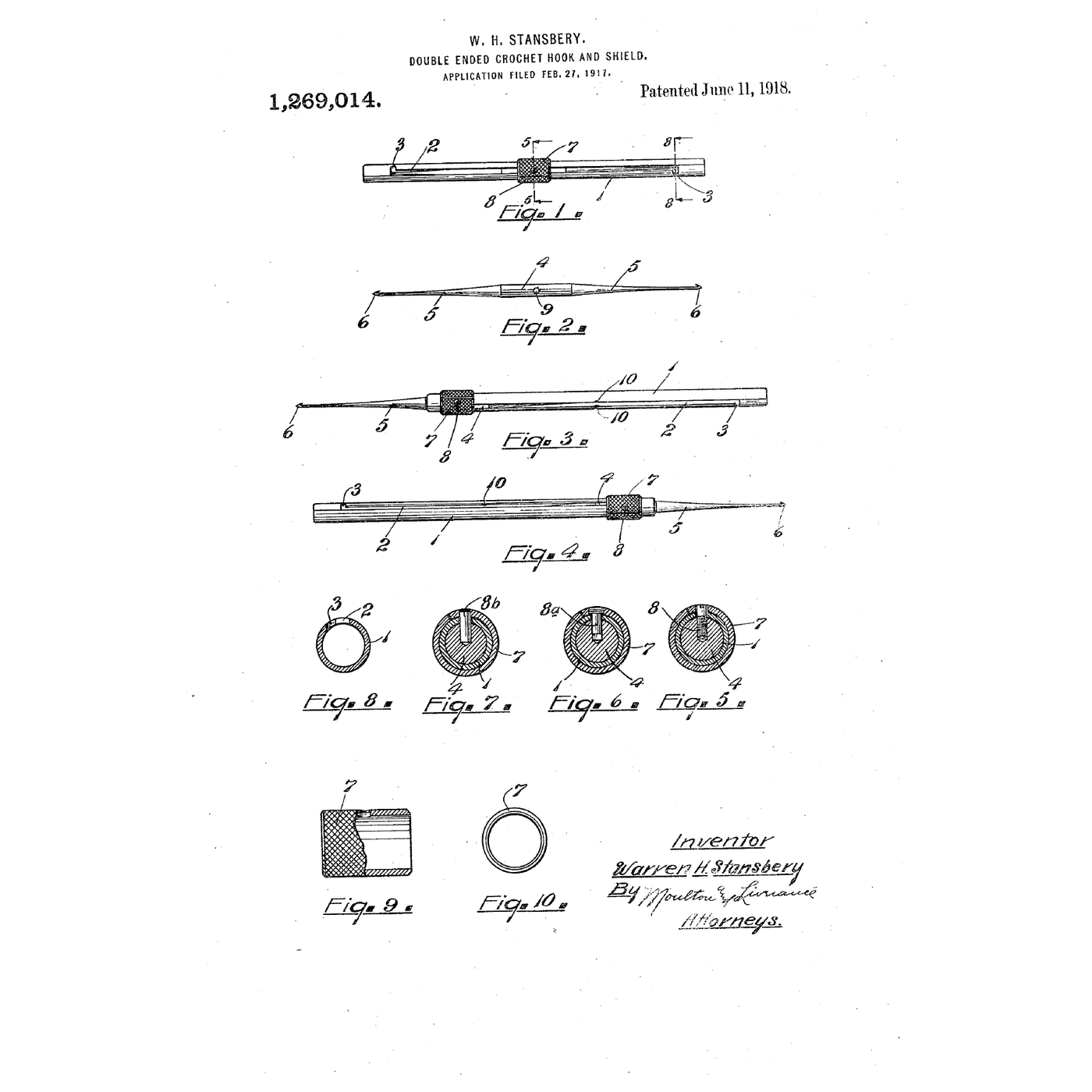
Warren H. Stansbery of Grand Haven, Michigan, received US 1,269,014, patented 11 June 1918, for a double-ended hook in a shield: a tube with a slot along one side holds a hook member with a hook at each end, preferably of different sizes; a sleeve with a pin through the slot pushes either hook out and locks it in the slot's right-angled end, and inward bends at mid-length hold the member when it is stowed.
This rung works out the slot length, then builds the shield from brass tube and two bought hooks, and tests how firmly it stows and locks.
Intermediário
About 3 hours
Instruções
1
1
Slot length
Slot length
A carregar o notebook Jupyter…
2
2
Several sizes carried in one case before it
Several sizes carried in one case before it
The embedded blueprint keeps hooks of several sizes in a case. Stansbery puts two sizes on one member that slides out of its own shield.
3
3
Read US 1,269,014
Read US 1,269,014
"When the device is not in use the double ended hook member is entirely within the shield and the cylindrical section 4 thereof is frictionally engaged by said projections 10 whereby the hook member is held against any accidental movement with respect to the shield. By grasping sleeve 7 either end of the hook member may be projected beyond the shield as shown in Figs. 3 and 4, pin 8, or 8a or 8b moving through the slot 2 until it reaches one end thereof after which the combined sleeve pin and hook may be turned to seat the pin in the extension 3 of the slot, this holding the hook member in position with respect to the shield."
4
4
Cut the shield and slot
Cut the shield and slot
Cut 150 mm of 3/8" brass tube. Mark a line along it and cut a 2 mm slot on it with the rotary tool's cut-off disc from 15 mm to 135 mm, with a 5 mm turn at right angles at each end. Deburr with needle files.
Materiais para este passo:
 Tubo de latão de 9,5 mm de diâmetro exterior1 peça
Ferramentas necessárias:
 Serra de arco para metais
 Torno de bancada
 Ferramenta rotativa (tipo Dremel)
 Jogo de limas de agulha
 Marcador permanente
 Régua
Régua Óculos de segurança transparentes
5
5
Make the hook member
Make the hook member
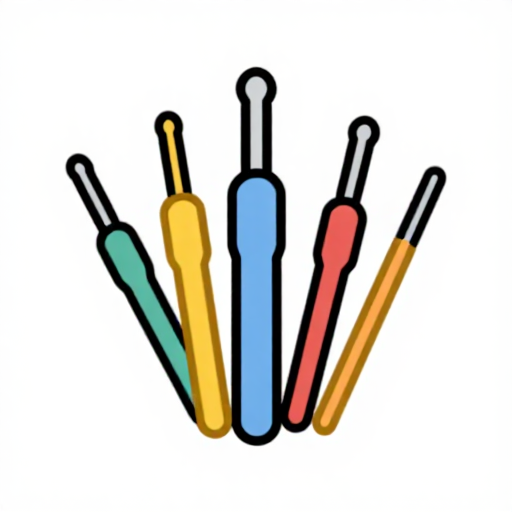
Sand 40 mm of hardwood dowel until it slides freely in the tube. Drill each end on the axis for a hook's shank. Cut two hooks of different sizes from the set to leave 50 mm each, and epoxy one into each end.
Materiais para este passo:
 Cavilhas de madeira dura1 peça
 Conjunto de agulhas de croché2 peças
 Epóxi de dois componentes1 peça
Ferramentas necessárias:
 Lixa
Lixa Paquímetro digital de 6 polegadas
 Berbequim sem fios
 Jogo de brocasSerra de arco para metais
6
6
Fit the sleeve and pin
Fit the sleeve and pin
Cut 20 mm of 1/2" brass tube for the sleeve and drill a 1.5 mm hole through one side. Slide the member into the shield, the sleeve over it, and push a 1.5 mm steel pin through the sleeve and slot into a 1.5 mm hole drilled in the dowel's middle.
Materiais para este passo:
 Tubo de latão de 1/2 polegada de diâmetro exterior1 peça
 Pino cilíndrico de aço1 peça
Ferramentas necessárias:
Serra de arco para metaisBerbequim sem fiosJogo de brocas Martelo
7
7
Dent the stops
Dent the stops
With the member centred, tap a light dent inward with the centre punch on each side of the slot at mid-length, until the dowel is gripped but still slides.
Ferramentas necessárias:
 Punção de centroMartelo
8
8
Or print it: one shield, a member per yarn weight
Or print it: one shield, a member per yarn weight
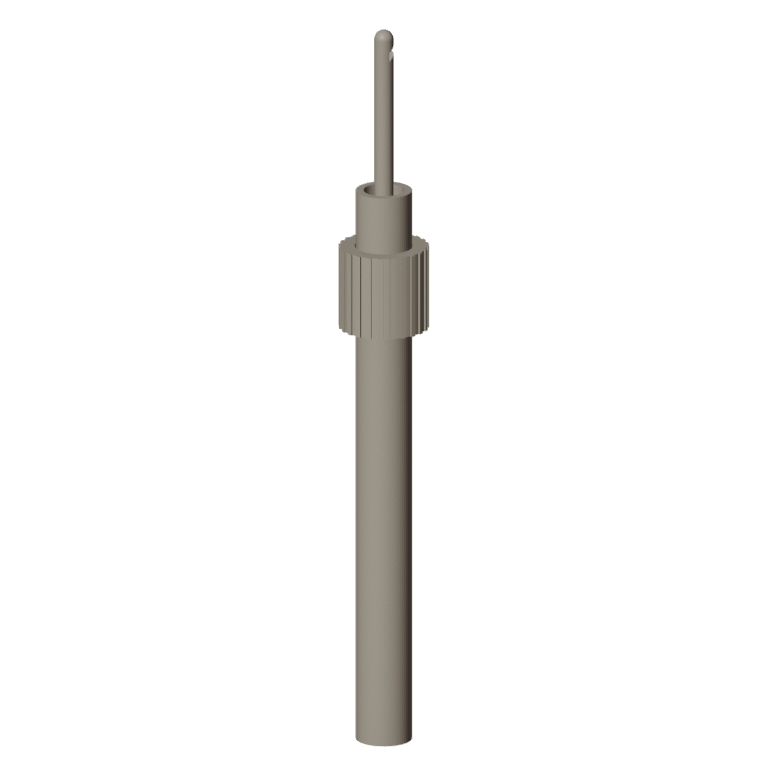
Instead of brass and bought hooks, print the parts in PLA at 0.12 mm layers, 100 % infill for the members:
- the shield, 150 mm long with its slot and right-angled turns (/uploads/blueprints/shielded-crochet-hook-shield.stl)
- the knurled sleeve (/uploads/blueprints/shielded-crochet-hook-sleeve.stl)
- a member for your yarn: 3.5/4.5 mm for fine yarn (/uploads/blueprints/shielded-crochet-hook-member-3_5-4_5.stl), 5/6 mm for medium (/uploads/blueprints/shielded-crochet-hook-member-5_0-6_0.stl), 6.5/8 mm for bulky (/uploads/blueprints/shielded-crochet-hook-member-6_5-8_0.stl)
Every member has the same 10 mm core, so one shield takes them all. Print members standing upright, then join sleeve, slot and member with a 2 mm steel pin, as in step 6.
Materiais para este passo:
 Filamento de PLA1 peça
Ferramentas necessárias:
 Impressora 3D de filamento (FDM)
9
9
The patent drawing
The patent drawing
US 1,269,014 drawing sheet, public domain (expired patent).
10
10
Test it
Test it
Pull the sleeve with the force meter to unstow the member; note the force. Lock each hook out, shake it hard ten times, and check it has not moved. Crochet a 20-stitch chain with each hook and time it.
Materiais para este passo:
 Fio1 peça
Ferramentas necessárias:
 Dinamómetro (balança de mola)
 Cronómetro
11
11
A hook that rattles, will not lock or will not slide
A hook that rattles, will not lock or will not slide
Shielded double crochet hook troubleshooting.
Flow
Loading...
12
12
History and honest limits
History and honest limits
**Warren H. Stansbery** of Grand Haven, Michigan, filed US 1,269,014 on 27 February 1917; it was patented 11 June 1918. His sleeve has a knurled surface, convenient for grasping in crocheting; he showed a screw, a headed connector and a straight pin through the slot, and wrote that the straight pin "is the way that the device has been actually constructed."
**Honest limits.** He gives no sizes; ours are examples, and a dowel with two bought hooks stands in for his one-piece member. Your forces and times are the result.
Materiais
8- Referência
- 1 peçaReferência
- Referência
- Referência
- Referência
- 1 peçaReferência
- 1 peçaReferência
- 1 peçaReferência
Ferramentas necessárias
16- Referência
- Referência
- Referência
- Referência
- Referência
- Referência
- Referência
- Referência
- Referência
- 1 vendor sell this, none ship to you yetReferência
- Referência
- Referência
- Referência
- Referência
- Referência
- Referência
Blueprints relacionados
Estes blueprints compartilham conhecimento — técnicas, materiais ou princípios
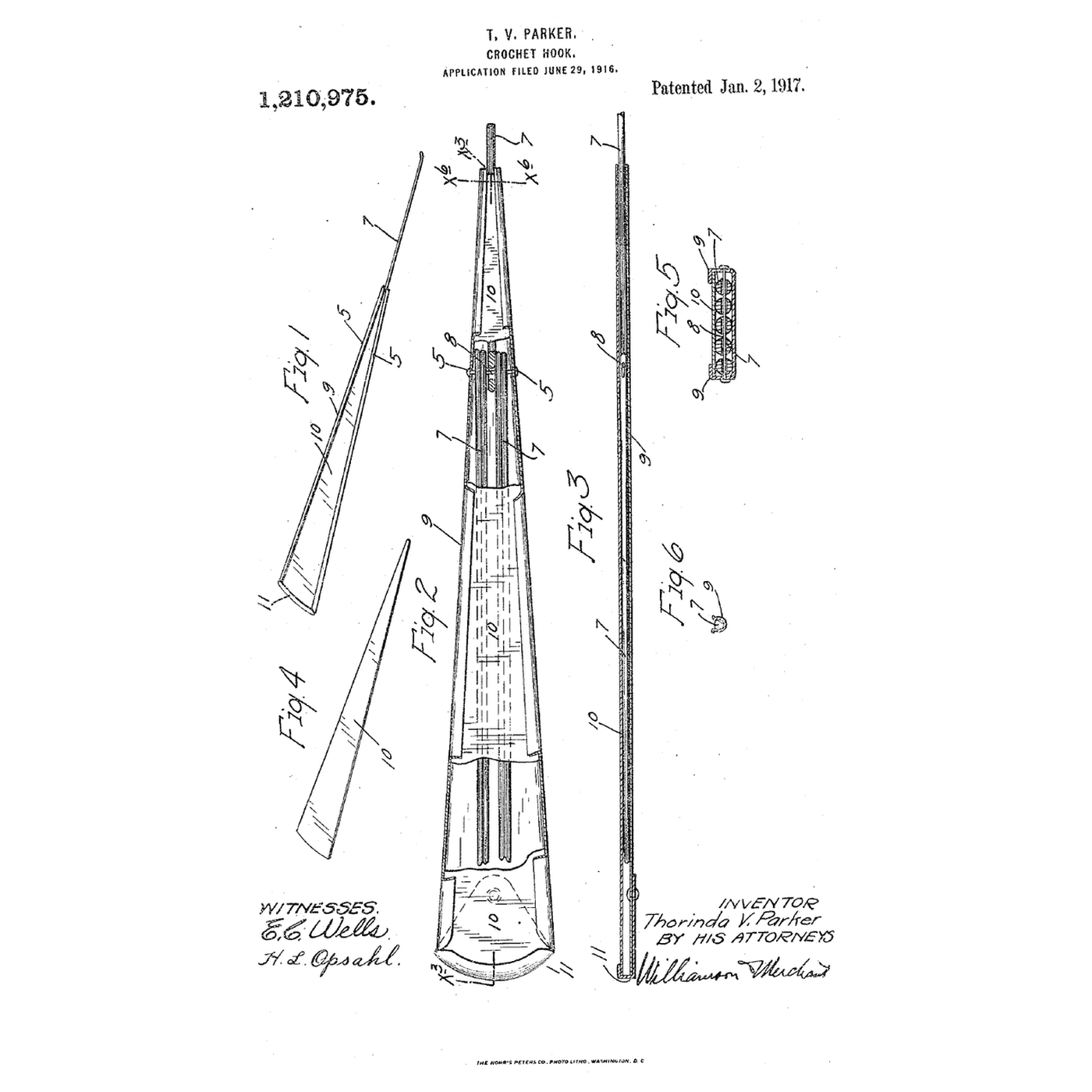
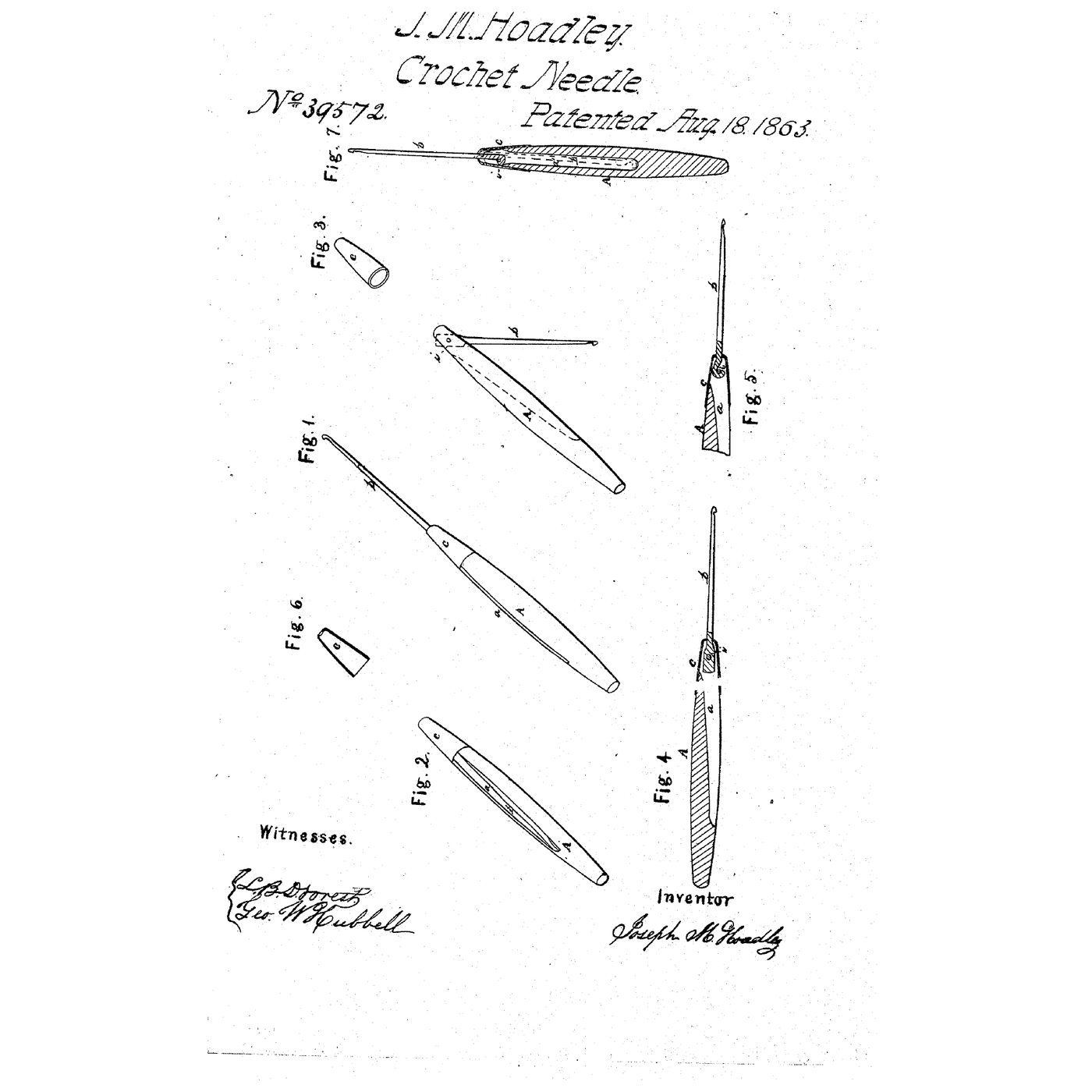

CC0 Domínio Público
Este blueprint é liberado sob CC0. Você é livre para copiar, modificar, distribuir e usar este trabalho para qualquer finalidade, sem pedir permissão.
Apoie o Maker comprando produtos através do Blueprint, onde ele ganha uma Comissão Maker definida pelos vendedores, ou crie uma nova versão deste Blueprint e inclua-o como conexão no seu próprio Blueprint para compartilhar receita.