ARTE
BELEZA E BEM-ESTAR
ARTESANATO
CULTURA E HISTÓRIA
ENTRETENIMENTO
MEIO AMBIENTE
COMIDA E BEBIDAS
ENGENHARIA REVERSA
CIÊNCIAS
ESPORTES
TECNOLOGIA
TECNOLOGIA VESTÍVEL


The Travelling Pin Cushion: Felt Between Veneers, Wax in the Lid
A pin cushion keeps pins and needles where they can be found and taken one at a time. For travelling, it has to be flat and hold everything else too.
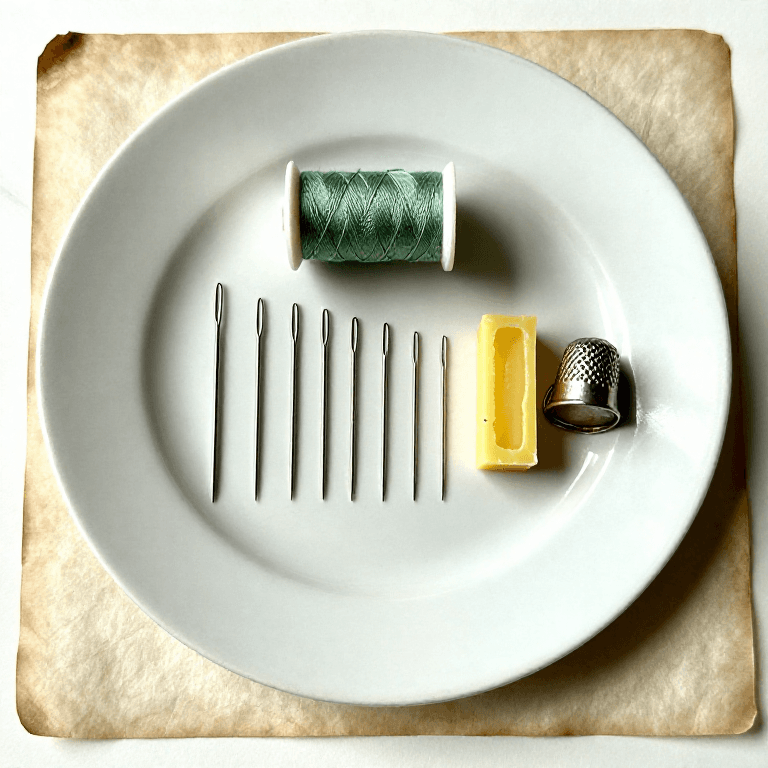
Scotto C. Nash of Harrisburg, Pennsylvania, received US 234,922, dated 30 November 1880 (filed 19 August 1880), for a thread and pin holder he called a "traveler's vade mecum": a box for buttons and a thimble, flat wings that hold thread and are pin-cushions, "a layer of felt" between two pieces of veneer, a double-ended cushion in one cover and a cup of beeswax in the other.
This rung estimates how felt holds a pin, then makes a flat felt cushion and measures the pull to draw a pin out.
Iniciante
About 2 hours
Instruções
1
1
How felt holds a pin
How felt holds a pin
A carregar o notebook Jupyter…
2
2
The wax in the lid
The wax in the lid
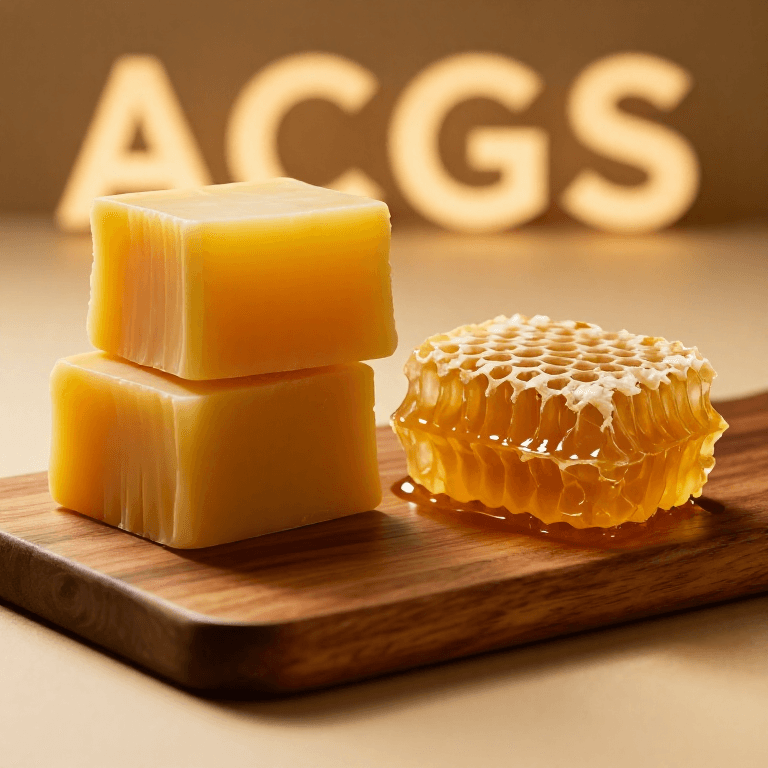
The embedded blueprint renders beeswax from comb; drawn over sewing thread it smooths and strengthens it, which is why Nash's case carries a cup of it.
3
3
Read US 234,922
Read US 234,922
"This device, which I term a 'traveler's vade mecum,' is made with a box for receiving buttons and similar articles, and with wings of peculiar construction at each side of the box for holding thread and forming pin-cushions, and the removable cover at one end has a receptacle for beeswax on the inside, so as to keep the wax from becoming soiled, or from soiling the fingers".
In the other cover is "a double-ended pincushion", "adapted to receive long pins or needles at the inner end, that are left projecting and pass into the thimble", and "ordinary pins can be inserted into the outer end of the cushion."
"There is a layer of felt" between "two pieces of veneer", "the parts being glued together". "The pins are easily stuck into this felt."
4
4
Make a flat cushion and test it
Make a flat cushion and test it
Cut two pieces of thin card or veneer and a piece of wool felt the same size, and glue the felt between them, leaving the felt edge exposed all round. Wind thread round it; the pins go into the felt edge.
Push a pin into the felt edge to 5, 10 and 20 mm. Tie thread to its head and pull it straight out with the force meter, reading the peak. Repeat each depth three times, and compare the trend with the notebook. Draw a length of thread through the beeswax and feel the difference when sewing.
Materiais para este passo:
 Folha de feltro de lã1 peça
 Cera de abelha1 peça
 Alfinetes de costura1 peça
 Linha de costura1 peça
 Moldes de cartão1 peça
Ferramentas necessárias:
 Alfineteira
 Dinamómetro (balança de mola)
 Régua
Régua Tesoura de alfaiate
5
5
A cushion that drops pins or blunts them
A cushion that drops pins or blunts them
Pin cushion troubleshooting.
Flow
Loading...
6
6
History and honest limits
History and honest limits
**Scotto C. Nash** of Harrisburg, Pennsylvania, filed US 234,922 on 19 August 1880; it is dated 30 November 1880. His claims include the flat cushion of two veneers with felt between them and wood strips at the edges.
**Honest limits.** The notebook treats the felt's squeeze as an even pressure; real felt varies with density and wear. Pressure, friction and sizes are examples. Your force-meter readings are the measurement.
Materiais
5- 1 peçaReferência
- 1 peçaReferência
- 1 peçaReferência
- 1 peçaReferência
- 1 peçaReferência
Ferramentas necessárias
4- Referência
- Referência
- Referência
- Referência
Blueprints relacionados
Estes blueprints compartilham conhecimento — técnicas, materiais ou princípios



CC0 Domínio Público
Este blueprint é liberado sob CC0. Você é livre para copiar, modificar, distribuir e usar este trabalho para qualquer finalidade, sem pedir permissão.
Apoie o Maker comprando produtos através do Blueprint, onde ele ganha uma Comissão Maker definida pelos vendedores, ou crie uma nova versão deste Blueprint e inclua-o como conexão no seu próprio Blueprint para compartilhar receita.