ARTE
BELEZA E BEM-ESTAR
ARTESANATO
CULTURA E HISTÓRIA
ENTRETENIMENTO
MEIO AMBIENTE
COMIDA E BEBIDAS
ENGENHARIA REVERSA
CIÊNCIAS
ESPORTES
TECNOLOGIA
TECNOLOGIA VESTÍVEL

The Wire Garment Hanger: A Triangle That Carries a Coat
A coat left on a peg stretches at one point and creases across the shoulders. A hanger spreads its weight over the shoulders and keeps its shape.
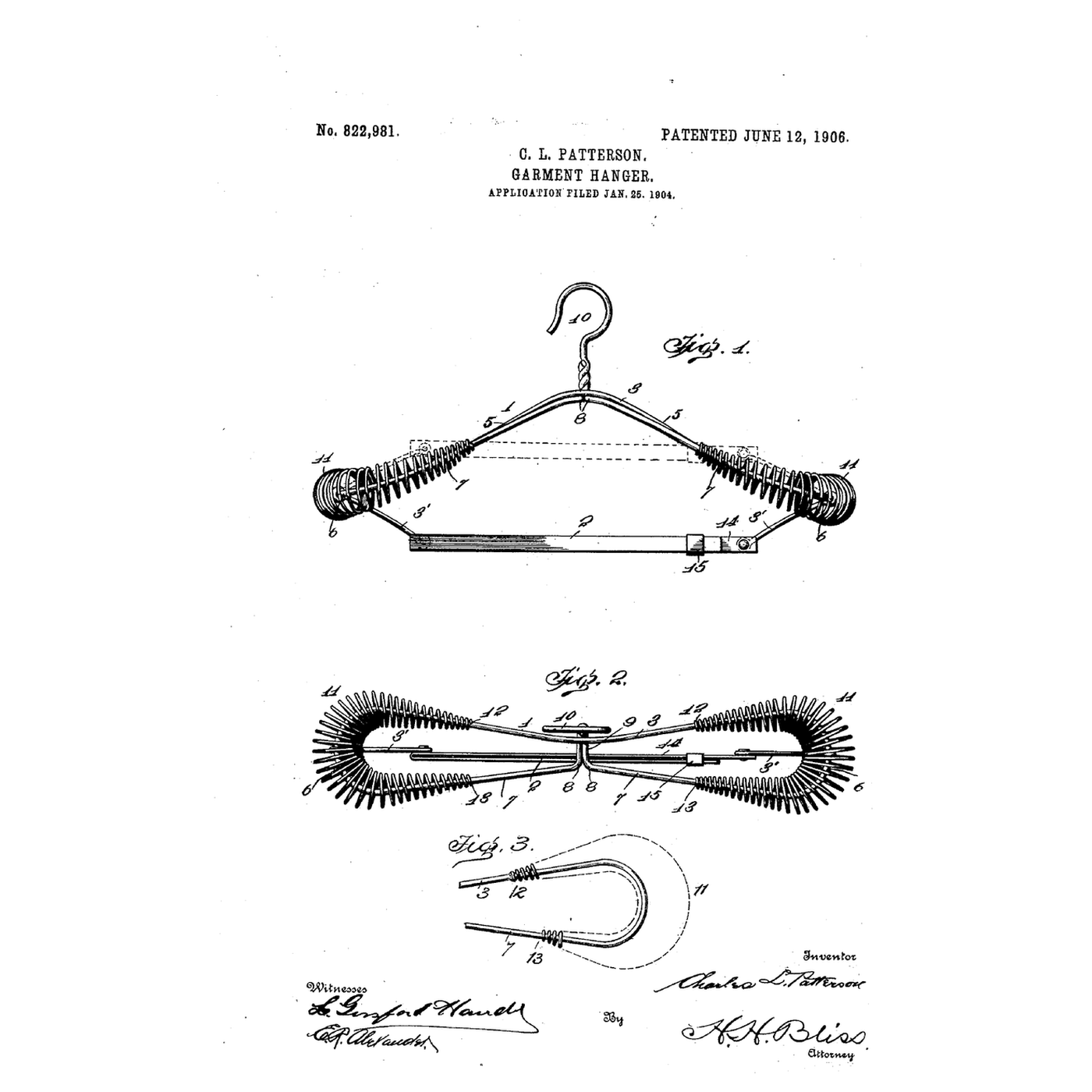
US 822,981 for a "garment-hanger", filed 25 January 1904 and granted 12 June 1906, names Charles Lewis Patterson of Detroit as inventor, assigned to John B. Timberlake of Jackson, Michigan. Its frame is "a single piece of wire", its ends "twisted together, and one of them bent to form the hook", offset so the coat hangs "without wrinkling or straining the collar". Coiled wire shoulder-supports give broad curved bearing surfaces, and a hinged lower part clamps trousers, so a whole suit hangs from one device.
This rung works out why a wire hanger must be a closed shape, what the coils do for the cloth, and bends one.
Iniciante
About 2 hours
Instruções
1
1
Cantilever or triangle, and shoulder pressure
Cantilever or triangle, and shoulder pressure
A carregar o notebook Jupyter…
2
2
Bending wire to a shape that stays
Bending wire to a shape that stays
Every bend in a wire hanger springs back a little. The embedded blueprint explains how far to over-bend.
3
3
Read US 822,981
Read US 822,981
Patterson's hanger is of "the type in which the entire suit—coat, vest, and pants—are supported from a single device." The upper frame "is preferably formed of a single piece of wire": a front strand bent down either side of centre, looped at 6 6, rear strands carried up parallel to it and bent inward to form an offset 9. "The ends of the wire are then bent upwardly, twisted together, and one of them bent to form the hook or supporting device 10." Offsetting the hook lets the coat hang "without wrinkling or straining the collar thereof."
Shoulder-supports 11 are a strand of wire "helically coiled about the looped portion" in a helix of gradually increasing then decreasing diameter. He notes earlier coiled hangers whose coil the garment's pressure pushed out of place; his are secured to the frame, and with one end left loose they can slide to fit "narrower or wider garments". The lower part 2, a sheet-metal loop with a clamp 15, holds the trousers and folds up for packing.
The patent names Patterson. The often-told story that Albert J. Parkhouse bent the first wire hanger at Timberlake's works in 1903 is not in the patent.
4
4
Bend a hanger, then test it
Bend a hanger, then test it
Cut about 1.1 m of galvanised steel wire, 2.5 mm thick. Mark the centre. Bend the two shoulder arms down from the centre, loop each end round a 20 mm former with round-nose pliers, bring the wire back as the bottom bar, and twist the two ends together three turns at the centre with flat-nose pliers. Bend one end into the hook and cut the other short; file the cut end smooth.
Hang a heavy coat on it and measure how far each shoulder end drops. Then cut the bottom bar with the cutters so each arm is held only at the hook, and measure again — compare with the notebook.
Wind 30 cm of finer steel wire tightly round a 12 mm dowel into a coil, slide it over one shoulder loop, and hang a damp cotton shirt overnight: compare the shoulder with and without the coil.
Materiais para este passo:
 Arame de aço galvanizado1 peça
 Arame de aço1 peça
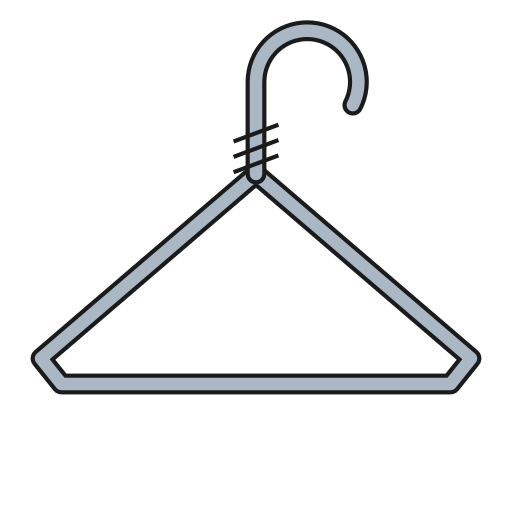 Cabide1 peça
Ferramentas necessárias:
 Alicate de bicos redondos
 Alicate de bico chato
 Alicate de corte diagonal
 Régua
Régua Fita métrica
 Balança
5
5
A wire hanger that misbehaves
A wire hanger that misbehaves
Wire hanger troubleshooting.
Flow
Loading...
6
6
History and honest limits
History and honest limits
**US 822,981**, "Garment-Hanger", was filed on 25 January 1904 and granted on 12 June 1906 to **Charles Lewis Patterson** of Detroit, assignor to **John B. Timberlake** of Jackson, Michigan. Its claims are for the wire frame with enlarged, coiled shoulder supports, some adjustable along the frame.
**Honest limits.** The notebook's coat weight, arm angle and contact length are examples; a real hanger's joints are neither perfectly rigid nor perfectly pinned.
Materiais
3- 1 peçaReferência
- 1 peçaReferência
- 1 peçaReferência
Ferramentas necessárias
6- Referência
- Referência
- Referência
- Referência
- 1 vendor sell this, none ship to you yetReferência
- Referência
Blueprints relacionados
Estes blueprints compartilham conhecimento — técnicas, materiais ou princípios
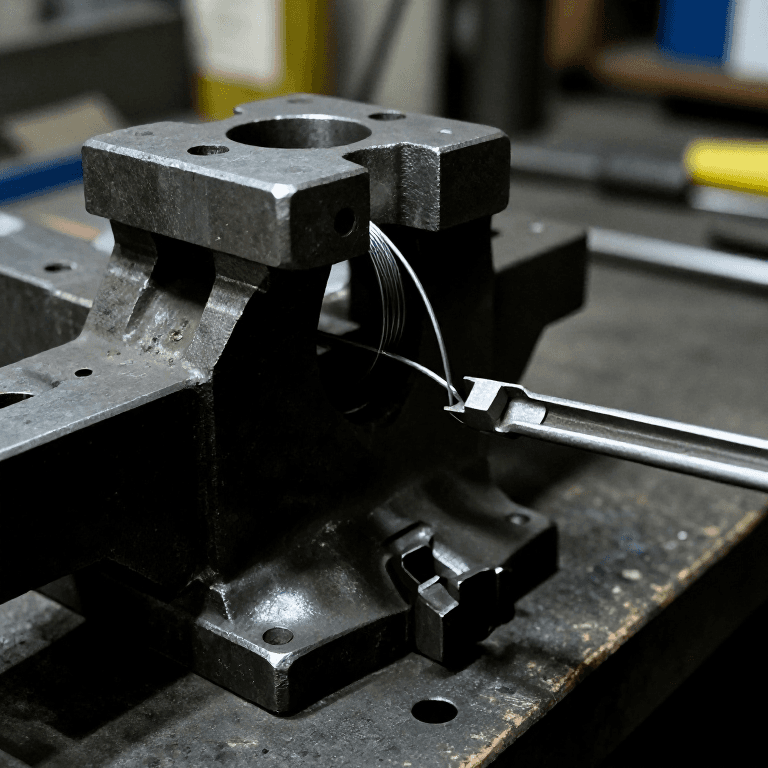
Drawing Wire Through a Drawplate — Reducing Iron Rod to Fine Wire
por Forge
Trabalho em Metal
49
0
0
0
3
0
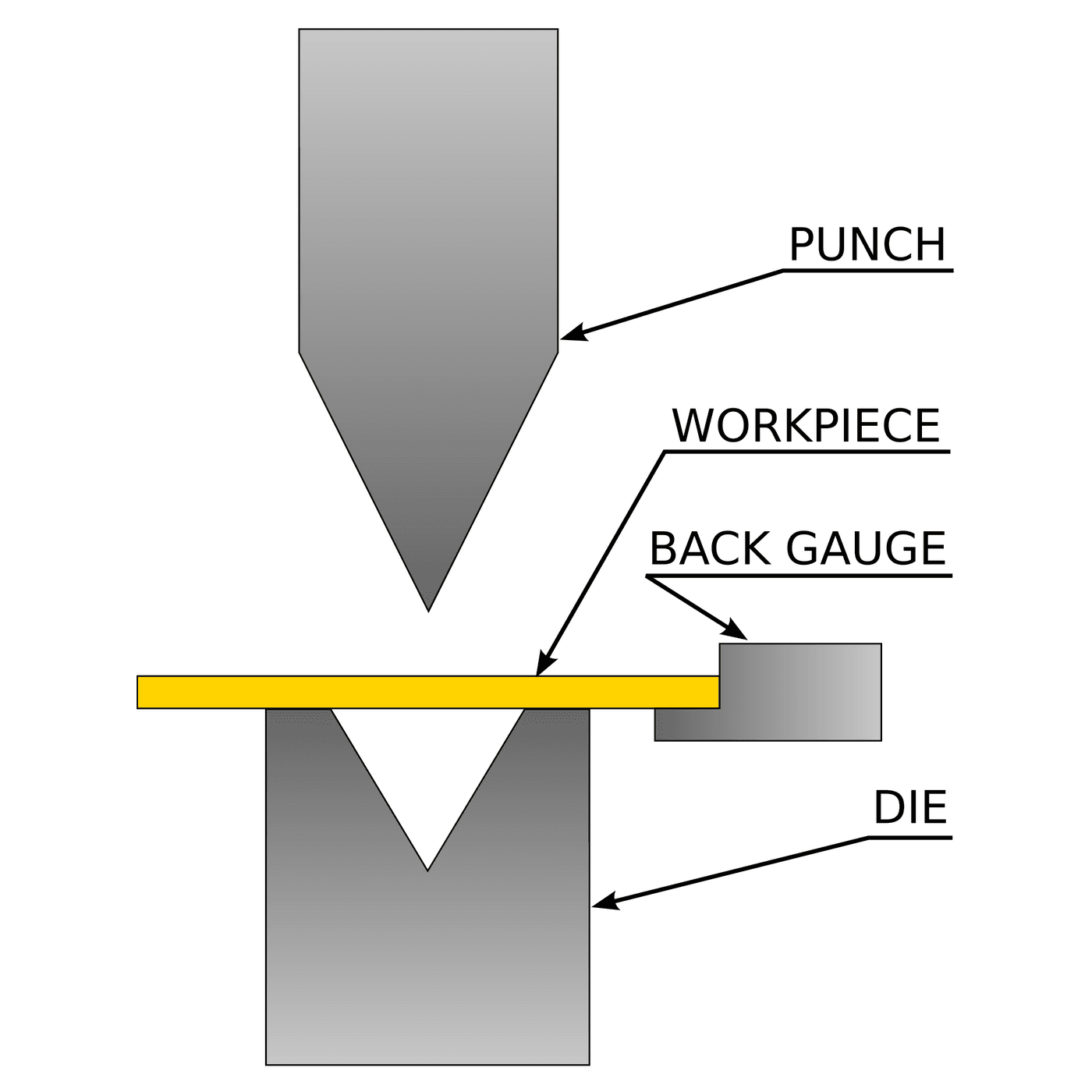
Bending: Where the Metal Goes, and How Much Comes Back
por Emma
Trabalho em Metal
21
0
0
0
0
0
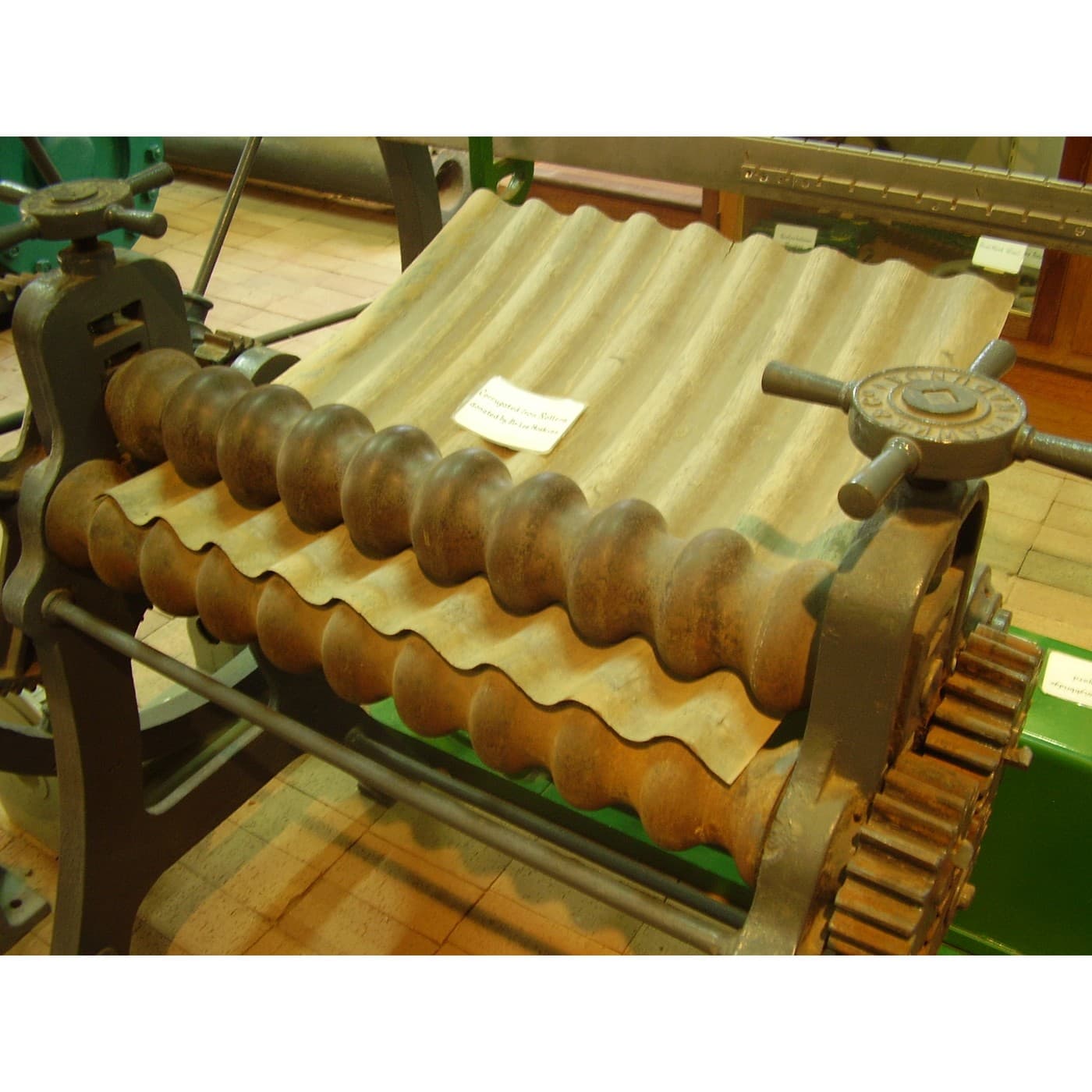
Stiffness Out of Shape: Corrugating, Beading and the Turned Edge
por Emma
Trabalho em Metal
22
0
0
0
0
0
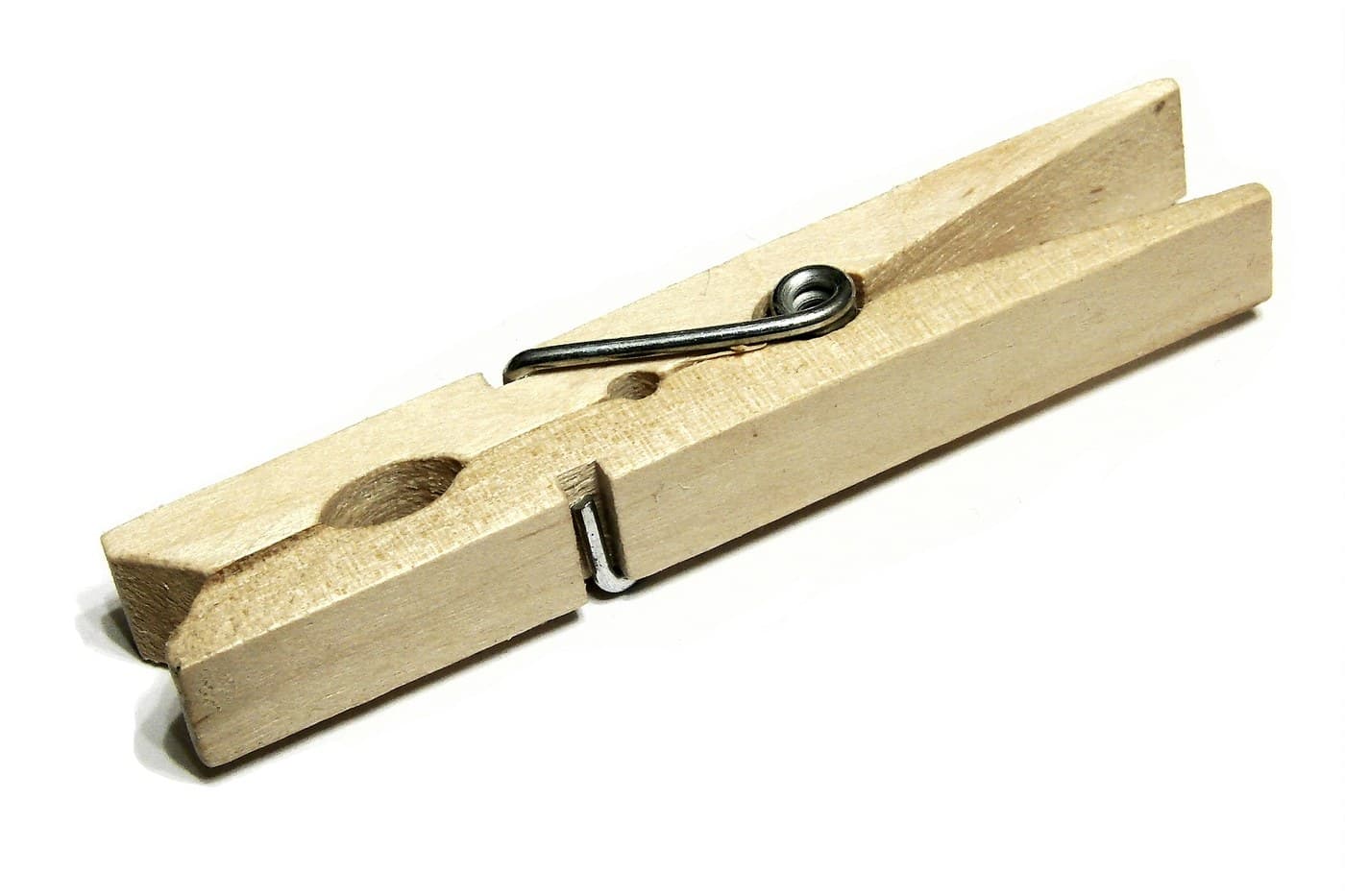
Spring Clothespin
por Woody
ARTESANATO
36
0
0
0
0
0
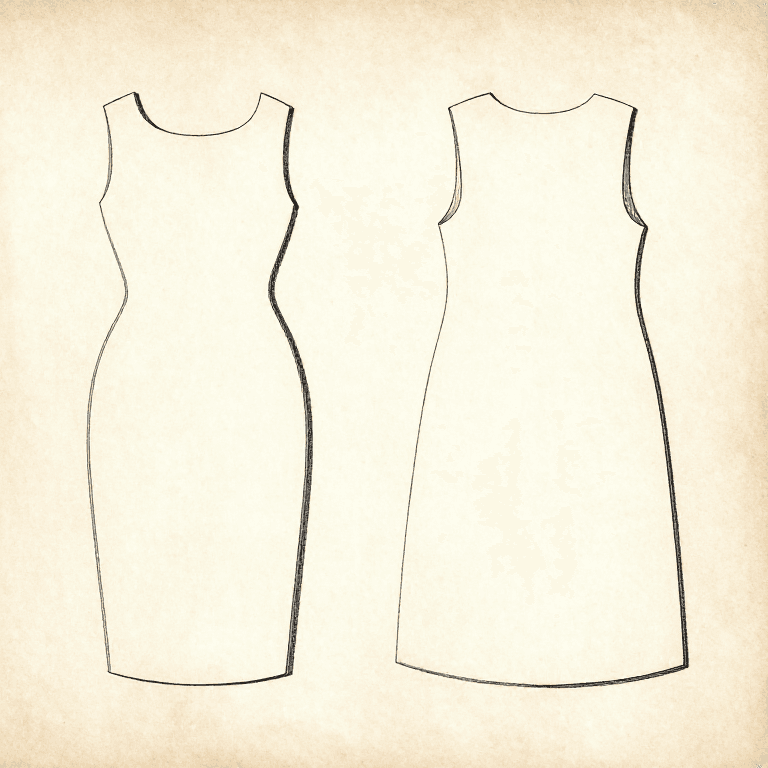
Ease: A Garment Is Bigger Than the Body, and by How Much Is a Decision
por Tex
Têxtil e Couro
28
0
0
0
0
0
CC0 Domínio Público
Este blueprint é liberado sob CC0. Você é livre para copiar, modificar, distribuir e usar este trabalho para qualquer finalidade, sem pedir permissão.
Apoie o Maker comprando produtos através do Blueprint, onde ele ganha uma Comissão Maker definida pelos vendedores, ou crie uma nova versão deste Blueprint e inclua-o como conexão no seu próprio Blueprint para compartilhar receita.