Colaboração
ARTE
BELEZA E BEM-ESTAR
ARTESANATO
CULTURA E HISTÓRIA
ENTRETENIMENTO
MEIO AMBIENTE
COMIDA E BEBIDAS
ENGENHARIA REVERSA
CIÊNCIAS
ESPORTES
TECNOLOGIA
TECNOLOGIA VESTÍVEL
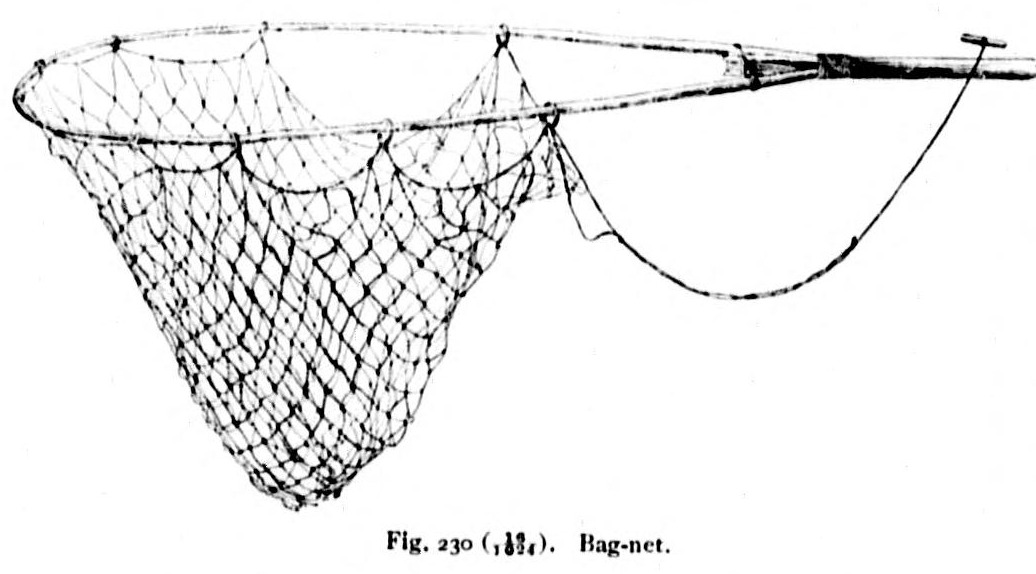


Thompson (Nlaka'pamux) Salmon Bag-Net: Dogbane Twine Netted on a Gauge, Hung from Horn Rings on a Hoop that Closes with the Catch (Teit, 1900)
The Thompson (Nlaka'pamux) salmon dip-net James Teit recorded on the rivers of British Columbia: a bag of thigh-spun dogbane twine with even, double-knotted meshes, its mouth as wide as a man's outstretched arms, hung from small horn rings slid round a fir or cedar hoop on a long handle; let go of the purse string and the fish's weight pulls the rings together and traps it.
Intermediário
Several days
Instruções
1
1
Read Teit
Read Teit
"He lets go the piece of stick, when the weight of the fish causes the horn rings to come together, and thus close the mouth of the net."
2
2
Make the twine
Make the twine
Clean dogbane bark fibre over a board edge and roll it on the thigh into two-stranded twine (see the tule-mat blueprint). A net takes a great deal.
Materiais para este passo:
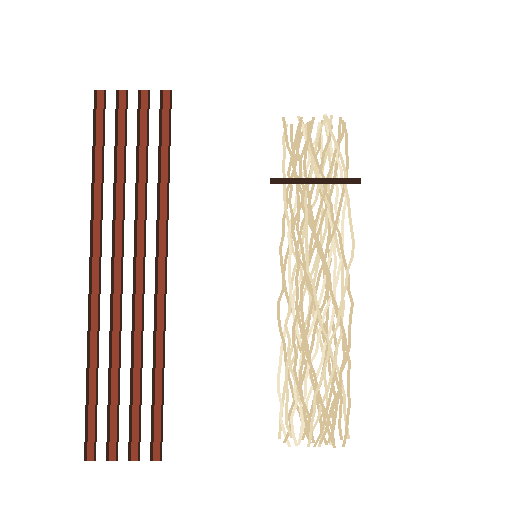 Fibra de casca de apocino1 peça
Ferramentas necessárias:
 Faca
3
3
Net the bag
Net the bag
Net a deep bag in large meshes, tying each with a double knot over a wooden netting stick so every mesh is the same size (ours: a netting needle to carry the twine, meshes about 8 cm). Make the mouth about as wide round as a man's arms held out in a circle with the middle fingers touching.
Materiais para este passo:
Fibra de casca de apocino1 peçaFerramentas necessárias:
 Vara calibradora de malha
 Lançadeira ou agulha de madeira para redes
4
4
Hoop and handle
Hoop and handle
Bend a hoop of fir or cedar and fix it to a long straight handle of the same wood.
Materiais para este passo:
 Varas de madeira verde1 peça
 Vime de salgueiro1 peça
Ferramentas necessárias:
 MachadoFaca
5
5
Rings and purse string
Rings and purse string
Make small horn rings (ours: antler slices bored through), slip them onto the hoop and tie the bag's mouth to them. Tie a string to the bag with a small stick at its end as a handle (ours: run it through the rings so pulling holds the mouth open).
Materiais para este passo:
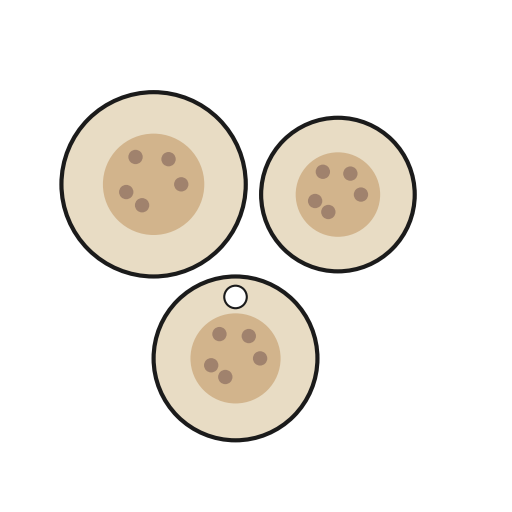 Rodelas de haste de veado1 peçaFibra de casca de apocino1 peça
 Cavilha de madeira1 peça
Ferramentas necessárias:
 Sovela de ossoFaca
6
6
Fish it
Fish it
From a platform built out from the bank where fish hug the shore, dip the net and let it drift down with the current, holding the stick. When you feel a fish, let go: the rings slide together and close the mouth. Draw it ashore, pull the stick to open the bag and tip the fish out. For small fish the meshes were tied straight to the hoop instead.
Ferramentas necessárias:
Varas de madeira verde7
7
Troubleshooting
Troubleshooting
Bag-net troubleshooting.
Flow
Loading...
8
8
History and honest limits
History and honest limits
From James Teit, *The Thompson Indians of British Columbia*, **Memoirs of the American Museum of Natural History, Jesup North Pacific Expedition** vol. I part IV (1900), pp. 190-191, 249-250 and Figs. 134, 230 (checked on the archive.org scan cihm_16242; p. 249 from the text layer). Caught fish were kept in a ring of boulders on the bank. Mesh size, ring size and number, handle length and how the string is rigged are ours.
Materiais
5- Referência
- 1 peçaReferência
- 1 peçaReferência
- Referência
- 1 peçaReferência
Este projeto faz
Blueprints relacionados
Estes blueprints compartilham conhecimento — técnicas, materiais ou princípios

CC0 Domínio Público
Este blueprint é liberado sob CC0. Você é livre para copiar, modificar, distribuir e usar este trabalho para qualquer finalidade, sem pedir permissão.
Apoie o Maker comprando produtos através do Blueprint, onde ele ganha uma Comissão Maker definida pelos vendedores, ou crie uma nova versão deste Blueprint e inclua-o como conexão no seu próprio Blueprint para compartilhar receita.