ARTE
BELEZA E BEM-ESTAR
ARTESANATO
CULTURA E HISTÓRIA
ENTRETENIMENTO
MEIO AMBIENTE
COMIDA E BEBIDAS
ENGENHARIA REVERSA
CIÊNCIAS
ESPORTES
TECNOLOGIA
TECNOLOGIA VESTÍVEL
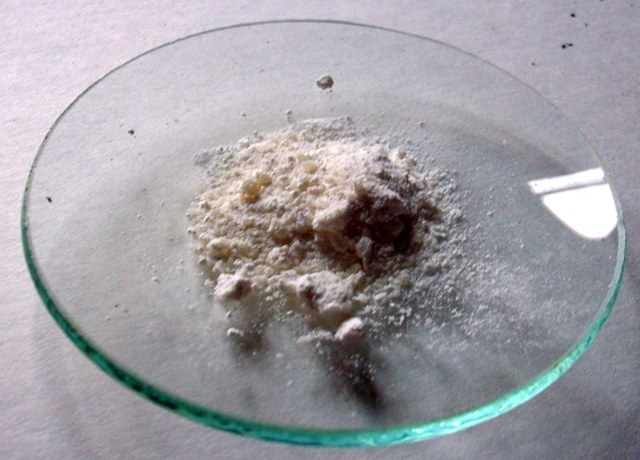


Tin Oxide: Tin Burnt in an Open Iron Pot
Tin oxide is made by burning tin in air: melted tin in an open pot slowly turns to a white powder. Andrew Ure (1839) describes the enamel makers' way, with a lead-tin alloy in a flat iron pot, the powder raked aside as it forms, then ground and washed fine. Done with pure tin it gives the milky white oxide used in glazes, opal glass and polishing.
The picture: tin(IV) oxide powder on a watch glass.
Intermediário
A day
Instruções
1
1
Melt the tin in an open pot
Melt the tin in an open pot
Melt the tin in a flat cast-iron pot over a charcoal fire. Leave the pot open to the air.
Materiais para este passo:
 Lingote de estanho1 kg
 Carvão vegetal1 as required
Ferramentas necessárias:
 Balança de pratos
 Cadinho de ferro fundido
 Forno de carvão vegetal
 Tenazes
 Luvas resistentes ao calor
2
2
Burn it, rake the powder aside
Burn it, rake the powder aside
Raise the heat towards a dull red and keep stirring the surface. Rake the white crust to the sides as it forms, as Ure describes, and add tin as it is used up. Keep the heat as low as will do: Ure warns that too strong a fire fuses the powder and makes it hard to grind.
Ferramentas necessárias:
Cadinho de ferro fundido Ancinho de ferro
 Escumadeira perfuradaLuvas resistentes ao calor
3
3
Pick out the metal
Pick out the metal
Let the powder cool. Sift it and pick out any beads of tin; Ure: no metal may be left in the oxide. Melt the beads back in.
Ferramentas necessárias:
 Peneira fina
 Óculos de proteção química
4
4
Grind and wash
Grind and wash
Grind the powder fine with water. Stir it up in a bucket of water, let the coarse part settle for a moment and pour off the milky water; let the fine part settle out of that, as Ure washed his. Dry it in a dish and store it closed.
Materiais para este passo:
 Água10 litros
Ferramentas necessárias:
 Almofariz e pilão
 Moleta
 Balde
 Cápsula de evaporação
 Frasco de vidro
5
5
Tin to oxide
Tin to oxide
A carregar o notebook Jupyter…
6
6
Limits
Limits
Burning tin in air is how tin oxide is made (Wikipedia); the pot, raking, low heat and washing are Ure's practice for the lead-tin calx of enamel makers, used here with pure tin by our choice. Tin oxidises more slowly than Ure's lead-rich alloy, so allow time.
Materiais
3- Referência
- 1 as requiredReferência
- 10 litrosReferência
Ferramentas necessárias
14- Referência
- Referência
- Referência
- Referência
- Referência
- Referência
- Referência
- Referência
- Referência
- Referência
- Referência
- Referência
- Referência
- Referência
Este projeto faz
CC0 Domínio Público
Este blueprint é liberado sob CC0. Você é livre para copiar, modificar, distribuir e usar este trabalho para qualquer finalidade, sem pedir permissão.
Apoie o Maker comprando produtos através do Blueprint, onde ele ganha uma Comissão Maker definida pelos vendedores, ou crie uma nova versão deste Blueprint e inclua-o como conexão no seu próprio Blueprint para compartilhar receita.