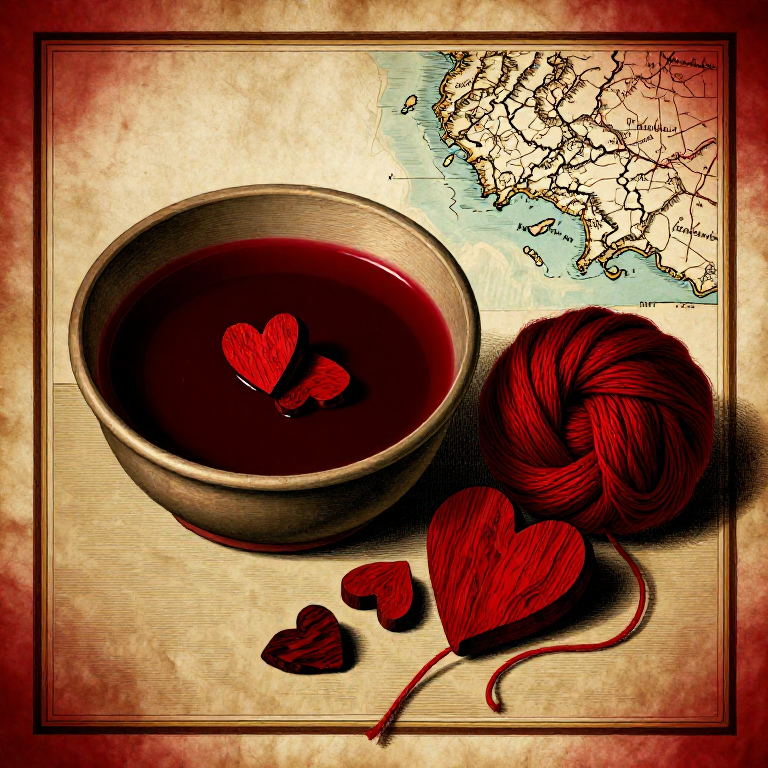


Crimson Dyeing — The Color of Pau-Brasil
Instruções
Conservation context
Conservation context
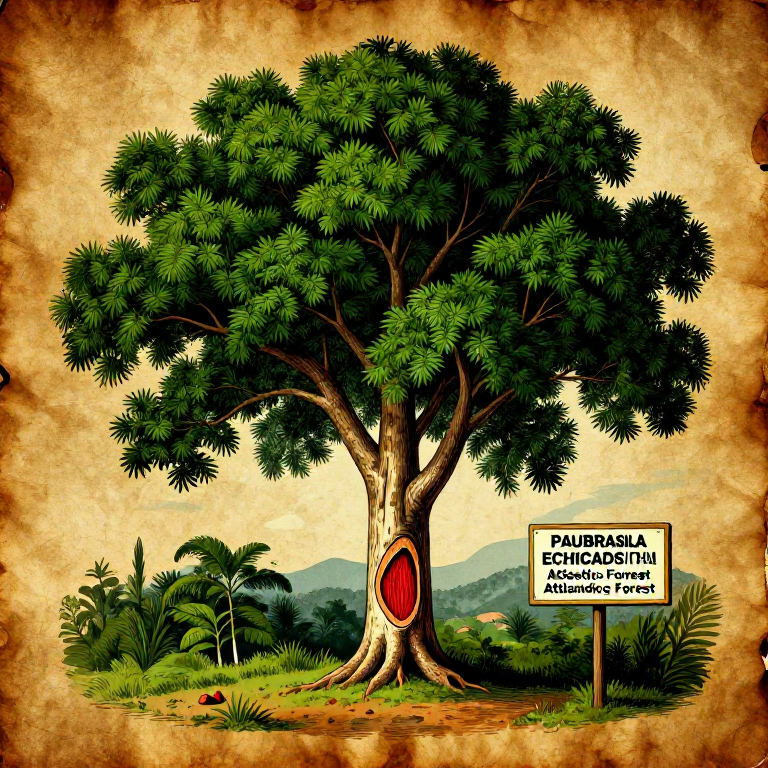
Brazilwood (Paubrasilia echinata) is THREATENED with extinction — only ~10,000 adult trees remain in the Atlantic Forest. Collection is prohibited by Brazilian law and by CITES. ALWAYS use sappan wood (Biancaea sappan), which contains the same brazilin and is not threatened.
Prepare sappan wood
Prepare sappan wood
Use sappan wood chips or powder (Biancaea sappan) in the proportion of 25-50% of the fiber weight. For 100g of fiber, use 25-50g of chips.
Materiais para este passo:
 Lascas de madeira de sapão50 g
Extract the dye (first bath)
Extract the dye (first bath)
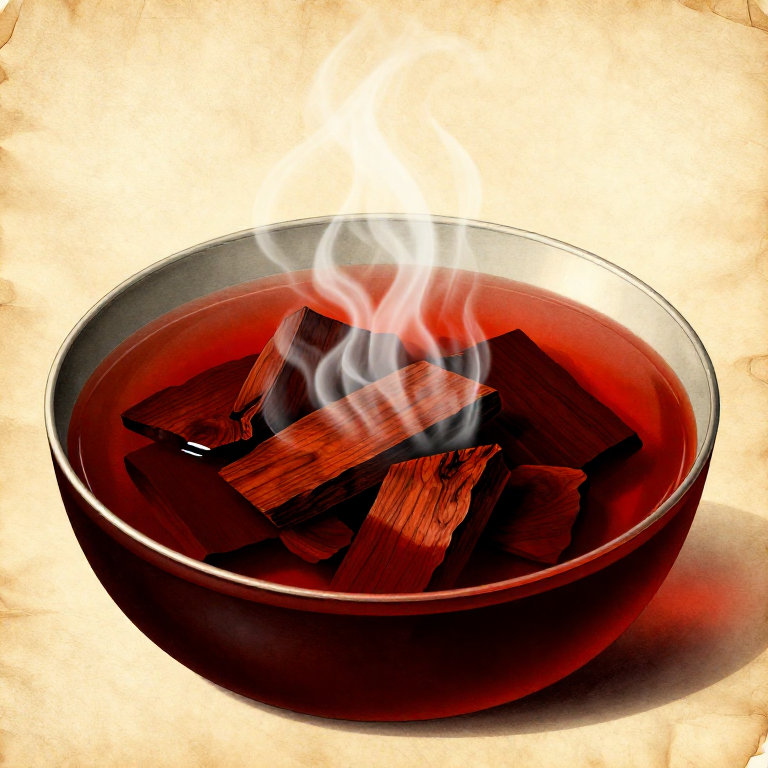
Place the sappan shavings in 4-5 liters of water in a stainless steel pot. Heat over low heat until gentle boiling and maintain for 1-2 hours. The liquid will become intense reddish-brown.
Materiais para este passo:
 Água5 litros
Long extraction soak
Long extraction soak
Turn off the heat and let the chips soak overnight (or up to 2-3 days for maximum extraction). The brazilin continues to dissolve slowly in water.
Strain the paint bath
Strain the paint bath
Strain the liquid through fine cloth, removing all wood chips. Set aside the chips — they can be reused for a second, lighter bath.
Materiais para este passo:
 Pano (de coar)1 peça
Prepare the fiber (desizing)
Prepare the fiber (desizing)
Wash the fiber in hot water with neutral soap to remove impurities. Rinse well.
Materiais para este passo:
 Meada de lã100 g
Mordant with alum
Mordant with alum
For wool/silk: dissolve 12-15g of alum in 4 liters of hot water. For cotton/linen: first treat with tannin (8% of weight), then mordant with alum (15% of weight) and a little sodium carbonate.
Materiais para este passo:
 Alúmen (alúmen de potássio)15 g
 Tanino (mordente natural)8 g
Boil in the mordant
Boil in the mordant
Immerse the wet fiber in the mordant bath. Heat to a gentle boil (80-90°C) for 1 hour, stirring gently. Let cool in the bath.
Dyeing in the sappan bath
Dyeing in the sappan bath
Place the mordanted fiber (damp, unrinsed) in the strained sappan bath. Heat gently — DO NOT boil. Maintain at 70-80°C for 1-2 hours, stirring regularly.
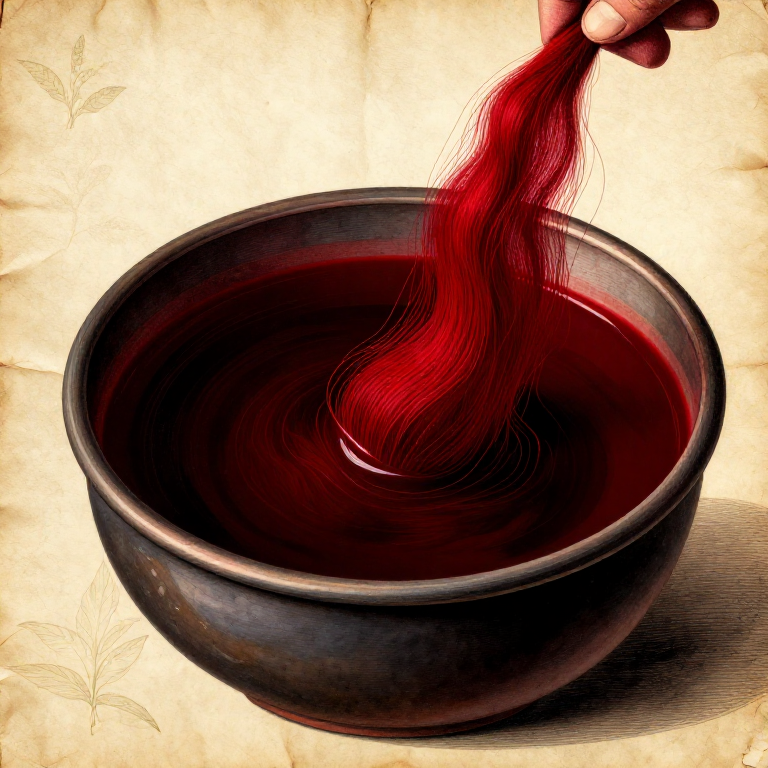
Night dyeing sauce
Night dyeing sauce
Turn off the heat and leave the fiber in the sappan bath overnight. Brazilin needs time to fully fix to the fibers.
Banho de modificação (opcional)
Banho de modificação (opcional)
Para carmesim puro: retire e enxágue. Para tons púrpura-escuro: mergulhe brevemente em água com ferro (pregos velhos em vinagre por 1 semana). Para vermelho mais vibrante: banho com um pouco de creme de tártaro.
Rinse and dry
Rinse and dry
Rinse the fiber in cold water until the water runs relatively clear. Dry in the shade. Note: the light fastness of brazilin is moderate — it improves with proper mordant, but avoid prolonged sun exposure.
Assess the color and history
Assess the color and history
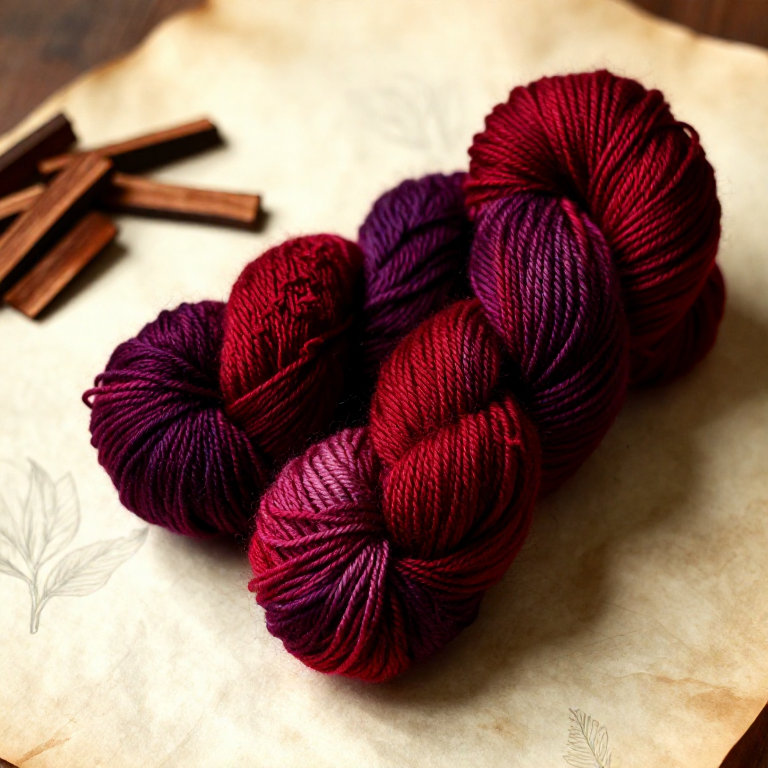
The result should be crimson to bright red (with alum), dark purple (with iron), or pink (diluted). This is the same color that drove Brazil's colonial economy and named the country. Using sappan, we honor the tradition without threatening the species.
Materiais
6- Referência
- 5 litrosReferência
- 1 peçaReferência
- 100 gReferência
- Referência
- Referência
Ferramentas necessárias
3- None required
- Referência
- Referência
Este projeto faz

CC0 Domínio Público
Este blueprint é liberado sob CC0. Você é livre para copiar, modificar, distribuir e usar este trabalho para qualquer finalidade, sem pedir permissão.
Apoie o Maker comprando produtos através do Blueprint, onde ele ganha uma Comissão Maker definida pelos vendedores, ou crie uma nova versão deste Blueprint e inclua-o como conexão no seu próprio Blueprint para compartilhar receita.