
Dyeing with Annatto — Orange-Red of Indigenous Peoples
Instruções
Select the seeds
Select the seeds
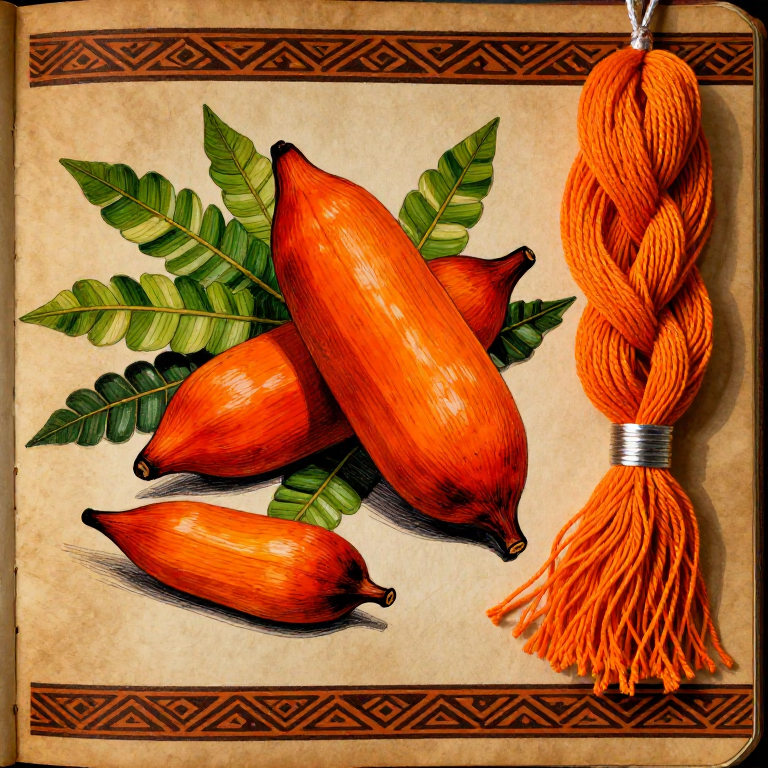
Choose dry annatto seeds (Bixa orellana) with intact red-orange aril. Use approximately 50-100% of the fiber weight (for example, 100g of seeds for 100g of fiber).
Materiais para este passo:
 Sementes de Urucum100 g
Prepare the fiber (desizing)
Prepare the fiber (desizing)
Wash the fiber or fabric in hot water with neutral soap to remove oils, waxes and sizing. Rinse well until the water runs clear.
Materiais para este passo:
 Meada de lã100 g
Prepare the mordant bath (alum)
Prepare the mordant bath (alum)
Dissolve alum (aluminum and potassium sulfate) in hot water, using 12-15% of the fiber weight. For 100g of fiber, use 12-15g of alum in 4 liters of water.
Materiais para este passo:
 Alúmen (alúmen de potássio)15 g
 Água4 litros
Morder a fibra
Morder a fibra
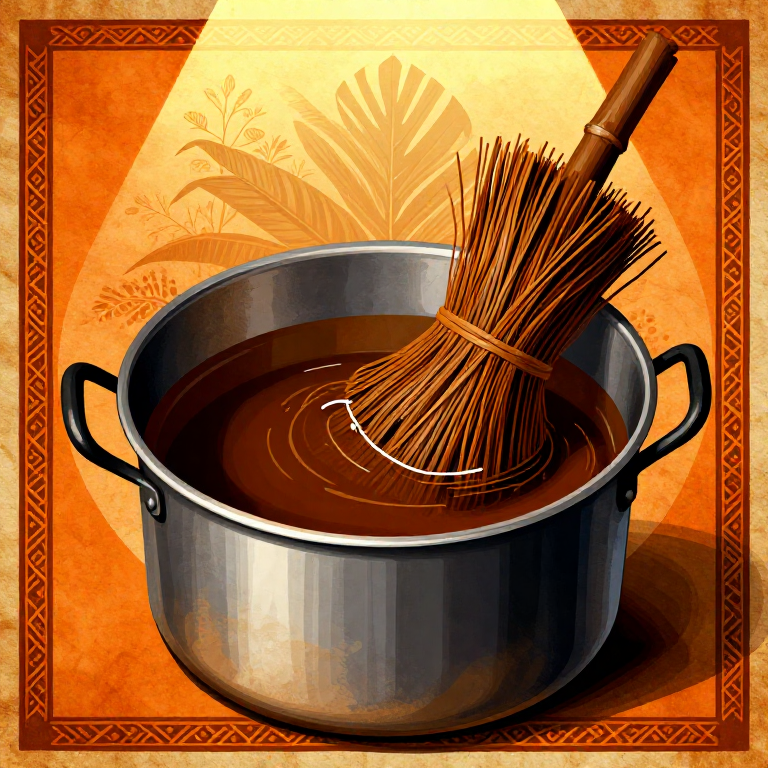
Mergulhe a fibra molhada no banho de alúmen. Aqueça lentamente até ferver baixo (80-90°C) e mantenha por 1 hora, mexendo ocasionalmente. Não torça — apenas mexa com delicadeza.
Cool in the mordant
Cool in the mordant
Turn off the heat and let the fiber cool in the mordant bath. Ideally, let it soak overnight for better fixation.
Prepare the annatto bath
Prepare the annatto bath
In a separate pan (stainless steel or enameled — NEVER aluminum or iron), place the annatto seeds in 4-5 liters of water.
Materiais para este passo:
Água5 litrosExtract the dye
Extract the dye
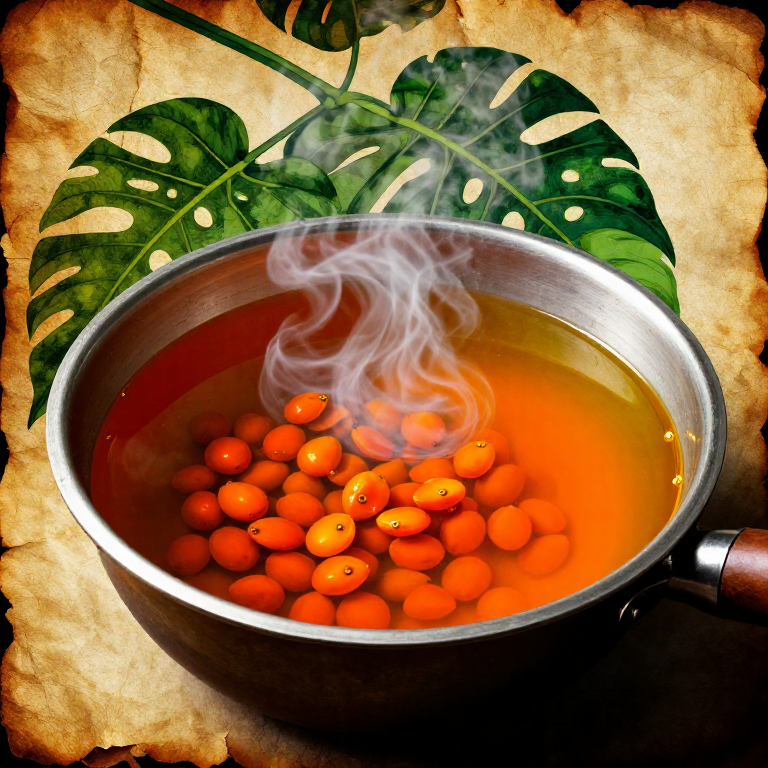
Heat the seeds on medium-low heat, maintaining a gentle boil for 1 hour. The water will become intensely orange-red as the bixin dissolves.
Strain the dye bath
Strain the dye bath
Strain the liquid through fine cloth or a sieve, removing all seeds. The dye bath should be clear and intensely colored.
Materiais para este passo:
 Pano (de coar)1 peça
Remover a fibra do mordente
Remover a fibra do mordente
Retire a fibra do banho de alúmen. Esprema gentilmente o excesso, mas NÃO enxágue — o mordente deve permanecer na fibra.
Dip the fiber in the annatto bath
Dip the fiber in the annatto bath
Place the mordanted fiber (still damp) in the strained annatto bath. Make sure the fiber is completely submerged.
Dye on low heat
Dye on low heat
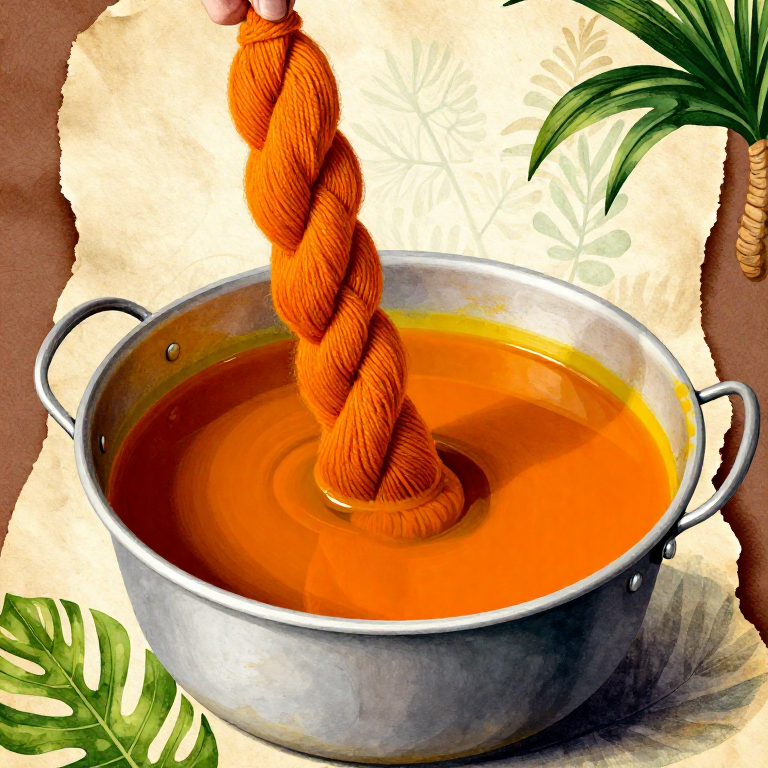
Heat the annatto bath with the fiber to 70-80°C (DO NOT boil). Maintain this temperature for 1 hour, stirring regularly to ensure uniform color.
Night soak
Night soak
Turn off the heat and let the fiber cool in the annatto bath overnight. The longer the soak, the more intense the color.
Rinse and dry
Rinse and dry
Remove the fiber from the bath and rinse gently in cold water until the water runs relatively clear. Dry in the shade — NEVER in direct sunlight, as annatto has low light fastness.
Evaluate the final color
Evaluate the final color
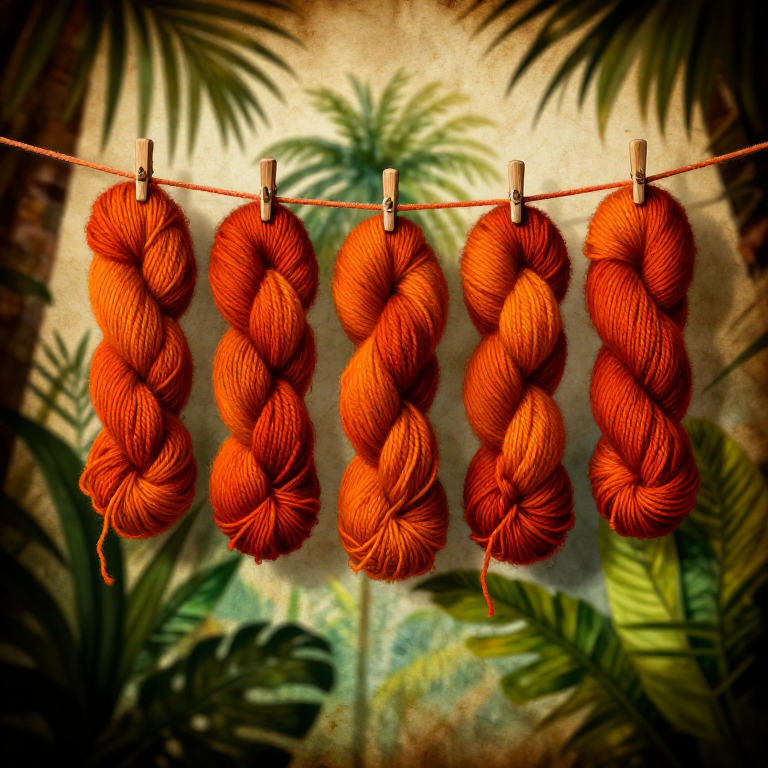
The result should be a vibrant orange to red-orange, depending on seed concentration and soaking time. Note: annatto has limited light fastness — ideal for pieces stored when not in use.
Materiais
5- 100 gReferência
- 100 gReferência
- Referência
- 4 litrosReferência
- 1 peçaReferência
Ferramentas necessárias
3- None required
- Referência
- Referência
Este projeto faz

CC0 Domínio Público
Este blueprint é liberado sob CC0. Você é livre para copiar, modificar, distribuir e usar este trabalho para qualquer finalidade, sem pedir permissão.
Apoie o Maker comprando produtos através do Blueprint, onde ele ganha uma Comissão Maker definida pelos vendedores, ou crie uma nova versão deste Blueprint e inclua-o como conexão no seu próprio Blueprint para compartilhar receita.