ARTE
BELEZA E BEM-ESTAR
ARTESANATO
CULTURA E HISTÓRIA
ENTRETENIMENTO
MEIO AMBIENTE
COMIDA E BEBIDAS
ENGENHARIA REVERSA
CIÊNCIAS
ESPORTES
TECNOLOGIA
TECNOLOGIA VESTÍVEL
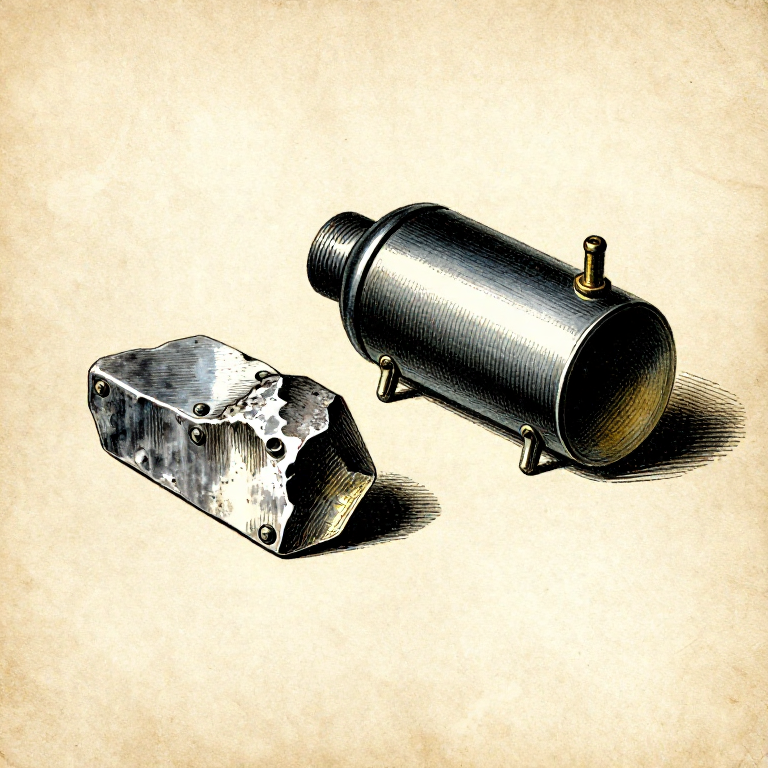
Understanding Thulium from Xenotime — The Rarest Stable Lanthanide
Intermediário
Instruções
1
1
Understand Thulium's Discovery
Understand Thulium's Discovery
Per Teodor Cleve discovered thulium in 1879 while working at Uppsala University in Sweden. He separated erbia into three components: holmia, erbia proper, and thulia — a greenish-tinged oxide. He named it thulium after Thule, the ancient name for Scandinavia or the most northerly land known to the Greeks and Romans. Thulium was among the last lanthanides discovered, requiring exceptionally tedious fractional crystallization to isolate.
2
2
Identify Thulium in Rare Earth Minerals
Identify Thulium in Rare Earth Minerals
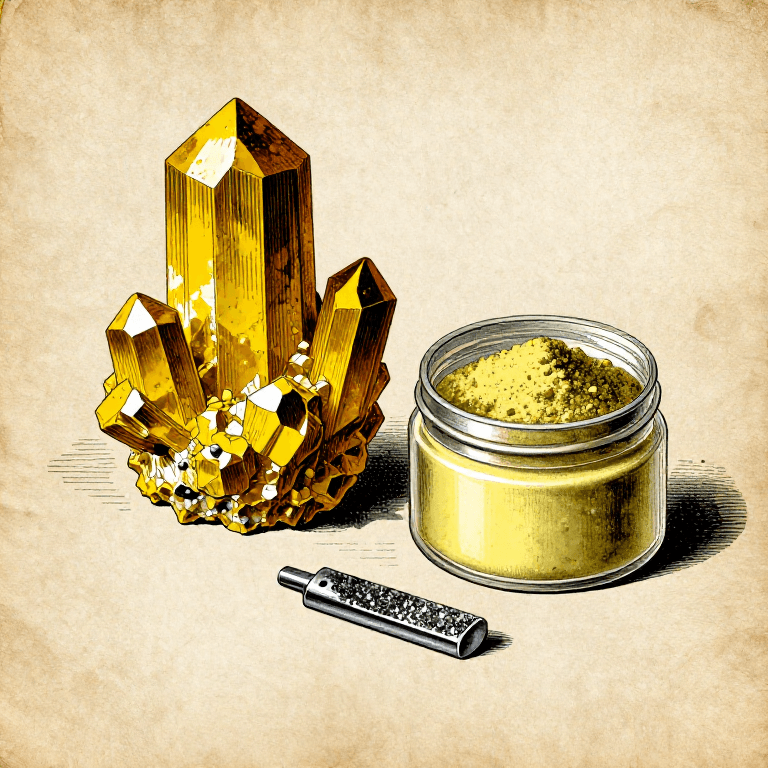
Thulium is the rarest stable lanthanide at 0.52 ppm crustal abundance — rarer than silver. Only promethium (which has no stable isotopes) is less abundant among the lanthanides. Thulium concentrates in xenotime at 0.5-1% of the rare earth fraction and in ionic adsorption clays. Annual production is approximately 50 tonnes of thulium oxide, making it one of the smallest rare earth markets. It is priced at $50-200 per kilogram of oxide.
Materiais para este passo:
 Exemplar de xenótimo
Ferramentas necessárias:
 Lupa de mão 10xLupa de mão 10x
 Placa de risca (porcelana não vidrada)
 Pontas de dureza de Mohs
3
3
Discover Portable X-Ray Sources
Discover Portable X-Ray Sources
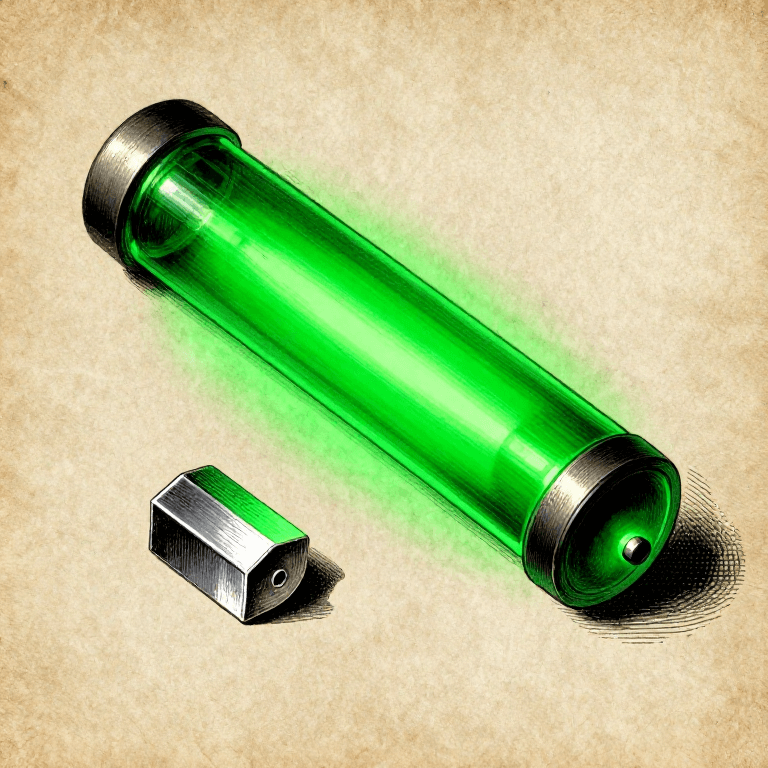
Thulium-170 (half-life 128.6 days) emits soft gamma rays at 84 keV — ideal for portable X-ray devices. When thulium-169 is irradiated in a nuclear reactor, it produces Tm-170, which can be sealed in a small capsule and used as an X-ray source in remote locations without electricity. These portable radiographic units are used for non-destructive testing of welds in pipelines, bridges, and aircraft structures in the field.
4
4
Examine Thulium Laser Applications
Examine Thulium Laser Applications
The thulium-doped fiber laser emits at 1,940-2,013 nm in the 'eye-safe' infrared band. This wavelength is strongly absorbed by water, making it effective for soft-tissue surgery while being safe for retinal exposure at low powers. Tm:fiber lasers are used for lithotripsy (kidney stone fragmentation), prostate surgery (ThuLEP), and as pump sources for mid-infrared optical parametric oscillators used in chemical sensing and environmental monitoring.
5
5
Understand Thulium in Blue Phosphors
Understand Thulium in Blue Phosphors
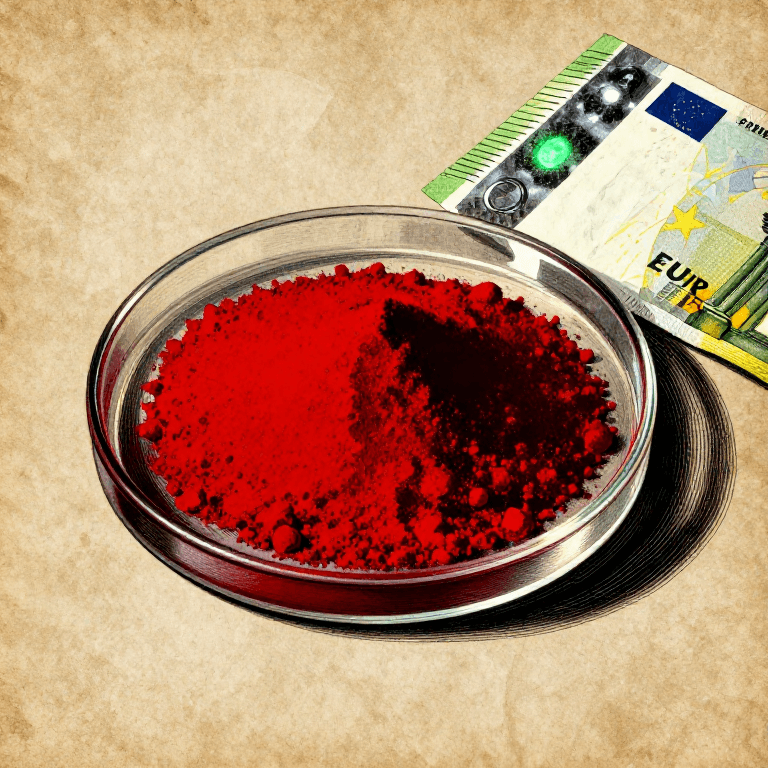
Tm³⁺ emits blue light at 450-475 nm, used in the blue phosphor component of euro banknote security features. Under UV illumination, genuine euros show terbium green, europium red, and thulium blue fluorescence in specific patterns. Thulium-doped upconversion phosphors also produce blue emission when pumped with 980 nm infrared — used in anti-counterfeiting labels and security inks that are invisible until excited by specific wavelengths.
6
6
Explore High-Temperature Superconductor Uses
Explore High-Temperature Superconductor Uses
Thulium barium copper oxide (TmBCO or TmBa₂Cu₃O₇) is a high-temperature superconductor with a critical temperature of 88 K — part of the REBCO (rare earth barium copper oxide) family. TmBCO thin films are grown on buffered metal substrates to create superconducting tapes for MRI magnets, particle accelerators, and fusion reactor magnets. The small ionic radius of Tm³⁺ creates favorable strain effects in epitaxial film growth.
7
7
Examine Metal Properties
Examine Metal Properties
Thulium is a bright silvery metal that is soft and malleable. Melting point is 1545°C, density 9.32 g/cm³. It oxidizes slowly in air and reacts slowly with water. Thulium has thirteen stable and radioactive isotopes. The metal is ferromagnetic below 32 K and exhibits an interesting sinusoidal magnetic structure between 32 K and 56 K. Thulium is obtained by calcium reduction of thulium fluoride or by metallothermic reduction.
8
8
Survey Emerging Applications
Survey Emerging Applications
Thulium-doped yttrium lithium fluoride (Tm:YLF) crystals produce laser output at 1,880-1,910 nm for atmospheric LIDAR applications — detecting water vapor concentration profiles in the atmosphere for weather forecasting. Thulium-doped silicon is being researched for photonic integrated circuits operating at 1,800-2,000 nm. Tm-171 is used in Mössbauer spectroscopy studies of electronic structure in compounds.
9
9
Understand Supply and Market Dynamics
Understand Supply and Market Dynamics
Thulium's rarity creates a paradox: it is produced as a byproduct of heavy rare earth separation but has limited commercial demand. Most thulium oxide ends up in stockpiles or is sold to researchers at relatively modest prices despite its scarcity. Growing interest in thulium fiber lasers for surgery and defense applications may increase demand. Recycling is negligible due to the tiny quantities used in each application.
Ferramentas necessárias:
 Balança de precisão
10
10
Document Findings and Future Potential
Document Findings and Future Potential
Record thulium's key data: atomic number 69, density 9.32 g/cm³, melting point 1545°C, bright silvery metal. Thulium is the least used lanthanide commercially, yet it has unique properties that are irreplaceable in niche applications. The development of high-power thulium fiber lasers is the most promising growth area — their 2 μm wavelength offers advantages in surgery, remote sensing, and defense that no other laser medium can match.
11
11
Ore grade: how much xenotime per kilogram
Ore grade: how much xenotime per kilogram
A carregar o notebook Jupyter…
Materiais
1- 1 peçaReferência
Ferramentas necessárias
4- Referência
- Referência
- Referência
- Referência
Materiais de Blueprints conectados
10% de atribuição
Understanding Erbium from Xenotime — The Pink Amplifier of the Internet
por Peter
Mineração
15
0
0
0
4
0
10% de atribuição
Understanding Holmium from Xenotime — The Strongest Magnetic Element
por Peter
Mineração
19
0
0
0
4
0
Perigoso
10% de atribuição
Understanding Yttrium from Xenotime — The Rare Earth That Lights Red Screens
por Peter
Mineração
42
0
0
0
12
0
10% de atribuição
Understanding Dysprosium from Xenotime — The Magnet Stabilizer for Electric Vehicles
por Peter
Mineração
21
0
0
0
5
0
10% de atribuição
Understanding Gadolinium from Monazite — The MRI Contrast Agent Metal
por Peter
Mineração
14
0
0
0
6
0
Blueprints relacionados
Estes blueprints compartilham conhecimento — técnicas, materiais ou princípios
CC0 Domínio Público
Este blueprint é liberado sob CC0. Você é livre para copiar, modificar, distribuir e usar este trabalho para qualquer finalidade, sem pedir permissão.
Apoie o Maker comprando produtos através do Blueprint, onde ele ganha uma Comissão Maker definida pelos vendedores, ou crie uma nova versão deste Blueprint e inclua-o como conexão no seu próprio Blueprint para compartilhar receita.