

Calcium Carbide
Willson was not trying to make calcium carbide. He was trying to make cheap aluminium in an electric furnace, and carbide is what he got instead — lime and coke, hit hard enough with electricity, give a grey lump that fizzes violently in water and gives off a gas that burns with a fierce white flame.
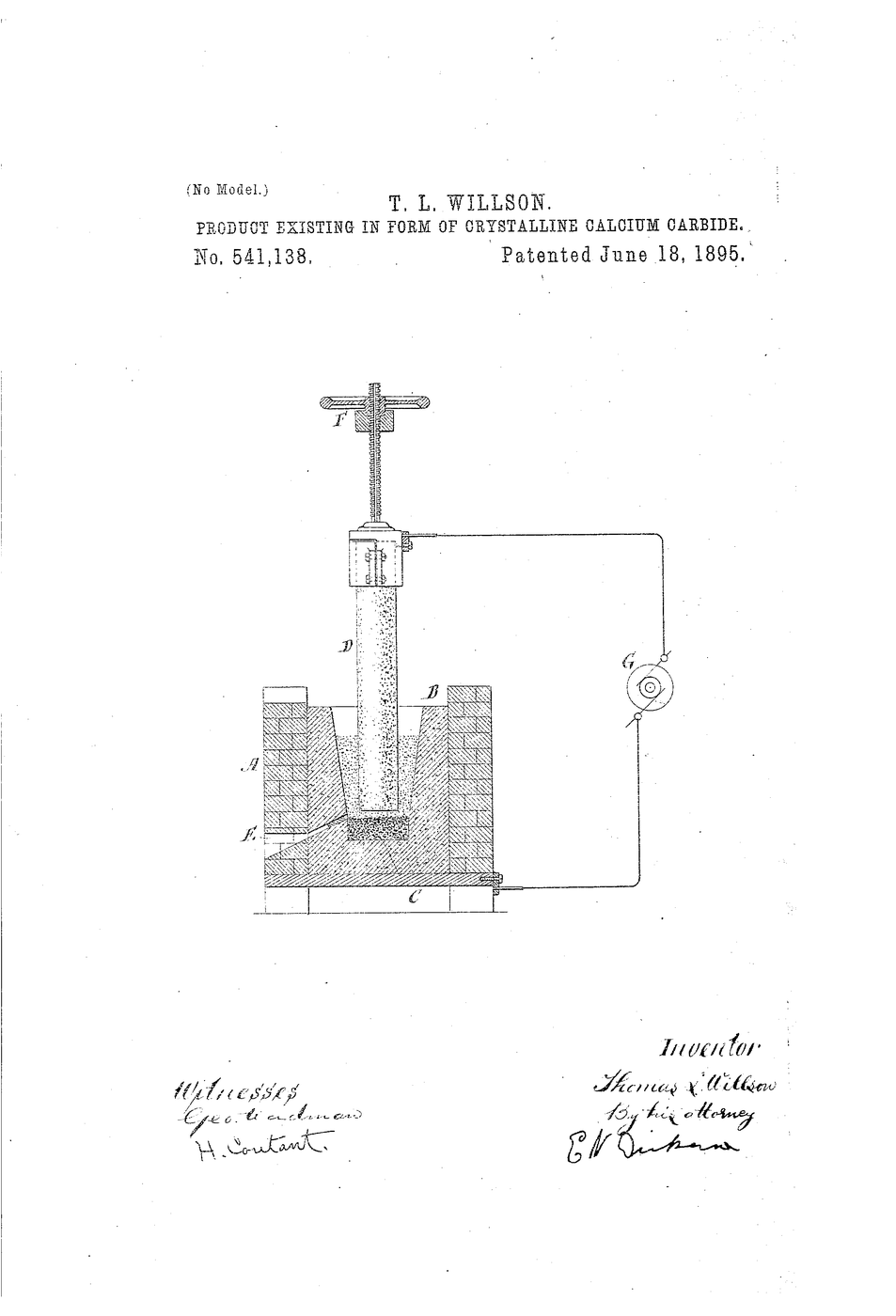
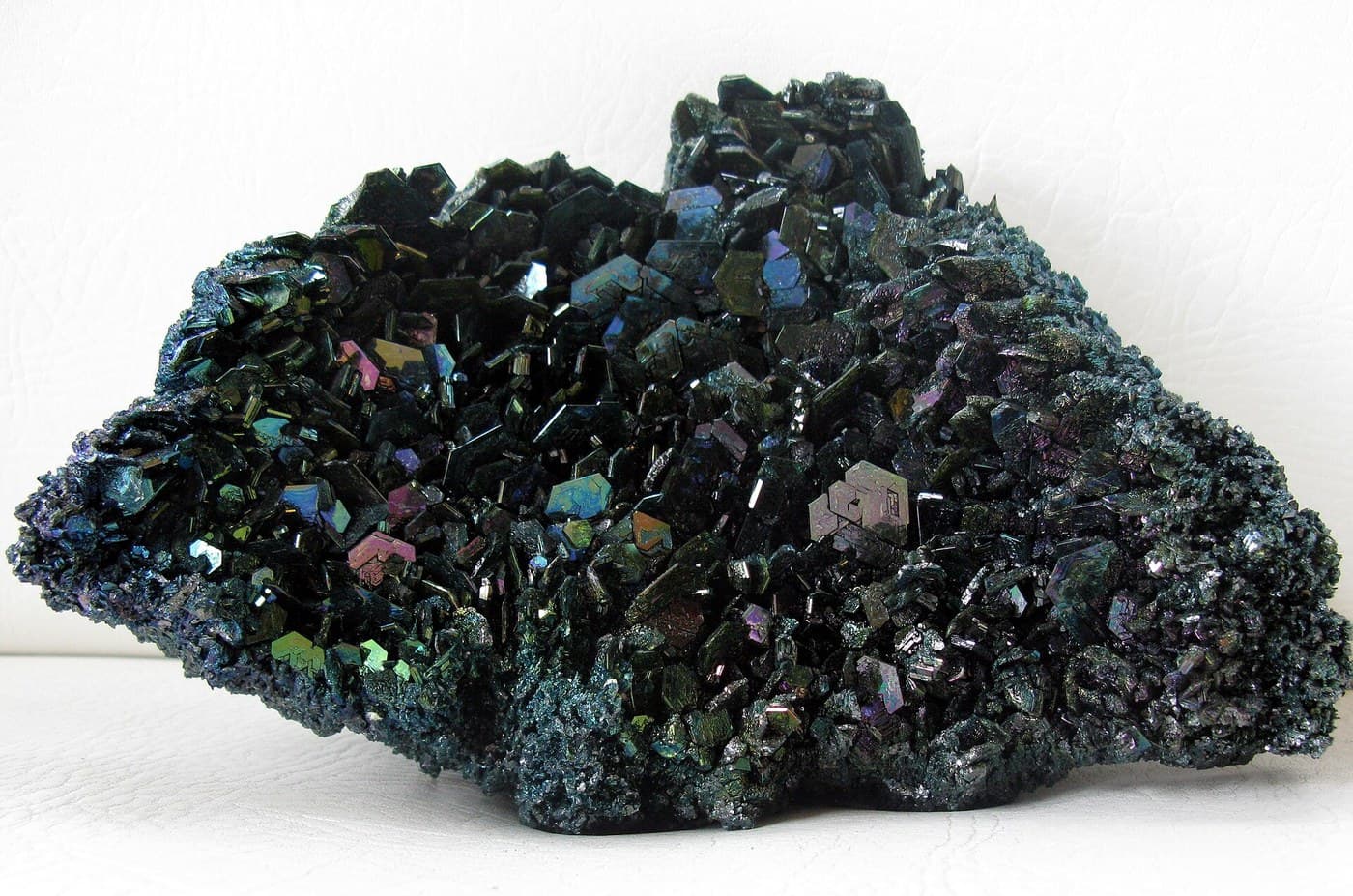
The patent's claim is purity, not the compound. Carbide was already known. Willson's specification says it had only ever existed "in amorphous condition" because of how it was made and what it contained, and that his process produces it "in crystalline condition, having a bluish or purplish iridescence" — a form "particularly applicable, on account of its purity, for conversion into other compounds".
The recipe is explicit and citable: finely divided coke and lime, 35 % coke to 65 % lime, mixed mechanically and subjected to an electric current in a furnace fed by an alternating-current dynamo at about 55 volts.
US Patent 541,138, granted 18 June 1895 to Thomas L. Willson of New York.
Instruções
Read the two numbers in the patent
Read the two numbers in the patent
Willson specifies 35 % coke and 65 % lime by proportion, and a furnace run at a mean potential of about 55 volts. Write both down — they are the whole process.
Read the safety rules before opening anything
Read the safety rules before opening anything
Carbide plus water makes acetylene, which is flammable, and leaves a caustic lime residue. Outdoors only. No flame anywhere near the generator. Gloves and glasses. Grams, not handfuls.
Ferramentas necessárias:
 Óculos de segurança transparentes
 Luvas isolantes para eletricidade
Weigh out the patent's charge ratio
Weigh out the patent's charge ratio
Grind and weigh 65 g lime to 35 g coke — Willson's exact proportion. Mix thoroughly and dry; this is the furnace charge.
Materiais para este passo:
 Cal apagada (hidróxido de cálcio)65 g
 Carvão vegetal em pedaços35 g
Heat the charge in a crucible and see it fail
Heat the charge in a crucible and see it fail
Heat the mixture as hot as a torch will take it. Nothing happens. A blowtorch reaches roughly 1300 °C; the reaction needs about 2000 °C. This failure is the point.
Ferramentas necessárias:
 Cadinho com tampa (porcelana)
 Maçarico de brasagem
Work out the electrical power the patent implies
Work out the electrical power the patent implies
The patent gives about 55 V and roughly 1500 A for an eight-inch pole. Multiply: about 82 kW in one furnace. Compare with a 2 kW kettle.
Examine commercial carbide dry
Examine commercial carbide dry
Look at a few lumps in a dry dish. Grey, glassy, faintly iridescent at fresh fractures — Willson's "bluish or purplish iridescence".
Materiais para este passo:
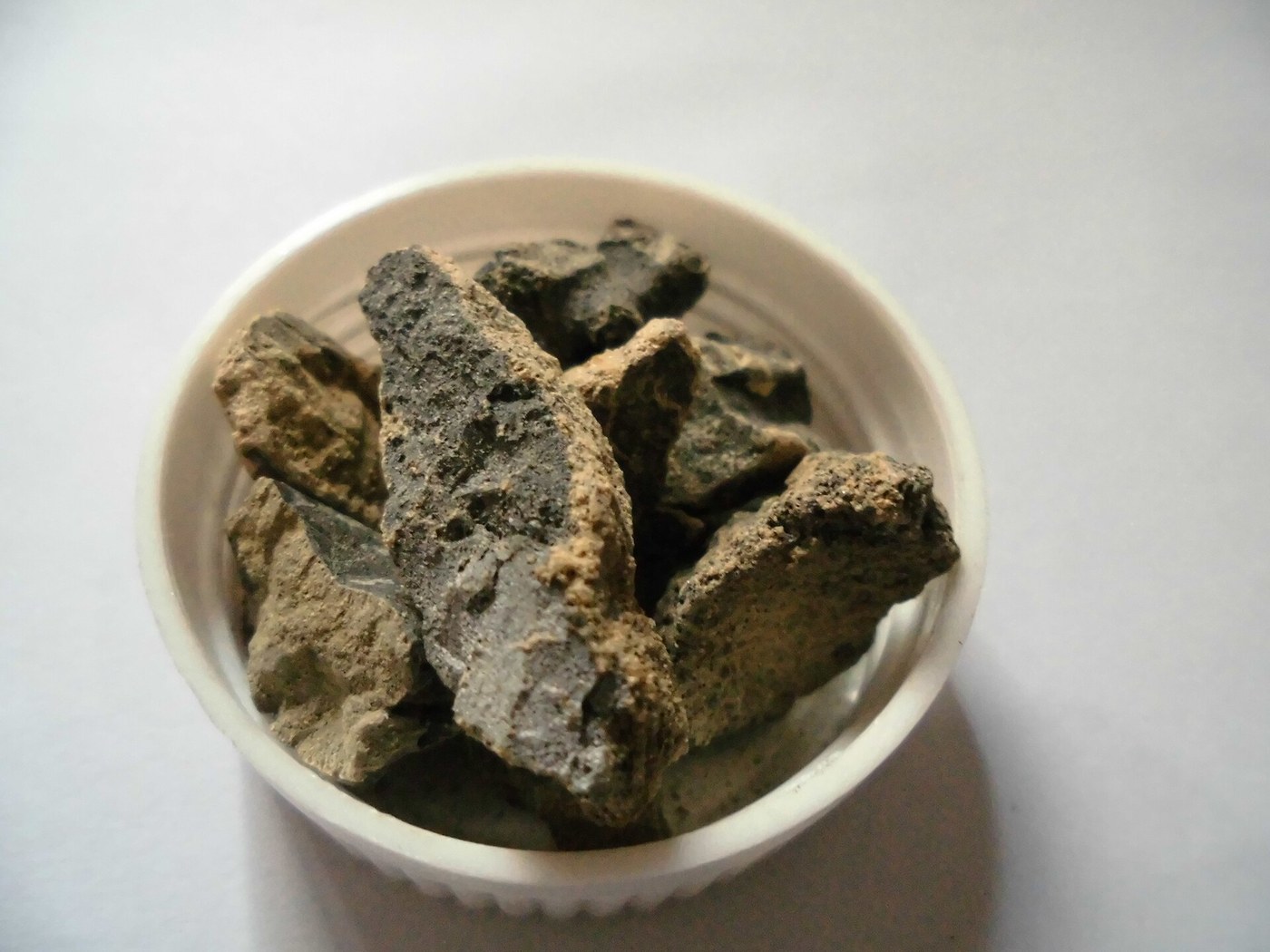 Carboneto de cálcio10 g
Leave one lump in open air for ten minutes
Leave one lump in open air for ten minutes
Set one lump aside uncovered. It dulls and powders as it takes moisture from the air. Carbide must be stored sealed.
Set up a water-displacement collector outdoors
Set up a water-displacement collector outdoors
Fill a jar with water, invert it over a trough, and lead a delivery tube under it. No ignition source anywhere.
Ferramentas necessárias:
 Frasco de vidro
Add ONE gram of carbide to water
Add ONE gram of carbide to water
Drop a single gram into water in the generator and stopper it. Gas comes off at once and displaces the water. One gram is plenty.
Measure the gas volume against the mass used
Measure the gas volume against the mass used
Record the water displaced. Roughly 300 ml of acetylene per gram of good carbide — the yield is how the trade judged quality.
Test the leftover liquid
Test the leftover liquid
The residue is milky and alkaline — calcium hydroxide, ordinary slaked lime. The lime you put in comes back out, which is why carbide works as a portable way to carry gas.
Burn the collected gas at arm's length
Burn the collected gas at arm's length
Well away from the generator, ignite the collected jar at arm's length with a taper. It burns with a bright sooty white flame — a carbon-rich fuel.
Neutralise and dispose of everything wet
Neutralise and dispose of everything wet
Let all residue react out fully with excess water, then dispose of it. Never bin carbide that has not been fully spent.
History & Context — the accident that made a chemical industry
History & Context — the accident that made a chemical industry
The patent. US 541,138, granted 18 June 1895 to Thomas L. Willson of New York. Its subject is "the production of a new form of crystalline calcium carbide" — note carefully that the novelty claimed is the form, not the substance.
Read the claim precisely. Willson writes that before his invention "calcium carbide has existed in amorphous condition, due either to the method of its preparation, or to the impurities contained in it", and that his process yields it "in a new form — namely, in crystalline condition, having a bluish or purplish iridescence", a state "particularly applicable, on account of its purity, for conversion into other compounds". So the achievement is a route to pure, consistent carbide at scale. Saying "Willson discovered calcium carbide" overstates it; saying he made it an industrial commodity is right.
The furnace, as specified. Brickwork enclosure, a carbon lining, broken carbon as one pole, a compacted carbon pole that can be raised and lowered by an adjusting mechanism — and, tellingly, "an alternating current dynamo, which may therefore be made commutatorless". That aside is a small window onto 1895: alternating current was winning, and one reason was that a machine with no commutator has no brushes to burn out. The charge is 35 % coke to 65 % lime, and the working point is about 55 volts at around 1500 amperes for an eight-inch pole — high current at low voltage, which is still exactly how an electric arc furnace is run.
Why a discovery about aluminium became a discovery about gas. Willson was pursuing cheap aluminium and reduced lime with coke in the hope of getting calcium metal to use as a reducing agent. What came out was carbide, and when it was thrown into water it produced a gas that burned far brighter than coal gas. Within a few years acetylene was lighting streets, houses, bicycles, mine lamps and motor-car headlamps, because it solved a problem no other fuel did: a solid you can carry dry in a tin, which makes its own gas on demand when you drip water on it. That is what steps 9 to 11 demonstrate, and it is why carbide lamps outlived gas lighting in caves and mines by decades.
What it became. Electric light took the lighting market, but carbide did not go away — it moved into the oxy-acetylene torch, which gave the hottest readily available flame and made field welding and cutting practical. Later it became a feedstock for the whole acetylene branch of organic chemistry, which is precisely the use Willson's own "conversion into other compounds" anticipated. It is a fair example of a mistake in one project founding an industry in another.
Materiais
3- Referência
- Referência
- Referência
Ferramentas necessárias
5- Referência
- Referência
- Referência
- Referência
- Referência
Blueprints relacionados
Estes blueprints compartilham conhecimento — técnicas, materiais ou princípios



CC0 Domínio Público
Este blueprint é liberado sob CC0. Você é livre para copiar, modificar, distribuir e usar este trabalho para qualquer finalidade, sem pedir permissão.
Apoie o Maker comprando produtos através do Blueprint, onde ele ganha uma Comissão Maker definida pelos vendedores, ou crie uma nova versão deste Blueprint e inclua-o como conexão no seu próprio Blueprint para compartilhar receita.