Colaboração
ARTE
BELEZA E BEM-ESTAR
ARTESANATO
CULTURA E HISTÓRIA
ENTRETENIMENTO
MEIO AMBIENTE
COMIDA E BEBIDAS
ENGENHARIA REVERSA
CIÊNCIAS
ESPORTES
TECNOLOGIA
TECNOLOGIA VESTÍVEL
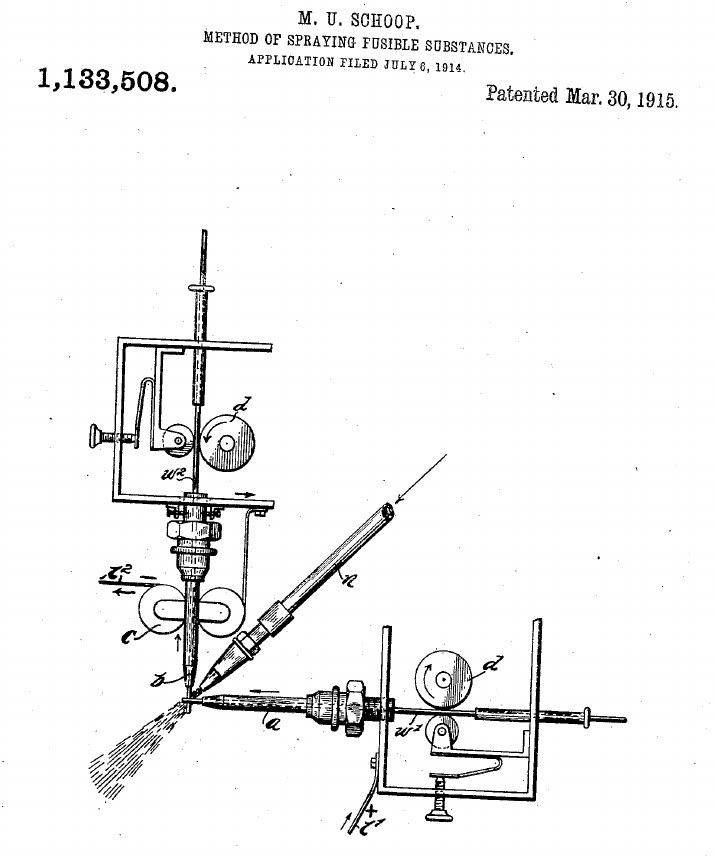


Wire-Arc Spray Gun: Two Crossed Wires, a Vibrating Arc and an Air Blast (Schoop, US 1,133,508, 1915)
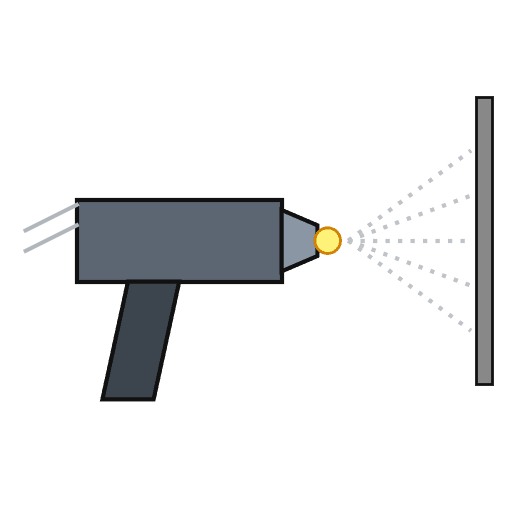
The first wire-arc metal sprayer. Two metal wires are pushed through iron tubes until their tips cross. Current through the wires also runs an electromagnet that pulls one tube back, so a small arc springs between the tips and melts them; a jet of air blows the molten metal off as a fine spray and puts the arc out, the magnet lets go, the wires touch again, and the cycle repeats very fast.
Result: a continuous spray of molten metal for coating a surface.
Source: M. U. Schoop, US 1,133,508 (1915). Unknown: the wire metals and sizes, the coil, the air pressure. Picture: the patent drawing.
Avançado
Unknown
Instruções
1
1
Make the feed tubes and rolls
Make the feed tubes and rolls
Make two feed tubes ending in nozzles, preferably of iron. For each, mount a pair of feed rolls in a frame to push a wire through the tube. Set the tubes at about 90° to each other so the wires cross as they come out, the nozzles only a few millimetres apart. Mount one tube on an elastic support so it can move a little. Not given: sizes, the roll drive (the air blast may drive a small turbine for it).
Materiais para este passo:
 Tubo de ferro2 feed tubes
 Metal desconhecido1 rolls, frames
 Mola de lâminas1 elastic support
Ferramentas necessárias:
 Torno mecânico
 Dimensões desconhecidas
2
2
Fit the electromagnet
Fit the electromagnet
Wind an electromagnet beside the springing tube, so the tube is its armature. Wire the coil into the same circuit as the two tubes and wires, positive to one tube and negative to the other. When current flows the magnet pulls the tube aside and draws its wire slightly back from the other. Ours: enamelled copper wire for the coil. Not given: the coil.
Materiais para este passo:
 Fio de cobre esmaltado1 coilMetal desconhecido1 magnet core
 Fio de cobre1 circuit leads
Ferramentas necessárias:
 Conjunto de chaves de fendas
3
3
Fit the air blast
Fit the air blast
Aim a blast pipe at the point where the wires cross, either close to it or 20-30 mm away, whichever sprays best for the metal. Feed it with compressed air or another gas. Not given: the pressure.
Materiais para este passo:
 Bico de ar1 peça
 Mangueira de ar comprimido1 peça
Ferramentas necessárias:
 Compressor de ar industrial
 Chave inglesa ajustável
4
4
Spray
Spray
Load a wire of the coating metal in each tube and feed them until they touch. Switch on the current, generally 40 to 75 volts depending on the metal and wire thickness, and the air. The magnet pulls the wires apart, an arc melts their tips, the air blows the melt away as spray and snuffs the arc, the magnet releases, and the cycle repeats very rapidly. The positive wire burns faster, so feed it faster or use a thicker wire; match the feed to the melting. Hold the work in the spray. Without the vibration the arc flickers and the wires may weld together.
Ferramentas necessárias:
 Fonte de alimentação de corrente contínuaCompressor de ar industrialMetal desconhecido
Materiais
7- 2 feed tubesReferência
- 1 magnet coreReferência
- 1 elastic supportReferência
- 1 coilReferência
- 1 circuit leadsReferência
- 1 peçaReferência
- Referência
Ferramentas necessárias
7- Referência
- Referência
- Referência
- Referência
- Referência
- Referência
Materiais de Blueprints conectados
Este projeto faz
CC0 Domínio Público
Este blueprint é liberado sob CC0. Você é livre para copiar, modificar, distribuir e usar este trabalho para qualquer finalidade, sem pedir permissão.
Apoie o Maker comprando produtos através do Blueprint, onde ele ganha uma Comissão Maker definida pelos vendedores, ou crie uma nova versão deste Blueprint e inclua-o como conexão no seu próprio Blueprint para compartilhar receita.