

Making Celluloid — The First Synthetic Plastic That Changed Everything
Celluloid (cellulose nitrate plasticised with camphor) was the first commercially successful synthetic plastic — and the material that launched the age of plastics, photography, and cinema. In 1869, John Wesley Hyatt in Newark, New Jersey, was searching for a substitute for ivory billiard balls (an elephant was killed for every three balls). He discovered that nitrocellulose, when mixed with camphor under heat and pressure, produced a mouldable, translucent material that could be shaped, carved, and polished like ivory or tortoiseshell.
The chemistry is elegant: camphor (C₁₀H₁₆O), a waxy terpene from the camphor laurel tree, acts as a plasticiser — its small molecules slip between the rigid nitrocellulose chains, pushing them apart and allowing them to slide past each other when heated. The result is a thermoplastic: rigid at room temperature but softened by gentle heat into a mouldable mass. This was the first time humanity had created a material that did not exist in nature — a turning point in the relationship between civilisation and materials.
Celluloid made possible photographic film (Kodak, 1889), motion picture film (the Lumière brothers, 1895), shirt collars, combs, spectacle frames, piano keys, and toys. It was eventually displaced by cellulose acetate (safety film) and Bakelite because of its dangerous flammability — celluloid is essentially solid guncotton with camphor, and it burns violently.
SAFETY WARNING: Celluloid is HIGHLY FLAMMABLE — it ignites easily and burns with intense heat. The nitrocellulose component is the same explosive material as guncotton. Work away from open flames. The solvent (ethanol or acetone) used in preparation is also flammable. Adequate ventilation is essential.
Instructions
Prepare ventilation and safety equipment
Prepare ventilation and safety equipment
Work in a well-ventilated area away from all open flames and heat sources. Celluloid is highly flammable — it contains nitrocellulose, essentially solid guncotton. Wear chemical splash goggles, nitrile gloves, and a lab coat. The solvents used (ethanol or acetone) are also flammable. Have a fire extinguisher rated for chemical fires immediately accessible. Never heat celluloid with an open flame — use only hot water baths.
Tools needed:
 Chemical Splash Goggles
 Nitrile Rubber Gloves (Thick)
 Lab Coat
Prepare wet nitrocellulose
Prepare wet nitrocellulose
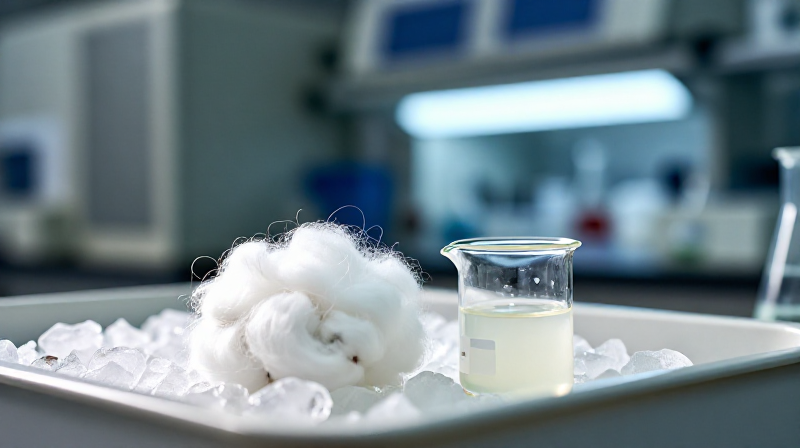
Start with 10 g of nitrocellulose prepared as in the guncotton blueprint — thoroughly washed, neutralised with sodium bicarbonate, and stored wet. Squeeze out the excess water gently. The nitrocellulose should feel like wet cotton wool. If using pre-made nitrocellulose (available as 'collodion cotton' or 'pyroxylin'), soak in water first to ensure it is safely wet before handling. Never handle dry nitrocellulose in bulk — it is shock-sensitive and can detonate.
Materials for this step:
 Cotton10 g
Tools needed:
 Digital Precision Scale
Dissolve nitrocellulose in ethanol
Dissolve nitrocellulose in ethanol
Transfer the wet nitrocellulose to a glass beaker and add 50 ml of ethanol (95% denatured alcohol). Stir until the nitrocellulose dissolves into a thick, viscous, clear solution — this is essentially collodion, the same solution used in early photography. The ethanol replaces the water and dissolves the nitrocellulose chains. If the solution is too thick, add more ethanol in 10 ml increments. Ensure good ventilation — ethanol vapour is flammable.
Materials for this step:
 Ethanol (Denatured, 95%)50 ml
Tools needed:
 Glass Beaker (Borosilicate, 500ml)
 Glass Stirring Rod (25cm)
Weigh and dissolve camphor
Weigh and dissolve camphor
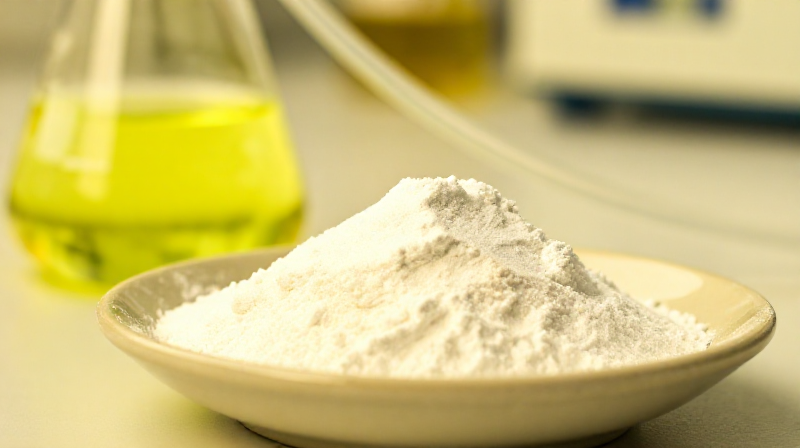
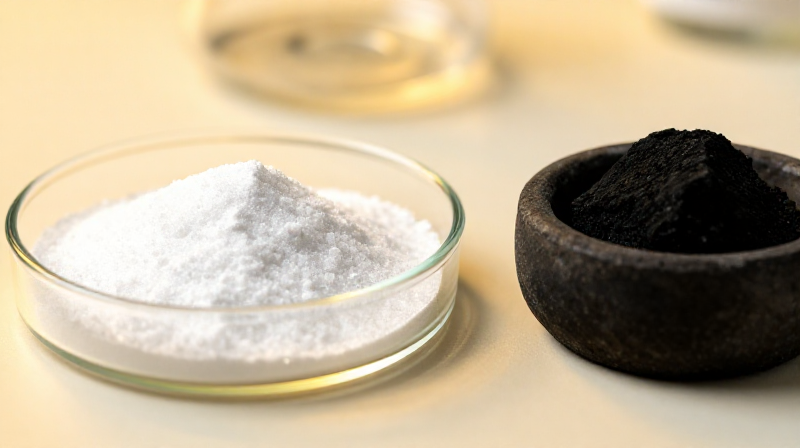
Weigh 3 g of camphor — a white, waxy, crystalline solid with a distinctive penetrating aromatic odour. Camphor is a bicyclic terpene (C₁₀H₁₆O) traditionally extracted from the wood of the camphor laurel (Cinnamomum camphora). Add the camphor to the nitrocellulose-ethanol solution and stir until completely dissolved. The camphor is the plasticiser — its molecules intercalate between the rigid nitrocellulose chains, reducing intermolecular forces and making the material flexible. Hyatt's key insight was that camphor, unlike other solvents, remains in the dried product permanently.
Materials for this step:
 Camphor3 g
Cast the celluloid solution into a mould
Cast the celluloid solution into a mould
Pour the clear, viscous solution into a shallow glass or metal mould — a petri dish, a small baking tin, or between two glass plates separated by spacers. Spread to an even thickness of 2–3 mm. The thinner the casting, the faster and more evenly the solvent evaporates. Cover loosely with a clean cloth to prevent dust settling on the surface while allowing the ethanol to evaporate. Work in a ventilated area — the ethanol vapour must not accumulate.
Tools needed:
 Evaporating Dish (Porcelain)
Allow the solvent to evaporate completely
Allow the solvent to evaporate completely
Leave the casting undisturbed for 24–48 hours in a well-ventilated area at room temperature. As the ethanol evaporates, the solution solidifies into a translucent, rigid sheet — celluloid. The camphor remains trapped between the nitrocellulose chains, acting as a permanent plasticiser. The sheet may curl slightly at the edges as it shrinks — this is normal. Do not attempt to accelerate drying with heat — the combination of ethanol vapour and heat near nitrocellulose is extremely dangerous.
Demould and examine the celluloid
Demould and examine the celluloid
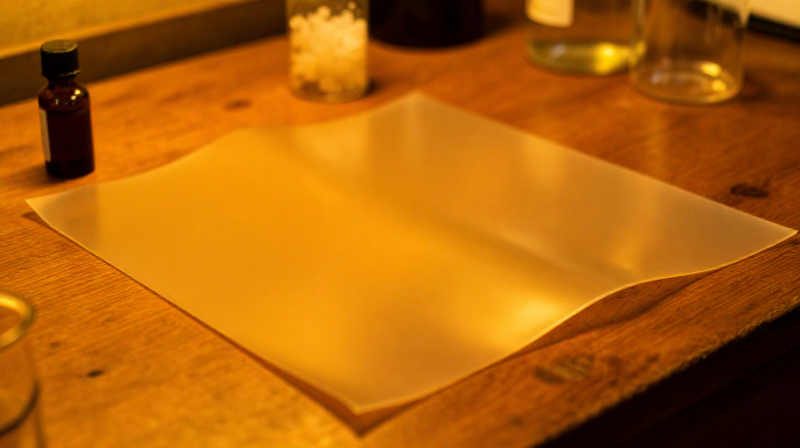
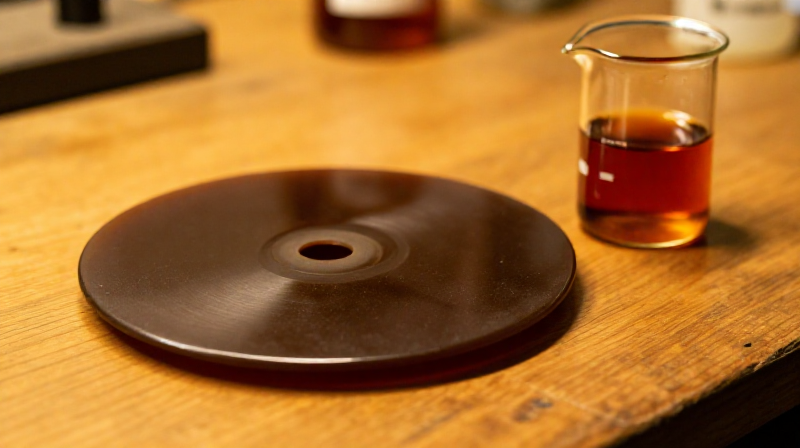
Peel the dried celluloid sheet from the mould. It should be a translucent, slightly yellowish, rigid but flexible sheet — it bends without breaking, springs back when released, and can be cut with scissors. Hold it up to the light: genuine celluloid is translucent with a warm amber tint. It has a faint camphor odour. This is the same material that made the first photographic roll film (Eastman Kodak, 1889), the first motion picture film (the Lumières, 1895), and countless everyday objects from combs to collar stays to ping-pong balls.
Test thermoplastic behaviour in hot water
Test thermoplastic behaviour in hot water
Cut a small strip of celluloid (2 × 5 cm) and immerse in water at 70–80 °C (NOT boiling — celluloid's ignition point is only about 150 °C). After 30 seconds, the strip becomes soft and pliable — you can bend it, twist it, or press it into a new shape. Remove from the water and hold in the desired shape while it cools. Within a minute, the celluloid has hardened again in its new form. This thermoplastic behaviour — softening reversibly with heat — is what made celluloid the first truly mouldable plastic. It could be shaped into any form by heating and pressing.
Store the finished celluloid
Store the finished celluloid
Store celluloid sheets flat in a cool, dry place away from heat sources and sunlight. Label: CELLULOID — FLAMMABLE. Celluloid degrades slowly over decades, releasing nitric acid fumes and camphor — this is why early cinema films crumble and self-combust in archives. Hyatt's 1869 invention — nitrocellulose plus camphor — was the first synthetic plastic: the first material made by human chemistry that did not exist anywhere in nature. It opened the door to Bakelite (1907), nylon (1935), polyethylene (1933), and the entire modern plastics industry that shapes the material world today.
Tools needed:
 Glass Storage Jar with Lid
Materials
3- Placeholder
- Placeholder
Tools Required
8- Placeholder
- Placeholder
- Placeholder
- Placeholder
- Placeholder
- Placeholder
- Placeholder
Connected Blueprint Materials
Related Blueprints
These blueprints share knowledge with this one — techniques, materials, or principles that connect them in the learning graph.
Related blueprints
Other builds that share materials, tools, or techniques with this one.
CC0 Public Domain
This blueprint is released under CC0. You are free to copy, modify, distribute, and use this work for any purpose, without asking permission.
Support the Maker by purchasing products through their Blueprint where they earn a Maker Commission set by Vendors, or create a new iteration of this Blueprint and include it as a connection in your own Blueprint to share revenue.