ART
BEAUTY & WELLNESS
CRAFT
CULTURE & HISTORY
ENTERTAINMENT
ENVIRONMENT
FOOD & DRINKS
GREEN FUTURE
REVERSE ENGINEERING
SCIENCES
SPORTS
TECHNOLOGY
WEARABLES
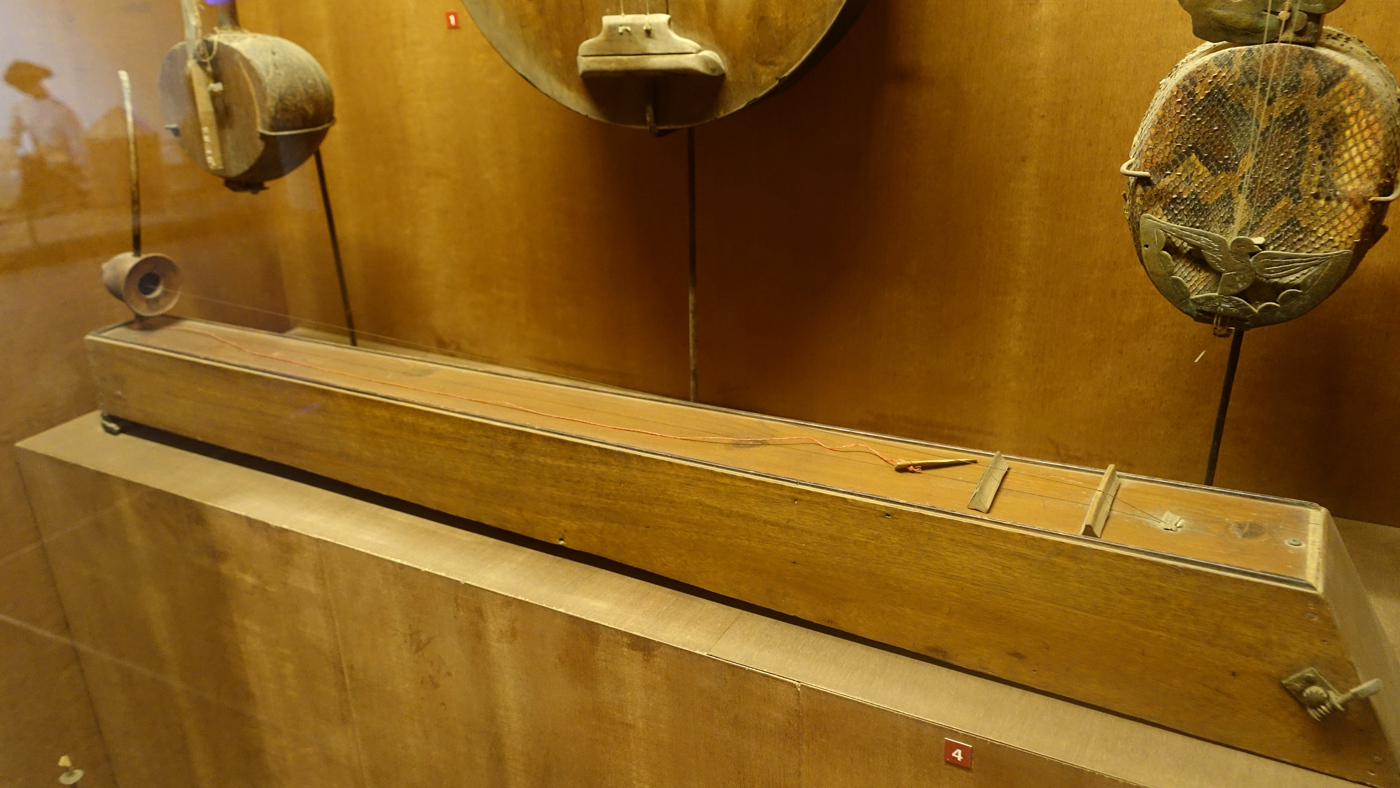


Building a Đàn Bầu — Vietnam's One-String Harmonic Zither
Build a đàn bầu: Vietnam's single-string instrument that plays only pure harmonics, with a flexible rod that bends every note like a singing voice. String it on a long box, learn to touch the nodes for flute-like overtones, then flex the rod to slide the pitch. A buildable school project in two deep ideas at once — string harmonics and how tension sets pitch.
Beginner
45 minutes
Instructions
1
1
One string, only harmonics
One string, only harmonics
The đàn bầu is Vietnam's one-string instrument. It plays only pure, bell-like harmonic notes, and a flexible rod bends every one of them, so a single string can sing like a voice.
2
2
Make the soundbox
Make the soundbox
Build a long, narrow, hollow wooden box about 90 cm long. This is the resonator that carries the quiet harmonics.
Materials for this step:
 Dry Softwood Board1 piece
 PVA Wood Glue1 piece
Tools needed:
 Hacksaw
3
3
Fit the flexible rod
Fit the flexible rod
At one end, fix a springy vertical rod (bamboo, or traditionally buffalo horn) that can flex back and forth. This rod is the whammy that bends the notes.
Materials for this step:
 Bamboo1 piece
Tools needed:
 Sloyd Carving Knife
4
4
Add the gourd
Add the gourd
Thread a small hollowed gourd onto the base of the rod, where it meets the string. The gourd softens and colours the tone — and gives the đàn bầu ('gourd instrument') its name.
Materials for this step:
 Mature Bottle Gourd1 piece
5
5
Fit the tuning peg
Fit the tuning peg
Fit a single tuning peg at the far end of the box.
Materials for this step:
 Tuning Pegs1 piece
Tools needed:
 Awl
Awl6
6
String it
String it
Tie the single string to the top of the flexible rod, run it the whole length of the box, and wind it onto the peg. Tune it to a clear, low note.
Materials for this step:
 Steel Music Wire 0.032"1 piece
7
7
Find the harmonic points
Find the harmonic points
Rest the SIDE of your hand lightly on the string exactly halfway along, pluck with a finger of that same hand, and lift instantly. A pure, flute-like note rings — a harmonic, an octave above the string's own note.
8
8
Climb the harmonic series
Climb the harmonic series
Touch and pluck at one-third, one-quarter and one-fifth of the string's length. Each point sounds a higher harmonic. The đàn bầu plays with these pure overtones alone.
9
9
Bend with the rod
Bend with the rod
While a harmonic rings, push the flexible rod toward the box to slacken the string and DROP the note, or pull it away to tighten the string and RAISE it. Bend slowly and smoothly.
10
10
Make it sing
Make it sing
Pluck a harmonic and waver the rod gently to make the note glide and shimmer — the way the đàn bầu shapes its tones to follow the rising and falling sounds of the Vietnamese language.
11
11
Compendium — string harmonics and the bending rod
Compendium — string harmonics and the bending rod
The đàn bầu rests on two beautiful pieces of physics. The first is the string harmonic. A plucked string does not only vibrate as a whole — it also vibrates in halves, thirds, quarters and more all at once, adding quiet higher notes, the harmonic series, on top of its main note. If you touch the string lightly at a still point (a node) of one of those patterns and pluck, you silence the main note and every pattern that moves at that spot, leaving only a harmonic that has a node there — so a single, pure, flute-like overtone rings out alone. Touch halfway for the note an octave up, at a third for the note higher still, and so on up the series; the đàn bầu plays with these harmonics only, which is why its voice is so pure and bell-like. The second idea is tension: a string's pitch rises when it is tightened and falls when it is slackened, and the flexible rod (the cần) is a lever for exactly that — flex it toward the box to loosen the string and bend the note down, flex it away to tighten and bend up — so any harmonic can be slid, wavered and swooped continuously, famously tracing the six tones of spoken Vietnamese. It is the same tension trick as the ektara's squeezed neck and the musical bow, and the same harmonic series that the kalyuka and conch hunt through inside a tube — here found on a single string. The little gourd softens the sound, and because bare harmonics are gentle, modern đàn bầu players usually add a magnetic pickup and amplifier.
Materials
6- 1 piecePlaceholder
- 1 piecePlaceholder
- 1 piecePlaceholder
- 1 piecePlaceholder
- 1 piecePlaceholder
Related Blueprints
These blueprints share knowledge with this one — techniques, materials, or principles that connect them in the learning graph.
Related blueprints
Other builds that share materials, tools, or techniques with this one.
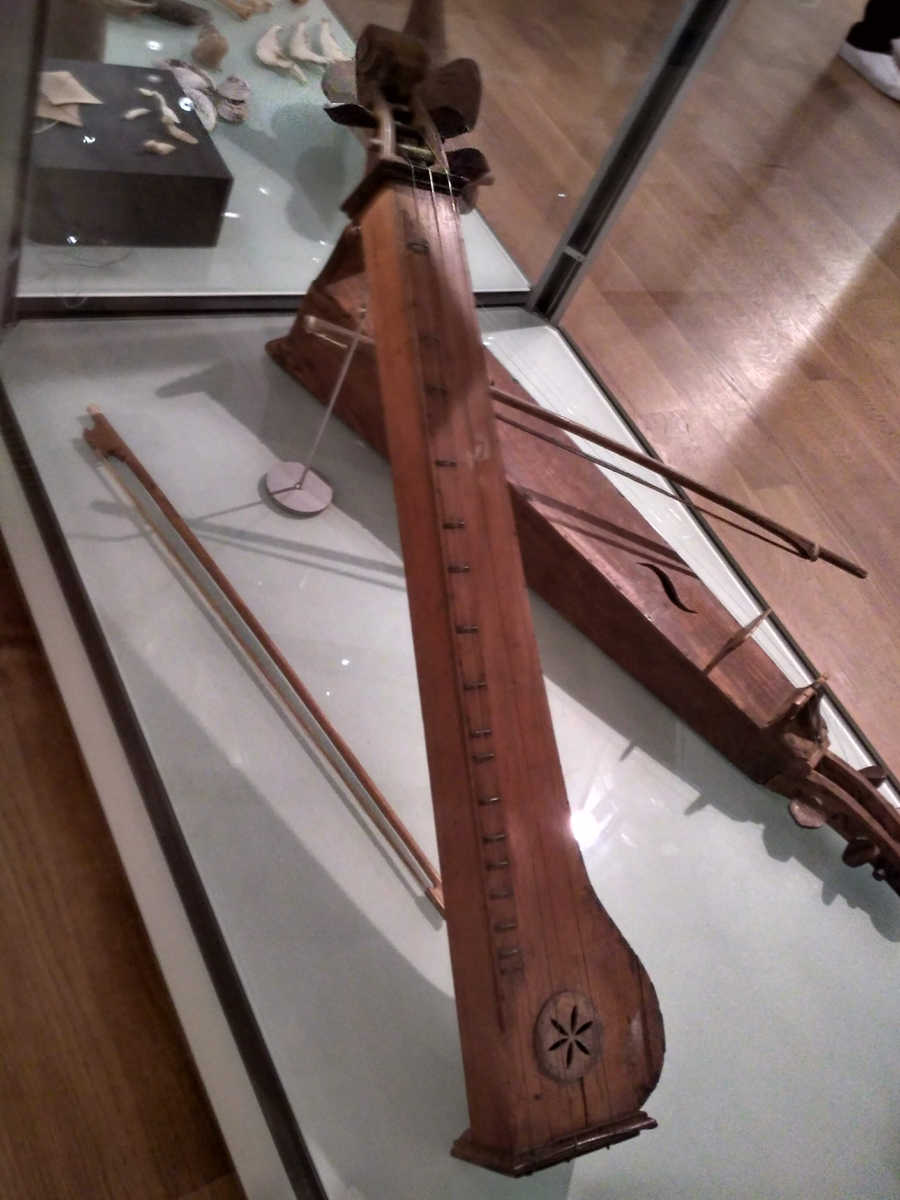
Building a Langspil — The Icelandic Drone Zither
Building an Ultrasonic Parking Sensorelectronics
Building an Oud — The Fretless Arabic Lute
Building a Roman Ballista — The Torsion-Powered Bolt Throwerengineering

Building a Celestial Globe — Mapping the Stars on a SpherePhysics & Astronomy

Building an Air-Quality Monitorelectronics
CC0 Public Domain
This blueprint is released under CC0. You are free to copy, modify, distribute, and use this work for any purpose, without asking permission.
Support the Maker by purchasing products through their Blueprint where they earn a Maker Commission set by Vendors, or create a new iteration of this Blueprint and include it as a connection in your own Blueprint to share revenue.