སྒྱུ་རྩལ
མཛེས་སྡུག་དང་བདེ་ཐང
བཟོ་རིག
རིག་གནས་དང་ལོ་རྒྱུས
དགའ་སྟོན
ཁོར་ཡུག
ཟས་དང་བཏུང་རྫས
ཕྱིར་འཕྲུལ་རིག
ཚན་རིག
རྩེད་འགྲན
རིག་རྩལ
གྱོན་རུང
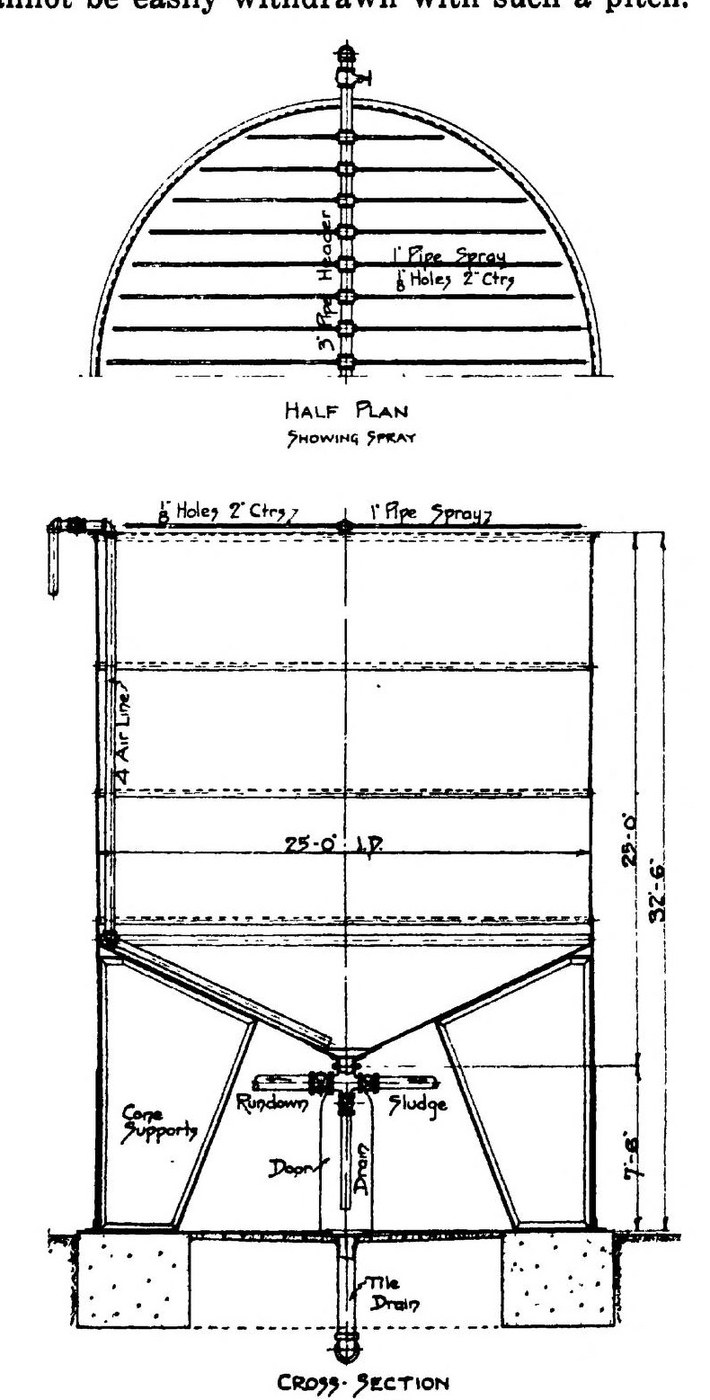


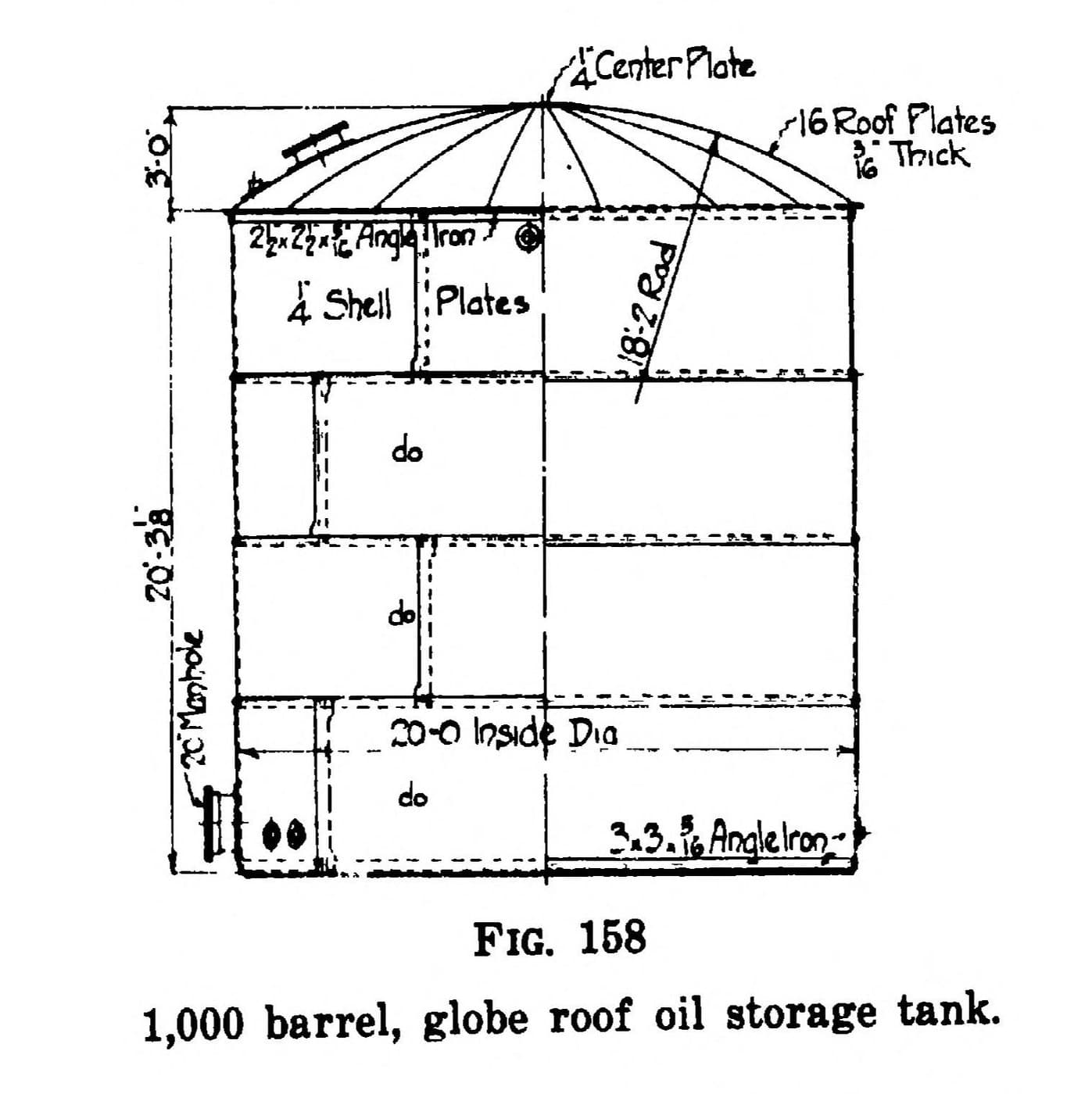
Agitated Mixing Tank: the Cone-Bottom Light-Oil Agitator (Bell, 1923)
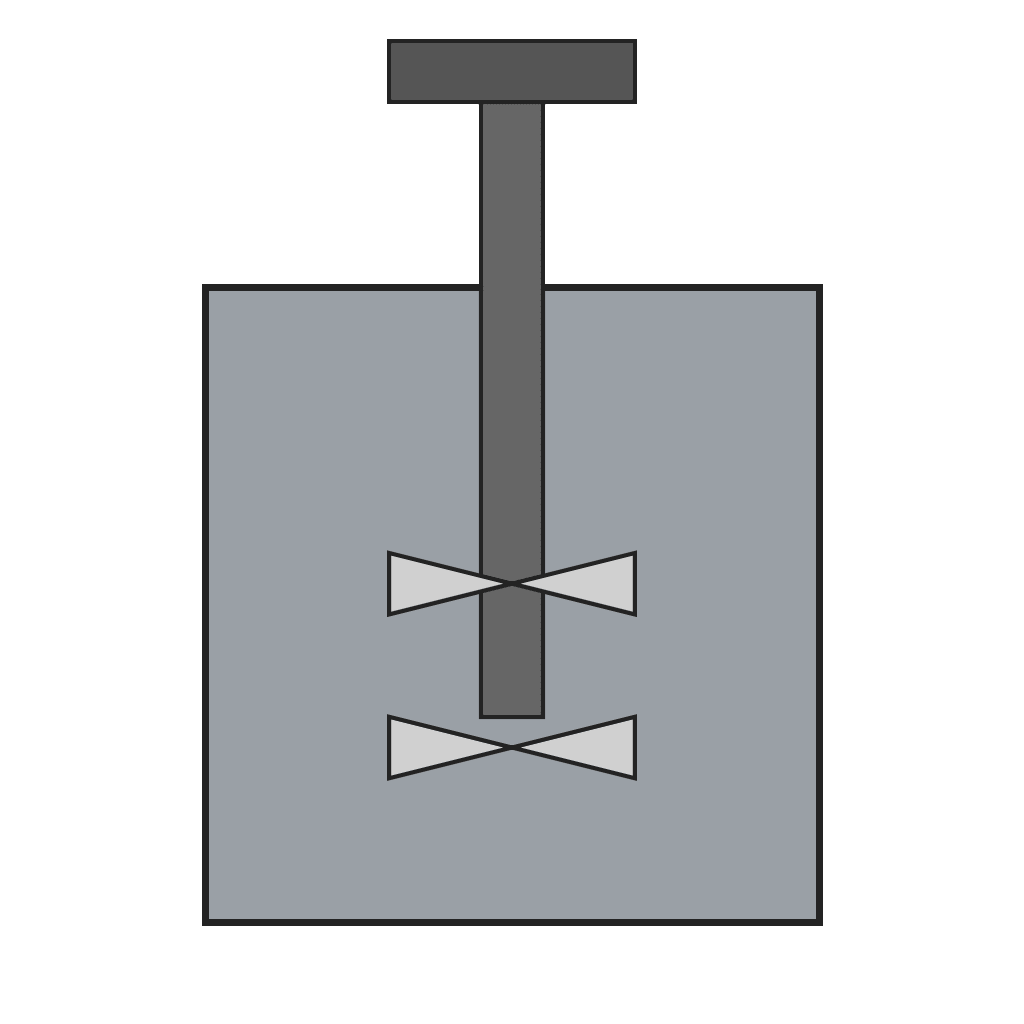
The refinery agitator for washing oil with acid, soda and water: a lead-lined riveted steel tank with a cone bottom, an air line that blows up through the charge to mix it, a spray header for wash water, and draw-offs at the tip of the cone for sludge and finished oil.
Variable: capacity, 160 to 5,000 barrels. Bell's Fig. 87 is 1,000 barrels: 25 ft inside diameter, 25 ft shell, 7 ft 6 in cone, 32 ft 6 in overall.
Source: H. S. Bell, American Petroleum Refining (1923), pp. 195-200. Unknown: plate thickness. Picture: Fig. 87 of the book.
ཆེས་མཁས་པ
Unknown
ལམ་སྟོན
1
1
Set the foundation and columns
Set the foundation and columns
Choose the capacity (160 to 5,000 barrels). Rest the tank on lugs on steel or concrete columns, fireproofing steel ones; the older way of extending the shell down with gussets under the cone is heavy. Fig. 87 stands on concrete footings with a tile drain under the cone tip.
གོམ་པ་འདིའི་རྫས་རིགས:
 ཀོང་ཀི་རིཊ།1 footings, columns
ལག་ཆས་དགོས་མཁོ:
 མ་ཤེས་པའི་ཚད།
2
2
Build the shell and cone
Build the shell and cone
Rivet a cylindrical shell (Fig. 87: 25 ft inside, 25 ft high) onto a cone bottom pitched no more than 4 in per foot from the horizontal for light oils; sludge still runs out at that slope. With a tight lead lining the shell need not be caulked; leave out an occasional rivet so lining leaks show. Not given: plate thickness.
གོམ་པ་འདིའི་རྫས་རིགས:
 ལྕགས་འཇམ་གྱི་ཤོག་ལེབ་སྟུག།1 shell, cone
 ལྕགས་འཇམ་གྱི་ཟུར་ལྕགས།1 top and cone angles
 ལྕགས་ཀྱི་གཟེར།1 དུམ་བུ།
ལག་ཆས་དགོས་མཁོ:
 བུག་གནོན་འཕྲུལ།
 གཟེར་བརྡུང་གི་ཐོ་བ།
3
3
Fit a low roof with relief
Fit a low roof with relief
Use a low globe roof, not the old hemispherical 'gas bag', with plenty of explosion hatches; even 10 % relief area has not always saved a roof. Bell's preferred form (Fig. 89) has two roof segments that lift in an explosion and fall back to smother the fire.
གོམ་པ་འདིའི་རྫས་རིགས:
ལྕགས་འཇམ་གྱི་ཤོག་ལེབ་སྟུག།1 roofལྕགས་ཀྱི་གཟེར།1 དུམ་བུ།ལག་ཆས་དགོས་མཁོ:
གཟེར་བརྡུང་གི་ཐོ་བ།4
4
Pipe the air, spray and draw-offs
Pipe the air, spray and draw-offs
Run a 4 in air line down to the cone tip; the blast needs at least 200 to 250 cu ft of free air per minute per 1,000 barrels, at just enough pressure to beat the oil head. Across the top fit a 3 in header with 1 in spray pipes drilled with 1/8 in holes at 2 in centres. At the cone tip fit valved rundown, sludge and drain lines.
གོམ་པ་འདིའི་རྫས་རིགས:
 ལྕགས་ཀྱི་ཕྱི་ལམ (གྱང་སྟུག་ཏོག་ཏོ། མཇུག་ལུ་སྐུད་རིས་ཡོད་མི)1 4 in air, 3 in header, 1 in sprays
 སྒོ་ཡི་ཝཱལ།3 rundown, sludge, drain
ལག་ཆས་དགོས་མཁོ:
 ལག་འཕྲུལ་ཁུང་བཏོན
 རླུང་འཕུ་འཕྲུལ་ཆས།
5
5
Line it with lead
Line it with lead
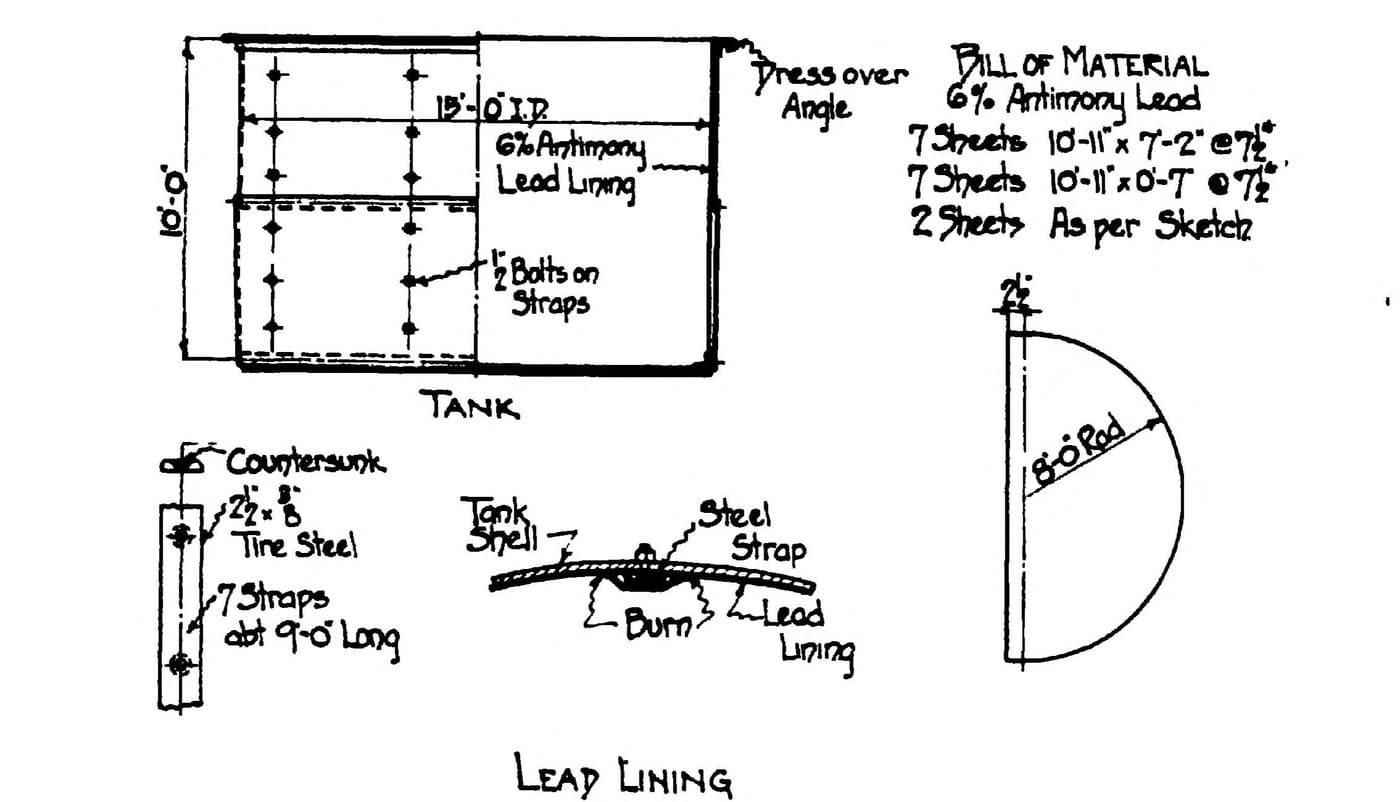
Weak acid from the washes eats steel, so line it with lead: 8 lb per sq ft on the shell, 10 lb on the cone, or 6 % antimony lead half a pound lighter. Don't just hang it from the top angle: agitation makes a loose lining creep and crack. Hold it with lead-covered steel straps about 8 ft apart, bolted through the shell, and bring the lining out through the draw-off neck.
གོམ་པ་འདིའི་རྫས་རིགས:
 ཞའི་ཤོག་ལེབ།1 8 lb shell, 10 lb cone
 ལྕགས་འཇམ་གྱི་ལེབ་ཤིང་།1 straps
 ཟུར་དྲུག་མགུ་ཡོད་པའི་བོལ་ཊི - རིམ་པ་ 8.81 དུམ་བུ།
ལག་ཆས་དགོས་མཁོ:
 ཤིང་གི་ཐོ་བ།
 མེ་ཤིང
རྫས་རིགས
9- 1 footings, columnsས་ཆ་འཛིན
- ས་ཆ་འཛིན
- 1 top and cone anglesས་ཆ་འཛིན
- 1 དུམ་བུ།ས་ཆ་འཛིན
- 1 4 in air, 3 in header, 1 in spraysས་ཆ་འཛིན
- 3 rundown, sludge, drainས་ཆ་འཛིན
- 1 8 lb shell, 10 lb coneས་ཆ་འཛིན
- 1 strapsས་ཆ་འཛིན
- ས་ཆ་འཛིན
ལག་ཆས་དགོས་མཁོ
7- ས་ཆ་འཛིན
- ས་ཆ་འཛིན
- ས་ཆ་འཛིན
- ས་ཆ་འཛིན
- ས་ཆ་འཛིན
- ས་ཆ་འཛིན
- ས་ཆ་འཛིན
མཐུད་སྦྲེལ་བིལུ་པིརིན་ཊི་རྫས་རིགས
བིལུ་པིརིན་ཊི་འདི་གིས་བཟོ་མི
CC0 སྤྱི་དབང
བིལུ་པིརིན་ཊི་འདི་CC0 འོག་བཀྲམས་ཡོད། ཁྱེད་རང་གིས་ཆོག་མཆན་མ་བཞེས་པར་ཕབ་ལེན་དང་བཟོ་བཅོས། བགོ་བཤའ། དགོས་མཁོ་གང་ལའང་བཀོལ་སྤྱོད་བྱས་ཆོག
བཟོ་མཁན་ལ་རྒྱབ་སྐྱོར་བྱེད་པའི་ཆེད་ཁོང་ཚོའི་བིལུ་པིརིན་ཊི་བརྒྱུད་ཐོན་སྐྱེད་ཉོ། བཟོ་མཁན་གྱིས བཟོ་མཁན་གྱི་ཁེ་ཕོགས ཚོང་པས་གཏན་འཁེལ་བྱས་པ། ཡང་ན་བིལུ་པིརིན་ཊི་འདིའི་པར་གསར་བཟོས་ཏེ་ཁྱེད་རང་གི་བིལུ་པིརིན་ཊི་ནང་མཐུད་སྦྲེལ་བྱས་ཏེ་ཡོང་སྒོ་བགོ་བཤའ་བྱེད།