སྒྱུ་རྩལ
མཛེས་སྡུག་དང་བདེ་ཐང
བཟོ་རིག
རིག་གནས་དང་ལོ་རྒྱུས
དགའ་སྟོན
ཁོར་ཡུག
ཟས་དང་བཏུང་རྫས
ཕྱིར་འཕྲུལ་རིག
ཚན་རིག
རྩེད་འགྲན
རིག་རྩལ
གྱོན་རུང
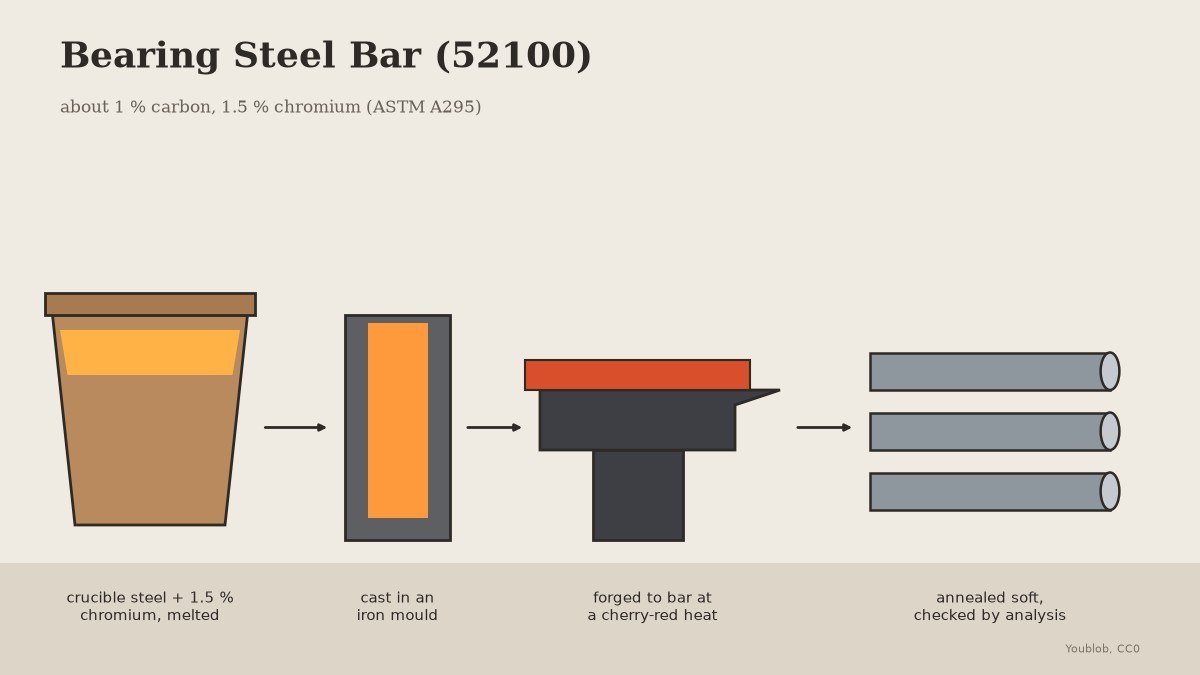


Bearing Steel Bar (52100): Crucible Steel Alloyed with Chromium
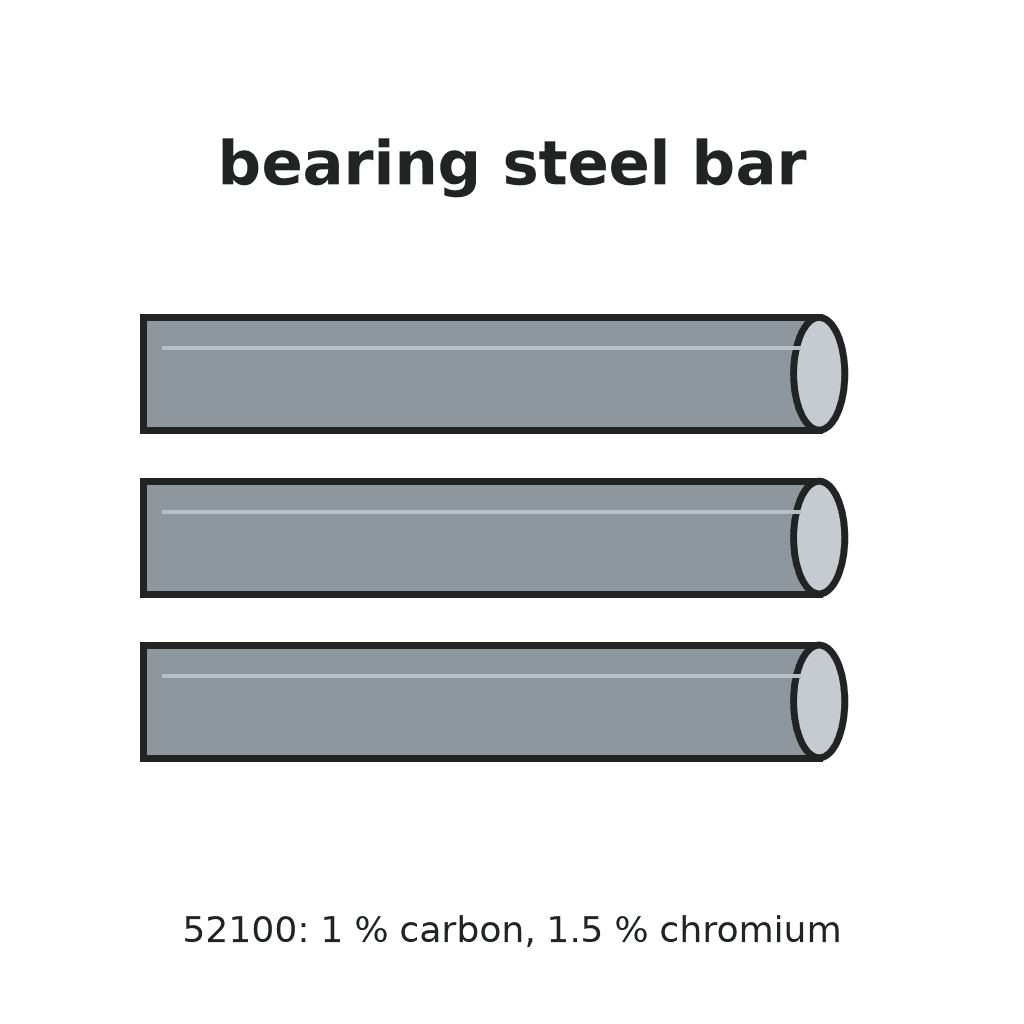
52100 is the steel of ball bearings: about 1 % carbon and 1.5 % chromium (ASM). The standard, ASTM A295, allows 0.93–1.05 % carbon and 1.35–1.60 % chromium. Here crucible steel is melted with chromium and a little manganese, cast, forged to bar and annealed soft for working.
Our method, not the factory one: factory 52100 is melted in an electric furnace and vacuum-degassed to meet the standard's limits on inclusions. A crucible melt can reach the composition, but only a lab test shows whether it is clean enough for bearings.
The picture: our drawing, crucible to bar.
མཐོ་རིམ
2 days
ལམ་སྟོན
1
1
Weigh the charge
Weigh the charge
For 1 kg: 981.5 g crucible steel of about 1 % carbon, 15 g chromium and 3.5 g manganese (our figures; see the last step). Use steel whose analysis you know.
གོམ་པ་འདིའི་རྫས་རིགས:
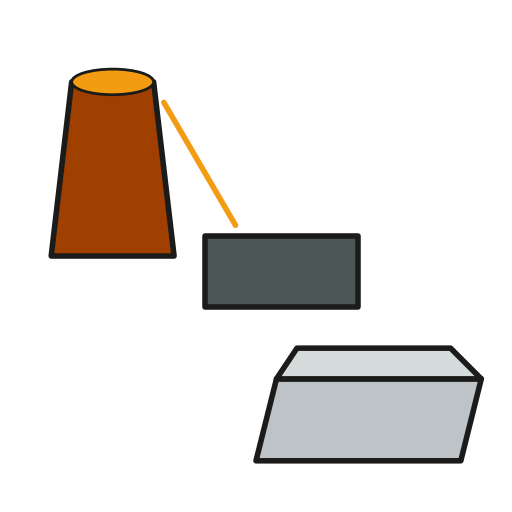 ཞུན་སྣོད་ཀྱི་ལྕགས་ཁར981.5 g
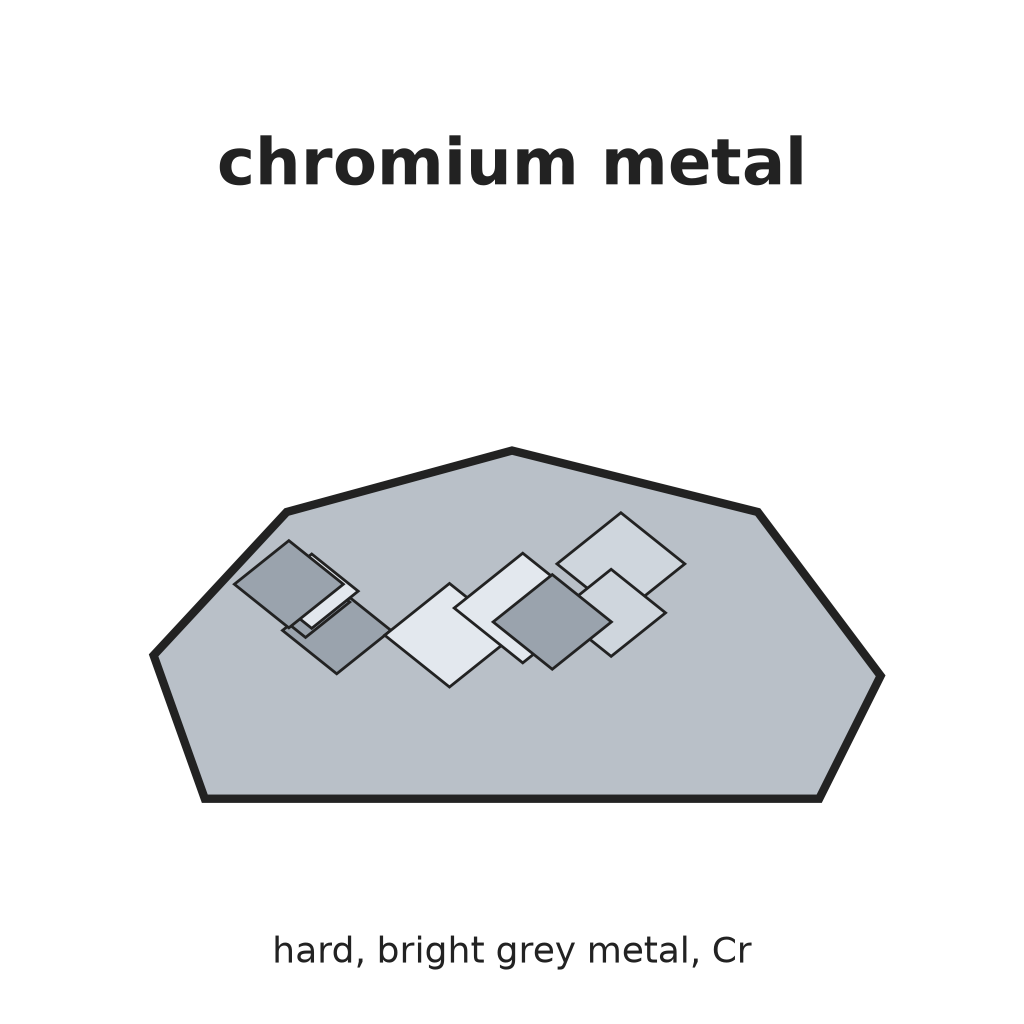 ཀྲོ་མིའུམ་ལྕགས།15 g
 མེན་ག་ནིསི།3.5 g
ལག་ཆས་དགོས་མཁོ:
 ཨང་རྟགས་ཐབ་ཚང་སྲང་།
2
2
Melt
Melt
Pack the steel, chromium and manganese in a covered clay crucible and melt it in the furnace. The alloy is fully liquid above 1450 °C.
ལག་ཆས་དགོས་མཁོ:
 འཇིམ་གྱི་ཞུན་སྣོད — གཏིང་ཟབ།
 ས་ཕག་གི་མེ་ཐབ།
 རླུང་སྦུད་ཆས།
 ཚག་གི་ལག་ཤུབས།
 ཀོ་བའི་སྣམ་སྦྱར།
 ཉེན་སྲུང་མིག་ཤེལ།
3
3
Cast the ingot
Cast the ingot
Lift the crucible out with tongs and pour into a cast-iron ingot mould. Let it cool.
ལག་ཆས་དགོས་མཁོ:
 བཞུ་སྣོད་ཀྱི་གཟེར་ཆས།
 ལྕགས་བྱང་བུའི་སྒྲོམ།ཚག་གི་ལག་ཤུབས།ཀོ་བའི་སྣམ་སྦྱར།ཉེན་སྲུང་མིག་ཤེལ།
4
4
Forge to bar
Forge to bar
Heat the ingot to a cherry-red heat and no hotter, and draw it out on the anvil to a round or square bar. Reheat when the colour drops; never hammer it cold.
གོམ་པ་འདིའི་རྫས་རིགས:
 སོལ་བ།1 as required
ལག་ཆས་དགོས་མཁོ:
 མགར་བའི་ཐབ་ཁུང་།
 མགར་བའི་རྡོ་ལེབ།
 ཐོ་བ་ཆེན།
 རྒྱབ་ཐིག་གི་ཐོ་བ།
 མགར་བའི་ལག་བཟུང་།
 ཨང་རྟགས་ཚད་འཇལ་ཆས་ ཨིནཅི 6ཚག་གི་ལག་ཤུབས།ཀོ་བའི་སྣམ་སྦྱར།ཉེན་སྲུང་མིག་ཤེལ།
5
5
Test the analysis
Test the analysis
Drill clean chips from the bar and have a lab analyse carbon, chromium, manganese, silicon, phosphorus and sulphur. Keep the bar only if it is within 52100 limits.
ལག་ཆས་དགོས་མཁོ:
 ལག་འཕྲུལ་ཁུང་བཏོན
 ཁ་བཅད་ཡོད་པའི་ཤེལ་སྣོད།ཉེན་སྲུང་མིག་ཤེལ།
6
6
Anneal soft
Anneal soft
In the oven, hold the bar at 793 °C (1460 °F) for 30 minutes, cool in the oven no faster than 500 °C an hour to 682 °C (1260 °F), then cool in air (Verhoeven's anneal).
ལག་ཆས་དགོས་མཁོ:
 ཚ་དྲོད་བཅོས་ཐབས་ཀྱི་ཐབ།
 ལྷག་ཆས་ཡོད་པའི་ཐར་མོ་ཀཔཱལ།མགར་བའི་ལག་བཟུང་།ཚག་གི་ལག་ཤུབས།
7
7
The charge
The charge
Jupyter ཚང་དེབ་མངོན་གསལ་འབད་དོ་…
རྫས་རིགས
4- 981.5 gས་ཆ་འཛིན
- 15 gས་ཆ་འཛིན
- 3.5 gས་ཆ་འཛིན
- 1 as requiredས་ཆ་འཛིན
ལག་ཆས་དགོས་མཁོ
19- ས་ཆ་འཛིན
- ས་ཆ་འཛིན
- ས་ཆ་འཛིན
- ས་ཆ་འཛིན
- ས་ཆ་འཛིན
- ས་ཆ་འཛིན
- ས་ཆ་འཛིན
- ས་ཆ་འཛིན
- ས་ཆ་འཛིན
- ས་ཆ་འཛིན
- ས་ཆ་འཛིན
- ས་ཆ་འཛིན
- ས་ཆ་འཛིན
- ས་ཆ་འཛིན
- ས་ཆ་འཛིན
- ས་ཆ་འཛིན
- ས་ཆ་འཛིན
- ས་ཆ་འཛིན
- ས་ཆ་འཛིན
བིལུ་པིརིན་ཊི་འདི་གིས་བཟོ་མི
འབྲེལ་ཡོད་བིལུ་པིརིན་ཊི
བིལུ་པིརིན་ཊི་འདི་ཚུ་ཐབས་ལམ་དང་རྫས་རིགས། སྤྱི་ཆོས་བགོ་བཤའ་བྱེད


CC0 སྤྱི་དབང
བིལུ་པིརིན་ཊི་འདི་CC0 འོག་བཀྲམས་ཡོད། ཁྱེད་རང་གིས་ཆོག་མཆན་མ་བཞེས་པར་ཕབ་ལེན་དང་བཟོ་བཅོས། བགོ་བཤའ། དགོས་མཁོ་གང་ལའང་བཀོལ་སྤྱོད་བྱས་ཆོག
བཟོ་མཁན་ལ་རྒྱབ་སྐྱོར་བྱེད་པའི་ཆེད་ཁོང་ཚོའི་བིལུ་པིརིན་ཊི་བརྒྱུད་ཐོན་སྐྱེད་ཉོ། བཟོ་མཁན་གྱིས བཟོ་མཁན་གྱི་ཁེ་ཕོགས ཚོང་པས་གཏན་འཁེལ་བྱས་པ། ཡང་ན་བིལུ་པིརིན་ཊི་འདིའི་པར་གསར་བཟོས་ཏེ་ཁྱེད་རང་གི་བིལུ་པིརིན་ཊི་ནང་མཐུད་སྦྲེལ་བྱས་ཏེ་ཡོང་སྒོ་བགོ་བཤའ་བྱེད།