སྒྱུ་རྩལ
མཛེས་སྡུག་དང་བདེ་ཐང
བཟོ་རིག
རིག་གནས་དང་ལོ་རྒྱུས
དགའ་སྟོན
ཁོར་ཡུག
ཟས་དང་བཏུང་རྫས
ཕྱིར་འཕྲུལ་རིག
ཚན་རིག
རྩེད་འགྲན
རིག་རྩལ
གྱོན་རུང
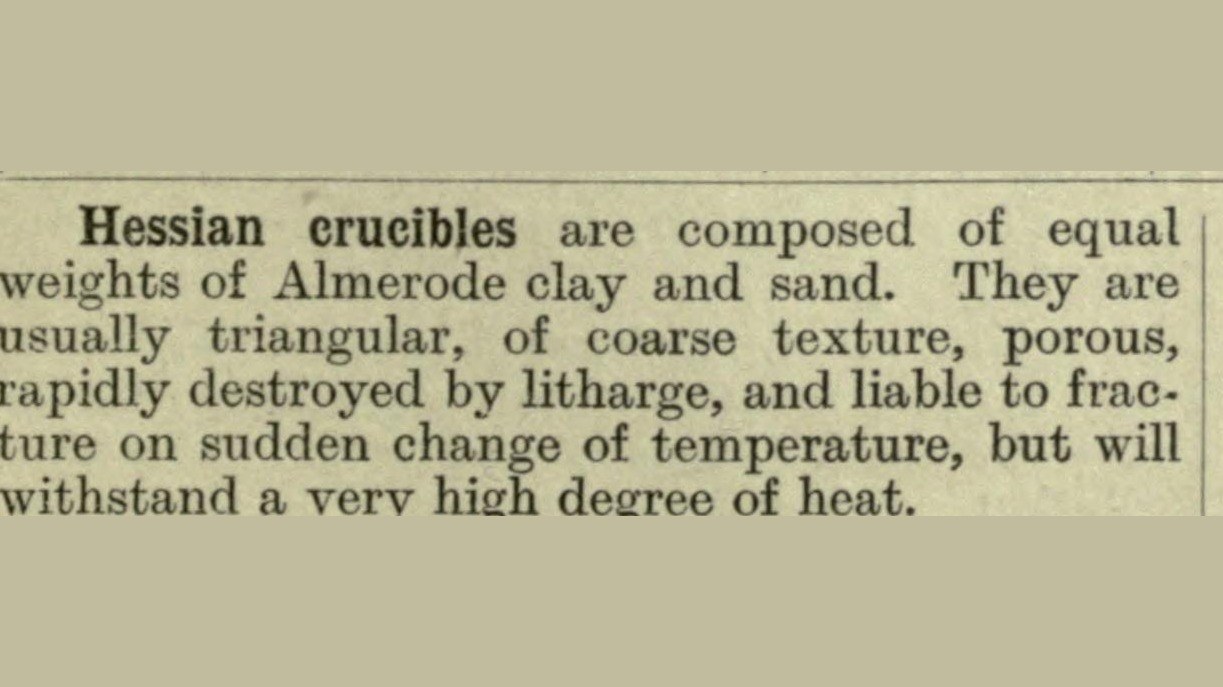


Ceramic Crucible: a Hessian Crucible of Equal Weights of Clay and Sand (Thorpe 1912)
A ceramic crucible is a fired clay pot for melting metal. Thorpe's Dictionary of Applied Chemistry (1912) describes the Hessian crucible: equal weights of clay and sand, usually triangular, coarse and porous; it withstands a very high heat but cracks on sudden changes of temperature and is quickly eaten by litharge.
His general rules for clay crucibles fill in the work: weather the clay, beat it fine to drive out air, mix in the sand, form the crucibles and bake small ones in a kiln. Sizes, forming and baking heat are not given.
Source: Thorpe, Dictionary of Applied Chemistry vol. II (1912), CRUCIBLES, pp. 168-169. Picture: the Hessian paragraph.
འགོ་བཙུགས
Weeks of weathering, then two days
ལམ་སྟོན
1
1
Read Thorpe
Read Thorpe
"Hessian crucibles are composed of equal weights of Almerode clay and sand."
2
2
Weather and clean the clay
Weather and clean the clay
Leave the clay exposed to the air in a moist state for some months; it breaks down, grows more plastic and is easier to clean. Pick out foreign matter, above all iron pyrites, which turns into a flux and leaves cavities, and lime.
གོམ་པ་འདིའི་རྫས་རིགས:
 འདམ།1 half by weight
ལག་ཆས་དགོས་མཁོ:
 ཆུ།
3
3
Beat and mix
Beat and mix
Beat the clay well, as fine as you can get it, to drive out air bubbles. Weigh it, and mix in an equal weight of sand; Berthier warns that the sand should not be too fine, or it combines with the clay and lowers the melting point.
གོམ་པ་འདིའི་རྫས་རིགས:
 ཀོཊསི་ཀྱི་བྱེ་མ།1 half by weight
ལག་ཆས་དགོས་མཁོ:
 ཤིང་གི་ཐོ་བ།
 ཏག་ཏག་གི་ཨང་རྟགས་སྲང་།
4
4
Form the crucibles
Form the crucibles
Form the crucibles; Hessian crucibles are usually triangular. Thorpe gives no sizes and no forming method (unknown).
ལག་ཆས་དགོས་མཁོ:
 རྫ་བཟོའི་ལག་ཆས་ཆ་ཚན།
 མ་ཤེས་པའི་ཚད།
5
5
Bake
Bake
Bake small crucibles in a kiln. Thorpe notes that the higher the baking heat, the more liable the crucible is to crack when heated again; the temperature is not given.
ལག་ཆས་དགོས་མཁོ:
 ཐབ།
 ཚ་བཟོད་ཀྱི་ལག་ཤུབས།
6
6
History and honest limits
History and honest limits
Thorpe sets the Hessian crucible beside others of his day: French crucibles of raw and burnt clay, Cornish crucibles for copper assaying, Stourbridge crucibles with old glass-pot grog, and graphite crucibles for melting metals. The sand forms a skeleton that keeps the pot from slumping at heats where the clay alone would soften.
He gives the proportions only; the size, the forming and the baking heat are not given, and plain clay and quartz sand stand for Almerode clay and its sand.
ལག་ཆས་དགོས་མཁོ
7- ས་ཆ་འཛིན
- ས་ཆ་འཛིན
- ས་ཆ་འཛིན
- ས་ཆ་འཛིན
- ས་ཆ་འཛིན
- ས་ཆ་འཛིན
- ས་ཆ་འཛིན
བིལུ་པིརིན་ཊི་འདི་གིས་བཟོ་མི

འབྲེལ་ཡོད་བིལུ་པིརིན་ཊི
བིལུ་པིརིན་ཊི་འདི་ཚུ་ཐབས་ལམ་དང་རྫས་རིགས། སྤྱི་ཆོས་བགོ་བཤའ་བྱེད
CC0 སྤྱི་དབང
བིལུ་པིརིན་ཊི་འདི་CC0 འོག་བཀྲམས་ཡོད། ཁྱེད་རང་གིས་ཆོག་མཆན་མ་བཞེས་པར་ཕབ་ལེན་དང་བཟོ་བཅོས། བགོ་བཤའ། དགོས་མཁོ་གང་ལའང་བཀོལ་སྤྱོད་བྱས་ཆོག
བཟོ་མཁན་ལ་རྒྱབ་སྐྱོར་བྱེད་པའི་ཆེད་ཁོང་ཚོའི་བིལུ་པིརིན་ཊི་བརྒྱུད་ཐོན་སྐྱེད་ཉོ། བཟོ་མཁན་གྱིས བཟོ་མཁན་གྱི་ཁེ་ཕོགས ཚོང་པས་གཏན་འཁེལ་བྱས་པ། ཡང་ན་བིལུ་པིརིན་ཊི་འདིའི་པར་གསར་བཟོས་ཏེ་ཁྱེད་རང་གི་བིལུ་པིརིན་ཊི་ནང་མཐུད་སྦྲེལ་བྱས་ཏེ་ཡོང་སྒོ་བགོ་བཤའ་བྱེད།