སྒྱུ་རྩལ
མཛེས་སྡུག་དང་བདེ་ཐང
བཟོ་རིག
རིག་གནས་དང་ལོ་རྒྱུས
དགའ་སྟོན
ཁོར་ཡུག
ཟས་དང་བཏུང་རྫས
ཕྱིར་འཕྲུལ་རིག
ཚན་རིག
རྩེད་འགྲན
རིག་རྩལ
གྱོན་རུང
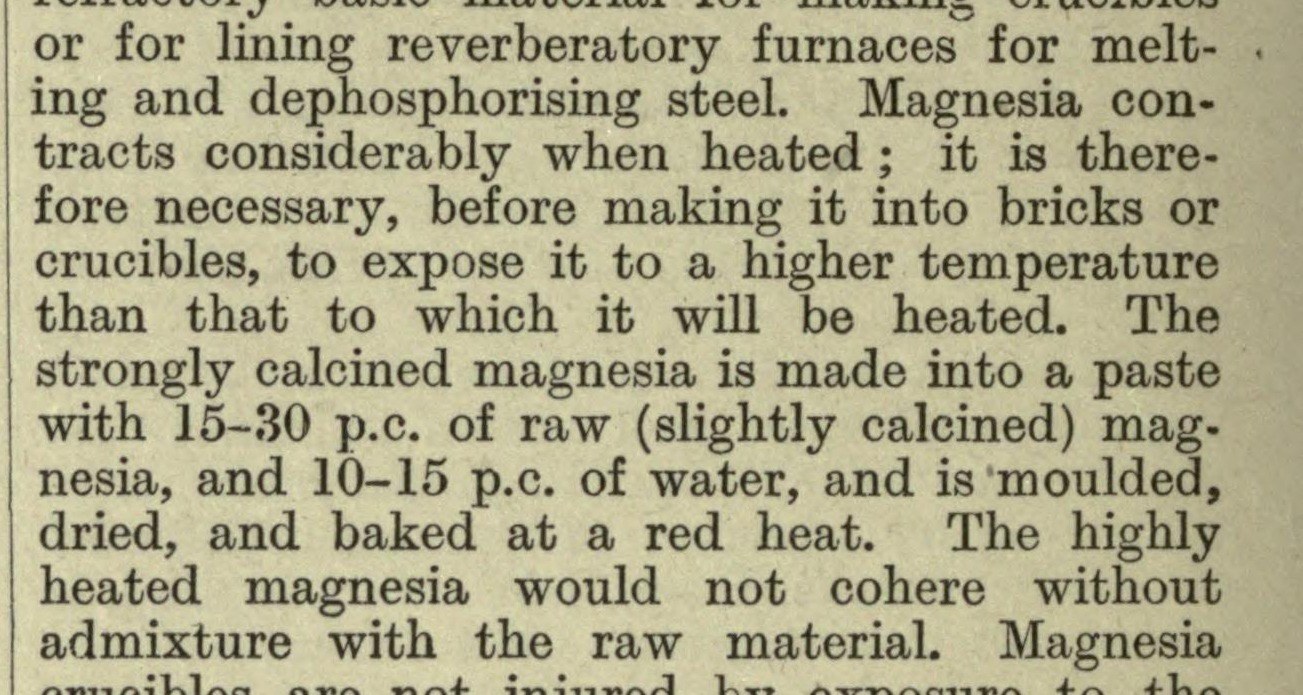


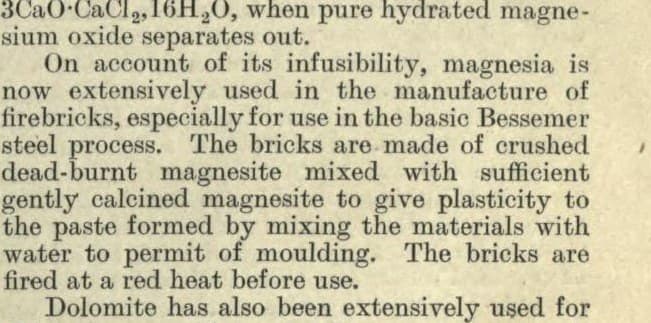
Magnesia Crucible: Strongly Calcined Magnesia Bound with Raw Magnesia and Baked at a Red Heat (Thorpe 1912)
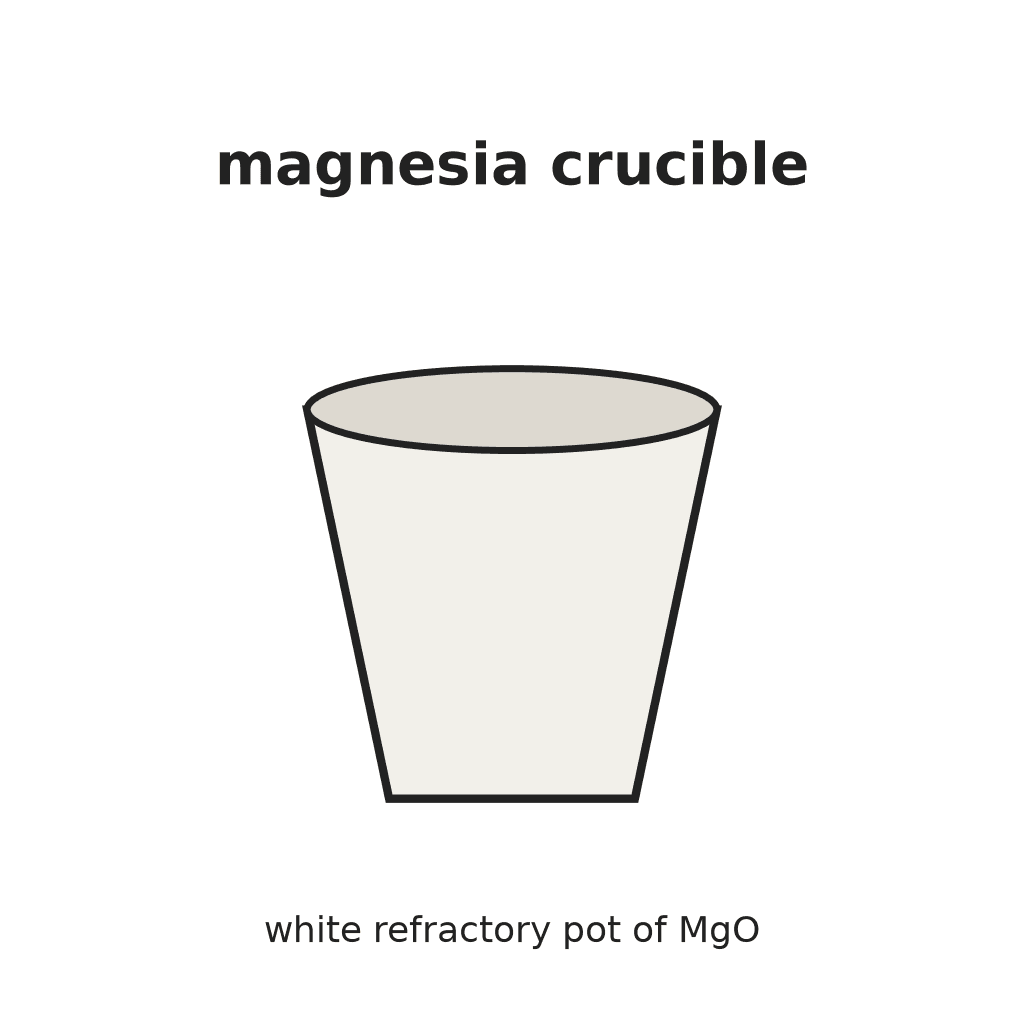
A magnesia crucible is a pot of magnesia, a basic refractory. Thorpe's Dictionary of Applied Chemistry (1912) gives the recipe introduced by Caron: magnesia shrinks a great deal when heated, so it is first calcined hotter than it will ever be used, then bound with 15-30 per cent of raw, slightly calcined magnesia and 10-15 per cent of water, moulded, dried and baked at a red heat.
He gives no calcining temperature, mould or size; those are unknown here.
Source: Thorpe, Dictionary of Applied Chemistry vol. II (1912), CRUCIBLES, p. 170. Picture: that passage.
བར་མ
Two to three days
ལམ་སྟོན
1
1
Read Thorpe
Read Thorpe
"The highly heated magnesia would not cohere without admixture with the raw material."
2
2
Calcine most of the magnesia hard
Calcine most of the magnesia hard
Magnesia contracts considerably when heated, so before making it into a crucible expose it to a higher temperature than the crucible will meet in use. The temperature itself is not given. Keep back a part of the magnesia only slightly calcined.
གོམ་པ་འདིའི་རྫས་རིགས:
 མེག་ནི་སིཡམ་ཨོག་སཱའིཌ།1 as required
ལག་ཆས་དགོས་མཁོ:
 ཐབ།
 ཚ་བཟོད་ཀྱི་ལག་ཤུབས།
3
3
Make the paste
Make the paste
Grind the strongly calcined magnesia and mix it with 15-30 per cent of the raw (slightly calcined) magnesia and 10-15 per cent of water into a paste. The raw part is what makes it hold together.
གོམ་པ་འདིའི་རྫས་རིགས:
 ཆུ།1 10-15 per cent
ལག་ཆས་དགོས་མཁོ:
 གཏུན་དང་གཏུན་ཤིང་།
 ཏག་ཏག་གི་ཨང་རྟགས་སྲང་།
 ཐལ་བའི་ཁ་རས།
4
4
Mould the crucible
Mould the crucible
Mould the paste into crucibles. Thorpe does not describe the mould or give sizes (unknown).
ལག་ཆས་དགོས་མཁོ:
 ངོ་མ་ཤེས་པའི་རྒྱུ་ཆ།
 མ་ཤེས་པའི་ཚད།
5
5
Dry and bake
Dry and bake
Dry the crucibles, then bake them at a red heat. Thorpe notes that magnesia crucibles are not harmed by standing in the air.
ལག་ཆས་དགོས་མཁོ:
ཐབ།ཚ་བཟོད་ཀྱི་ལག་ཤུབས།6
6
History and honest limits
History and honest limits
Thorpe credits Caron with introducing magnesia for crucibles and for lining reverberatory furnaces in which steel was melted and dephosphorised. He also lists magnesia-bauxite crucibles (Gaudin) and calcined magnesite with a boron compound (Rawson and Littlefield, 1900).
The calcining temperature, the mould, the size and the drying are not given; the tools are ours.
ལག་ཆས་དགོས་མཁོ
7- ས་ཆ་འཛིན
- ས་ཆ་འཛིན
- ས་ཆ་འཛིན
- ས་ཆ་འཛིན
- ས་ཆ་འཛིན
- ས་ཆ་འཛིན
- ས་ཆ་འཛིན
བིལུ་པིརིན་ཊི་འདི་གིས་བཟོ་མི
འབྲེལ་ཡོད་བིལུ་པིརིན་ཊི
བིལུ་པིརིན་ཊི་འདི་ཚུ་ཐབས་ལམ་དང་རྫས་རིགས། སྤྱི་ཆོས་བགོ་བཤའ་བྱེད
CC0 སྤྱི་དབང
བིལུ་པིརིན་ཊི་འདི་CC0 འོག་བཀྲམས་ཡོད། ཁྱེད་རང་གིས་ཆོག་མཆན་མ་བཞེས་པར་ཕབ་ལེན་དང་བཟོ་བཅོས། བགོ་བཤའ། དགོས་མཁོ་གང་ལའང་བཀོལ་སྤྱོད་བྱས་ཆོག
བཟོ་མཁན་ལ་རྒྱབ་སྐྱོར་བྱེད་པའི་ཆེད་ཁོང་ཚོའི་བིལུ་པིརིན་ཊི་བརྒྱུད་ཐོན་སྐྱེད་ཉོ། བཟོ་མཁན་གྱིས བཟོ་མཁན་གྱི་ཁེ་ཕོགས ཚོང་པས་གཏན་འཁེལ་བྱས་པ། ཡང་ན་བིལུ་པིརིན་ཊི་འདིའི་པར་གསར་བཟོས་ཏེ་ཁྱེད་རང་གི་བིལུ་པིརིན་ཊི་ནང་མཐུད་སྦྲེལ་བྱས་ཏེ་ཡོང་སྒོ་བགོ་བཤའ་བྱེད།