སྒྱུ་རྩལ
མཛེས་སྡུག་དང་བདེ་ཐང
བཟོ་རིག
རིག་གནས་དང་ལོ་རྒྱུས
དགའ་སྟོན
ཁོར་ཡུག
ཟས་དང་བཏུང་རྫས
ཕྱིར་འཕྲུལ་རིག
ཚན་རིག
རྩེད་འགྲན
རིག་རྩལ
གྱོན་རུང


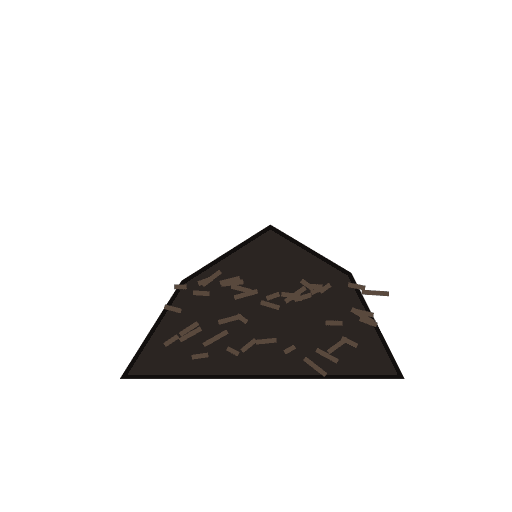
Charred Leather: Shoe-Sole Scrap Charred in Hardening Boxes Overnight (Bacon, 1919)
Charred leather is packed round steel in a closed box to case-harden it; John Lord Bacon calls it the very best carburizer for fine work.
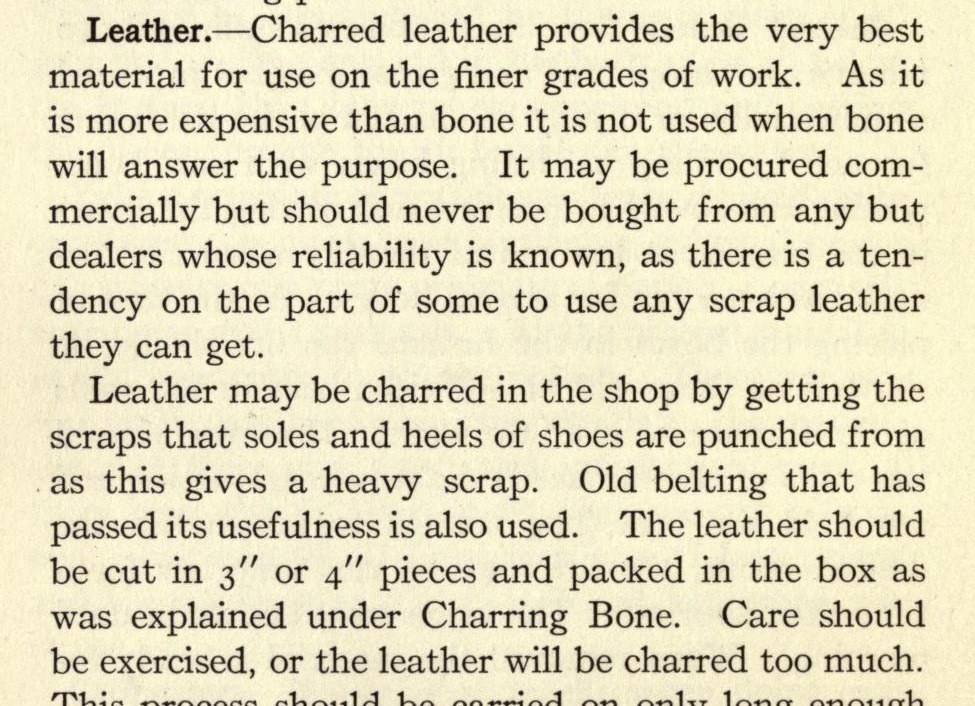
His Forge-Practice and Heat Treatment of Steel (1919) has it made in the shop from heavy scrap: the pieces punched out when shoe soles and heels are cut, or worn-out leather belting. Cut into 3 or 4 inch pieces, the leather is packed into covered hardening boxes and left overnight in a hot furnace whose fire has been shut off, just until it can be crushed in the hand.
Source: J. L. Bacon, Forge-Practice and Heat Treatment of Steel, 3rd ed. (1919), pp. 335-336. Picture: his p. 336.
འགོ་བཙུགས
Overnight
ལམ་སྟོན
1
1
Read Bacon
Read Bacon
"This process should be carried on only long enough to char the leather until it can be crushed in the hand."
2
2
Cut the scrap
Cut the scrap
Collect heavy leather scrap: the pieces left when shoe soles and heels are punched out, or old leather belting that is worn out. Cut it into pieces 3 or 4 inches across.
གོམ་པ་འདིའི་རྫས་རིགས:
 ཀོ་བ།1 scrap
ལག་ཆས་དགོས་མཁོ:
 པགས་ཀོའི་གྲི།
3
3
Pack the boxes
Pack the boxes
Fill hardening boxes with the leather pieces and put the covers in place.
ལག་ཆས་དགོས་མཁོ:
 ཀེསི་ སྲ་བཟོའི་ སྒམ་
4
4
Char overnight
Char overnight
At the end of the day, when the furnace has been running for several hours, set the boxes in it and shut the fire off: the heat stored in the walls chars the contents. If the furnace walls are too light to hold enough heat, run the fire very low for a while, then shut it off. Leave the boxes in until morning.
ལག་ཆས་དགོས་མཁོ:
 མཱཕལ་ཐབ
 ཚ་བཟོད་ཀྱི་ལག་ཤུབས།
5
5
Check the char
Check the char
Take the boxes out. The leather is done when it can be crushed in the hand. Do not overdo it: Bacon warns that leather is easily charred too much.
ལག་ཆས་དགོས་མཁོ:
ཚ་བཟོད་ཀྱི་ལག་ཤུབས།6
6
History and honest limits
History and honest limits
Bacon writes that charred leather was dearer than charred bone and kept for the finer work, and that bought leather char should come only from trusted dealers, as some used any scrap leather they could get. He counts leather a safe carburizer for all steel under 1.25 per cent carbon.
He describes the boxes and furnace only as the hardening boxes and hardening furnace of the shop; the knife and furnace type are ours.
ལག་ཆས་དགོས་མཁོ
4- ས་ཆ་འཛིན
- ས་ཆ་འཛིན
- ས་ཆ་འཛིན
- ས་ཆ་འཛིན
བིལུ་པིརིན་ཊི་འདི་གིས་བཟོ་མི
འབྲེལ་ཡོད་བིལུ་པིརིན་ཊི
བིལུ་པིརིན་ཊི་འདི་ཚུ་ཐབས་ལམ་དང་རྫས་རིགས། སྤྱི་ཆོས་བགོ་བཤའ་བྱེད
CC0 སྤྱི་དབང
བིལུ་པིརིན་ཊི་འདི་CC0 འོག་བཀྲམས་ཡོད། ཁྱེད་རང་གིས་ཆོག་མཆན་མ་བཞེས་པར་ཕབ་ལེན་དང་བཟོ་བཅོས། བགོ་བཤའ། དགོས་མཁོ་གང་ལའང་བཀོལ་སྤྱོད་བྱས་ཆོག
བཟོ་མཁན་ལ་རྒྱབ་སྐྱོར་བྱེད་པའི་ཆེད་ཁོང་ཚོའི་བིལུ་པིརིན་ཊི་བརྒྱུད་ཐོན་སྐྱེད་ཉོ། བཟོ་མཁན་གྱིས བཟོ་མཁན་གྱི་ཁེ་ཕོགས ཚོང་པས་གཏན་འཁེལ་བྱས་པ། ཡང་ན་བིལུ་པིརིན་ཊི་འདིའི་པར་གསར་བཟོས་ཏེ་ཁྱེད་རང་གི་བིལུ་པིརིན་ཊི་ནང་མཐུད་སྦྲེལ་བྱས་ཏེ་ཡོང་སྒོ་བགོ་བཤའ་བྱེད།