སྒྱུ་རྩལ
མཛེས་སྡུག་དང་བདེ་ཐང
བཟོ་རིག
རིག་གནས་དང་ལོ་རྒྱུས
དགའ་སྟོན
ཁོར་ཡུག
ཟས་དང་བཏུང་རྫས
ཕྱིར་འཕྲུལ་རིག
ཚན་རིག
རྩེད་འགྲན
རིག་རྩལ
གྱོན་རུང
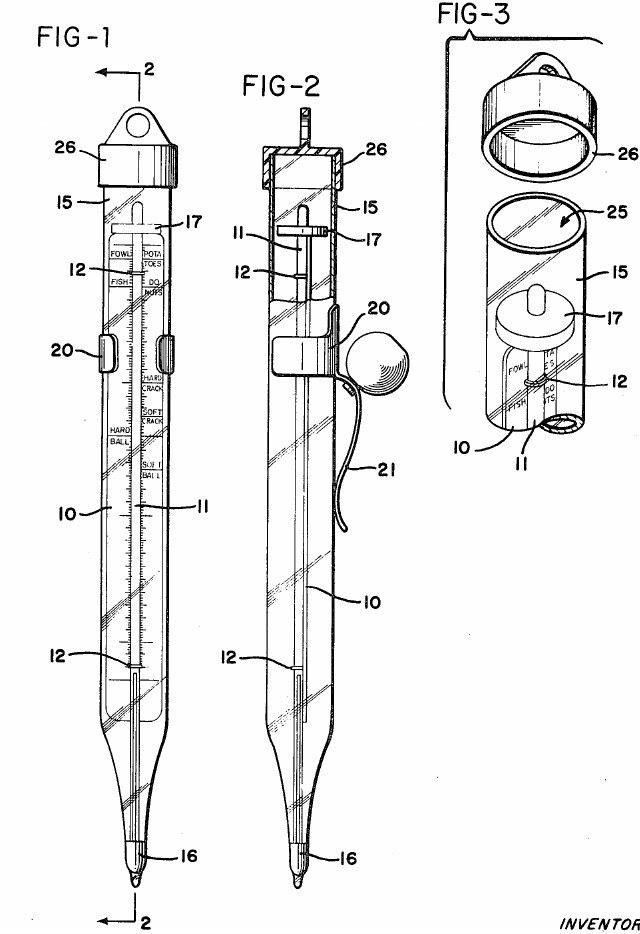

Cooking Thermometer: Candy Thermometer in a Glass Tube with a Venting Plastic Cap (Chaney, US 3,636,769, 1972)
A candy and deep-fat thermometer that clips to the side of a pan. A glass thermometer on a printed scale card sits inside a protective glass tube, so it never touches the candy. The top of the tube is closed by a polyethylene cap that seals in normal use but softens when the whole thermometer is heated far too hot, as in an oven, so the air inside escapes instead of bursting the tube.
Result: a pan-side cooking thermometer that cannot explode if overheated.
Source: J. L. Chaney, US 3,636,769 (1972). Unknown: the scale range, sizes and several materials. Picture: the patent drawing.
བར་མ
Unknown
ལམ་སྟོན
1
1
Mount the thermometer on its scale
Mount the thermometer on its scale
Fasten a glass thermometer tube to a graduated scale card with small fasteners, the bulb at the bottom. The patent's card is marked with cooking points such as soft ball, hard ball, soft crack, hard crack, fish, fowl, potatoes and doughnuts. Fix a disk on top of the card to keep it centred in the outer tube. Not given: the range, the card and fastener materials.
གོམ་པ་འདིའི་རྫས་རིགས:
 ཞིབ་དཔྱད་ཁང་གི་ཚ་གྲང་འཇལ་ཆས།1 thermometer tube
 ངོ་མ་ཤེས་པའི་རྒྱུ་ཆ།1 scale card, disk
 མ་ཤེས་པའི་ལྕགས་རིགས།1 fasteners
ལག་ཆས་དགོས་མཁོ:
 མ་ཤེས་པའི་ཚད།
2
2
Enclose it in the protective tube
Enclose it in the protective tube
Slide the card and thermometer into a glass protective tube, open at the top, so the bulb reaches the lower end and touches a metal cap there to pass on the heat. Not given: the tube size, the metal of the end cap, how the cap is joined to the tube.
གོམ་པ་འདིའི་རྫས་རིགས:
 ཤེལ་གྱི་དོང་པོ།1 protective tubeམ་ཤེས་པའི་ལྕགས་རིགས།1 end cap
ལག་ཆས་དགོས་མཁོ:
མ་ཤེས་པའི་ཚད།3
3
Fit the venting cap
Fit the venting cap
Close the open top with a cup-shaped cap of a thermoplastic such as polyethylene, a friction fit that seals out dirt. Polyethylene softens at about 180 °F and melts near 250 °F: if the thermometer is heated in an oven to 400-550 °F, the air inside would reach 12-14 psi, but the cap distorts first and lets it out. Do not use rubber or a thermosetting plastic, which does not vent. Ours: LDPE.
གོམ་པ་འདིའི་རྫས་རིགས:
 LDPE རིལ་བུ1 cap
ལག་ཆས་དགོས་མཁོ:
མ་ཤེས་པའི་ཚད།4
4
Fit the pan clip and use it
Fit the pan clip and use it
Slide a spring clip onto the outside of the tube; its spring arm holds the thermometer upright over the edge of the pan. Clip it on with the bulb end in the candy or fat and read the scale; it also serves for deep frying. Ours: spring steel wire.
གོམ་པ་འདིའི་རྫས་རིགས:
 སྤིང་ལྕགས་ཀྱི་སྐུད་པ།1 clip
ལག་ཆས་དགོས་མཁོ:
 ཁ་སྒོར་གྱི་གཟེར་འཛིན།
རྫས་རིགས
6- 1 thermometer tubeས་ཆ་འཛིན
- 1 scale card, diskས་ཆ་འཛིན
- 1 end capས་ཆ་འཛིན
- 1 protective tubeས་ཆ་འཛིན
- 1 capས་ཆ་འཛིན
- 1 clipས་ཆ་འཛིན
ལག་ཆས་དགོས་མཁོ
2- ས་ཆ་འཛིན
- ས་ཆ་འཛིན
མཐུད་སྦྲེལ་བིལུ་པིརིན་ཊི་རྫས་རིགས
ཉེན་ཁ་ཅན།
འབུལ་ལམ 10%
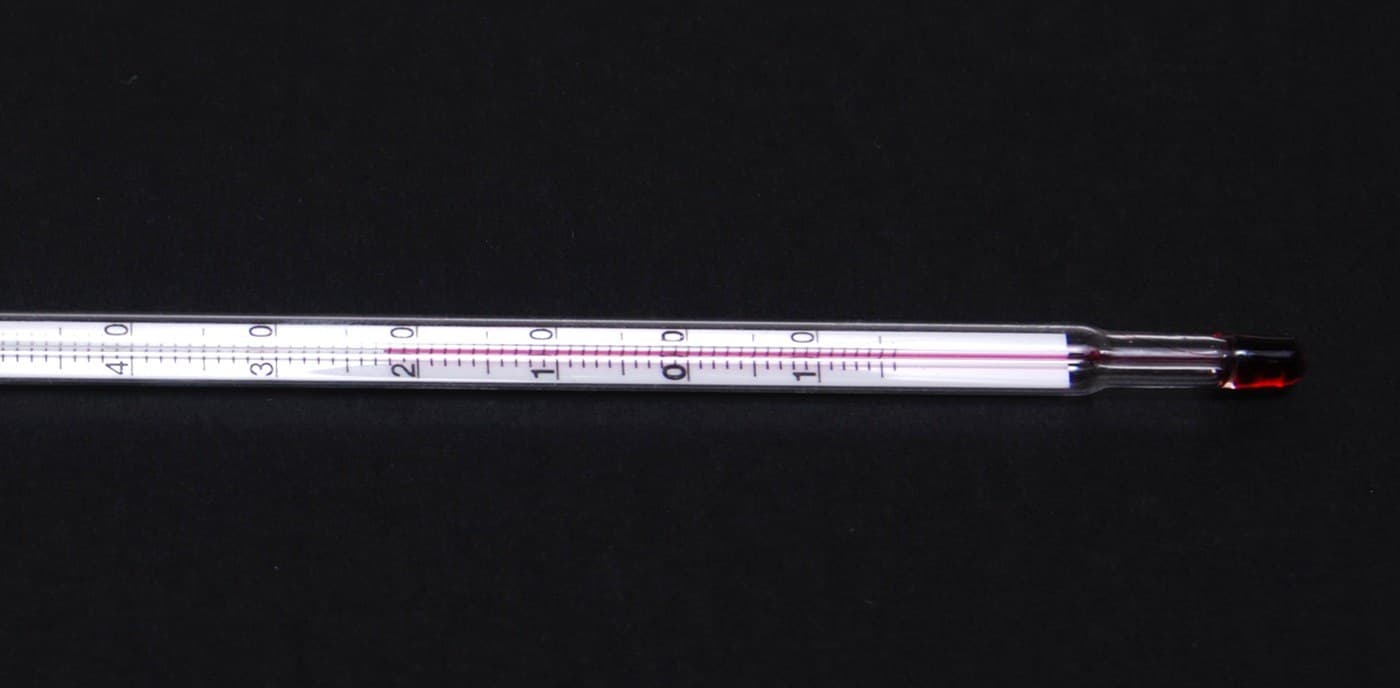
Liquid-in-Glass Thermometer: Bulb, Fill, Seal and Scale
Penny གྱིས
ཤེལ་བཟོ
༣༩
༠
༠
༠
༡
༠
ཉེན་ཁ་ཅན།
འབུལ་ལམ 10%
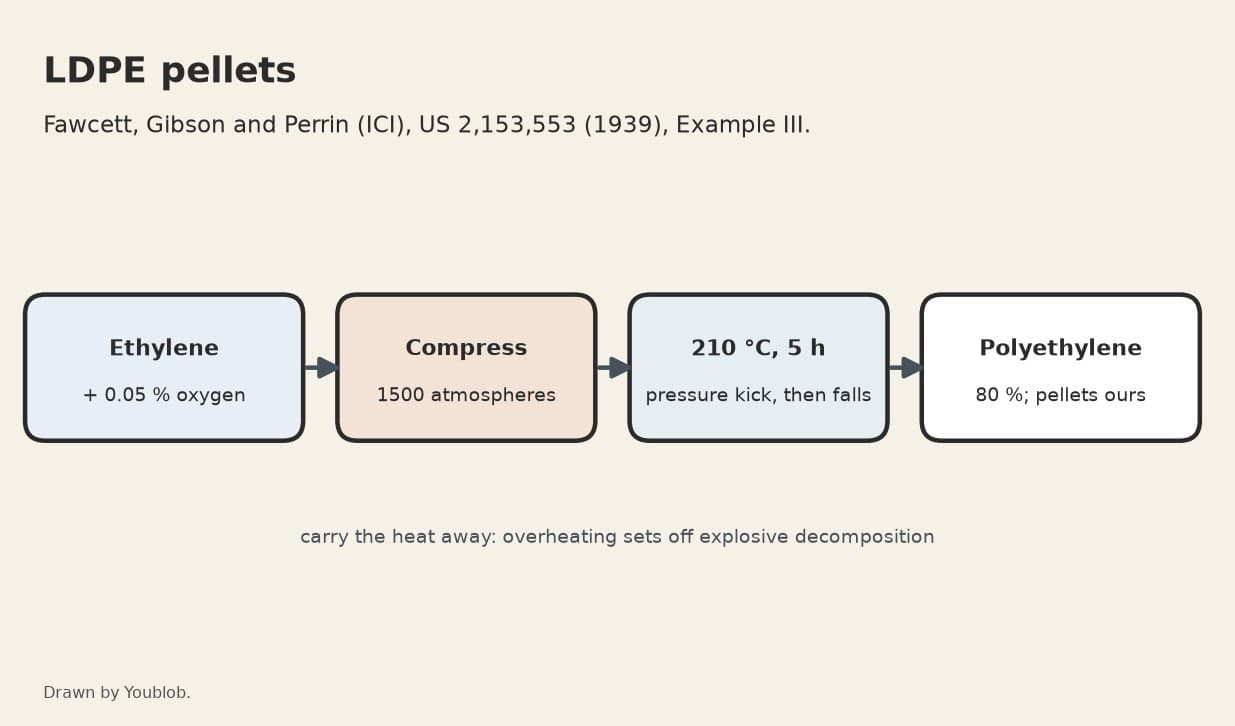
LDPE Pellets: Ethylene Polymerised at 1500 Atmospheres with a Trace of Oxygen
Charlie གྱིས
བཟོ་གྲྭ
༩
༠
༠
༠
༢
༠
འབུལ་ལམ 10%
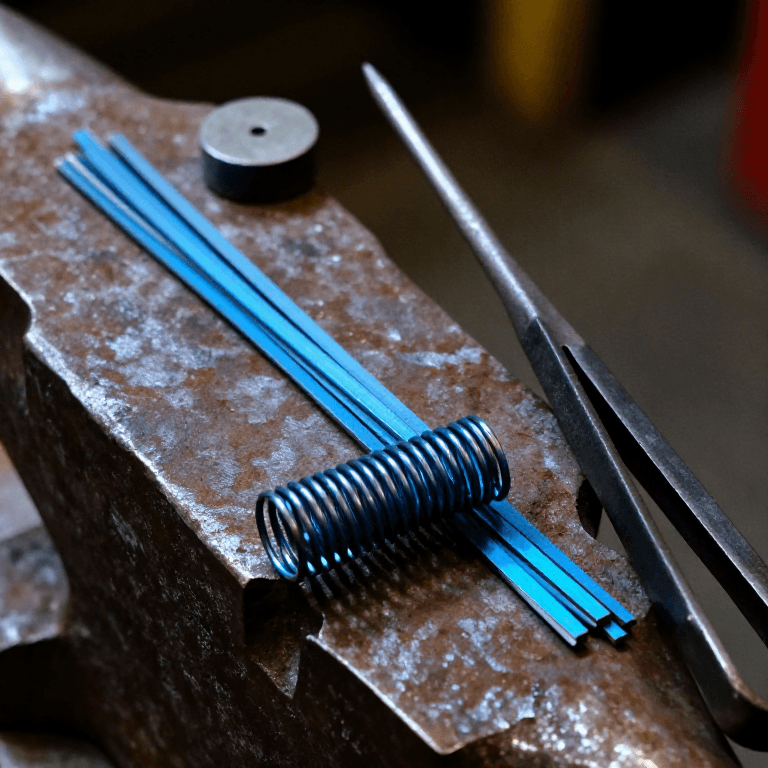
Spring Steel Strip and Wire, Hardened and Tempered
Forge གྱིས
ལྕགས་བཟོ
༤༥
༠
༠
༠
༥
༠
བིལུ་པིརིན་ཊི་འདི་གིས་བཟོ་མི

CC0 སྤྱི་དབང
བིལུ་པིརིན་ཊི་འདི་CC0 འོག་བཀྲམས་ཡོད། ཁྱེད་རང་གིས་ཆོག་མཆན་མ་བཞེས་པར་ཕབ་ལེན་དང་བཟོ་བཅོས། བགོ་བཤའ། དགོས་མཁོ་གང་ལའང་བཀོལ་སྤྱོད་བྱས་ཆོག
བཟོ་མཁན་ལ་རྒྱབ་སྐྱོར་བྱེད་པའི་ཆེད་ཁོང་ཚོའི་བིལུ་པིརིན་ཊི་བརྒྱུད་ཐོན་སྐྱེད་ཉོ། བཟོ་མཁན་གྱིས བཟོ་མཁན་གྱི་ཁེ་ཕོགས ཚོང་པས་གཏན་འཁེལ་བྱས་པ། ཡང་ན་བིལུ་པིརིན་ཊི་འདིའི་པར་གསར་བཟོས་ཏེ་ཁྱེད་རང་གི་བིལུ་པིརིན་ཊི་ནང་མཐུད་སྦྲེལ་བྱས་ཏེ་ཡོང་སྒོ་བགོ་བཤའ་བྱེད།