སྒྱུ་རྩལ
མཛེས་སྡུག་དང་བདེ་ཐང
བཟོ་རིག
རིག་གནས་དང་ལོ་རྒྱུས
དགའ་སྟོན
ཁོར་ཡུག
ཟས་དང་བཏུང་རྫས
ཕྱིར་འཕྲུལ་རིག
ཚན་རིག
རྩེད་འགྲན
རིག་རྩལ
གྱོན་རུང
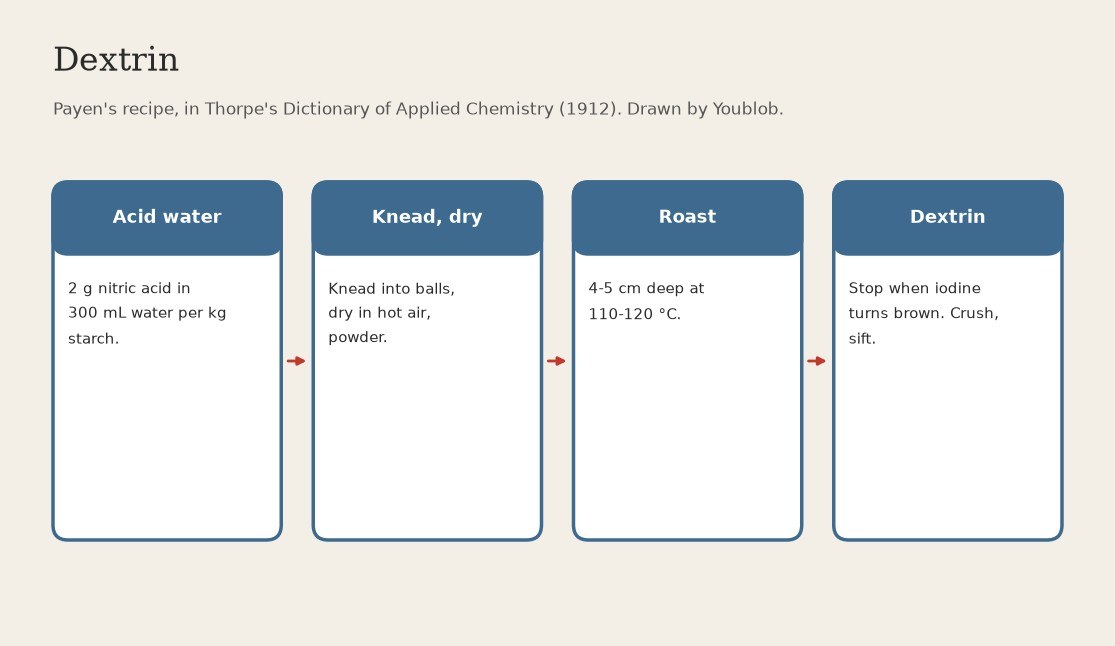


Dextrin: Starch Moistened with Dilute Nitric Acid and Heated at 110-120 °C (Payen, in Thorpe 1912)
Dextrin, also called British gum, is starch broken down by heat into a powder that dissolves in water to a sticky gum. A trace of nitric acid lets it form at a lower heat, 110 to 120 °C, so it comes out paler. The lower the heat and the drier the starch, the whiter the dextrin.
Source: Thorpe, Dictionary of Applied Chemistry, vol. 2 (1912), Dextrins, giving Payen's recipe. Ours: potato starch (Payen names no starch) and the scaling to 1 kg. Not given: how long to dry and to heat. Picture drawn by Youblob.
འགོ་བཙུགས
2 days
ལམ་སྟོན
1
1
Mix 2 g nitric acid into 300 mL water
Mix 2 g nitric acid into 300 mL water
Payen: 30 gallons of water holding 2 lb nitric acid (sp. gr. 1.38) for 1000 lb starch. Ours, scaled to 1 kg of starch: weigh 2 g of the acid into about 300 mL water. Add acid to water, not water to acid. Goggles and gloves for the strong acid.
གོམ་པ་འདིའི་རྫས་རིགས:
 ནའི་ཊིརིཀ་ཨེ་སིཌ2 g
 ཆུ།300 ml
ལག་ཆས་དགོས་མཁོ:
 ལག་པ་འདྲ་མཉམ་གྱི་སྲང་།
 ཚད་འཇལ་ཟོ་ལི།
 རྫས་སྦྱོར་འཐོར་སྲུང་མིག་ཤེལ།
 ནའི་ཊི་རཱིལ་གྱི་ལག་ཤུབས།
2
2
Knead 1 kg starch with the acid water into balls
Knead 1 kg starch with the acid water into balls
Moisten 1 kg of starch with the acid water, knead it well and make it up into balls. Payen names no starch; ours: potato starch.
གོམ་པ་འདིའི་རྫས་རིགས:
 ཀེ་ཝའི་སྦར་ཁུ1 kg
ལག་ཆས་དགོས་མཁོ:
 ཤེལ་གྱི་ཕོར་པ།ནའི་ཊི་རཱིལ་གྱི་ལག་ཤུབས།
3
3
Dry the balls in hot air, then powder them
Dry the balls in hot air, then powder them
Dry the balls in a hot-air chamber, then powder them. Time and heat for this drying are not given. Ours: a drying oven, and a mortar to powder.
ལག་ཆས་དགོས་མཁོ:
 སྐམ་ནིའི་ཐབ
 གཏུན་ཁུང་དང་གཏུན་ཤིང་།
4
4
Heat 4-5 cm deep on trays at 110-120 °C
Heat 4-5 cm deep on trays at 110-120 °C
Spread the powder 1 1/2 to 2 inches (4 to 5 cm) deep on trays (Payen: brass trays) and heat in a hot-air oven at 110 to 120 °C. Time not given.
ལག་ཆས་དགོས་མཁོ:
 ལེབ་ལེབ་སྐམ་སྡེར།སྐམ་ནིའི་ཐབ
 ཐབ་ཀྱི་ཚ་ཚད་འཇལ་ཆས།
5
5
Stop as soon as iodine turns a sample brown
Stop as soon as iodine turns a sample brown
Test small samples with iodine. Starch turns iodine blue; commercial dextrin, mostly erythrodextrin, gives a brown colour. When the change is complete, stop the heating at once. Ours: a few iodine crystals shaken in water as the test liquid.
ལག་ཆས་དགོས་མཁོ:
 ཨའི་ཡོ་ཌིན་གྱི་ཤེལ།ཆུ།སྐམ་ནིའི་ཐབ
6
6
Crush, sift and store dry
Crush, sift and store dry
Crush the roasted dextrin and sift it (in works: crushing pans or rollers, then a rotating silk screen as in flour mills). Ours: mortar and a fine sieve. Keep it dry in a closed jar.
ལག་ཆས་དགོས་མཁོ:
གཏུན་ཁུང་དང་གཏུན་ཤིང་། ལྕགས་སྐུད་ཞིབ་མོའི་ཚགས་མ།
 ཤེལ་སྣོད།
རྫས་རིགས
3- ས་ཆ་འཛིན
- 300 mlས་ཆ་འཛིན
- 1 kgས་ཆ་འཛིན
ལག་ཆས་དགོས་མཁོ
13- ས་ཆ་འཛིན
- ས་ཆ་འཛིན
- ས་ཆ་འཛིན
- ས་ཆ་འཛིན
- ས་ཆ་འཛིན
- ས་ཆ་འཛིན
- ས་ཆ་འཛིན
- ས་ཆ་འཛིན
- ས་ཆ་འཛིན
- ས་ཆ་འཛིན
- ས་ཆ་འཛིན
- ས་ཆ་འཛིན
- ས་ཆ་འཛིན
བིལུ་པིརིན་ཊི་འདི་གིས་བཟོ་མི
འབྲེལ་ཡོད་བིལུ་པིརིན་ཊི
བིལུ་པིརིན་ཊི་འདི་ཚུ་ཐབས་ལམ་དང་རྫས་རིགས། སྤྱི་ཆོས་བགོ་བཤའ་བྱེད

CC0 སྤྱི་དབང
བིལུ་པིརིན་ཊི་འདི་CC0 འོག་བཀྲམས་ཡོད། ཁྱེད་རང་གིས་ཆོག་མཆན་མ་བཞེས་པར་ཕབ་ལེན་དང་བཟོ་བཅོས། བགོ་བཤའ། དགོས་མཁོ་གང་ལའང་བཀོལ་སྤྱོད་བྱས་ཆོག
བཟོ་མཁན་ལ་རྒྱབ་སྐྱོར་བྱེད་པའི་ཆེད་ཁོང་ཚོའི་བིལུ་པིརིན་ཊི་བརྒྱུད་ཐོན་སྐྱེད་ཉོ། བཟོ་མཁན་གྱིས བཟོ་མཁན་གྱི་ཁེ་ཕོགས ཚོང་པས་གཏན་འཁེལ་བྱས་པ། ཡང་ན་བིལུ་པིརིན་ཊི་འདིའི་པར་གསར་བཟོས་ཏེ་ཁྱེད་རང་གི་བིལུ་པིརིན་ཊི་ནང་མཐུད་སྦྲེལ་བྱས་ཏེ་ཡོང་སྒོ་བགོ་བཤའ་བྱེད།