སྒྱུ་རྩལ
མཛེས་སྡུག་དང་བདེ་ཐང
བཟོ་རིག
རིག་གནས་དང་ལོ་རྒྱུས
དགའ་སྟོན
ཁོར་ཡུག
ཟས་དང་བཏུང་རྫས
ཕྱིར་འཕྲུལ་རིག
ཚན་རིག
རྩེད་འགྲན
རིག་རྩལ
གྱོན་རུང
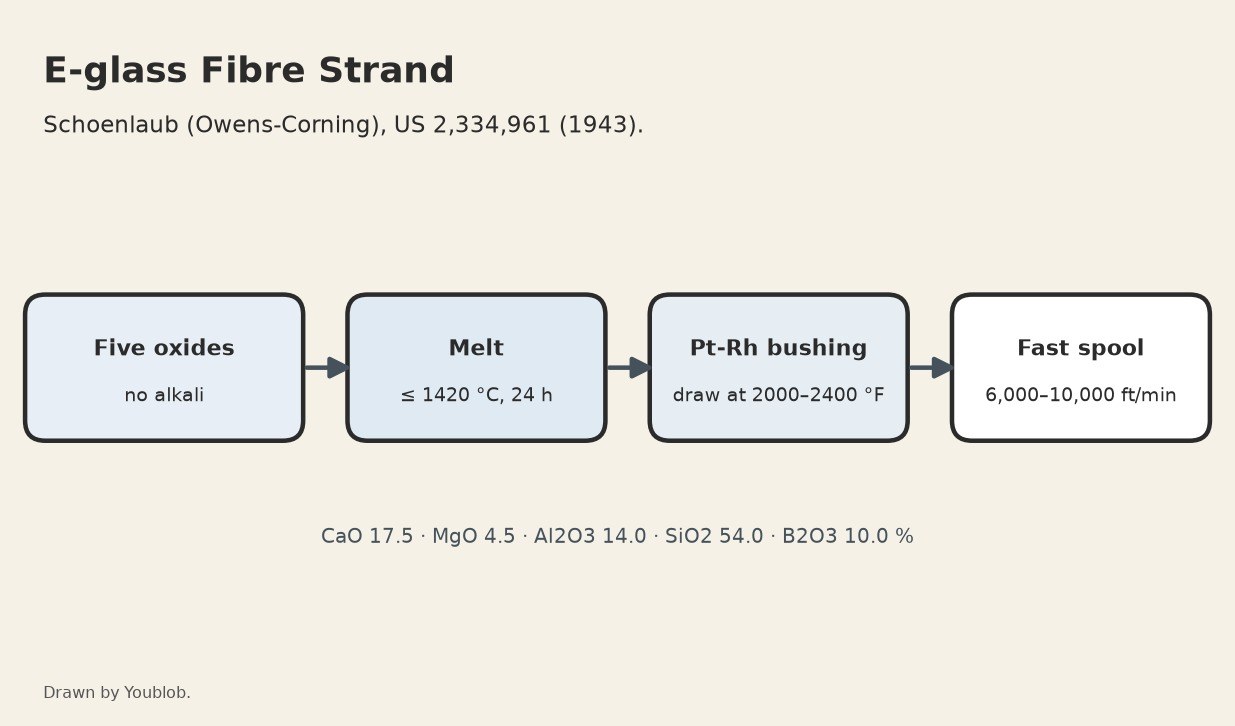


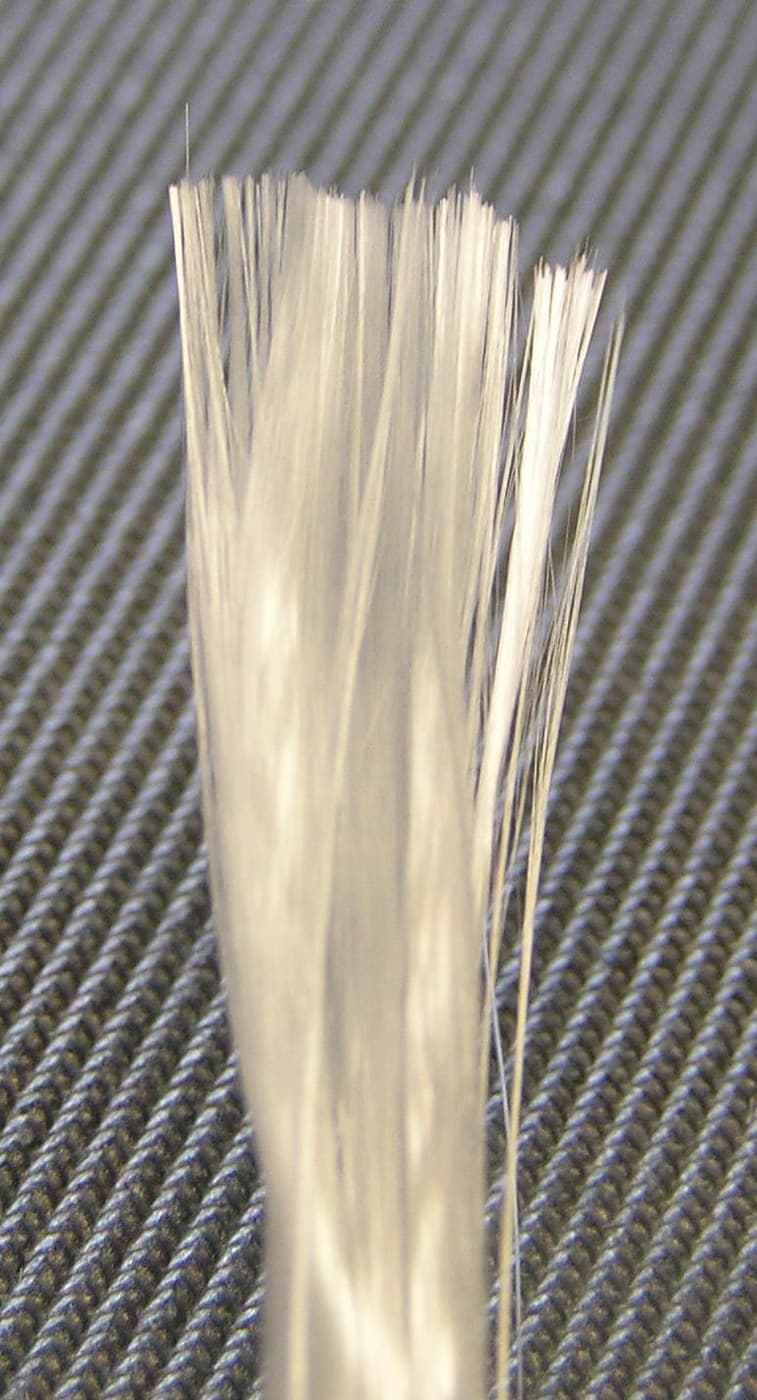
E-glass Fibre Strand: Alkali-Free Lime-Alumina-Borosilicate Glass Drawn to Filament
Fibre from ordinary glass carries alkali on its huge surface; it takes up water from the air and slowly destroys itself, and it conducts electricity. Schoenlaub's Owens-Corning glass (US 2,334,961, 1943) has no alkali at all: lime, magnesia, alumina and silica fluxed with boric oxide. It was made to be drawn into fibres for insulation and textiles. It is melted at up to 1420 °C and drawn into continuous filaments on a fast spool.
The picture: our diagram.
མཐོ་རིམ
2 days
ལམ་སྟོན
1
1
Weigh out the batch
Weigh out the batch
The patent's example glass: lime (CaO) 17.5 %, magnesia (MgO) 4.5 %, alumina 14.0 %, silica 54.0 %, boric oxide 10.0 %. Ours: weigh those five oxides in those proportions and mix them. Keep within the patent's limits; small changes make this glass devitrify.
གོམ་པ་འདིའི་རྫས་རིགས:
 མ་ཞུ་བའི་རྡོ་ཞ17.5 parts
 མེག་ནི་སིཡམ་ཨོག་སཱའིཌ།4.5 parts
 ཨ་ལུ་མི་ནའི་ཕྱེ་མ། (ཨ་ལུ་མི་ནིཡམ་ཨོག་སའིཌ།)14 parts
 ཀོཊསི་ཀྱི་བྱེ་མ།54 parts
 བོ་རིཀ་ཨོག་སཱའིཌ།10 parts
ལག་ཆས་དགོས་མཁོ:
 ལག་པ་འདྲ་མཉམ་གྱི་སྲང་།
 ཉེན་སྲུང་མིག་ཤེལ།
2
2
Melt at no more than 1420 °C
Melt at no more than 1420 °C
Melt the batch in a glass tank furnace without going above 1420 °C; the patent's day tanks ran on a 24-hour cycle.
ལག་ཆས་དགོས་མཁོ:
 ཤེལ་ཞུ་ཐབ།
 པཱའི་རོ་མི་ཊར
 ཚ་བཟོད་ཀྱི་ལག་ཤུབས།ཉེན་སྲུང་མིག་ཤེལ།
3
3
Feed the platinum bushing
Feed the platinum bushing
Draw from a platinum-rhodium bushing like Slayter and Thomas's, heated by an adjustable current. The drawing range of this glass is about 2000–2400 °F (1090–1320 °C). A blower below the nozzles sets each filament.
ལག་ཆས་དགོས་མཁོ:
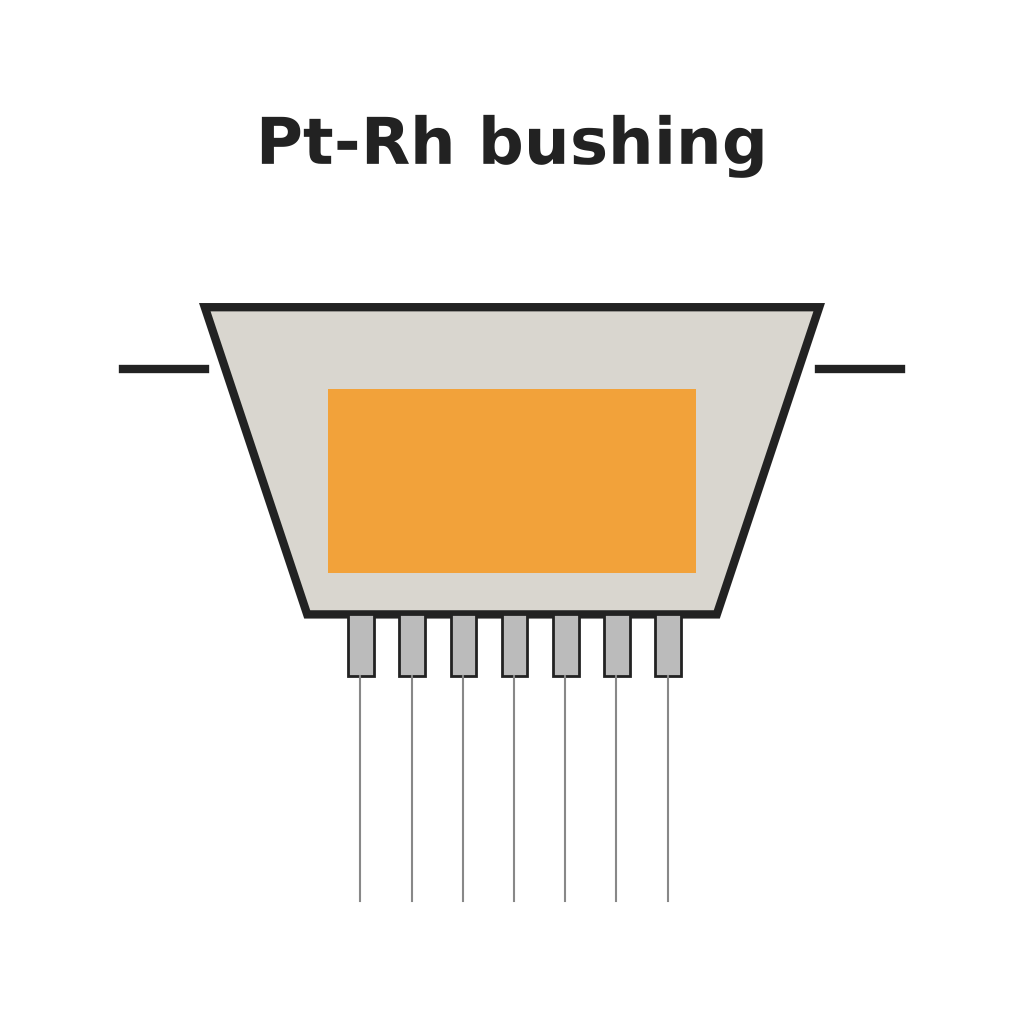 པ་ལ་ཊི་ནམ་-རོ་ཌི་ཡམ་ སྐུད་འཐེན་སྒམ
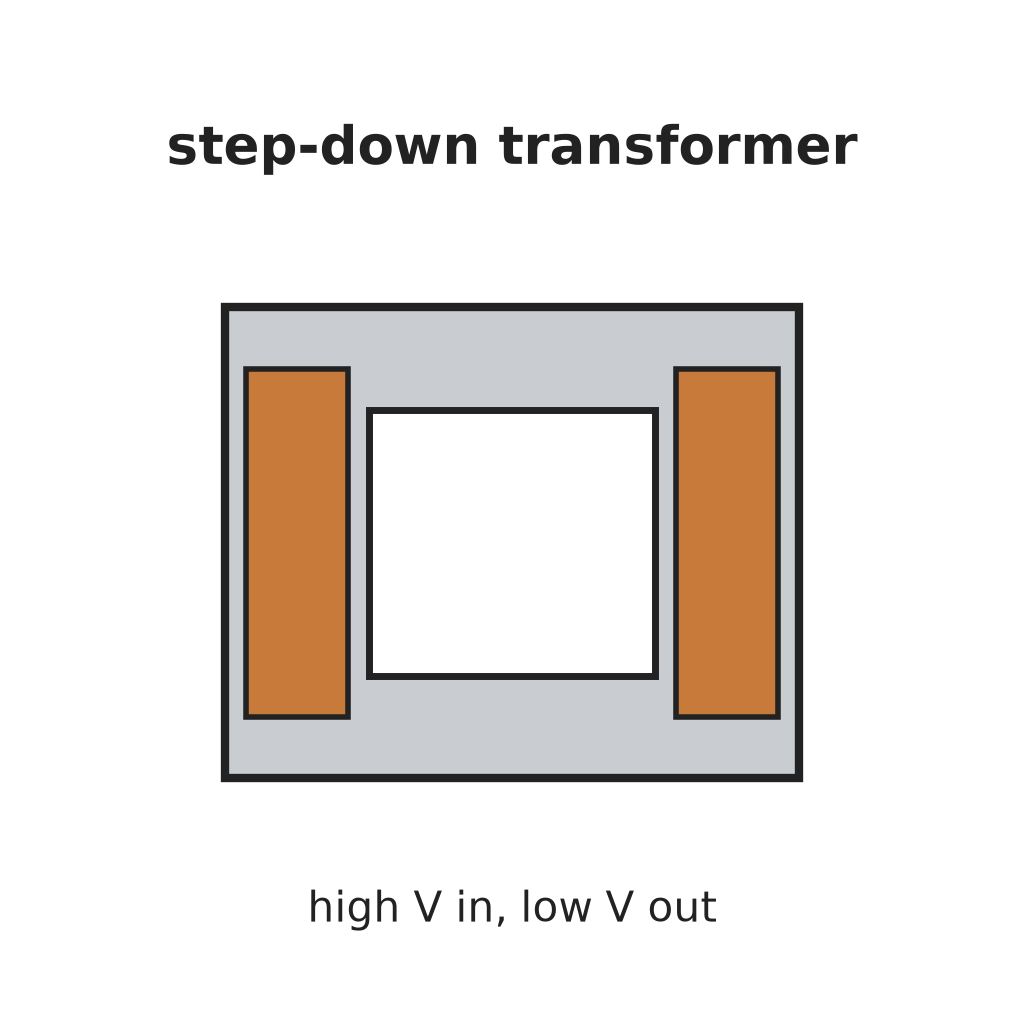 གློག་ཤུགས་འབབ་བཏང་གི་ཊྲཱནས་ཕོར་མརཔཱའི་རོ་མི་ཊར
 རླུང་འཕུ་འཕྲུལ་ཆས།ཚ་བཟོད་ཀྱི་ལག་ཤུབས།
4
4
Wind on a fast spool
Wind on a fast spool
Gather the filaments into a strand and wind it on a spool running as fast as 6,000–10,000 ft per minute (30–50 m/s). Filaments come out about .0001–.0003 in (2.5–7.6 µm) thick. The strand can then be twisted and plied into yarn.
ལག་ཆས་དགོས་མཁོ:
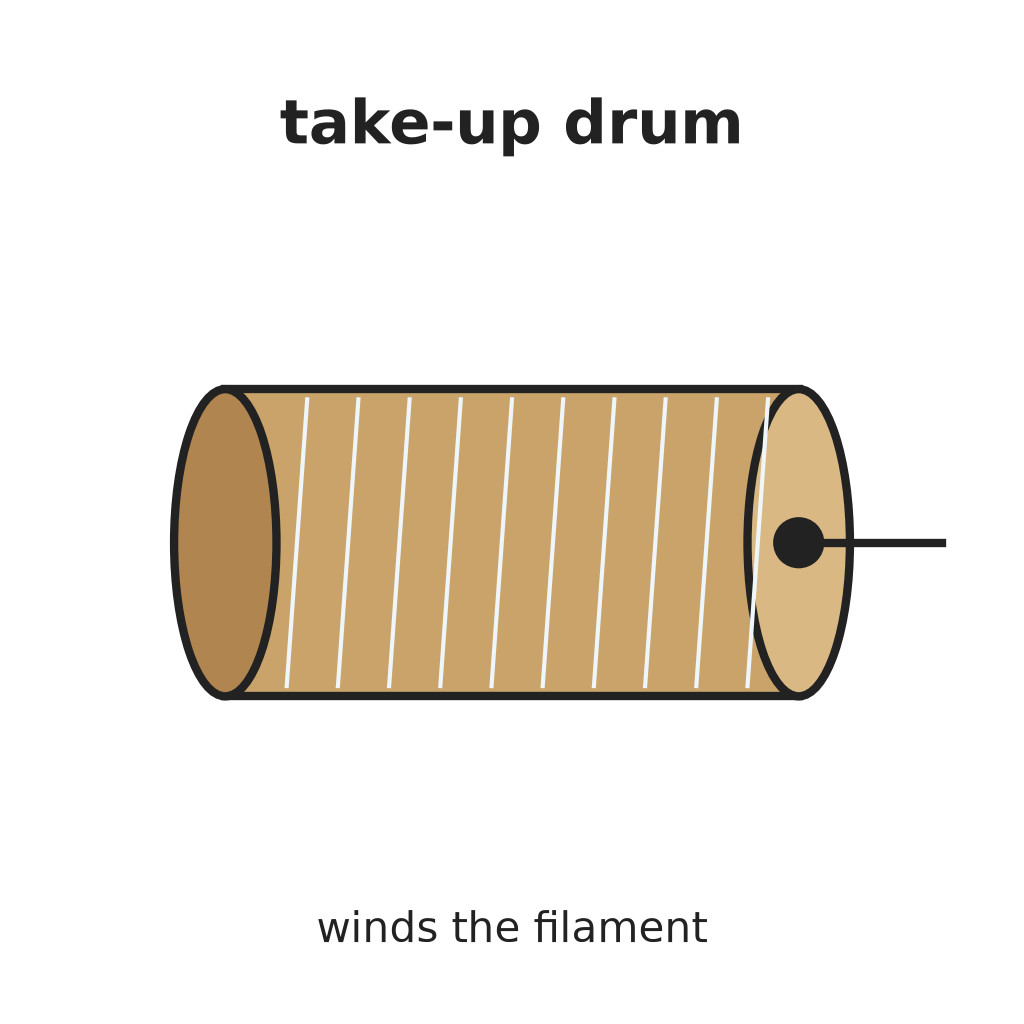 ཐག་ལེན་འཁོར་ལོ།
རྫས་རིགས
5- 17.5 partsས་ཆ་འཛིན
- 4.5 partsས་ཆ་འཛིན
- ས་ཆ་འཛིན
- 54 partsས་ཆ་འཛིན
- 10 partsས་ཆ་འཛིན
ལག་ཆས་དགོས་མཁོ
9- ས་ཆ་འཛིན
- ས་ཆ་འཛིན
- ས་ཆ་འཛིན
- ས་ཆ་འཛིན
- ས་ཆ་འཛིན
- ས་ཆ་འཛིན
- ས་ཆ་འཛིན
བིལུ་པིརིན་ཊི་འདི་གིས་བཟོ་མི
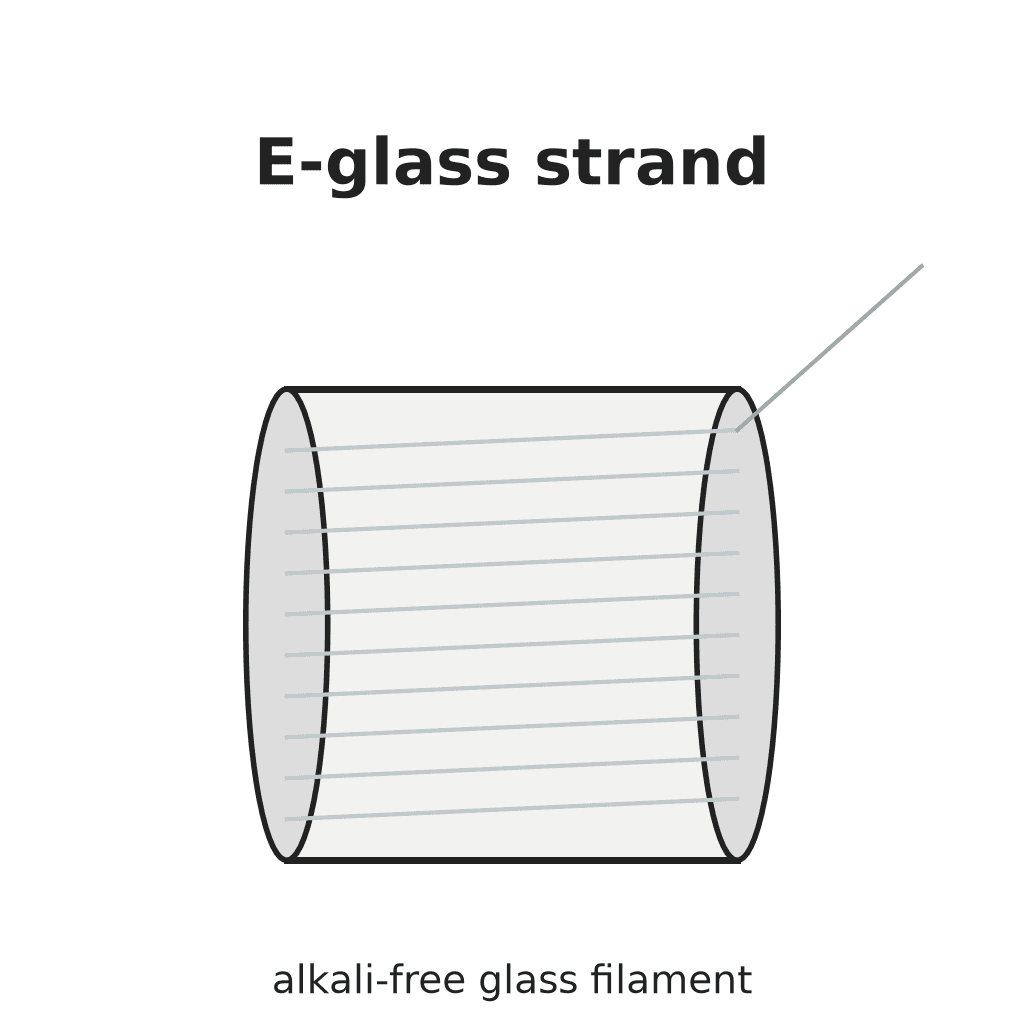
འབྲེལ་ཡོད་བིལུ་པིརིན་ཊི
བིལུ་པིརིན་ཊི་འདི་ཚུ་ཐབས་ལམ་དང་རྫས་རིགས། སྤྱི་ཆོས་བགོ་བཤའ་བྱེད
CC0 སྤྱི་དབང
བིལུ་པིརིན་ཊི་འདི་CC0 འོག་བཀྲམས་ཡོད། ཁྱེད་རང་གིས་ཆོག་མཆན་མ་བཞེས་པར་ཕབ་ལེན་དང་བཟོ་བཅོས། བགོ་བཤའ། དགོས་མཁོ་གང་ལའང་བཀོལ་སྤྱོད་བྱས་ཆོག
བཟོ་མཁན་ལ་རྒྱབ་སྐྱོར་བྱེད་པའི་ཆེད་ཁོང་ཚོའི་བིལུ་པིརིན་ཊི་བརྒྱུད་ཐོན་སྐྱེད་ཉོ། བཟོ་མཁན་གྱིས བཟོ་མཁན་གྱི་ཁེ་ཕོགས ཚོང་པས་གཏན་འཁེལ་བྱས་པ། ཡང་ན་བིལུ་པིརིན་ཊི་འདིའི་པར་གསར་བཟོས་ཏེ་ཁྱེད་རང་གི་བིལུ་པིརིན་ཊི་ནང་མཐུད་སྦྲེལ་བྱས་ཏེ་ཡོང་སྒོ་བགོ་བཤའ་བྱེད།