སྒྱུ་རྩལ
མཛེས་སྡུག་དང་བདེ་ཐང
བཟོ་རིག
རིག་གནས་དང་ལོ་རྒྱུས
དགའ་སྟོན
ཁོར་ཡུག
ཟས་དང་བཏུང་རྫས
ཕྱིར་འཕྲུལ་རིག
ཚན་རིག
རྩེད་འགྲན
རིག་རྩལ
གྱོན་རུང
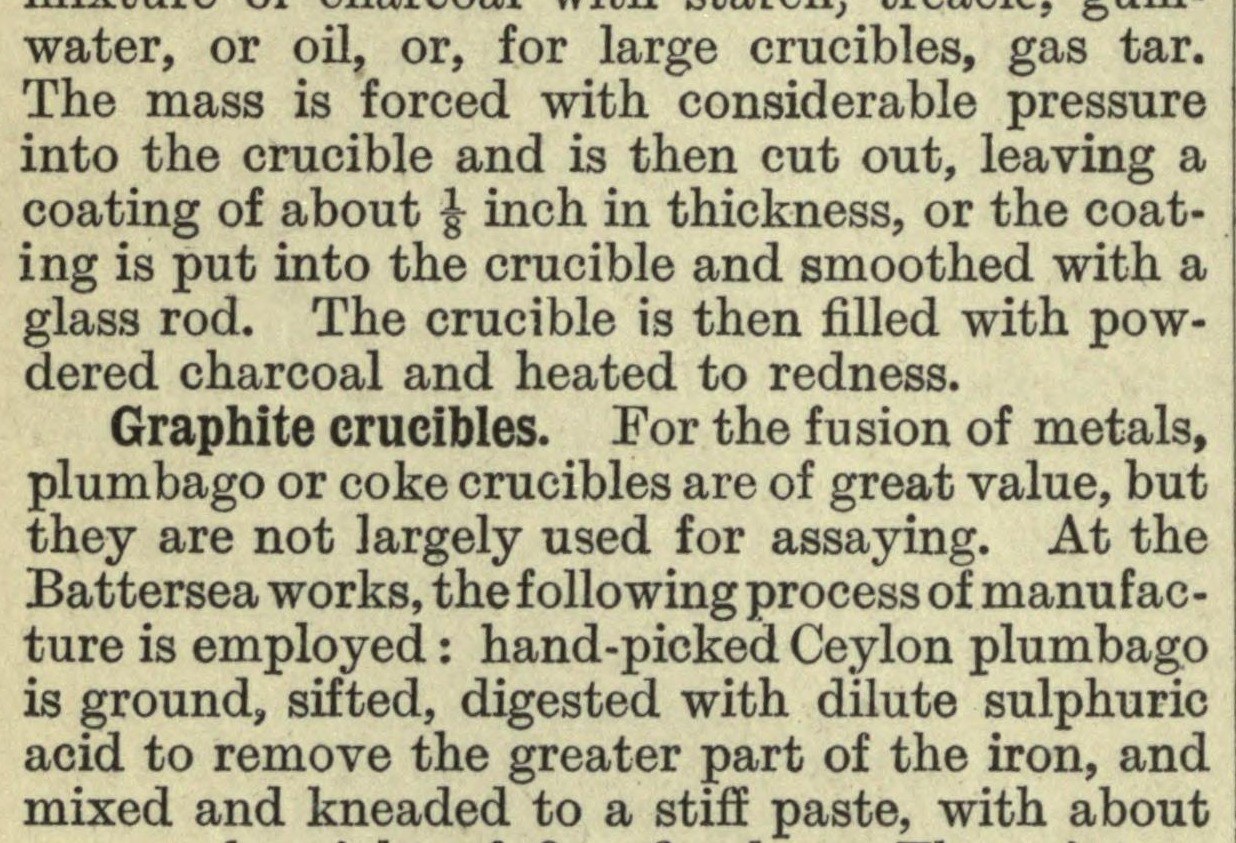


Graphite-Clay Crucible: Plumbago and Fireclay, the Battersea Works Way (Thorpe 1912)
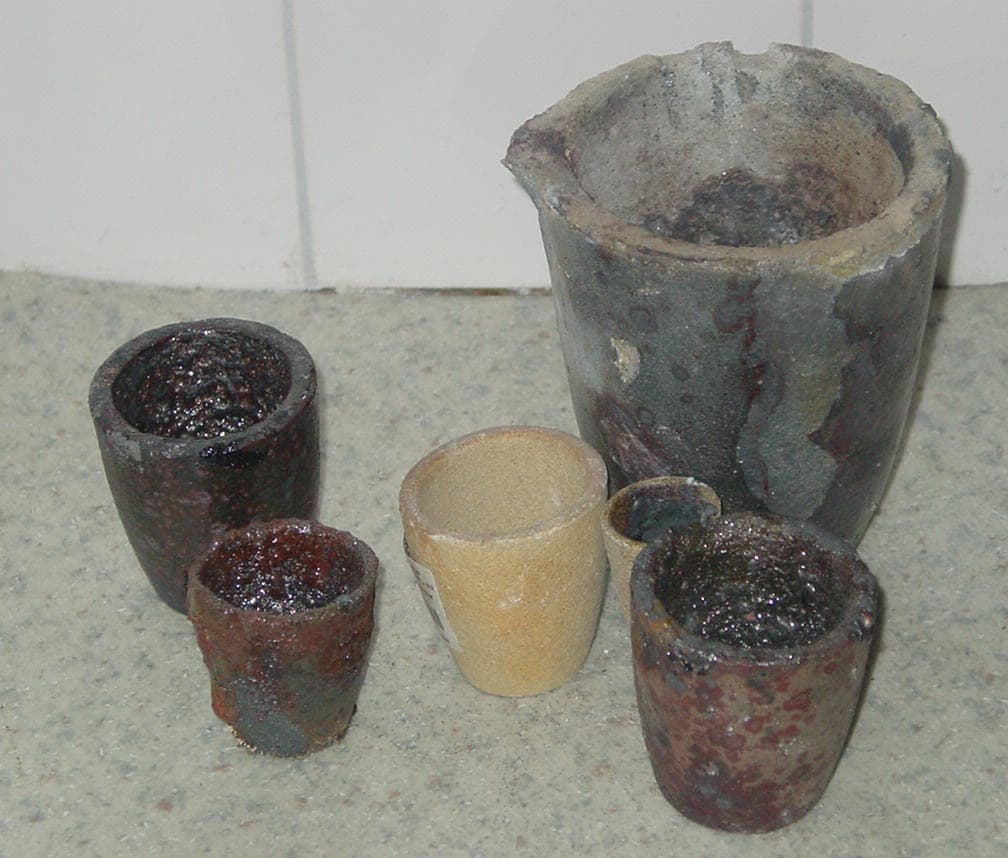
A graphite (plumbago) crucible is a melting pot of graphite bound with clay: fine grained, it stands the highest heats and sudden changes of temperature, and Thorpe counts it of great value for melting metals.
Thorpe's Dictionary of Applied Chemistry (1912) gives the Battersea works process: Ceylon plumbago ground, sifted and digested with dilute sulphuric acid to take out most of its iron, kneaded with about its own weight of fine fireclay, pugged, cut into blocks, pugged again, thrown on a wheel or moulded, dried and baked in saggars.
Acid strength, sizes and baking heat are not given.
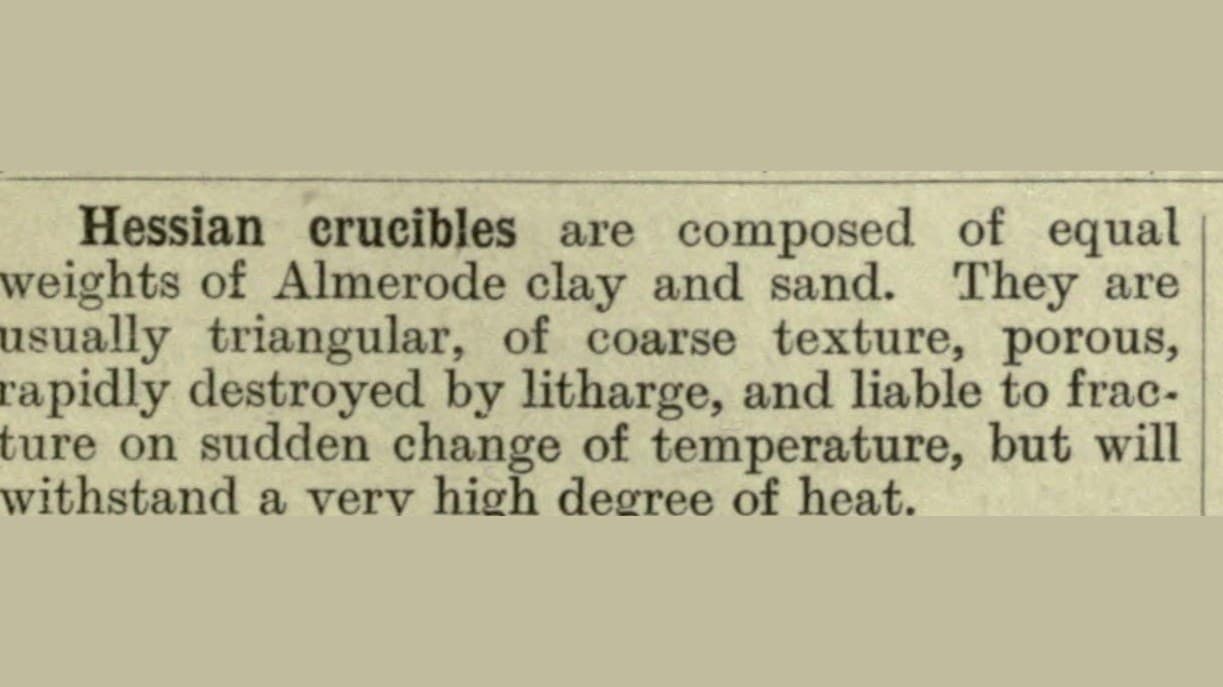
Source: Thorpe, Dictionary of Applied Chemistry vol. II (1912), CRUCIBLES, p. 170. Picture: that paragraph.
བར་མ
Several days with drying and baking
ལམ་སྟོན
1
1
Read Thorpe
Read Thorpe
"Hand-picked Ceylon plumbago is ground, sifted, digested with dilute sulphuric acid to remove the greater part of the iron, and mixed and kneaded to a stiff paste, with about an equal weight of fine fireclay."
2
2
Grind and clean the plumbago
Grind and clean the plumbago
Pick over the plumbago by hand, grind it and sift it. Digest it with dilute sulphuric acid to remove the greater part of its iron, which would otherwise pass into the melt; the strength and time are not given.
གོམ་པ་འདིའི་རྫས་རིགས:
 རང་བྱུང་གྲ་ཕཱའིཊ།1 half by weight
ལག་ཆས་དགོས་མཁོ:
 བཏགས་འཕྲུལ།
 ཚགས་མ་རྩུབ་པ།
 སལ་ཕིའུ་རིཀ་སྐྱུར་རྫས་སླ་བ།
 ཆུ།
 ནའི་ཊི་རཱིལ་གྱི་ལག་ཤུབས།
 ཉེན་སྲུང་མིག་ཤེལ།
3
3
Knead with fireclay and pug
Knead with fireclay and pug
Mix the plumbago with about an equal weight of fine fireclay and knead it with water to a stiff paste. Pass it through a pug mill and cut the column into blocks. Pass the blocks through the mill again when you are ready to make crucibles.
གོམ་པ་འདིའི་རྫས་རིགས:
 མེ་བཟོད་ཀྱི་འཇིམ།1 half by weightཆུ།1 to a stiff paste
ལག་ཆས་དགོས་མཁོ:
 ཏག་ཏག་གི་ཨང་རྟགས་སྲང་།
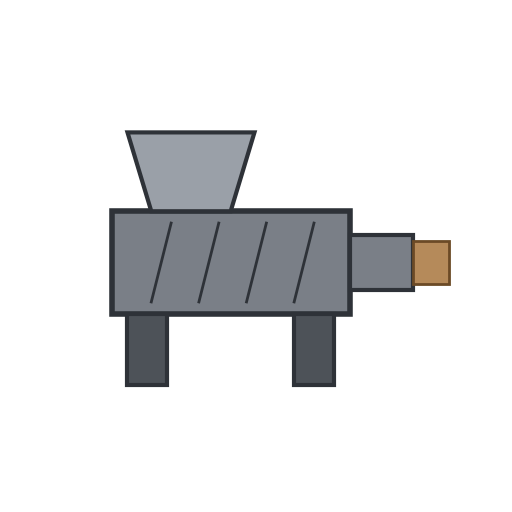 ས་འདམ་ སྦྱར་བའི་ འཕྲུལ་ཆས་
4
4
Form the crucibles
Form the crucibles
Make the crucibles by hand on a wheel, or mould them. Sizes are not given (unknown).
ལག་ཆས་དགོས་མཁོ:
 རྫ་མཁན་གྱི་འཁོར་ལོ།
 མ་ཤེས་པའི་ཚད།
5
5
Dry and bake in saggars
Dry and bake in saggars
Dry the crucibles, then bake them inside saggars. To slow the burning out of the graphite in use, a crucible may be dipped in a paste of clay and a solution of borax.
ལག་ཆས་དགོས་མཁོ:
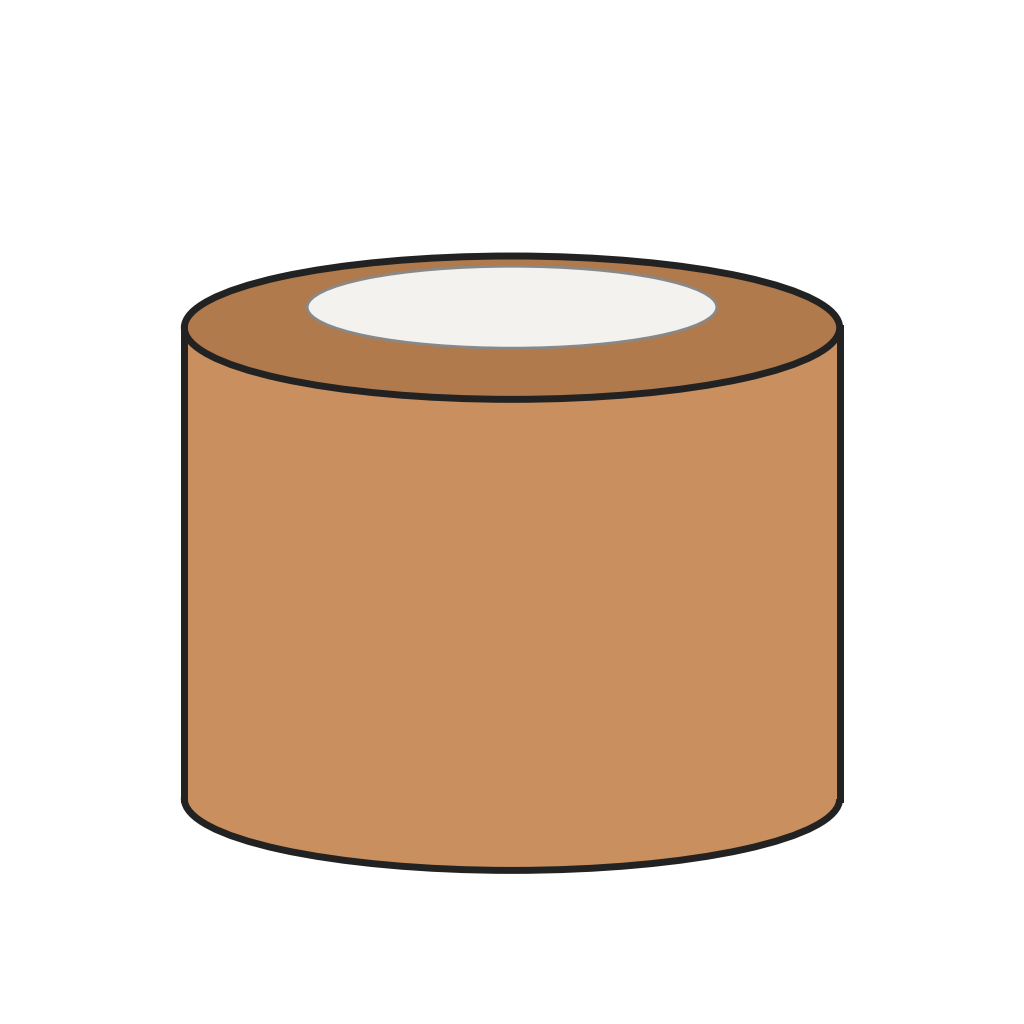 མེ་བཟོད་འཇིམ་པའི་སྒམ།
 ཐབ།
 ཚ་ལེ་ཕྱེ་མ།
6
6
History and honest limits
History and honest limits
Thorpe notes that graphite crucibles are of great value for melting metals but little used for assaying, that the graphite is slowly burnt by metal oxides and furnace gases, and that iron left in the graphite can pass into the metal. He also gives Digby's 1893 mixture of coarse and fine plumbago, Russian clay, china-stone and gas carbon, a different route.
The acid strength and time, the sizes and the baking heat are not given; refractory clay stands for his fine fireclay.
རྫས་རིགས
3- 1 half by weightས་ཆ་འཛིན
- 1 half by weightས་ཆ་འཛིན
- 1 to a stiff pasteས་ཆ་འཛིན
ལག་ཆས་དགོས་མཁོ
13- ས་ཆ་འཛིན
- ས་ཆ་འཛིན
- ས་ཆ་འཛིན
- ས་ཆ་འཛིན
- ས་ཆ་འཛིན
- ས་ཆ་འཛིན
- ས་ཆ་འཛིན
- ས་ཆ་འཛིན
- ས་ཆ་འཛིན
- ས་ཆ་འཛིན
- ས་ཆ་འཛིན
- ས་ཆ་འཛིན
- ས་ཆ་འཛིན
བིལུ་པིརིན་ཊི་འདི་གིས་བཟོ་མི

འབྲེལ་ཡོད་བིལུ་པིརིན་ཊི
བིལུ་པིརིན་ཊི་འདི་ཚུ་ཐབས་ལམ་དང་རྫས་རིགས། སྤྱི་ཆོས་བགོ་བཤའ་བྱེད

CC0 སྤྱི་དབང
བིལུ་པིརིན་ཊི་འདི་CC0 འོག་བཀྲམས་ཡོད། ཁྱེད་རང་གིས་ཆོག་མཆན་མ་བཞེས་པར་ཕབ་ལེན་དང་བཟོ་བཅོས། བགོ་བཤའ། དགོས་མཁོ་གང་ལའང་བཀོལ་སྤྱོད་བྱས་ཆོག
བཟོ་མཁན་ལ་རྒྱབ་སྐྱོར་བྱེད་པའི་ཆེད་ཁོང་ཚོའི་བིལུ་པིརིན་ཊི་བརྒྱུད་ཐོན་སྐྱེད་ཉོ། བཟོ་མཁན་གྱིས བཟོ་མཁན་གྱི་ཁེ་ཕོགས ཚོང་པས་གཏན་འཁེལ་བྱས་པ། ཡང་ན་བིལུ་པིརིན་ཊི་འདིའི་པར་གསར་བཟོས་ཏེ་ཁྱེད་རང་གི་བིལུ་པིརིན་ཊི་ནང་མཐུད་སྦྲེལ་བྱས་ཏེ་ཡོང་སྒོ་བགོ་བཤའ་བྱེད།