སྒྱུ་རྩལ
མཛེས་སྡུག་དང་བདེ་ཐང
བཟོ་རིག
རིག་གནས་དང་ལོ་རྒྱུས
དགའ་སྟོན
ཁོར་ཡུག
ཟས་དང་བཏུང་རྫས
ཕྱིར་འཕྲུལ་རིག
ཚན་རིག
རྩེད་འགྲན
རིག་རྩལ
གྱོན་རུང
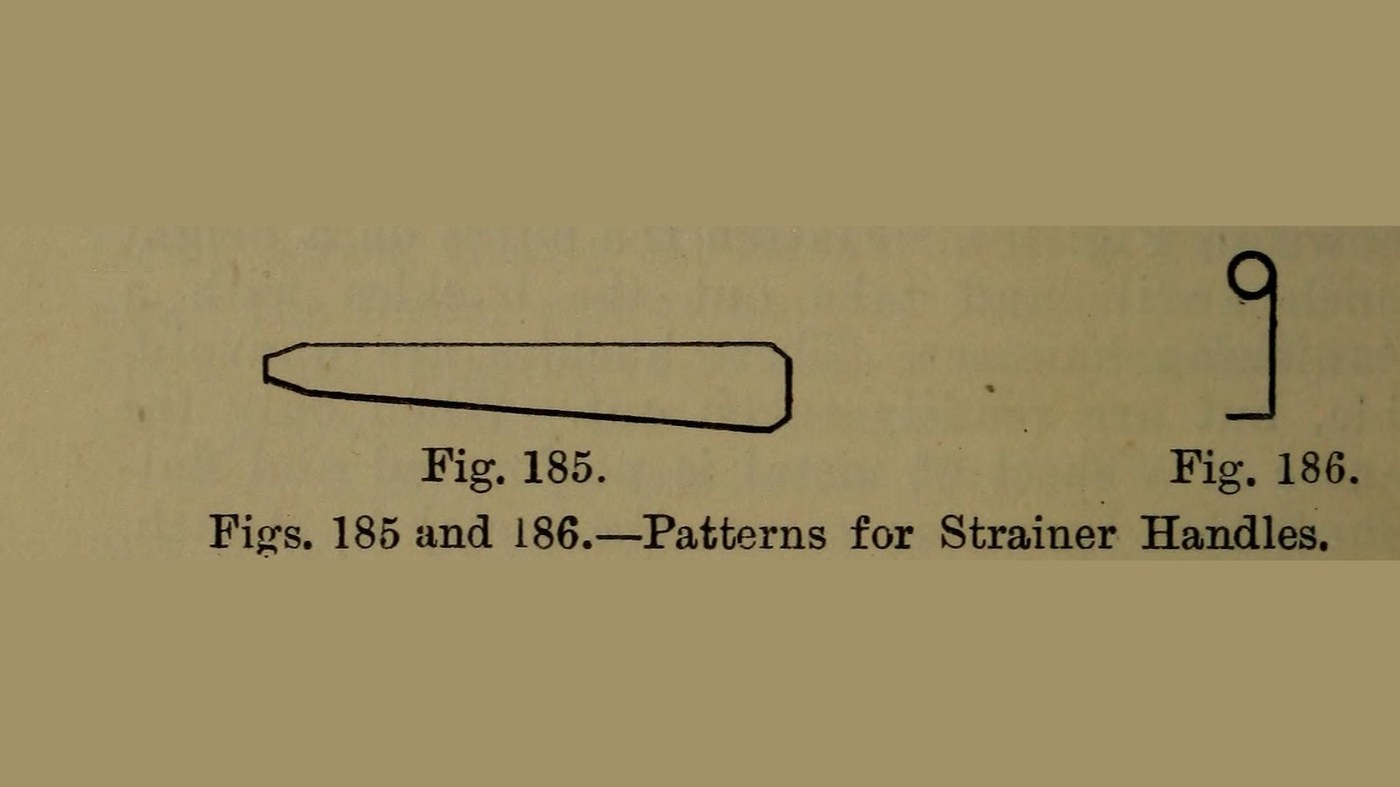


Handle: a Wired Tinplate Lifting Handle, Riveted and Soldered On (Hasluck, 1907)
A tinsmith's lifting handle is a strip of tinplate cut to a tapering pattern, stiffened with wire along its edges and bent so its narrow end curls into a ring, then riveted and soldered to the vessel.
Paul N. Hasluck's Tinplate Work (1907) gives it for the strainer of a fish kettle (Figs. 185-186). He gives no sizes for the pattern or the wire; those are unknown here.
Source: P. N. Hasluck, Tinplate Work (1907), pp. 89-90. Picture: his Figs. 185 and 186.
འགོ་བཙུགས
An hour for a pair
ལམ་སྟོན
1
1
Read Hasluck
Read Hasluck
"Having cut two to this pattern, wire the edges, and bend to the shape of Fig. 186, letting the narrow part of the pattern form the ring; then rivet and solder them to the strainer."
2
2
Cut to the pattern
Cut to the pattern
Mark out the handle on tinplate to the pattern of Fig. 185, a long strip tapering to a narrow end, and cut it out with snips; cut two for a pair. Hasluck gives no sizes (unknown).
གོམ་པ་འདིའི་རྫས་རིགས:
 ཊིན་བྱུགས་ལྕགས་ལེབ།1 two strips
ལག་ཆས་དགོས་མཁོ:
 ཐིག་འཛུགས་ཁབ།
 ལྕགས་ལེབ་གཏུབ་ནིའི་ཇེམ་ཙི།
 མ་ཤེས་པའི་ཚད།
3
3
Wire the edges
Wire the edges
Wire the edges of each strip: The gauge for the handles is not given; the strainer they are made for is wired with No. 10 B.W.G. tinned wire.
གོམ་པ་འདིའི་རྫས་རིགས:
 ལྕགས་སྐུད1 edges
ལག་ཆས་དགོས་མཁོ:
 ཤིང་གི་ཐོ་བ།
 ཕུར་པ
4
4
Bend the ring
Bend the ring
Bend the strip to the shape of Fig. 186, curling the narrow end of the pattern round into the ring you lift by.
ལག་ཆས་དགོས་མཁོ:
ཤིང་གི་ཐོ་བ།ཕུར་པ5
5
Rivet and solder on
Rivet and solder on
Punch the rivet holes, rivet the flat end of the handle to the vessel, and solder it.
གོམ་པ་འདིའི་རྫས་རིགས:
 ལྕགས་ཀྱི་གཟེར་ཆུང་།1 per handle
 གསའ-ཞ་ཡི་ལྷ་ཡིག1 small amount
ལག་ཆས་དགོས་མཁོ:
 ལྕགས་ལེབ་ཁུང་བུ་གཏོད་ཆས།
 གཟེར་བརྡུང་གི་ཐོ་བ།
 གློག་གི་ཞ་སྦྱར་ལྕགས
 ཞུ་རོགས་རྫས
6
6
History and honest limits
History and honest limits
In Hasluck this handle lifts the perforated strainer out of a fish kettle; his colander has a pair of bow handles riveted on opposite each other.
He gives the pattern by figure only, with no sizes, and does not say which wire goes in the handle edges; the tools are ours.
རྫས་རིགས
4- 1 two stripsས་ཆ་འཛིན
- 1 edgesས་ཆ་འཛིན
- 1 per handleས་ཆ་འཛིན
- 1 small amountས་ཆ་འཛིན
ལག་ཆས་དགོས་མཁོ
9- ས་ཆ་འཛིན
- ས་ཆ་འཛིན
- ས་ཆ་འཛིན
- ས་ཆ་འཛིན
- ས་ཆ་འཛིན
- ས་ཆ་འཛིན
- ས་ཆ་འཛིན
- ས་ཆ་འཛིན
- ས་ཆ་འཛིན
བིལུ་པིརིན་ཊི་འདི་གིས་བཟོ་མི

འབྲེལ་ཡོད་བིལུ་པིརིན་ཊི
བིལུ་པིརིན་ཊི་འདི་ཚུ་ཐབས་ལམ་དང་རྫས་རིགས། སྤྱི་ཆོས་བགོ་བཤའ་བྱེད

CC0 སྤྱི་དབང
བིལུ་པིརིན་ཊི་འདི་CC0 འོག་བཀྲམས་ཡོད། ཁྱེད་རང་གིས་ཆོག་མཆན་མ་བཞེས་པར་ཕབ་ལེན་དང་བཟོ་བཅོས། བགོ་བཤའ། དགོས་མཁོ་གང་ལའང་བཀོལ་སྤྱོད་བྱས་ཆོག
བཟོ་མཁན་ལ་རྒྱབ་སྐྱོར་བྱེད་པའི་ཆེད་ཁོང་ཚོའི་བིལུ་པིརིན་ཊི་བརྒྱུད་ཐོན་སྐྱེད་ཉོ། བཟོ་མཁན་གྱིས བཟོ་མཁན་གྱི་ཁེ་ཕོགས ཚོང་པས་གཏན་འཁེལ་བྱས་པ། ཡང་ན་བིལུ་པིརིན་ཊི་འདིའི་པར་གསར་བཟོས་ཏེ་ཁྱེད་རང་གི་བིལུ་པིརིན་ཊི་ནང་མཐུད་སྦྲེལ་བྱས་ཏེ་ཡོང་སྒོ་བགོ་བཤའ་བྱེད།