སྒྱུ་རྩལ
མཛེས་སྡུག་དང་བདེ་ཐང
བཟོ་རིག
རིག་གནས་དང་ལོ་རྒྱུས
དགའ་སྟོན
ཁོར་ཡུག
ཟས་དང་བཏུང་རྫས
ཕྱིར་འཕྲུལ་རིག
ཚན་རིག
རྩེད་འགྲན
རིག་རྩལ
གྱོན་རུང
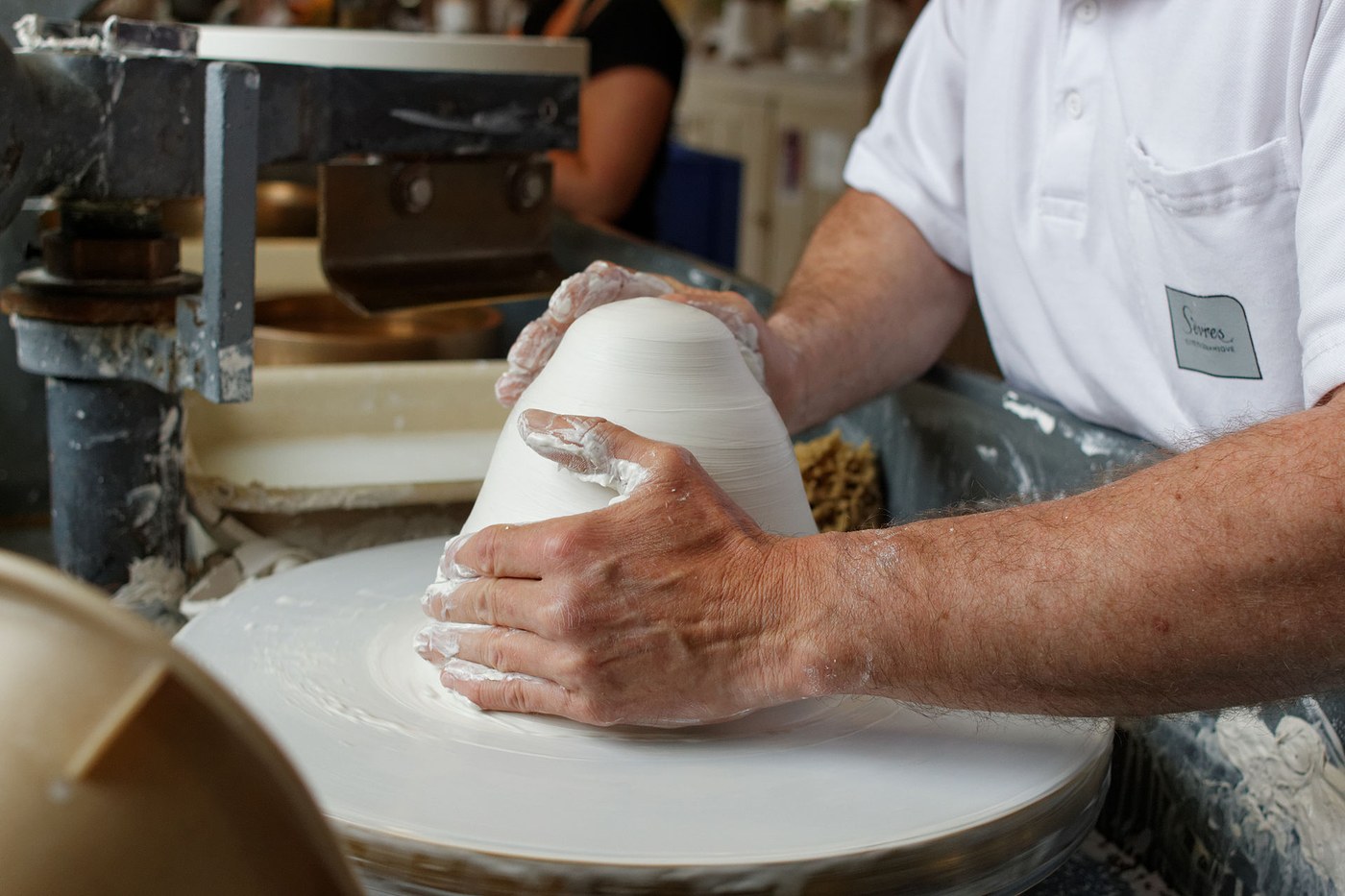


Hard Porcelain Body: Kaolin, Felspar, Flint and Chalk, the Sèvres Paste
Hard porcelain is white kaolin made just fusible enough with ground felspar. Andrew Ure (1839) gives the Sèvres paste: 63–70 parts washed kaolin, 22–15 felspar, about 10 flint powder and 5 chalk, mixed as slips, stiffened on plaster and left to ripen damp for months before it is trodden and used.
The picture: centring porcelain paste on the wheel in the Grand Atelier of the Sèvres manufactory.
མཐོ་རིམ
Days to mix, months to ripen
ལམ་སྟོན
1
1
Calcine and grind the felspar
Calcine and grind the felspar
Pick felspar free of dark mica and rust. Heat it red hot in the kiln and quench it so it crumbles, then crush and grind it very fine with water and sift.
གོམ་པ་འདིའི་རྫས་རིགས:
 ཕེལ་སི་པར་གྱི་རྡོ་གོང་།2 kg
 ཆུ།10 ལི་ཊར།
ལག་ཆས་དགོས་མཁོ:
 ཐབ།
ཐབ། སྲ་བཟོའི་ཆུ་སྣོད།
 གཏུན་ཁུང་དང་གཏུན་ཤིང་།
 གཞོང་རྡོ
 དྲ་ཕྲ་བའི་ཚག་མ།
 ཚ་བཟོད་ཀྱི་ལག་ཤུབས།
 ཐལ་བའི་ཁ་རས།
2
2
Flint powder
Flint powder
Calcine and quench flint the same way and grind it to a fine powder with water.
གོམ་པ་འདིའི་རྫས་རིགས:
 མེ་རྡོའི་གོང་བུ།1 kg
ལག་ཆས་དགོས་མཁོ:
ཐབ།སྲ་བཟོའི་ཆུ་སྣོད།གཞོང་རྡོདྲ་ཕྲ་བའི་ཚག་མ།ཐལ་བའི་ཁ་རས།3
3
Weigh and mix the slips
Weigh and mix the slips
Weigh the dry kaolin, felspar, flint and chalk in Ure's proportions, stir each into water and mix them into one smooth slip; pass it through a fine sieve.
གོམ་པ་འདིའི་རྫས་རིགས:
 ཀའོ་ལིན་འཇིམ་གྱི་ཕྱེ་མ།6.65 kg
 ཀེལ་སིམ་ཀར་བོ་ནེཊ (རྡོ་ཐལ་གྱི་ཕྱེ)0.5 kgཆུ།15 ལི་ཊར།
ལག་ཆས་དགོས་མཁོ:
 ལག་པ་འདྲ་མཉམ་གྱི་སྲང་།
 ཤིང་གི་ཟོ་ཆེན།དྲ་ཕྲ་བའི་ཚག་མ།
4
4
Stiffen on plaster, ripen
Stiffen on plaster, ripen
Pour the slip onto plaster bats to draw the water out without heat. When it is a soft paste, store it covered and damp for months to ripen.
ལག་ཆས་དགོས་མཁོ:
 རྡོ་རྫས་ཀྱི་ལེབ་ཤོག
5
5
Tread and ball it
Tread and ball it
Before use, work the paste hard on the wedging table (Sèvres trod it barefoot) until even, and keep it in damp balls.
ལག་ཆས་དགོས་མཁོ:
 འཇིམ་པ་མཉེ་ནིའི་ཅོག་ཙེ།
6
6
Ure's Sèvres paste, scaled
Ure's Sèvres paste, scaled
Jupyter ཚང་དེབ་མངོན་གསལ་འབད་དོ་…
7
7
Limits
Limits
The recipe and handling are Ure's; calcining the flint and the batch size are ours. Grinding flint and felspar makes fine silica dust that harms the lungs over time: grind wet and wear a mask.
རྫས་རིགས
5- ས་ཆ་འཛིན
- 25 ལི་ཊར།ས་ཆ་འཛིན
- 1 kgས་ཆ་འཛིན
- 6.65 kgས་ཆ་འཛིན
- ས་ཆ་འཛིན
ལག་ཆས་དགོས་མཁོ
11- ས་ཆ་འཛིན
- ས་ཆ་འཛིན
- ས་ཆ་འཛིན
- ས་ཆ་འཛིན
- ས་ཆ་འཛིན
- ས་ཆ་འཛིན
- ས་ཆ་འཛིན
- ས་ཆ་འཛིན
- ས་ཆ་འཛིན
- ས་ཆ་འཛིན
- ས་ཆ་འཛིན
བིལུ་པིརིན་ཊི་འདི་གིས་བཟོ་མི
འབྲེལ་ཡོད་བིལུ་པིརིན་ཊི
བིལུ་པིརིན་ཊི་འདི་ཚུ་ཐབས་ལམ་དང་རྫས་རིགས། སྤྱི་ཆོས་བགོ་བཤའ་བྱེད
CC0 སྤྱི་དབང
བིལུ་པིརིན་ཊི་འདི་CC0 འོག་བཀྲམས་ཡོད། ཁྱེད་རང་གིས་ཆོག་མཆན་མ་བཞེས་པར་ཕབ་ལེན་དང་བཟོ་བཅོས། བགོ་བཤའ། དགོས་མཁོ་གང་ལའང་བཀོལ་སྤྱོད་བྱས་ཆོག
བཟོ་མཁན་ལ་རྒྱབ་སྐྱོར་བྱེད་པའི་ཆེད་ཁོང་ཚོའི་བིལུ་པིརིན་ཊི་བརྒྱུད་ཐོན་སྐྱེད་ཉོ། བཟོ་མཁན་གྱིས བཟོ་མཁན་གྱི་ཁེ་ཕོགས ཚོང་པས་གཏན་འཁེལ་བྱས་པ། ཡང་ན་བིལུ་པིརིན་ཊི་འདིའི་པར་གསར་བཟོས་ཏེ་ཁྱེད་རང་གི་བིལུ་པིརིན་ཊི་ནང་མཐུད་སྦྲེལ་བྱས་ཏེ་ཡོང་སྒོ་བགོ་བཤའ་བྱེད།