

Carving a Lodestone Compass Spoon — China's Magnetic Direction Finder
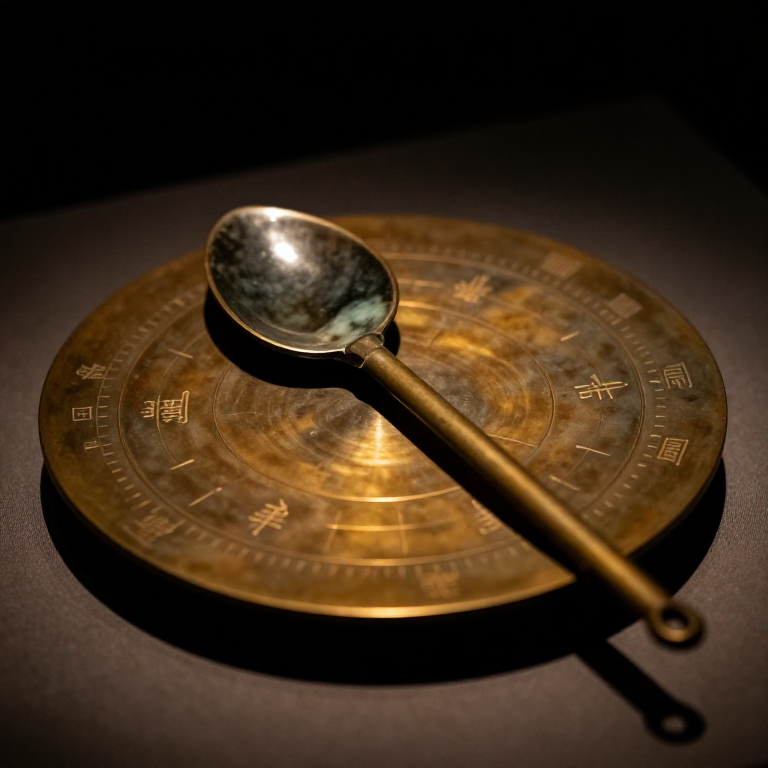
The magnetic compass was invented in China during the Han dynasty (approximately 200 BCE), originally not for navigation but for feng shui — aligning buildings, tombs, and furniture with the Earth's magnetic field. The earliest form was the 'sinan' (司南, 'south-pointer'): a spoon carved from naturally magnetized lodestone (magnetite, Fe₃O₄) balanced on a smooth bronze plate. The spoon's handle, being the narrow end, swung freely to align with Earth's magnetic field, pointing south.
Lodestone is a naturally occurring permanent magnet — one of only two minerals that exhibit magnetism without being artificially magnetized (the other is pyrrhotite). It forms when magnetite is struck by lightning, which aligns the iron oxide crystal domains into a permanent dipole. The ancient Chinese recognized that certain 'living stones' (magnetite specimens that attracted iron) could be carved into tools that always pointed the same direction.
The sinan evolved over centuries: from a spoon on a plate (Han dynasty) to a magnetized iron needle floating in water (Song dynasty, ~1000 AD) to the dry-pivot compass used by mariners (12th century). It reached Europe via Arab traders around 1190 AD, where it transformed ocean navigation and enabled the Age of Exploration. Every GPS satellite, every ship's compass, and every smartphone magnetometer is a descendant of that first carved lodestone spoon.
ལམ་སྟོན
Find and test lodestone specimens
Find and test lodestone specimens
Lodestone is magnetite (Fe₃O₄) that has been naturally magnetized — typically by lightning strikes on exposed iron ore deposits. Not all magnetite is lodestone: only specimens that attract iron filings and small nails qualify. Test candidate stones by holding them near iron filings or a small iron needle — genuine lodestone will pick up filings and deflect a suspended needle.
Lodestone is found in regions with exposed magnetite deposits: parts of modern Turkey (ancient Magnesia, from which 'magnet' derives its name), Greece, India, and China. The stone should be dense, dark grey-black, and heavy for its size. Select a specimen at least 5-7 cm long that shows strong attraction to iron — weaker specimens will not have enough magnetic force to overcome friction when balanced on a plate.
ལག་ཆས་དགོས་མཁོ:
 ཐོ་བ།
ཐོ་བ།Identify the magnetic poles
Identify the magnetic poles
Before carving, determine which end of the lodestone is the south-seeking pole — this end will become the handle of the spoon, which points south in the finished compass. Suspend the lodestone from a thread tied around its middle and allow it to rotate freely until it settles. Mark the end that points south (toward geographic south) — this is the stone's south-seeking pole.
The Chinese convention names this the 'south-pointer' because Chinese cosmology placed south at the top of maps, making south the primary cardinal direction. Western convention names the same phenomenon 'north-seeking' because European maps place north at the top. The physics is identical — only the naming convention differs.
གོམ་པ་འདིའི་རྫས་རིགས:
 སོ་མའི་ཐག་པ།1 མི་ཊར།
Carve the spoon shape
Carve the spoon shape
Using stone abrasives (sandstone or emery), grind the lodestone into the traditional sinan spoon shape: a round, convex bowl approximately 3-4 cm in diameter tapering to a narrow handle 4-5 cm long. The south-seeking pole should be at the tip of the handle. The bowl must be perfectly round and smoothly convex on the bottom — this is the bearing surface that sits on the bronze plate.
Magnetite is hard (Mohs 5.5-6.5) but brittle, so work slowly with abrasion rather than striking. The critical dimension is the bottom of the bowl: it must be ground to a smooth, convex hemisphere that contacts the bronze plate at a single point. Any flat spots or irregularities increase friction and prevent the spoon from rotating freely. The handle must be significantly lighter than the bowl to ensure the center of gravity stays over the contact point.
ལག་ཆས་དགོས་མཁོ:
 རྡོ་གཞོང་།
Cast or carve the bronze base plate
Cast or carve the bronze base plate
The base plate (dipan, 地盘) is a smooth, flat bronze disc or square approximately 20-25 cm across. The surface must be polished to a mirror finish — any roughness creates friction that prevents the spoon from rotating freely. Traditional sinan plates were cast from bronze and polished with increasingly fine abrasives until they could reflect an image.
The plate is engraved with concentric rings of markings: the cardinal directions (south, north, east, west), the eight trigrams of the I Ching, the 24 compass points used in feng shui (each spanning 15 degrees), and the 28 lunar mansions of Chinese astronomy. These markings allow the feng shui practitioner to read precise directional alignments once the spoon has settled.
གོམ་པ་འདིའི་རྫས་རིགས:
 ལི་མའི་ལྷུ་མ།1 དུམ་བུ།
ལག་ཆས་དགོས་མཁོ:
 བརྐོས་རིས་ཀྱི་བུ་རིན།
Polish the bearing surfaces
Polish the bearing surfaces
The performance of the sinan depends almost entirely on minimizing friction between the spoon's convex bottom and the bronze plate's flat surface. Polish both surfaces to the highest possible finish using progressively finer abrasives: start with fine sandstone, then emery powder mixed with oil, then rouge (iron oxide powder) on a leather pad.
Test the friction by placing the spoon on the plate and giving it a gentle spin. It should rotate at least 3-4 full turns before stopping. If it stops quickly, the bearing surfaces need more polishing. Some historical reconstructions suggest that a thin film of oil or animal fat on the plate further reduces friction, though this is debated among historians.
Calibrate and test the compass
Calibrate and test the compass
Place the sinan on a flat, level surface away from iron objects (tools, nails, iron pots — all of which distort the Earth's magnetic field locally). Set the spoon on the center of the bronze plate and give it a gentle push to start it rotating. As friction slows the rotation, the spoon's handle will gradually align with the north-south magnetic axis, with the handle pointing south.
Test consistency by rotating the spoon 90 degrees and releasing — it should return to the same orientation within 10-15 degrees. The alignment will not be perfect because of residual friction and the relatively weak magnetic field of natural lodestone compared to modern magnets. Ancient feng shui practitioners accepted a precision of approximately ±15 degrees, which was sufficient for architectural alignment and tomb orientation.
Understanding the evolution to the mariner's compass
Understanding the evolution to the mariner's compass
The lodestone spoon was adequate for stationary feng shui work but too friction-dependent for use at sea. By the Song dynasty (~1000 AD), Chinese navigators had developed a superior design: a thin iron needle magnetized by stroking it with lodestone, then floated on water in a small bowl. The water surface eliminated friction entirely, and the lightweight needle responded to the Earth's field far more sensitively than the heavy stone spoon.
The floating needle compass reached the Arab world by the 12th century and Europe by the late 12th century, where it was refined with a dry pivot mount, a compass card, and eventually a gimbal suspension for shipboard use. The principle remained identical to the sinan — a magnetized object free to rotate until it aligns with Earth's magnetic field — but each iteration reduced friction and increased sensitivity. From spoon to needle to digital magnetometer, the compass remains humanity's oldest continuously used scientific instrument.
རྫས་རིགས
2- 1 མི་ཊར།ས་ཆ་འཛིན
- 1 དུམ་བུ།ས་ཆ་འཛིན
ལག་ཆས་དགོས་མཁོ
3- ས་ཆ་འཛིན
- ས་ཆ་འཛིན
- ས་ཆ་འཛིན
བིལུ་པིརིན་ཊི་འདི་གིས་བཟོ་མི

འབྲེལ་ཡོད་བིལུ་པིརིན་ཊི
བིལུ་པིརིན་ཊི་འདི་ཚུ་ཐབས་ལམ་དང་རྫས་རིགས། སྤྱི་ཆོས་བགོ་བཤའ་བྱེད



CC0 སྤྱི་དབང
བིལུ་པིརིན་ཊི་འདི་CC0 འོག་བཀྲམས་ཡོད། ཁྱེད་རང་གིས་ཆོག་མཆན་མ་བཞེས་པར་ཕབ་ལེན་དང་བཟོ་བཅོས། བགོ་བཤའ། དགོས་མཁོ་གང་ལའང་བཀོལ་སྤྱོད་བྱས་ཆོག
བཟོ་མཁན་ལ་རྒྱབ་སྐྱོར་བྱེད་པའི་ཆེད་ཁོང་ཚོའི་བིལུ་པིརིན་ཊི་བརྒྱུད་ཐོན་སྐྱེད་ཉོ། བཟོ་མཁན་གྱིས བཟོ་མཁན་གྱི་ཁེ་ཕོགས ཚོང་པས་གཏན་འཁེལ་བྱས་པ། ཡང་ན་བིལུ་པིརིན་ཊི་འདིའི་པར་གསར་བཟོས་ཏེ་ཁྱེད་རང་གི་བིལུ་པིརིན་ཊི་ནང་མཐུད་སྦྲེལ་བྱས་ཏེ་ཡོང་སྒོ་བགོ་བཤའ་བྱེད།