སྒྱུ་རྩལ
མཛེས་སྡུག་དང་བདེ་ཐང
བཟོ་རིག
རིག་གནས་དང་ལོ་རྒྱུས
དགའ་སྟོན
ཁོར་ཡུག
ཟས་དང་བཏུང་རྫས
ཕྱིར་འཕྲུལ་རིག
ཚན་རིག
རྩེད་འགྲན
རིག་རྩལ
གྱོན་རུང
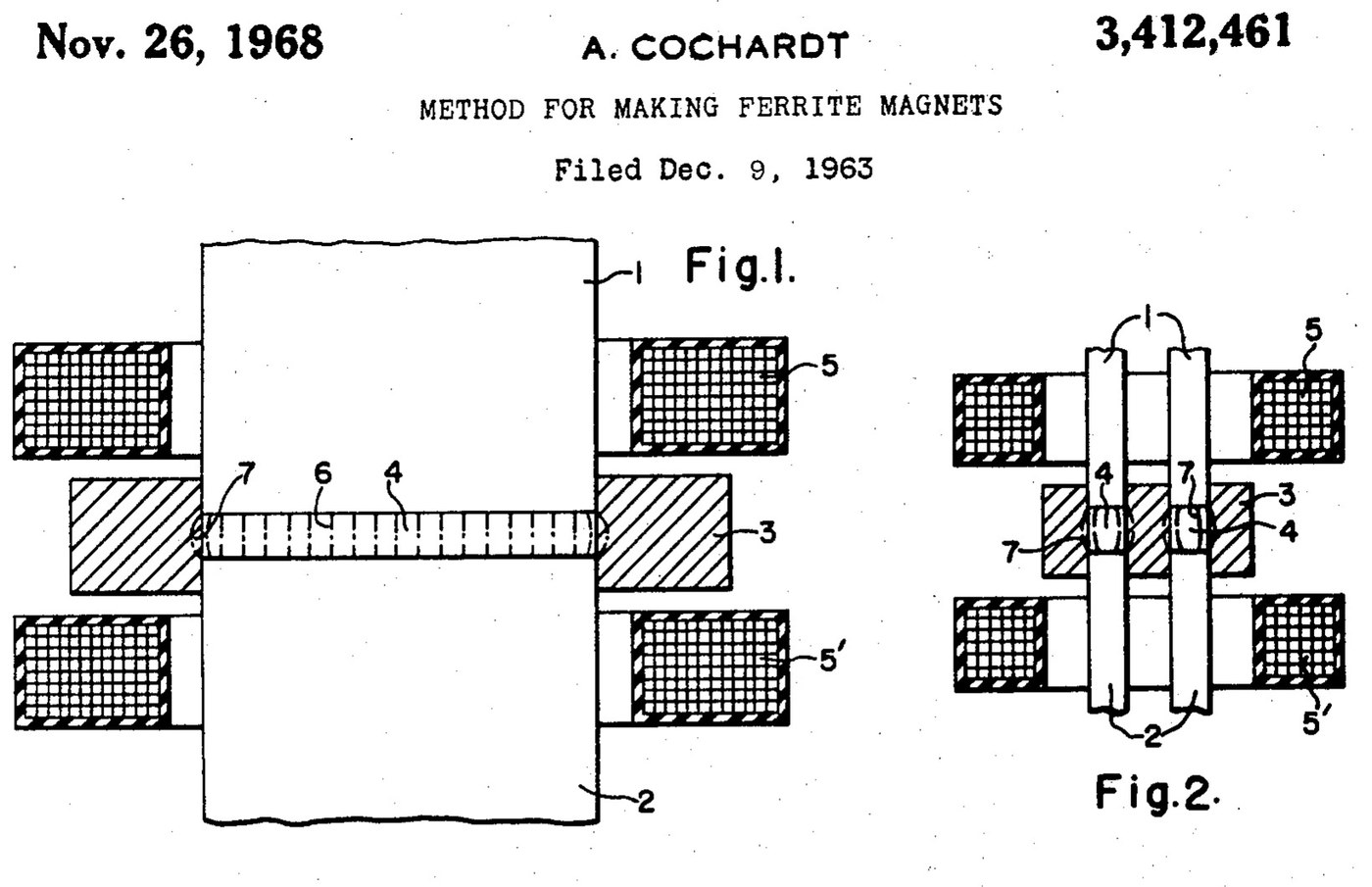


Magnetic-Field Press: Soft-Steel Punches as the Poles (Cochardt, US 3,412,461, 1968)
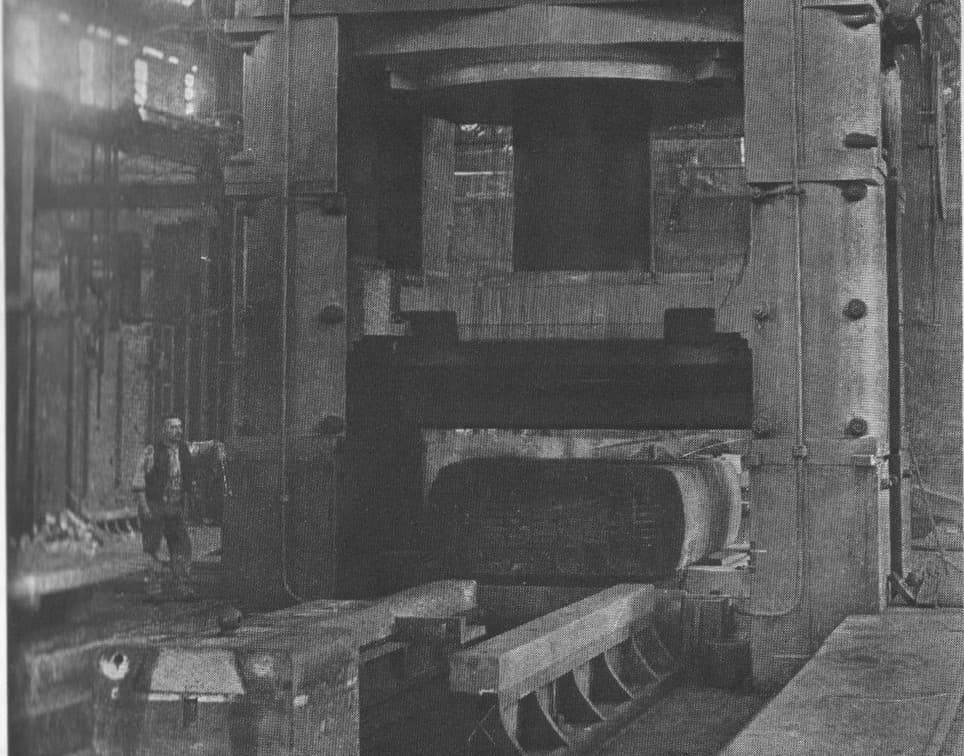
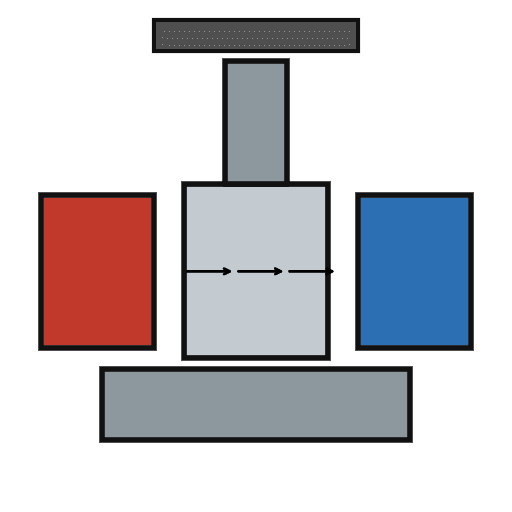
A press that lines magnetic powder up while it squeezes it. Two punches of magnetically soft steel close a die, and two coils around them make the punches the poles of an electromagnet. The field runs straight through the powder from one punch face to the other.
Result: a press for anisotropic magnets, about 4000 oersted in the pressing space.
Source: A. W. Cochardt, US 3,412,461 (1968). Unknown: the die's metal, sizes, coil windings, the press and the pump. Picture: the patent drawing.
མཐོ་རིམ
Unknown
ལམ་སྟོན
1
1
Make the punches and the die
Make the punches and the die
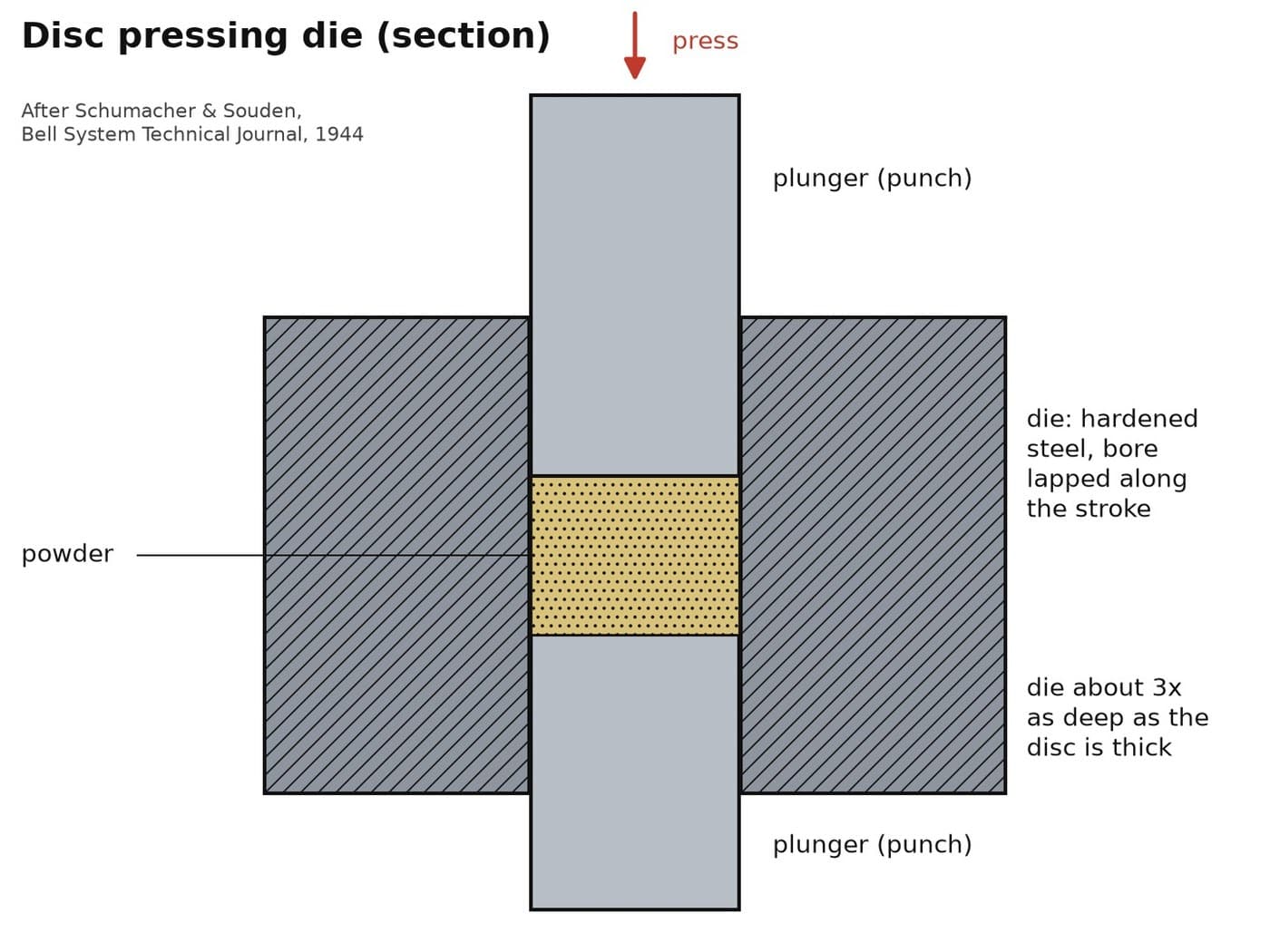
Make an upper and a lower press member (punches) of magnetically soft steel. Then the magnetic gap is only the thickness of the part being pressed. Make a die wall that the punches close to form a flat cavity. A wide, thin cavity keeps the field lines straight; they bend only at its edges. Ours: mild steel for the punches. Not given: the die's metal, sizes.
གོམ་པ་འདིའི་རྫས་རིགས:
 ལྕགས་འཇམ་གྱི་ལྕགས་ཕྲེང་སྒོར་སྒོརམ།1 upper and lower punches
 མ་ཤེས་པའི་ལྕགས་རིགས།1 die
ལག་ཆས་དགོས་མཁོ:
 ལྕགས་ཀྱི་འཁྲུལ་འཁོར།
 མ་ཤེས་པའི་ཚད།
2
2
Wind the two coils
Wind the two coils
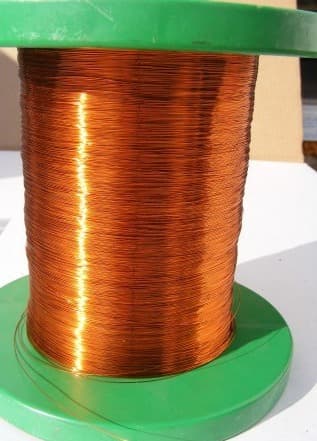
Wind two coils to sit around the punches, one above the die and one below, so that together they drive a field along the pressing direction. The patent's coils were water-cooled. Ours: enamelled copper wire. Not given: the turns, the wire size, how the cooling water runs.
གོམ་པ་འདིའི་རྫས་རིགས:
 ཨེ་ན་མཱེལ་བྱུགས་པའི་ཟངས་སྐུད།1 two coils
ལག་ཆས་དགོས་མཁོ:
 བསིལ་བཏང་ནིའི་ཆུམ་ཤེས་པའི་ཚད།
3
3
Mount it in a press
Mount it in a press
Mount the punches, die and coils in a press, so the upper punch and the die can move down together while the lower punch stays put. Connect the coils to a current supply. Ours: a hydraulic press and a DC supply. Not given: the press, the supply.
ལག་ཆས་དགོས་མཁོ:
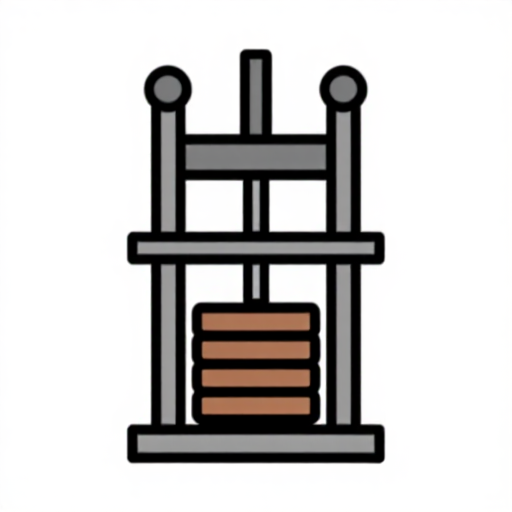 ཧའི་ཌོ་ལིཀ་ནོན་འཕྲུལ།
 ཐད་རྒྱུན་གློག་ཁུངས།
4
4
Press a plate in the field
Press a plate in the field
Raise the lower punch, lower the upper punch into the die, and pump in a ferrite slurry: water with 1 to 2 percent dispersing agent. Move the upper punch and die down to press the slurry and drive out the water, and energise the coils at the same time, to about 4000 oersted. A plate 0.5 x 10 x 9 cm took 8200 watts. Demagnetise the plate as far as possible, then raise the punch, lower the die and lift the plate off the lower punch. Ours: a diaphragm pump.
ལག་ཆས་དགོས་མཁོ:
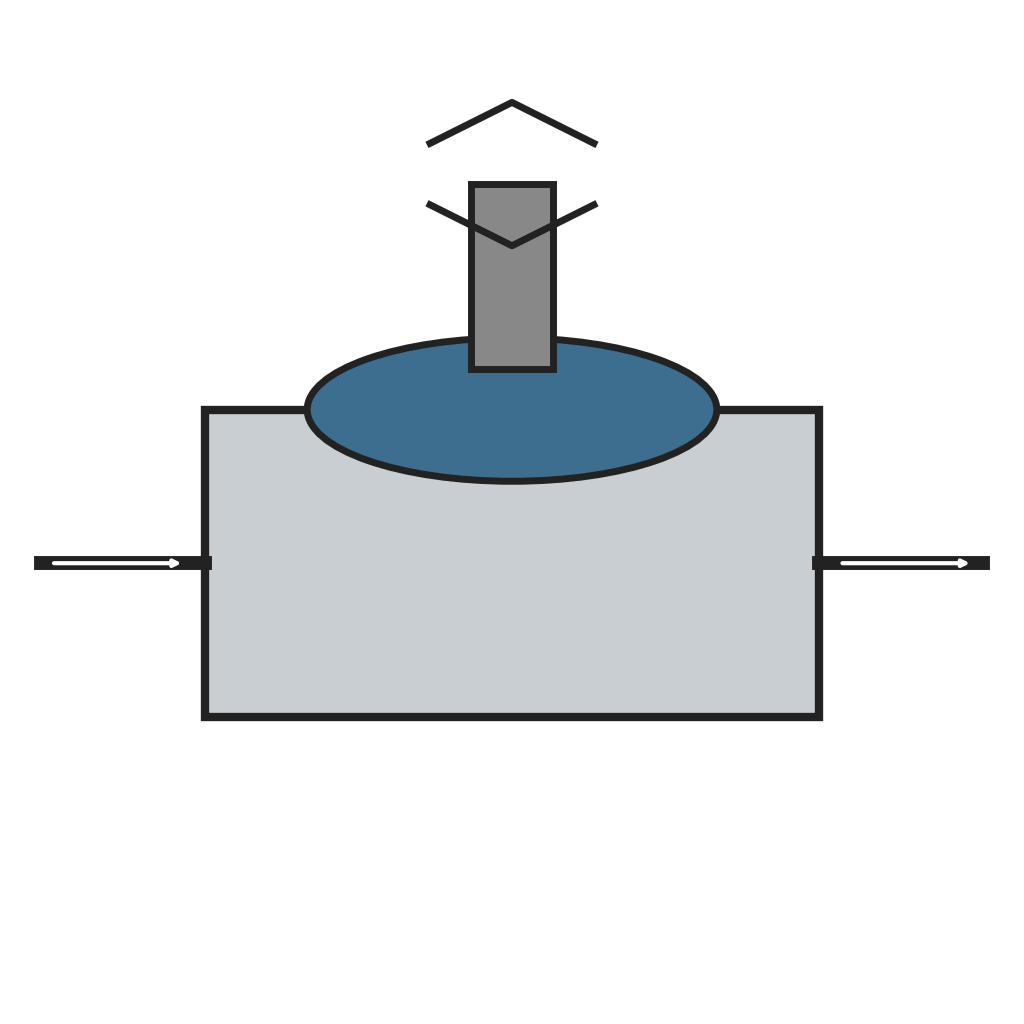 སྐྱོགས་ལྕགས་རྫས་འཕྱར་འཕེལ།ཐད་རྒྱུན་གློག་ཁུངས།བསིལ་བཏང་ནིའི་ཆུ
རྫས་རིགས
3- 1 upper and lower punchesས་ཆ་འཛིན
- 1 dieས་ཆ་འཛིན
- 1 two coilsས་ཆ་འཛིན
ལག་ཆས་དགོས་མཁོ
6- ས་ཆ་འཛིན
- ས་ཆ་འཛིན
- ས་ཆ་འཛིན
- ས་ཆ་འཛིན
- ས་ཆ་འཛིན
- ས་ཆ་འཛིན
མཐུད་སྦྲེལ་བིལུ་པིརིན་ཊི་རྫས་རིགས

བིལུ་པིརིན་ཊི་འདི་གིས་བཟོ་མི
འབྲེལ་ཡོད་བིལུ་པིརིན་ཊི
བིལུ་པིརིན་ཊི་འདི་ཚུ་ཐབས་ལམ་དང་རྫས་རིགས། སྤྱི་ཆོས་བགོ་བཤའ་བྱེད
CC0 སྤྱི་དབང
བིལུ་པིརིན་ཊི་འདི་CC0 འོག་བཀྲམས་ཡོད། ཁྱེད་རང་གིས་ཆོག་མཆན་མ་བཞེས་པར་ཕབ་ལེན་དང་བཟོ་བཅོས། བགོ་བཤའ། དགོས་མཁོ་གང་ལའང་བཀོལ་སྤྱོད་བྱས་ཆོག
བཟོ་མཁན་ལ་རྒྱབ་སྐྱོར་བྱེད་པའི་ཆེད་ཁོང་ཚོའི་བིལུ་པིརིན་ཊི་བརྒྱུད་ཐོན་སྐྱེད་ཉོ། བཟོ་མཁན་གྱིས བཟོ་མཁན་གྱི་ཁེ་ཕོགས ཚོང་པས་གཏན་འཁེལ་བྱས་པ། ཡང་ན་བིལུ་པིརིན་ཊི་འདིའི་པར་གསར་བཟོས་ཏེ་ཁྱེད་རང་གི་བིལུ་པིརིན་ཊི་ནང་མཐུད་སྦྲེལ་བྱས་ཏེ་ཡོང་སྒོ་བགོ་བཤའ་བྱེད།