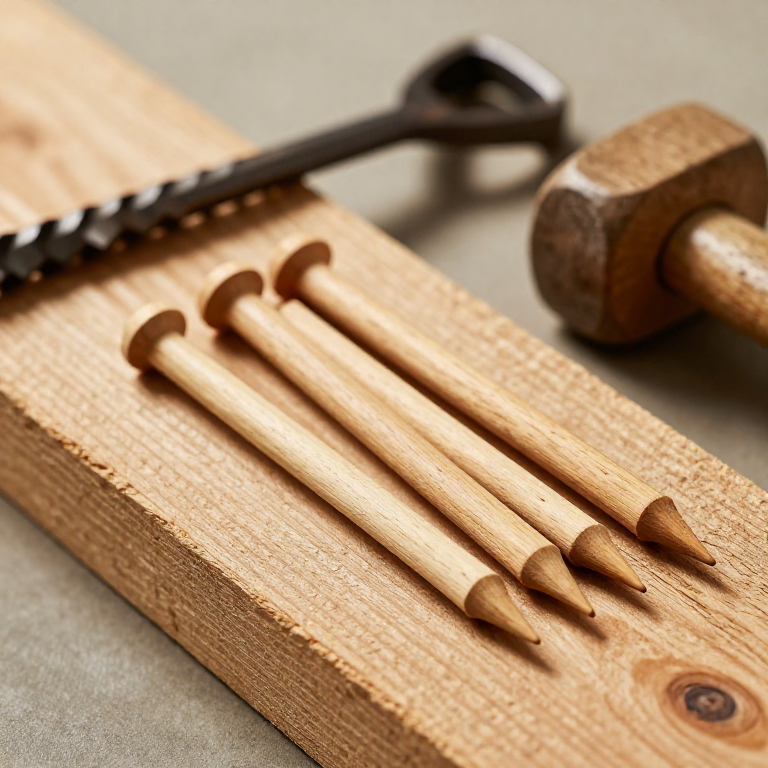


Making Treenails — Wooden Pegs for Timber Framing and Shipbuilding
Before iron nails were cheap, wood was fastened with wood. A treenail (pronounced 'trunnel') is a cylindrical wooden peg driven into a bored hole to lock a timber joint together. Treenails held together medieval roof trusses, Viking longships, and post-and-beam barns for centuries. In many applications they outperform iron nails — they do not rust, they swell when wet to tighten the joint, and they flex with the timber instead of working loose.
Treenails are always made from a wood harder or at least as hard as the timber they join. Oak treenails in oak frames, or locust treenails in softwood construction. They are riven from straight-grained stock, never sawn — riving preserves the grain continuity that gives the peg its shear strength. A sawn peg has cut fibres that snap under load.
The technique is simple: rive a billet into rough square sections, then round them by driving through a steel plate with a round hole (a rounding die) or by shaving with a drawknife. The finished treenail is slightly tapered so it can be started in the hole and driven home with a mallet. Some traditions split the protruding end and drive a small hardwood wedge into the split, locking the treenail permanently.
ལམ་སྟོན
Select straight-grained hardwood
Select straight-grained hardwood
གོམ་པ་འདིའི་རྫས་རིགས:
 ཨོག་དམརཔོའི་ཤིང་།1 དུམ་བུ།
Rive the billet into square blanks
Rive the billet into square blanks
ལག་ཆས་དགོས་མཁོ:
 ཕོརོ (གཤག་གྲི)
Round the blanks
Round the blanks
ལག་ཆས་དགོས་མཁོ:
 ཡུ་བ་གཉིས་ཀྱི་བཤུས་གྲི།
 ཤིང་འབྲེག་ནིའི་སྟེགས
 ཤིང་གི་ཐོ་བ།
Taper the leading end
Taper the leading end
ལག་ཆས་དགོས་མཁོ:
ཡུ་བ་གཉིས་ཀྱི་བཤུས་གྲི།Bore the holes and drive the treenails
Bore the holes and drive the treenails
ལག་ཆས་དགོས་མཁོ:
 ལག་པའི་ཕུག་ཆས།ཤིང་གི་ཐོ་བ།
Wedge the protruding end (optional lock)
Wedge the protruding end (optional lock)
གོམ་པ་འདིའི་རྫས་རིགས:
 སྲ་བའི་ཤིང་གཟེར་རྡོ1 དུམ་བུ།
ལག་ཆས་དགོས་མཁོ:
 ཤིང་གི་གཟོང་ཆས་ཆ་ཚང་།
རྫས་རིགས
2- ཨོག་དམརཔོའི་ཤིང་།ཁེ་ཕོགས 10%1 དུམ་བུ།ས་ཆ་འཛིན
- 1 དུམ་བུ།ས་ཆ་འཛིན
ལག་ཆས་དགོས་མཁོ
7- ས་ཆ་འཛིན
- ས་ཆ་འཛིན
- ས་ཆ་འཛིན
- ས་ཆ་འཛིན
- ས་ཆ་འཛིན
- ས་ཆ་འཛིན
- ས་ཆ་འཛིན
མཐུད་སྦྲེལ་བིལུ་པིརིན་ཊི་རྫས་རིགས
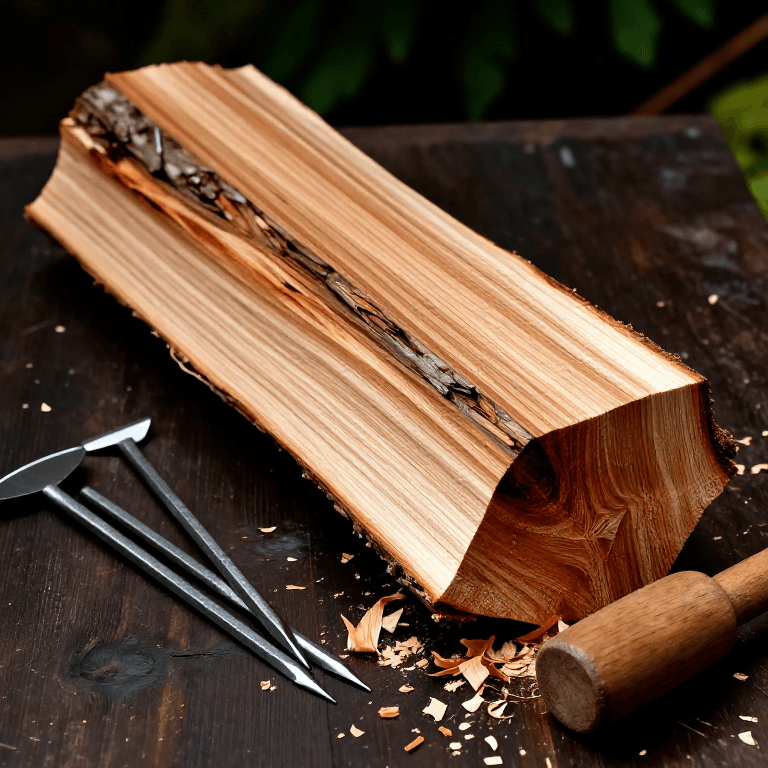
འབྲེལ་ཡོད་བིལུ་པིརིན་ཊི
བིལུ་པིརིན་ཊི་འདི་ཚུ་ཐབས་ལམ་དང་རྫས་རིགས། སྤྱི་ཆོས་བགོ་བཤའ་བྱེད


CC0 སྤྱི་དབང
བིལུ་པིརིན་ཊི་འདི་CC0 འོག་བཀྲམས་ཡོད། ཁྱེད་རང་གིས་ཆོག་མཆན་མ་བཞེས་པར་ཕབ་ལེན་དང་བཟོ་བཅོས། བགོ་བཤའ། དགོས་མཁོ་གང་ལའང་བཀོལ་སྤྱོད་བྱས་ཆོག
བཟོ་མཁན་ལ་རྒྱབ་སྐྱོར་བྱེད་པའི་ཆེད་ཁོང་ཚོའི་བིལུ་པིརིན་ཊི་བརྒྱུད་ཐོན་སྐྱེད་ཉོ། བཟོ་མཁན་གྱིས བཟོ་མཁན་གྱི་ཁེ་ཕོགས ཚོང་པས་གཏན་འཁེལ་བྱས་པ། ཡང་ན་བིལུ་པིརིན་ཊི་འདིའི་པར་གསར་བཟོས་ཏེ་ཁྱེད་རང་གི་བིལུ་པིརིན་ཊི་ནང་མཐུད་སྦྲེལ་བྱས་ཏེ་ཡོང་སྒོ་བགོ་བཤའ་བྱེད།