སྒྱུ་རྩལ
མཛེས་སྡུག་དང་བདེ་ཐང
བཟོ་རིག
རིག་གནས་དང་ལོ་རྒྱུས
དགའ་སྟོན
ཁོར་ཡུག
ཟས་དང་བཏུང་རྫས
ཕྱིར་འཕྲུལ་རིག
ཚན་རིག
རྩེད་འགྲན
རིག་རྩལ
གྱོན་རུང
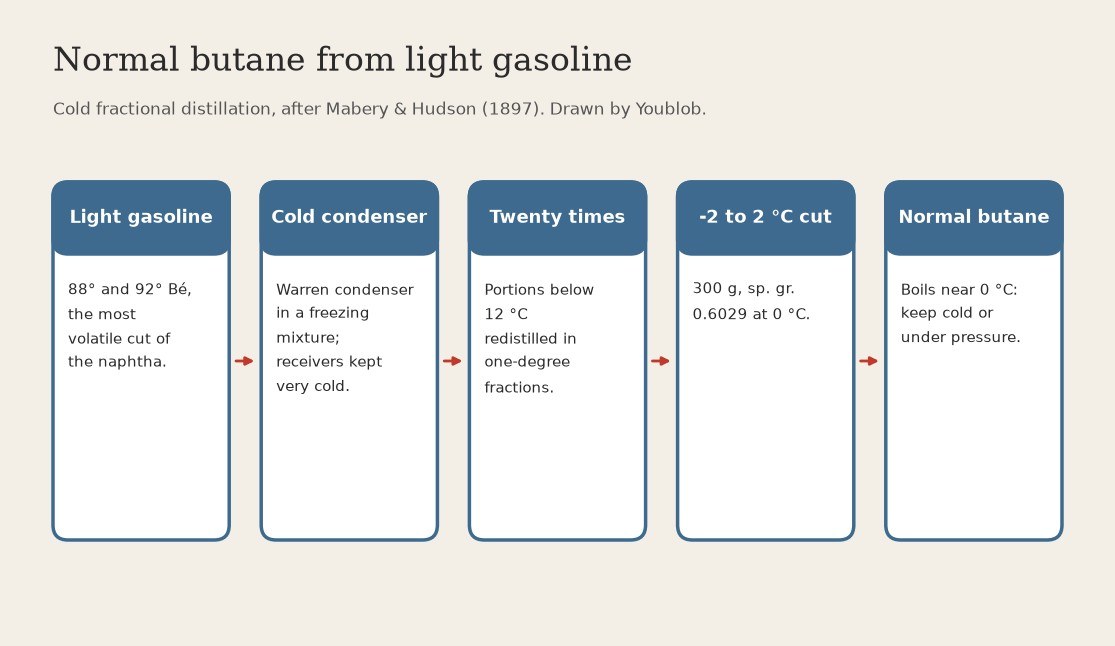


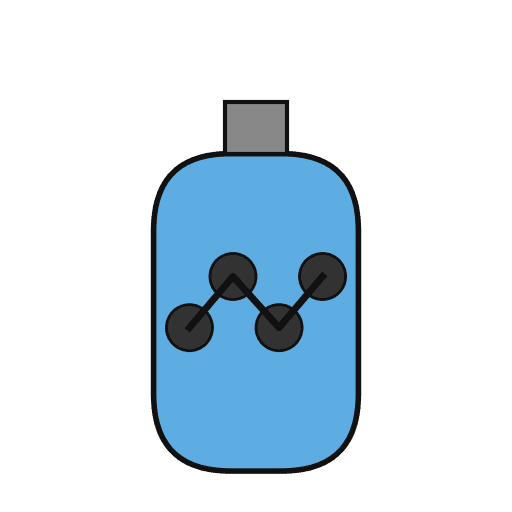
Normal Butane: the 0 °C Cut of the Lightest Gasoline, Distilled Twenty Times in the Cold (Mabery & Hudson 1897)
The lightest gasoline still holds butane, a gas that boils at about 0 °C. Distil it again and again through a condenser packed in a freezing mixture, and the butane gathers as a cut between -2 and 2 °C.
Result: 300 grams within -2 to 2 °C, specific gravity 0.6029 at 0 °C, vapour density 2.07 (2.01 calculated for butane). Very little came over below -10 °C.
Note: Mabery & Hudson named this cut isobutane. By the boiling points in Ipatieff & Pines, US 2,318,226 (normal butane +0.5 °C, isobutane -10.5 °C), a cut at 0 °C is normal butane, and it is built here as such.
Source: Mabery & Hudson, Proc. Amer. Acad. 32 (1897), pp. 101-111. Not given: the freezing mixture, how the butane was stored. Extremely flammable: no flame near. Picture drawn by Youblob.
ཆེས་མཁས་པ
3 months
ལམ་སྟོན
1
1
Take the lightest gasoline
Take the lightest gasoline
Start from the most volatile gasoline you can get. Mabery & Hudson used 88° and 92° Baumé gasoline, the second distillate of Pennsylvania and Ohio naphtha, collected at the refinery in lots of 45 litres while the air was below 0 °F. 250 litres were worked in all.
གོམ་པ་འདིའི་རྫས་རིགས:
 ཤིང་སྣུམ།250 ལི་ཊར།
ལག་ཆས་དགོས་མཁོ:
 ཤེལ་གྱི་བཙོ་བཏོན་ཤེལ་དམ།
2
2
Distil through a condenser in a freezing mixture
Distil through a condenser in a freezing mixture
Distil from a flask through a Warren condenser filled with a freezing mixture, and keep every receiver very cold to avoid loss. The paper does not give the mixture. Ours: crushed ice and salt.
ལག་ཆས་དགོས་མཁོ:
ཤེལ་གྱི་བཙོ་བཏོན་ཤེལ་དམ།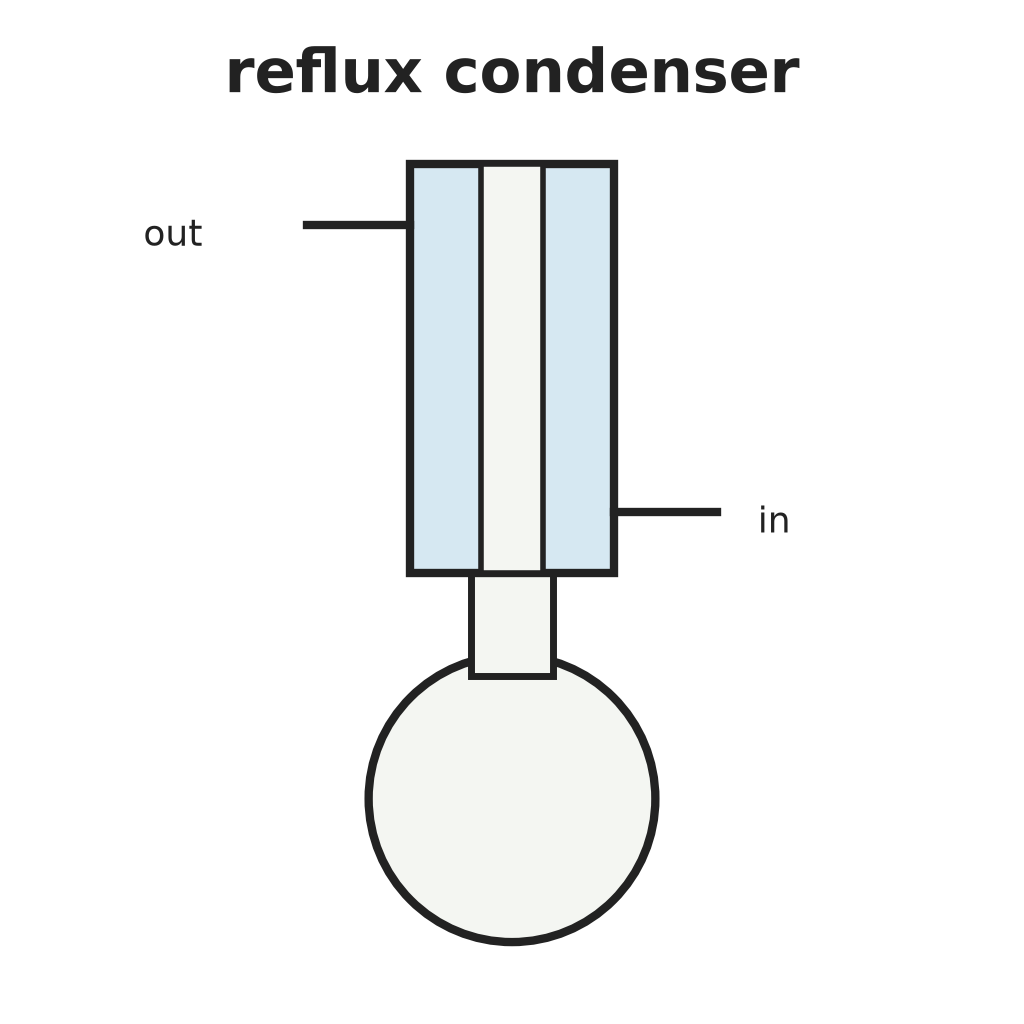 ཆུ་གྲང་གུར་ཐུན་ཆས
 བརྡུངས་པའི་ཁྱགས་རོམ།
 ཚྭ།
 ཞིབ་དཔྱད་ཁང་གི་ཚ་གྲང་འཇལ་ཆས།
3
3
Let the lightest portions boil from room heat
Let the lightest portions boil from room heat
The portions from -20 to -10 °C boil from the heat of the surrounding air alone. Regulate them by cooling the still, not by heating it.
ལག་ཆས་དགོས་མཁོ:
ཤེལ་གྱི་བཙོ་བཏོན་ཤེལ་དམ།བརྡུངས་པའི་ཁྱགས་རོམ།ཚྭ།ཞིབ་དཔྱད་ཁང་གི་ཚ་གྲང་འཇལ་ཆས།4
4
Redistil everything below 12 °C twenty times
Redistil everything below 12 °C twenty times
Collect in single-degree fractions and distil the portions below 12 °C again, twenty times over. By the twentieth run almost nothing stays between 5 and 20 °C, and the butane gathers between -2 and 2 °C.
ལག་ཆས་དགོས་མཁོ:
ཤེལ་གྱི་བཙོ་བཏོན་ཤེལ་དམ།ཆུ་གྲང་གུར་ཐུན་ཆསབརྡུངས་པའི་ཁྱགས་རོམ།ཚྭ།ཞིབ་དཔྱད་ཁང་གི་ཚ་གྲང་འཇལ་ཆས།5
5
Keep the -2 to 2 °C cut
Keep the -2 to 2 °C cut
This is the butane: 300 grams in Mabery & Hudson's run, specific gravity 0.6029 at 0 °C. It boils at about 0 °C, so it must be kept cold or under pressure. Ours: condense it into a pressure gas cylinder.
ལག་ཆས་དགོས་མཁོ:
 གནོན་ཤུགས་ཀྱི་རླུང་རྫས་སྣོད།ཞིབ་དཔྱད་ཁང་གི་ཚ་གྲང་འཇལ་ཆས།
བིལུ་པིརིན་ཊི་འདི་གིས་བཟོ་མི
འབྲེལ་ཡོད་བིལུ་པིརིན་ཊི
བིལུ་པིརིན་ཊི་འདི་ཚུ་ཐབས་ལམ་དང་རྫས་རིགས། སྤྱི་ཆོས་བགོ་བཤའ་བྱེད
CC0 སྤྱི་དབང
བིལུ་པིརིན་ཊི་འདི་CC0 འོག་བཀྲམས་ཡོད། ཁྱེད་རང་གིས་ཆོག་མཆན་མ་བཞེས་པར་ཕབ་ལེན་དང་བཟོ་བཅོས། བགོ་བཤའ། དགོས་མཁོ་གང་ལའང་བཀོལ་སྤྱོད་བྱས་ཆོག
བཟོ་མཁན་ལ་རྒྱབ་སྐྱོར་བྱེད་པའི་ཆེད་ཁོང་ཚོའི་བིལུ་པིརིན་ཊི་བརྒྱུད་ཐོན་སྐྱེད་ཉོ། བཟོ་མཁན་གྱིས བཟོ་མཁན་གྱི་ཁེ་ཕོགས ཚོང་པས་གཏན་འཁེལ་བྱས་པ། ཡང་ན་བིལུ་པིརིན་ཊི་འདིའི་པར་གསར་བཟོས་ཏེ་ཁྱེད་རང་གི་བིལུ་པིརིན་ཊི་ནང་མཐུད་སྦྲེལ་བྱས་ཏེ་ཡོང་སྒོ་བགོ་བཤའ་བྱེད།