སྒྱུ་རྩལ
མཛེས་སྡུག་དང་བདེ་ཐང
བཟོ་རིག
རིག་གནས་དང་ལོ་རྒྱུས
དགའ་སྟོན
ཁོར་ཡུག
ཟས་དང་བཏུང་རྫས
ཕྱིར་འཕྲུལ་རིག
ཚན་རིག
རྩེད་འགྲན
རིག་རྩལ
གྱོན་རུང
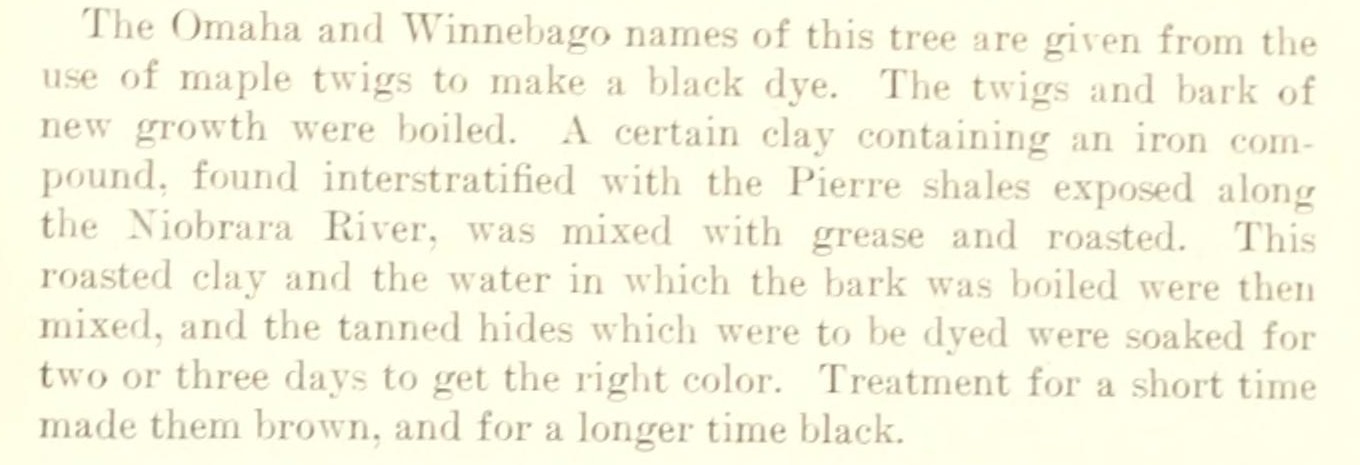

Omaha and Winnebago Black Dye for Tanned Hides: Soft Maple Twigs Boiled, Iron Clay Roasted with Grease (Gilmore, 1919)
Why the Omaha and Winnebago called the soft maple "tree to dye black", from Melvin Gilmore's record: twigs and bark of new growth boiled, an iron-bearing clay roasted with grease and stirred in, and tanned hides soaked in it two or three days: a short soak gives brown, a long one black.
འགོ་བཙུགས
Two or three days of soaking
ལམ་སྟོན
1
1
Read Gilmore
Read Gilmore
"Treatment for a short time made them brown, and for a longer time black."
2
2
Boil the maple
Boil the maple
Cut twigs and bark of new growth from a soft maple and boil them in water (amounts and time ours: a pot packed with twigs, boiled until the water is dark).
གོམ་པ་འདིའི་རྫས་རིགས:
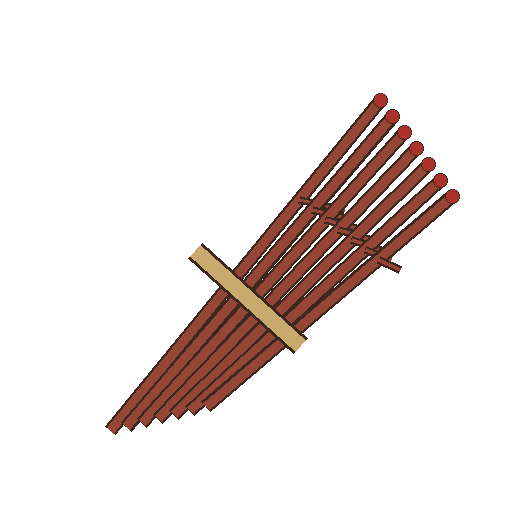 Soft Maple Twigs1 དུམ་བུ།
 ཆུ།1 དུམ་བུ།
ལག་ཆས་དགོས་མཁོ:
 གྲི།
 ལྕགས་ཀྱི་ཇམ་སྦྱིས།
 མེའི་དོང་།
3
3
Roast the clay
Roast the clay
Mix the iron-bearing clay with grease and roast it (theirs came from beds in the Pierre shale along the Niobrara River). Ours: in an old pan over the fire until it darkens.
གོམ་པ་འདིའི་རྫས་རིགས:
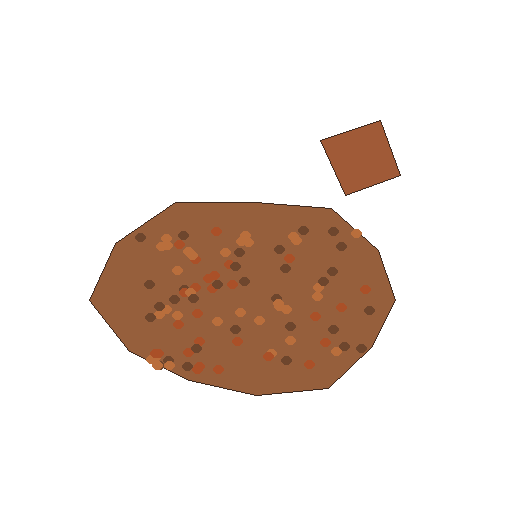 Iron-bearing Clay1 དུམ་བུ།
 སེམས་ཅན་གྱི་ཚིལ།1 དུམ་བུ།
ལག་ཆས་དགོས་མཁོ:
ལྕགས་ཀྱི་ཇམ་སྦྱིས།མེའི་དོང་།4
4
Mix and soak the hides
Mix and soak the hides
Stir the roasted clay into the maple water and soak the tanned hides in it for two or three days. Take them out early for brown, leave them longer for black. Rinse and dry them (ours).
གོམ་པ་འདིའི་རྫས་རིགས:
 ཤ་བའི་པགས་པ་མཉེན་མོ།1 དུམ་བུ།
ལག་ཆས་དགོས་མཁོ:
 ཚོས་གཞི་བཙུགས་ནིའི་ཧོད་ཆེན
5
5
Troubleshooting
Troubleshooting
Hide dye troubleshooting.
Flow
Loading...
6
6
History and honest limits
History and honest limits
From Melvin R. Gilmore, *Uses of Plants by the Indians of the Missouri River Region*, **33rd Annual Report of the Bureau of American Ethnology** (1919), pp. 100-101 (checked on the archive.org scan usesofplantsbyin00gilm). The Omaha-Ponca and Winnebago names of the soft maple both mean "tree to dye black". Gilmore gives no amounts or times except the soak: amounts, boiling and roasting, rinsing, and tallow as the grease are ours.
རྫས་རིགས
5- 1 དུམ་བུ།ས་ཆ་འཛིན
- 1 དུམ་བུ།ས་ཆ་འཛིན
- 1 དུམ་བུ།ས་ཆ་འཛིན
- 1 དུམ་བུ།ས་ཆ་འཛིན
- 1 དུམ་བུ།ས་ཆ་འཛིན
བིལུ་པིརིན་ཊི་འདི་གིས་བཟོ་མི
འབྲེལ་ཡོད་བིལུ་པིརིན་ཊི
བིལུ་པིརིན་ཊི་འདི་ཚུ་ཐབས་ལམ་དང་རྫས་རིགས། སྤྱི་ཆོས་བགོ་བཤའ་བྱེད
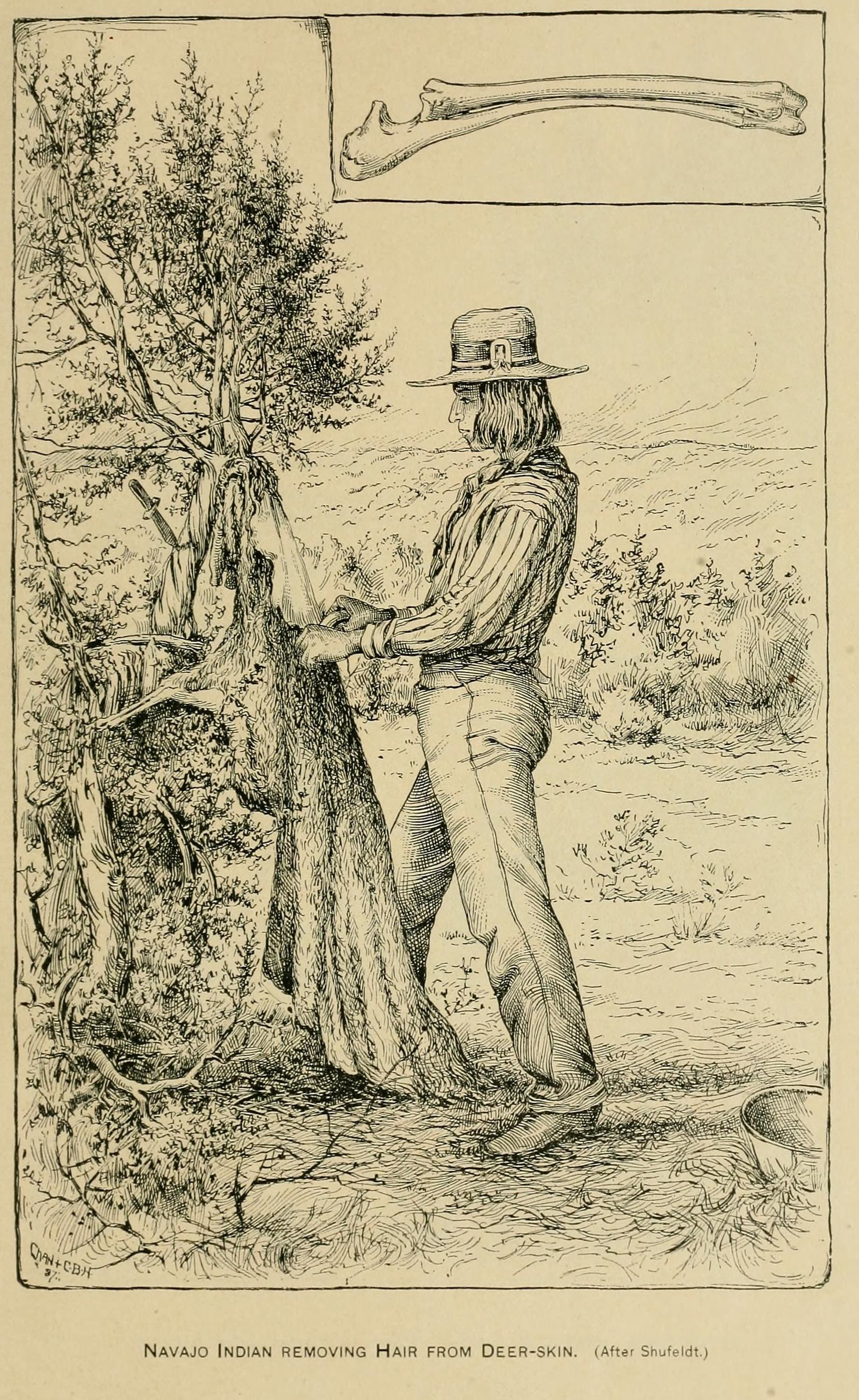
Navajo Buckskin: Hair Shaved with the Deer's Own Foreleg Bone, Brains Rubbed In, Wrung on a Tree, Worked Dry over the Feet (Shufeldt, 1888)
Tex གྱིས
རས་དང་པགས
༧
༠
༠
༠
༠
༠
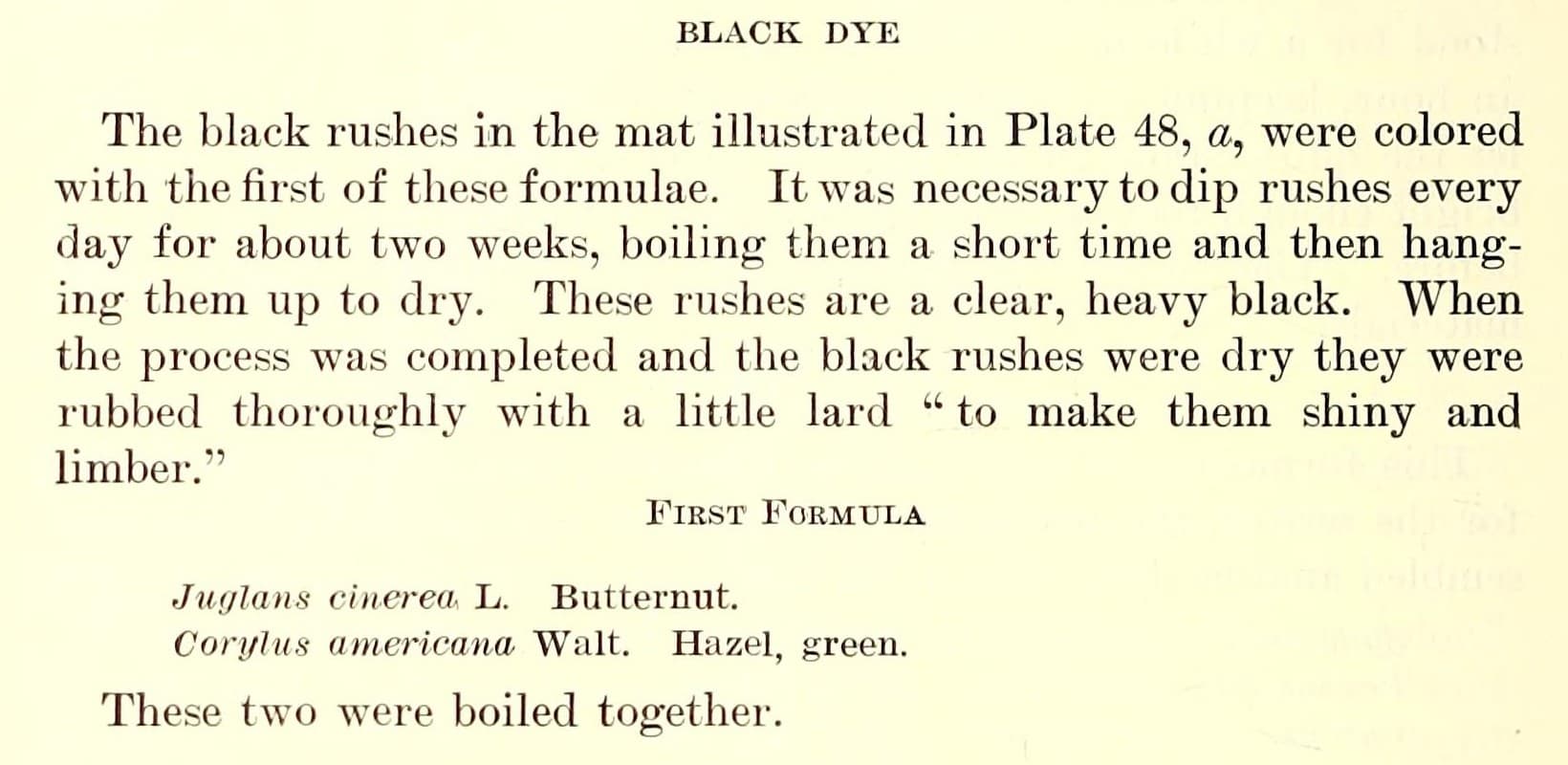
Chippewa Black Dyes: Butternut, Green Hazel Burs and Oak Bark with Black Spring Earth or Grindstone Dust (Densmore, 1928)
Charlie གྱིས
རི་མོ
༧
༠
༠
༠
༠
༠
CC0 སྤྱི་དབང
བིལུ་པིརིན་ཊི་འདི་CC0 འོག་བཀྲམས་ཡོད། ཁྱེད་རང་གིས་ཆོག་མཆན་མ་བཞེས་པར་ཕབ་ལེན་དང་བཟོ་བཅོས། བགོ་བཤའ། དགོས་མཁོ་གང་ལའང་བཀོལ་སྤྱོད་བྱས་ཆོག
བཟོ་མཁན་ལ་རྒྱབ་སྐྱོར་བྱེད་པའི་ཆེད་ཁོང་ཚོའི་བིལུ་པིརིན་ཊི་བརྒྱུད་ཐོན་སྐྱེད་ཉོ། བཟོ་མཁན་གྱིས བཟོ་མཁན་གྱི་ཁེ་ཕོགས ཚོང་པས་གཏན་འཁེལ་བྱས་པ། ཡང་ན་བིལུ་པིརིན་ཊི་འདིའི་པར་གསར་བཟོས་ཏེ་ཁྱེད་རང་གི་བིལུ་པིརིན་ཊི་ནང་མཐུད་སྦྲེལ་བྱས་ཏེ་ཡོང་སྒོ་བགོ་བཤའ་བྱེད།