སྒྱུ་རྩལ
མཛེས་སྡུག་དང་བདེ་ཐང
བཟོ་རིག
རིག་གནས་དང་ལོ་རྒྱུས
དགའ་སྟོན
ཁོར་ཡུག
ཟས་དང་བཏུང་རྫས
ཕྱིར་འཕྲུལ་རིག
ཚན་རིག
རྩེད་འགྲན
རིག་རྩལ
གྱོན་རུང
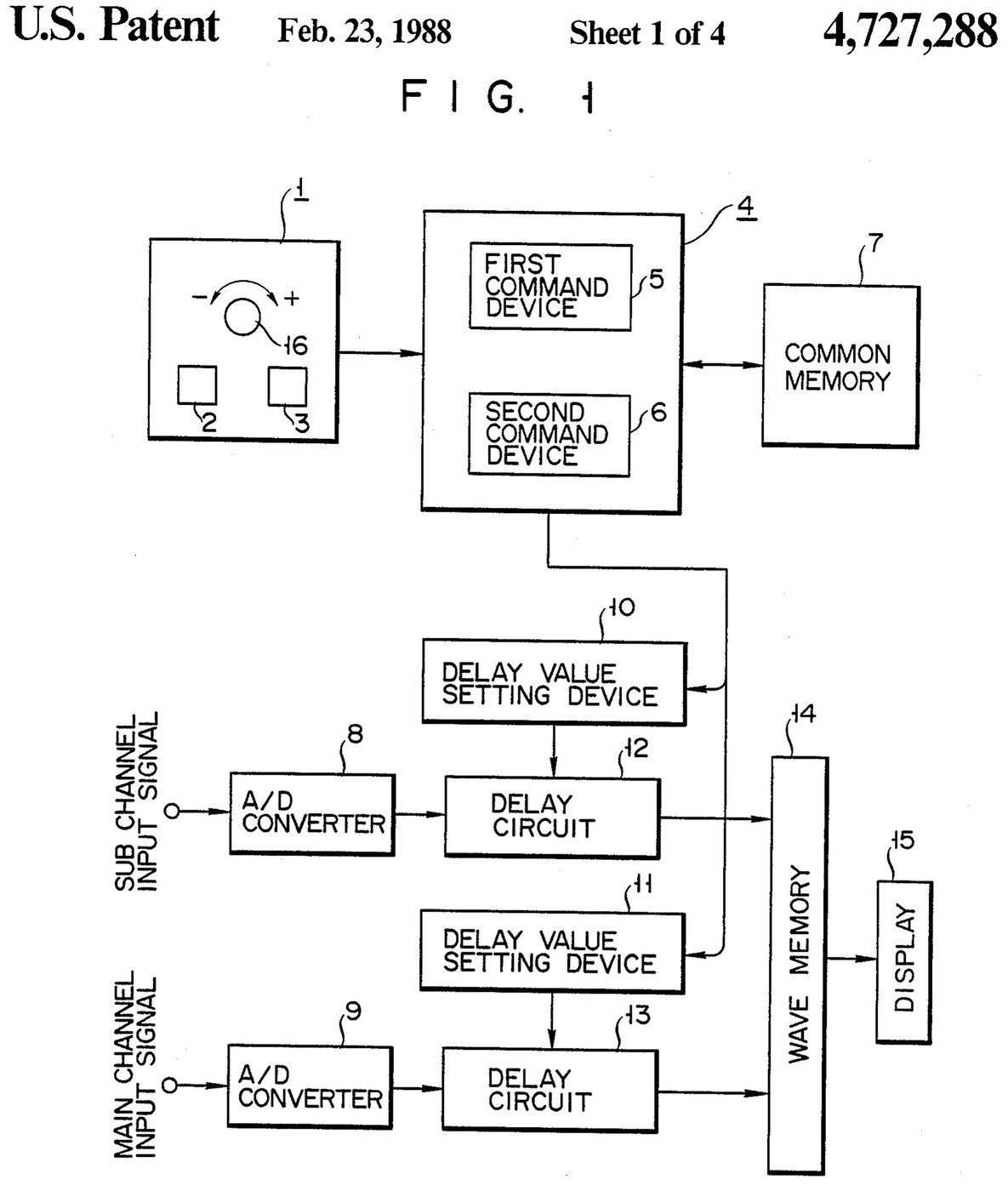

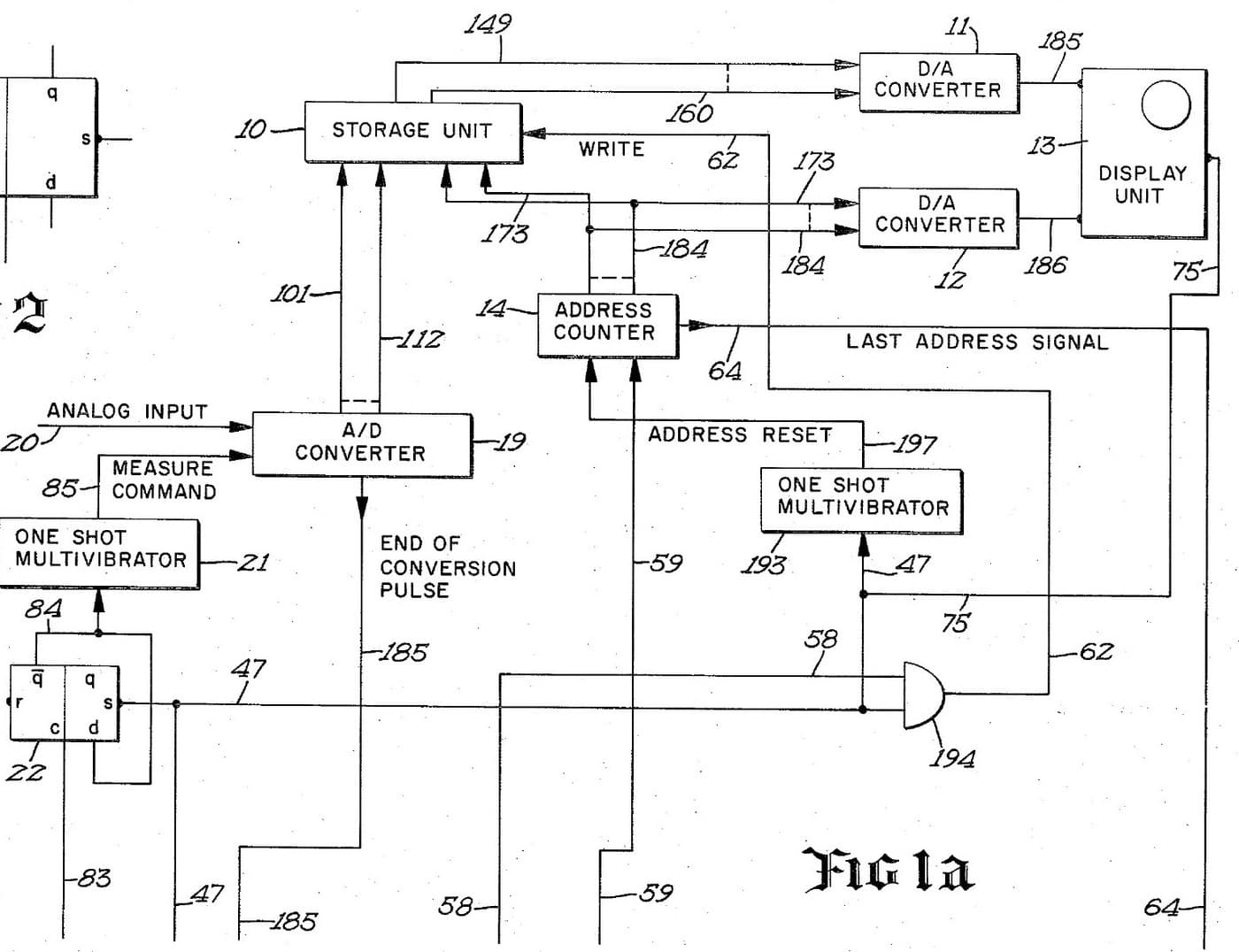
Oscilloscope: Two-Channel Digital, with a Delay per Channel and a Common Delay (Anritsu, US 4,727,288, 1988)
A two-channel digital oscilloscope. Each channel has its own converter and delay circuit. One knob, with a main and a sub button, sets the delays. The sub button shifts only the sub channel's wave, so you can line it up against the main one. The main button shifts both waves together and keeps the gap between them.
Result: a 2-channel digital oscilloscope that can move both traces along the time base without losing their phase difference.
Source: K. Nakatsugawa et al. (Anritsu), US 4,727,288 (1988). Unknown: sample rate, bandwidth, memory size and the display. Picture: the patent drawing.
ཆེས་མཁས་པ
Unknown
ལམ་སྟོན
1
1
Convert the two channels
Convert the two channels
Bring the main channel and the sub channel each to its own analog-to-digital converter. Ours: BNC sockets. Not given: the sample rate, the bandwidth.
གོམ་པ་འདིའི་རྫས་རིགས:
 རྒྱུན་ཆགས་ལས་ཨང་ཅན་ལུ་སྒྱུར་ཆས2 main and sub converters
 ཀིང་གཅིག་མཐུད་ཆས་ཆ་ཚང (BNC / SO-239)1 input sockets
ལག་ཆས་དགོས་མཁོ:
 ཞ་བཏབ་ནིའི་ལྕགས།
 ལྕགས་སྐུད་ཀྱི་ཤུབས་བཤུས་ཆས།
2
2
Delay, store and display
Delay, store and display
Pass each channel's digital signal through its own delay circuit, whose delay is set by its own delay value setting device. Store both delayed signals in a wave memory and show them on the display. Ours: logic ICs for the delay circuits and setting devices, IC memory, and a CRT driven through D/A converters. Not given: how the delay circuits are built, the memory size, the display.
གོམ་པ་འདིའི་རྫས་རིགས:
 ལོ་ཇིཀ་ IC སྣ་འདྲེས་ཆ་ཚང་།1 delay circuits and setting devices
 ཚོགས་བསྡོམས་གློག་ལམ་གྱི་ དྲན་ཚད།1 wave memory
 ཨང་རྟགས་ལས་ ཨེ་ན་ལོག་ལུ་ བསྒྱུར་ཆས།2 display drive
 ཀེ་ཐོཌ་འོད་ཟེར་ དོང་པོ།1 display
ལག་ཆས་དགོས་མཁོ:
ཞ་བཏབ་ནིའི་ལྕགས།ལྕགས་སྐུད་ཀྱི་ཤུབས་བཤུས་ཆས།3
3
Build the delay panel and processor
Build the delay panel and processor
Make a delay operation panel with a main switch, a sub switch and one dial, with an encoder on the dial so each turn is read as a change in its output. Connect the panel to a microprocessor with a common memory that holds the sub channel's delay S in one area and the main channel's delay M in another. Mount it all in a case with its supply. Ours: push buttons, an aluminium case, a DC supply.
གོམ་པ་འདིའི་རྫས་རིགས:
 གནོན་ཐེབས།2 main and sub switches
 འཁོར་སྐོར་ཨང་སྒྲིག་ཆས།1 delay dial
 མའི་ཀོརོ་པོརོ་སེ་སར།1 command devicesཚོགས་བསྡོམས་གློག་ལམ་གྱི་ དྲན་ཚད།1 common memory
 ཨ་ལུ་མི་ནིཡམ་གྱི་སྒྲོམ།1 case
ལག་ཆས་དགོས་མཁོ:
 ཐད་རྒྱུན་གློག་ཁུངས།
 འཁོད་བཞག་ཕུག་འཕྲུལ།ཞ་བཏབ་ནིའི་ལྕགས།
4
4
Program the two commands
Program the two commands
When the dial turns, read the encoder change e and which switch is held. Sub switch: add e to S, set the sum in the sub channel's setting device and store it back as the new S. Main switch: add e to both M and S, set M + e in the main channel's device and S + e in the sub channel's, and store both back. The main command so moves both channels by the same amount and keeps their relative delay.
ལག་ཆས་དགོས་མཁོ:
ཞ་བཏབ་ནིའི་ལྕགས།5
5
Compare two waves
Compare two waves
Feed two signals in. Hold the sub switch and turn the dial to slide the sub channel's wave against the main one. Then hold the main switch and turn the dial: both waves move along the time base together, with the phase difference between them unchanged. Test it with a known signal.
ལག་ཆས་དགོས་མཁོ:
 རླབས་བཟོ་འཕྲུལ་ཆས།
རྫས་རིགས
10- 2 main and sub convertersས་ཆ་འཛིན
- 1 input socketsས་ཆ་འཛིན
- 1 delay circuits and setting devicesས་ཆ་འཛིན
- 1 common memoryས་ཆ་འཛིན
- 2 display driveས་ཆ་འཛིན
- 1 displayས་ཆ་འཛིན
- ས་ཆ་འཛིན
- ས་ཆ་འཛིན
- 1 command devicesས་ཆ་འཛིན
- 1 caseས་ཆ་འཛིན
ལག་ཆས་དགོས་མཁོ
5- 2 vendors sell this, none ship to you yetས་ཆ་འཛིན
- ས་ཆ་འཛིན
- ས་ཆ་འཛིན
- ས་ཆ་འཛིན
- ས་ཆ་འཛིན
བིལུ་པིརིན་ཊི་འདི་གིས་བཟོ་མི

འབྲེལ་ཡོད་བིལུ་པིརིན་ཊི
བིལུ་པིརིན་ཊི་འདི་ཚུ་ཐབས་ལམ་དང་རྫས་རིགས། སྤྱི་ཆོས་བགོ་བཤའ་བྱེད
CC0 སྤྱི་དབང
བིལུ་པིརིན་ཊི་འདི་CC0 འོག་བཀྲམས་ཡོད། ཁྱེད་རང་གིས་ཆོག་མཆན་མ་བཞེས་པར་ཕབ་ལེན་དང་བཟོ་བཅོས། བགོ་བཤའ། དགོས་མཁོ་གང་ལའང་བཀོལ་སྤྱོད་བྱས་ཆོག
བཟོ་མཁན་ལ་རྒྱབ་སྐྱོར་བྱེད་པའི་ཆེད་ཁོང་ཚོའི་བིལུ་པིརིན་ཊི་བརྒྱུད་ཐོན་སྐྱེད་ཉོ། བཟོ་མཁན་གྱིས བཟོ་མཁན་གྱི་ཁེ་ཕོགས ཚོང་པས་གཏན་འཁེལ་བྱས་པ། ཡང་ན་བིལུ་པིརིན་ཊི་འདིའི་པར་གསར་བཟོས་ཏེ་ཁྱེད་རང་གི་བིལུ་པིརིན་ཊི་ནང་མཐུད་སྦྲེལ་བྱས་ཏེ་ཡོང་སྒོ་བགོ་བཤའ་བྱེད།