སྒྱུ་རྩལ
མཛེས་སྡུག་དང་བདེ་ཐང
བཟོ་རིག
རིག་གནས་དང་ལོ་རྒྱུས
དགའ་སྟོན
ཁོར་ཡུག
ཟས་དང་བཏུང་རྫས
ཕྱིར་འཕྲུལ་རིག
ཚན་རིག
རྩེད་འགྲན
རིག་རྩལ
གྱོན་རུང
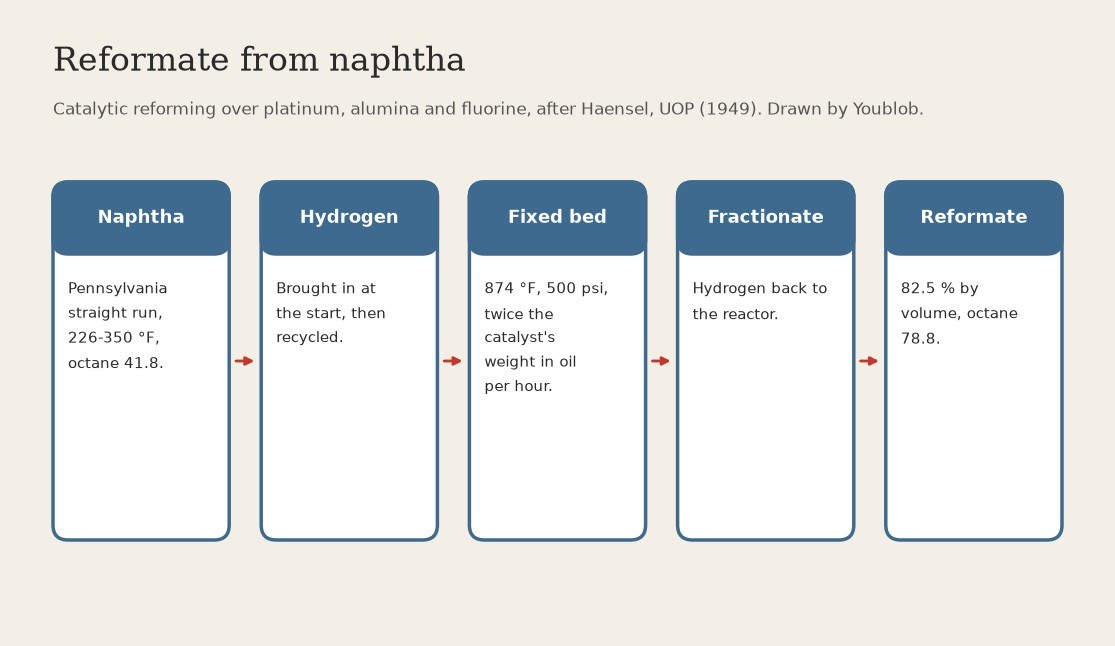


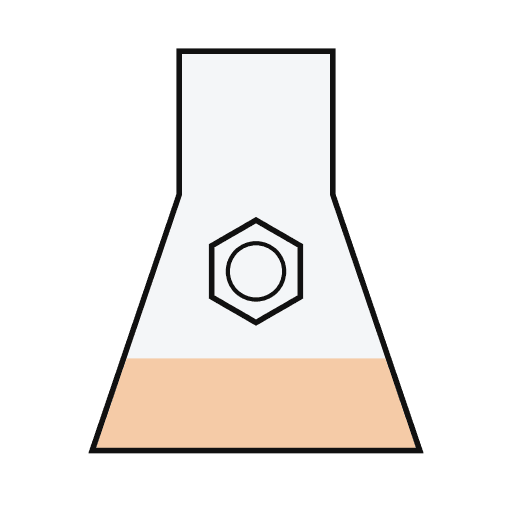
Reformate: Straight-Run Naphtha over Platinum-Alumina-Fluorine Catalyst at 874 °F and 500 psi (Haensel, UOP, US 2,479,110)
Straight-run naphtha knocks badly in an engine. Passed hot and under pressure over Haensel's platinum catalyst, its molecules are reshaped into aromatics and smaller ones, and the octane number nearly doubles.
Result (Ex. I): a Pennsylvania naphtha of octane 41.8 gave 82.5 % by volume of reformate of octane 78.8 (A.S.T.M. motor method).
Variable: reforming temperature. At 824 °F: 95.9 % by weight, octane 65.7, too cool. At 874 °F: 83.2 %, octane 78.8; more of the charge goes to gas.
Source: Haensel, US 2,479,110 (1949), Ex. I-II. Not given: reactor size, how the products are fractionated. Hot hydrogen and oil vapour under pressure: fire risk. Picture drawn by Youblob.
ཆེས་མཁས་པ
1 day
ལམ་སྟོན
1
1
Pack the catalyst in a fixed bed
Pack the catalyst in a fixed bed
Put the platinum reforming catalyst in the reaction zone as a fixed bed. The oil is passed through it, upward or downward.
ལག་ཆས་དགོས་མཁོ:
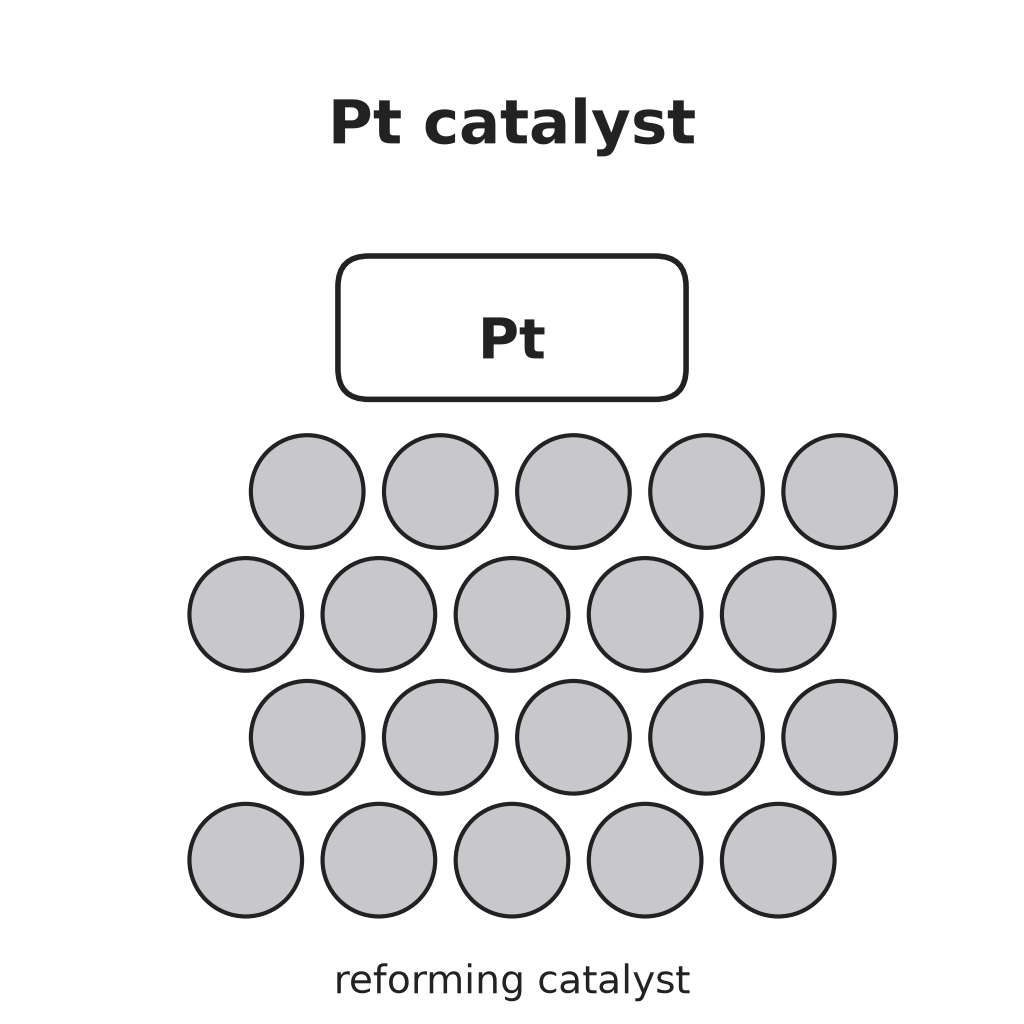 པ་ལེ་ཊི་ནམ་རི་ཕོར་མིང་ཀེ་ཊ་ལིསཊ
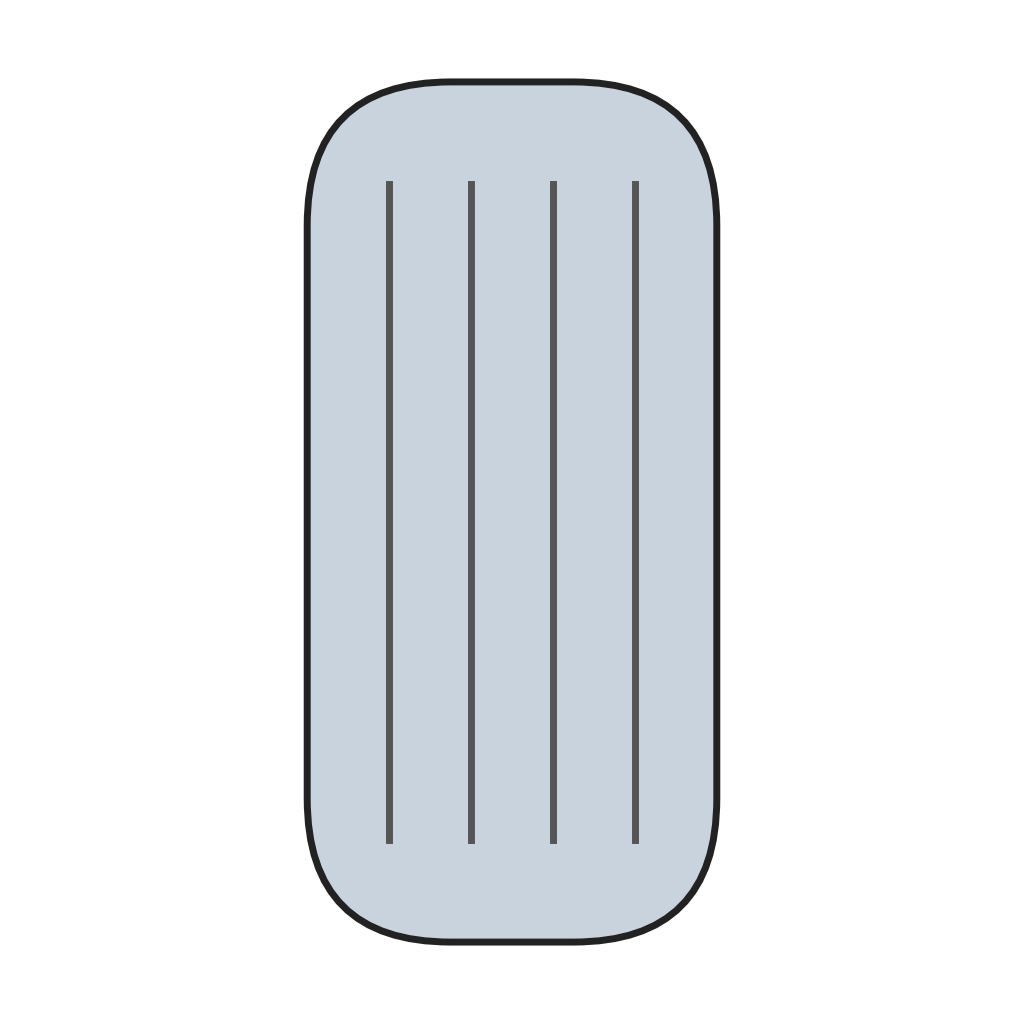 རྒྱུ་ལམ་མང་པོ་ཅན་གྱི་གཏན་སྒྲིག་རྫས་འགྱུར་སྣོད།
2
2
Feed a straight-run naphtha
Feed a straight-run naphtha
Use a straight-run naphtha. Haensel's: a Pennsylvania naphtha boiling from 226 to 350 °F, with an A.S.T.M. motor octane number of 41.8.
གོམ་པ་འདིའི་རྫས་རིགས:
 ནེབ་ཐ།1 as required
ལག་ཆས་དགོས་མཁོ:
 སྣུམ་བསག་སྣོད།
3
3
Start with hydrogen
Start with hydrogen
The reaction can make enough hydrogen for itself, but the patent prefers to bring hydrogen in from outside at the start and then recycle it, so the reaction zone always holds enough.
ལག་ཆས་དགོས་མཁོ:
 ཧའི་ཌུརོ་ཇཱན།
 གནོན་ཤུགས་ཀྱི་རླུང་རྫས་སྣོད།
4
4
Reform at 874 °F, 500 psi
Reform at 874 °F, 500 psi
Pass the naphtha over the catalyst at about 874 °F and 500 pounds per square inch, at a weight hourly space velocity of about 2: twice the catalyst's weight in oil each hour.
ལག་ཆས་དགོས་མཁོ:
རྒྱུ་ལམ་མང་པོ་ཅན་གྱི་གཏན་སྒྲིག་རྫས་འགྱུར་སྣོད།པ་ལེ་ཊི་ནམ་རི་ཕོར་མིང་ཀེ་ཊ་ལིསཊ གནོན་ཤུགས་འཇལ་ཆས།
5
5
Fractionate off the hydrogen, collect the reformate
Fractionate off the hydrogen, collect the reformate
Fractionate the products to separate the hydrogen, which goes back into the process, and recover the reformate: 82.5 % by volume of the charge, octane 78.8. Ours: a fractionating still.
ལག་ཆས་དགོས་མཁོ:
 ཆ་ཤས་བཙག་བཏོན་ཆསགནོན་ཤུགས་ཀྱི་རླུང་རྫས་སྣོད།སྣུམ་བསག་སྣོད།
ལག་ཆས་དགོས་མཁོ
7- ས་ཆ་འཛིན
- ས་ཆ་འཛིན
- ས་ཆ་འཛིན
- ས་ཆ་འཛིན
- ས་ཆ་འཛིན
- ས་ཆ་འཛིན
བིལུ་པིརིན་ཊི་འདི་གིས་བཟོ་མི
འབྲེལ་ཡོད་བིལུ་པིརིན་ཊི
བིལུ་པིརིན་ཊི་འདི་ཚུ་ཐབས་ལམ་དང་རྫས་རིགས། སྤྱི་ཆོས་བགོ་བཤའ་བྱེད
CC0 སྤྱི་དབང
བིལུ་པིརིན་ཊི་འདི་CC0 འོག་བཀྲམས་ཡོད། ཁྱེད་རང་གིས་ཆོག་མཆན་མ་བཞེས་པར་ཕབ་ལེན་དང་བཟོ་བཅོས། བགོ་བཤའ། དགོས་མཁོ་གང་ལའང་བཀོལ་སྤྱོད་བྱས་ཆོག
བཟོ་མཁན་ལ་རྒྱབ་སྐྱོར་བྱེད་པའི་ཆེད་ཁོང་ཚོའི་བིལུ་པིརིན་ཊི་བརྒྱུད་ཐོན་སྐྱེད་ཉོ། བཟོ་མཁན་གྱིས བཟོ་མཁན་གྱི་ཁེ་ཕོགས ཚོང་པས་གཏན་འཁེལ་བྱས་པ། ཡང་ན་བིལུ་པིརིན་ཊི་འདིའི་པར་གསར་བཟོས་ཏེ་ཁྱེད་རང་གི་བིལུ་པིརིན་ཊི་ནང་མཐུད་སྦྲེལ་བྱས་ཏེ་ཡོང་སྒོ་བགོ་བཤའ་བྱེད།