སྒྱུ་རྩལ
མཛེས་སྡུག་དང་བདེ་ཐང
བཟོ་རིག
རིག་གནས་དང་ལོ་རྒྱུས
དགའ་སྟོན
ཁོར་ཡུག
ཟས་དང་བཏུང་རྫས
ཕྱིར་འཕྲུལ་རིག
ཚན་རིག
རྩེད་འགྲན
རིག་རྩལ
གྱོན་རུང
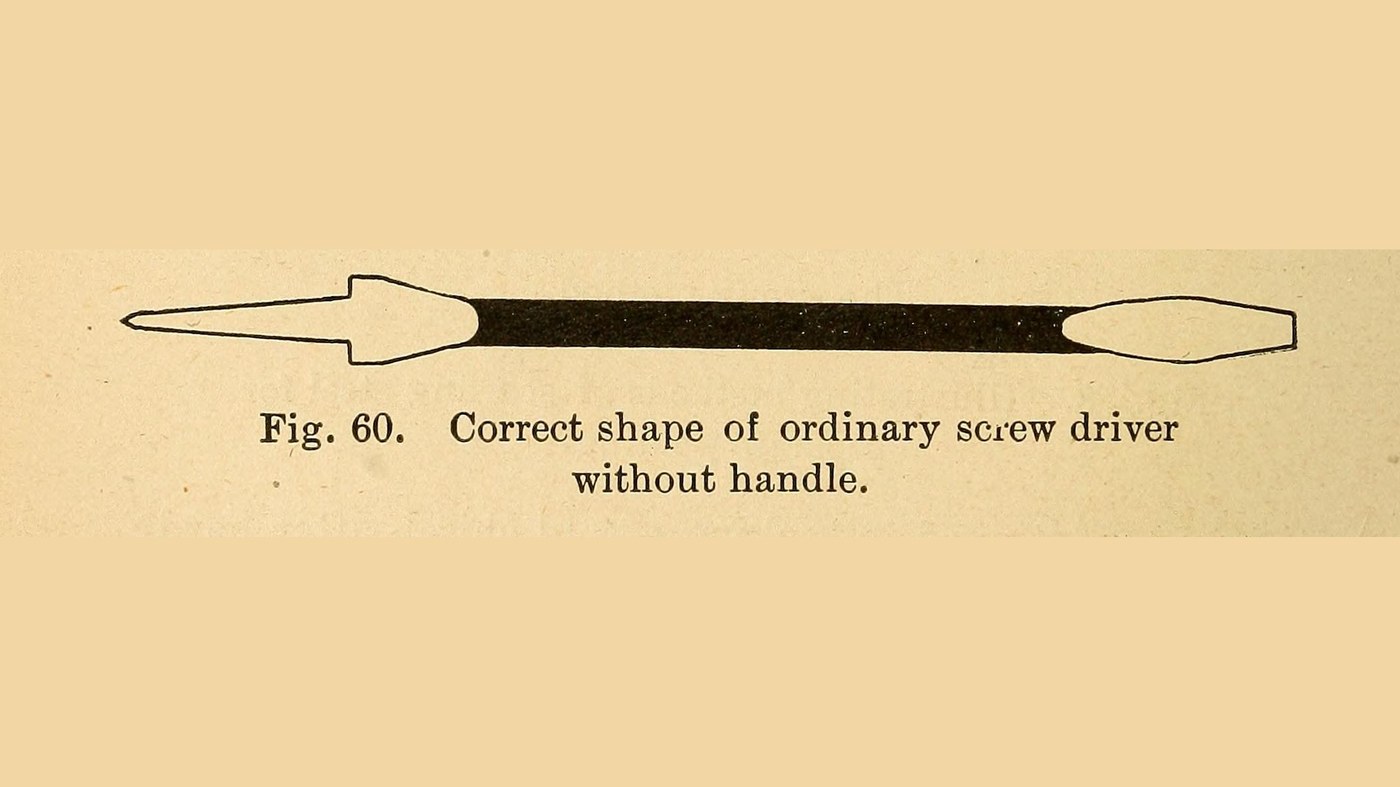


Screwdriver: a Flat Blade Forged, Packed at a Low Heat and Tempered Grey (Holford, 1907)
A flat screwdriver is a steel shank flattened to a blade that fits the slot of a screw. H. Holford's 20th Century Toolsmith and Steelworker (1907) says most smiths make them so they twist or break on a hard screw, and gives his cure: forge it from 75-point carbon steel, strike the blade a few good blows on each flat at a low heat, harden it and let the temper run to grey.
His Fig. 60 shows the shape without its handle. He gives no sizes and no handle, which are unknown here; the brine bath is from his chapter on the hardening bath.
Source: H. Holford (1907), pp. 21, 118. Picture: his Fig. 60.
བར་མ
Half a day
ལམ་སྟོན
1
1
Read Holford
Read Holford
"Strike it a few good blows on each flat side of the screw driving edge while at a low heat. Then harden and allow the temper to draw to a grey, cool off and you will have a screw driver that will give unlimited satisfaction."
2
2
Forge the shape
Forge the shape
Take good steel of 75 points carbon. Forge it to the shape of Fig. 60: a round shank, flattened at one end to the driving blade and drawn to a pointed tang at the other for the handle. Holford gives no sizes (unknown).
གོམ་པ་འདིའི་རྫས་རིགས:
 ལག་ཆས་ལྕགས་ཁར་གྱི་ཡུ་བ་གྲུ་བཞི།1 bar
ལག་ཆས་དགོས་མཁོ:
 མགར་ཐབ།
 མགར་བའི་རྡོ་ལེབ།
 མགར་བའི་ཐོ་བ།
 མགར་བའི་ལག་བཟུང་།
 མ་ཤེས་པའི་ཚད།
 ཉེན་སྲུང་མིག་ཤེལ།
 ཚ་བཟོད་ཀྱི་ལག་ཤུབས།
3
3
Pack the blade
Pack the blade
At a low heat, strike a few good blows on each flat side of the driving edge.
ལག་ཆས་དགོས་མཁོ:
མགར་བའི་ཐོ་བ།མགར་བའི་རྡོ་ལེབ།མགར་ཐབ།མགར་བའི་ལག་བཟུང་།4
4
Harden and temper grey
Harden and temper grey
Heat the blade end evenly and quench it in the hardening bath. Holford's bath is clean water free from grease, best made into a brine with as much salt as the water will dissolve, kept as large and as cold as possible. Brighten the blade with a file so the colours show, draw the temper to a grey, then cool it off.
ལག་ཆས་དགོས་མཁོ:
མགར་ཐབ། ཚྭ་ཁུ་གང་བ།མགར་བའི་ལག་བཟུང་།
 ལྕགས་བཤུ་ཆས་ཕྲ་མོཚ་བཟོད་ཀྱི་ལག་ཤུབས།
5
5
Fit a handle
Fit a handle
Fit a handle on the tang. Holford shows the screwdriver without one and does not say what it is made of (unknown).
གོམ་པ་འདིའི་རྫས་རིགས:
 ངོ་མ་ཤེས་པའི་རྒྱུ་ཆ།1 handle
6
6
History and honest limits
History and honest limits
Holford, a toolsmith writing for blacksmiths and tool dressers, says a good screwdriver is prized by every mechanic, woodworkers most of all, yet few smiths could make one that would not break or twist. His temper table lists the screwdriver at grey, in 0.75 carbon steel.
He gives no sizes, no handle and no heat for hardening; those are unknown here, and the tools are ours.
རྫས་རིགས
2- ས་ཆ་འཛིན
- 1 handleས་ཆ་འཛིན
བིལུ་པིརིན་ཊི་འདི་གིས་བཟོ་མི
འབྲེལ་ཡོད་བིལུ་པིརིན་ཊི
བིལུ་པིརིན་ཊི་འདི་ཚུ་ཐབས་ལམ་དང་རྫས་རིགས། སྤྱི་ཆོས་བགོ་བཤའ་བྱེད
CC0 སྤྱི་དབང
བིལུ་པིརིན་ཊི་འདི་CC0 འོག་བཀྲམས་ཡོད། ཁྱེད་རང་གིས་ཆོག་མཆན་མ་བཞེས་པར་ཕབ་ལེན་དང་བཟོ་བཅོས། བགོ་བཤའ། དགོས་མཁོ་གང་ལའང་བཀོལ་སྤྱོད་བྱས་ཆོག
བཟོ་མཁན་ལ་རྒྱབ་སྐྱོར་བྱེད་པའི་ཆེད་ཁོང་ཚོའི་བིལུ་པིརིན་ཊི་བརྒྱུད་ཐོན་སྐྱེད་ཉོ། བཟོ་མཁན་གྱིས བཟོ་མཁན་གྱི་ཁེ་ཕོགས ཚོང་པས་གཏན་འཁེལ་བྱས་པ། ཡང་ན་བིལུ་པིརིན་ཊི་འདིའི་པར་གསར་བཟོས་ཏེ་ཁྱེད་རང་གི་བིལུ་པིརིན་ཊི་ནང་མཐུད་སྦྲེལ་བྱས་ཏེ་ཡོང་སྒོ་བགོ་བཤའ་བྱེད།